
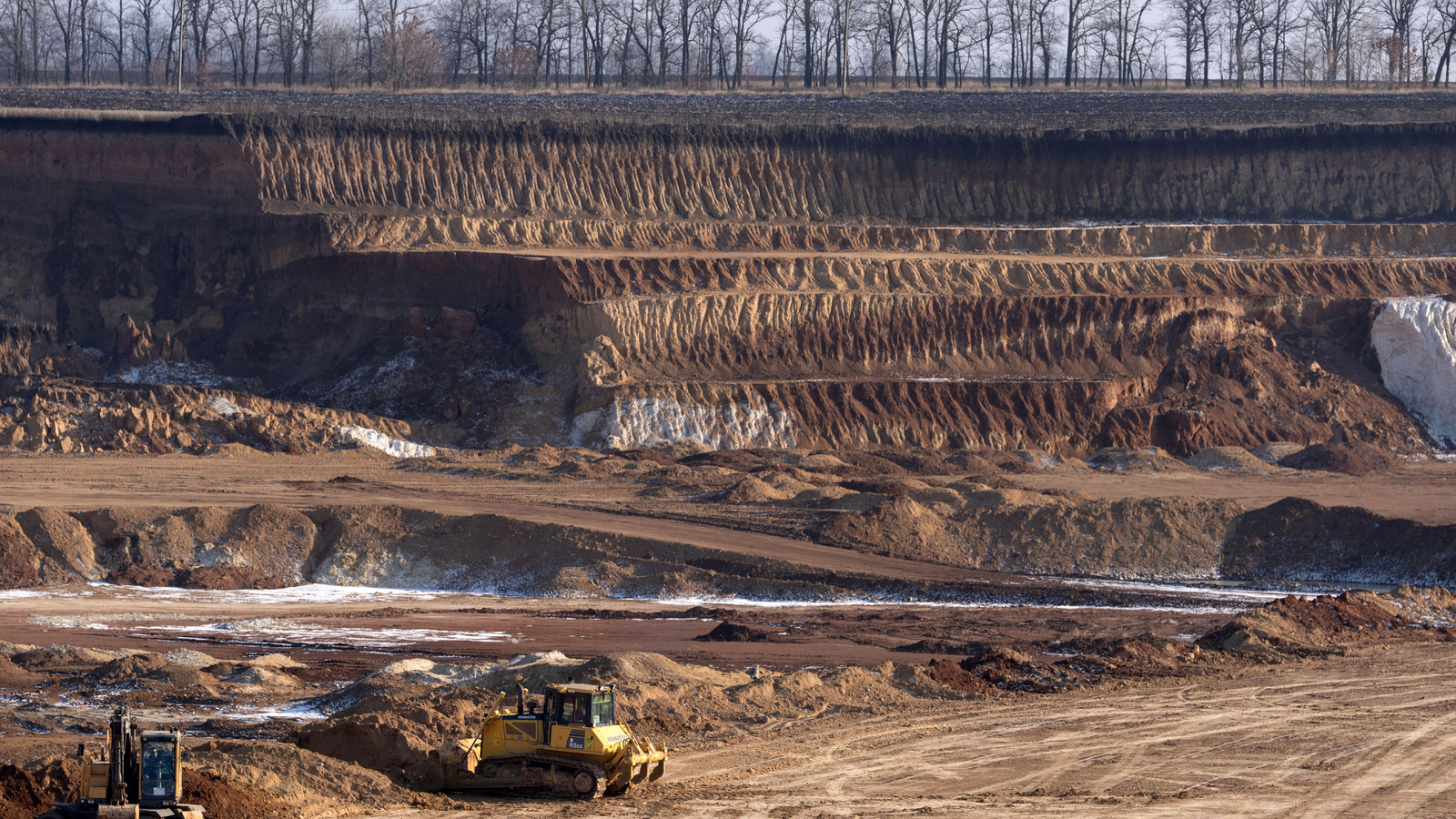
Ukrainian President Volodymyr Zelenskyy has made clear that any minerals deal between Kyiv and Washington will remain hollow unless it is paired with robust Western security guarantees. Speaking at a press conference in Kyiv, the Ukrainian leader emphasized that without credible protections for his country, neither a lasting ceasefire nor a sustainable peace agreement is achievable. His remarks come as negotiators from both nations work to finalize a preliminary framework covering critical mineral resources, with a potential in-person meeting in Washington looming on the horizon.
Zelenskyy Draws a Hard Line: Security First, Resources Second
The central message from Zelenskyy’s press conference was unmistakable. A minerals sharing arrangement with the United States, regardless of how favorable the economic terms might be, will not deliver peace on its own. “Without future security guarantees, we will not have a real ceasefire,” the Ukrainian president stated bluntly. “And if we don’t have it, nothing will work. Nothing will work.”
This insistence on coupling economic cooperation with defense commitments reflects a strategic calculation that has guided Ukrainian diplomacy throughout the conflict. Zelenskyy appears to understand that any revenue-sharing arrangement with the U.S. , no matter how generous , becomes meaningless if Russia remains willing and able to resume hostilities. For Ukraine, the question of security guarantees is not a peripheral concern; it is the foundation upon which every other element of any future agreement must rest.
Signaling diplomatic flexibility, Zelenskyy indicated that he does not necessarily need the United States to serve as the sole guarantor of Ukrainian security. Instead, he suggested that Washington could participate alongside other countries in a multilateral framework. This openness to alternative arrangements may be designed to ease pressure from the Trump administration while still securing the underlying commitment Ukraine requires.
The Putin Challenge
Beyond the immediate question of the minerals deal, Zelenskyy offered pointed observations about the diplomatic road ahead. He predicted that President Donald Trump will encounter significant difficulties when engaging with Russian President Vladimir Putin.
“He will have a lot of challenges with Putin, because he doesn’t want to end the war,” Zelenskyy said, characterizing the Russian leader as an exceptionally tough negotiating partner. Acknowledging Trump’s desire for rapid results, the Ukrainian president nonetheless stressed the need for a peace that cannot be reversed. “The most important is to end the war yesterday,” he declared. “We need to focus to get peace without any possibility to get back to the war. That is why we are focusing on just peace and lasting. This is more important than weeks. Of course, we want within days.”
This tension between Trump’s apparent preference for swift resolution and the deeper structural requirements for lasting peace sits at the heart of the current diplomatic standoff.
The Minerals Deal: What Has Changed at the Negotiating Table
Behind the public statements, Ukrainian negotiators appear to have made meaningful progress in reshaping the proposed minerals deal into terms more favorable to Kyiv. According to a Ukrainian official who spoke with ABC News, several of the Trump administration’s most aggressive initial demands have been softened or removed from the current draft.
The $500 Billion Demand Is Gone
One of the most striking developments is the apparent disappearance of the staggering $500 billion valuation that was floated early in negotiations. This figure, which drew widespread skepticism when first reported, no longer appears in the latest draft framework. The removal of this number suggests Ukraine successfully pushed back against what many observers considered an unrealistic starting position.
Ownership Structure Revised
Equally significant is the change in the proposed ownership of the joint fund. Earlier discussions reportedly envisioned a vehicle that would be entirely American-controlled. Under the revised terms, the fund is no longer going to be 100% U.S.-owned, according to the Ukrainian official. While the precise structure has not been publicly disclosed, this shift represents a notable concession from Washington and a meaningful win for Kyiv.
Scope Limited to Non-Budget Resources
Perhaps most importantly, the resources covered by the agreement appear to be restricted to those not currently contributing to the Ukrainian state budget. In practical terms, this likely means oil and gas reserves , along with the bulk of Ukraine’s mineral wealth , are excluded from the arrangement. If the final agreement tracks closely with these reported terms, the economic impact for the United States may be considerably smaller than originally suggested.
Warnings About Wartime Debt and the “Pandora’s Box”
Zelenskyy also used his press conference to address a particularly sensitive concern: the question of whether the minerals deal might be used to offset previous American military assistance provided to Ukraine during the conflict. The Ukrainian president made clear that any such arrangement would be unacceptable and dangerously precedent-setting.
Such a structure, he warned, would open a “Pandora’s box” by establishing a framework through which other nations could demand repayment of their own wartime aid packages. For a country that has relied heavily on international donations of military equipment and financial support, this concern is more than hypothetical. Ukraine’s ability to continue receiving assistance from a wide coalition of partners depends on maintaining clear distinctions between grants, loans, and resource-sharing arrangements.
Zelenskyy added that he plans to ask Trump directly whether the United States might halt American military aid in the future. For now, he confirmed, there is no freeze on assistance flowing to Ukraine.
Expert Skepticism: A Sideshow or a Strategic Asset?
Not all observers are convinced that the minerals deal carries the weight that both governments seem to be assigning it. Carl Bildt, the former Swedish Prime Minister and co-chair of the European Council on Foreign Relations, offered a notably skeptical assessment when speaking with BBC News. He characterized the minerals deal as essentially a “sideshow” designed primarily to satisfy President Trump rather than to deliver substantial economic returns.
According to Bildt, the arrangement is “not going to give a lot of money to the U.S., and I don’t see it having any materially economic effect for very many years.” If the deal indeed excludes oil, gas, and most existing mineral resources, his assessment may prove accurate. The most valuable Ukrainian subsoil assets could remain under state control while the agreement covers a narrower category of resources that may take years to develop.
Looking Ahead: The Washington Summit
While President Trump has not formally confirmed that a minerals deal has been agreed upon, he indicated that Zelenskyy is expected to visit Washington to finalize terms. “It’s OK with me if he’d like to,” Trump said, leaving the door open for a high-profile meeting. The terms of any final agreement have not yet been disclosed, and significant work remains before a signed document can be presented to either public.
For Zelenskyy, the trip will likely involve continued insistence on tying any economic arrangement to a credible security architecture. For Trump, the priority appears to be delivering a tangible diplomatic win. Bridging these two visions will require both leaders to move beyond rhetoric and commit to the kind of detailed, verifiable commitments that make peace negotiations more than performative diplomacy.
Conclusion
The emerging framework for a U.S.-Ukraine minerals deal represents a significant diplomatic undertaking, but its ultimate value will be measured not in dollars or tonnage of extracted resources, but in whether it contributes to lasting peace. Zelenskyy has been unequivocal: without binding security guarantees, economic arrangements are little more than paper. The reported softening of American demands , from the removal of the $500 billion figure to the adjustment of ownership structures , suggests Kyiv has negotiated effectively so far. Yet the fundamental challenge remains. A deal that satisfies Trump’s appetite for a quick win while failing to deter future Russian aggression would benefit no one. As both leaders prepare for their anticipated meeting in Washington, the international community will be watching closely to see whether this minerals deal becomes a genuine stepping stone toward stability or merely another footnote in a conflict that has already reshaped global geopolitics.