
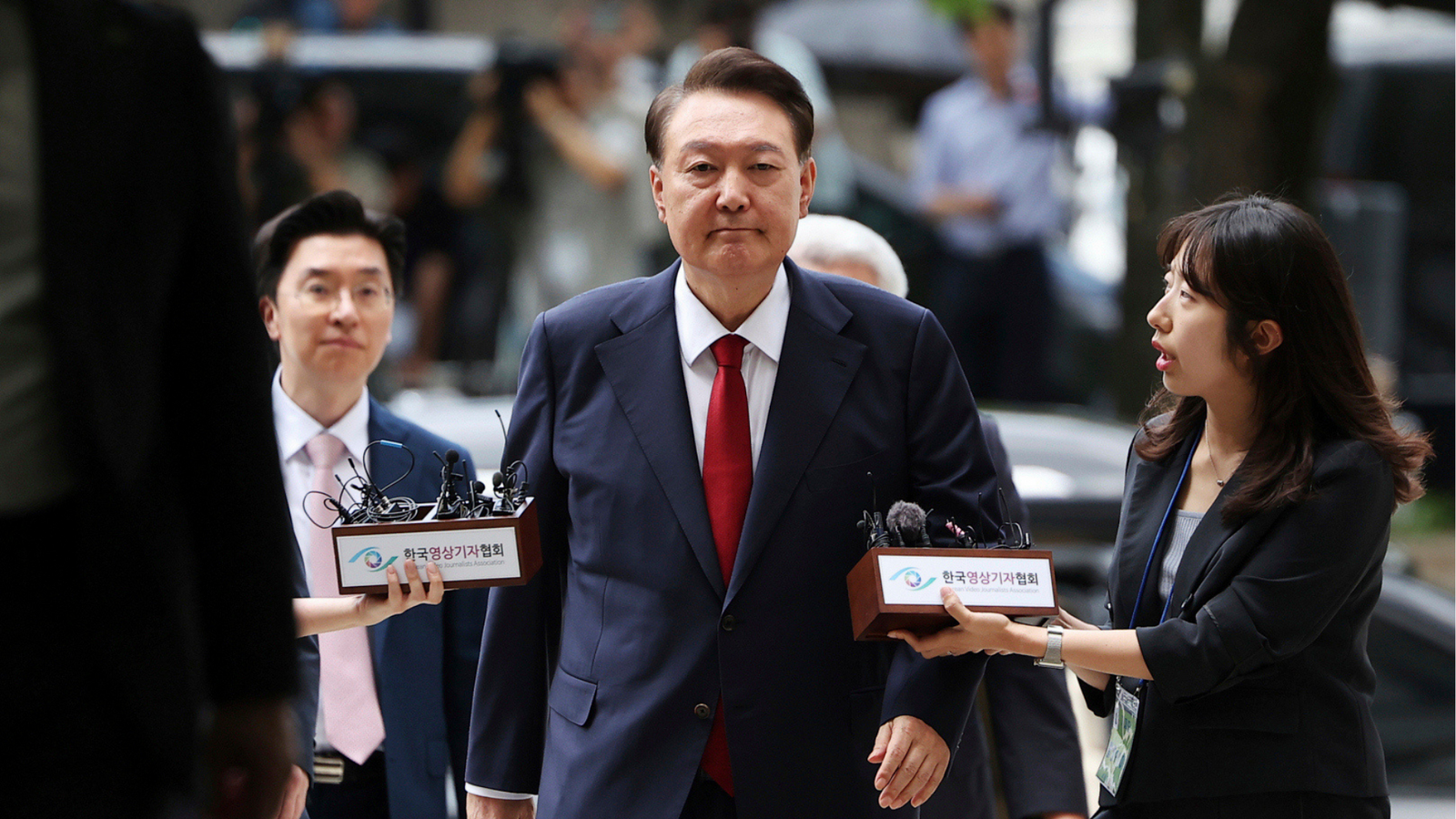
In a historic ruling that sent shockwaves through South Korea and the global community, the Yoon Suk Yeol sentencing concluded with a life imprisonment verdict handed down by the Seoul Central District Court. The former president was found guilty of leading an insurrection tied to his controversial declaration of martial law on December 3, 2024, marking one of the most consequential political trials in modern South Korean history. The ruling represents a watershed moment in the country’s democratic trajectory, raising profound questions about constitutional governance, the limits of executive power, and the resilience of democratic institutions.
The Court’s Central Finding: Military Mobilization as Insurrection
Presiding Judge Ji Gui-yeon delivered the court’s verdict, articulating a clear legal framework that defined the core of Yoon’s offense. The court determined that the former president had mobilized both military and police forces with the intention of seizing control of the National Assembly and detaining key political figures. This deliberate deployment of armed forces against the legislature formed the foundation of the insurrection charge.
In her ruling, Judge Ji emphasized a crucial legal principle: the deployment of martial law troops to the National Assembly during a state of emergency constitutes “rioting,” which is a fundamental legal element necessary to establish the crime of insurrection. Furthermore, the court clarified that declaring martial law can constitute insurrection when the intent is to obstruct or paralyze constitutional institutions, regardless of the official justification provided.
Political Tensions Did Not Justify Martial Law
The defense had reportedly argued that Yoon’s actions were a response to extraordinary political circumstances, particularly the ongoing tensions between his administration and an opposition-controlled legislature. However, the court firmly rejected this reasoning, stating that political friction,however severe,cannot serve as legal justification for declaring martial law under South Korea’s constitution. This ruling underscores the judiciary’s commitment to maintaining constitutional order even amid intense political polarization.
Factors Influencing the Severity of the Sentence
The life imprisonment sentence reflects several considerations the judges deemed significant. Most notably, the court observed that Yoon demonstrated no remorse and offered no acknowledgment of wrongdoing throughout the proceedings. This absence of contrition influenced the court’s determination of an appropriate punishment, suggesting that rehabilitation was not considered a viable sentencing goal.
Prosecutors had originally sought the death penalty, arguing that Yoon’s actions represented a grave threat to the constitutional order of South Korea. While the court ultimately imposed a life sentence rather than capital punishment, the severity of the ruling signals the judiciary’s recognition of the fundamental nature of the offense.
Defense Team’s Sharp Criticism
In the aftermath of the verdict, Yoon’s legal team launched a scathing critique of the proceedings. Attorney Yoon Gab-geun characterized the ruling as “a mere formality for a predetermined conclusion,” suggesting that the defense believed a fair trial was impossible. The attorney expressed deep concern about the state of the rule of law in South Korea, questioning whether pursuing an appeal or continuing to participate in criminal proceedings was even worthwhile.
“Watching the rule of law collapse in reality, I question whether I should even pursue an appeal or continue participating in these criminal proceedings,” Yoon’s attorney told reporters outside the courthouse. He added that “the truth will be revealed in the court of history,” signaling the defense’s intention to frame the legal battle as part of a larger historical narrative rather than simply a matter of legal interpretation.
Immediate Aftermath and Legal Next Steps
Following the announcement of the verdict, Yoon was taken into custody without delay and transferred to the Seoul Detention Center. He will remain incarcerated at the facility unless the court grants a request for release pending appeal. This immediate detention underscores the court’s view that the former president poses a flight risk or potential threat to public order.
The Appeals Process Ahead
Should Yoon choose to pursue an appeal, the case will proceed to the Seoul High Court, which has the authority to review both legal interpretations and factual findings established in the lower court. A final appeal could potentially be filed with the Supreme Court of South Korea, extending what is already a complex and politically charged legal saga.
Legal experts have noted that the appeals process could take considerable time, given the complexity of the case and the constitutional questions at stake. Each level of judicial review will require careful examination of both the factual record and the legal principles applied to the insurrection case.
Multiple Legal Battles Still Pending
Thursday’s ruling addressed only the insurrection charge, leaving several other criminal cases connected to the December 2024 martial law declaration unresolved. Additional charges, including alleged abuse of power and obstruction of official duty, remain pending in separate legal proceedings. These ongoing cases ensure that Yoon’s legal troubles are far from over, even with the life sentence now on the books.
In a related development last month, Yoon received a five-year prison sentence in a separate case involving obstruction of his arrest,the first criminal conviction directly tied to the broader crisis. That earlier conviction established a pattern of judicial findings against the former president, building toward the more severe insurrection ruling.
National Sentiment and the Search for Closure
Despite the gravity of the verdict, the emotional landscape among South Korean citizens appears more nuanced than might be expected. Leif-Eric Easley, a professor at Ewha University in Seoul, offered a particularly insightful perspective on the ruling’s significance for the nation.
“Yoon’s sentencing does not represent a national catharsis since most Koreans have already emotionally moved on from the former president,” Easley told ABC News. “Nor does this televised verdict mark closure because many cases and appeals related to Yoon’s martial law debacle have yet to be fully adjudicated.”
This analysis suggests that while the legal system continues its methodical process, public attention may have already shifted to other matters. The protracted nature of the legal proceedings,spanning multiple cases, courts, and potential appeals,means that definitive closure remains elusive.
Implications for South Korean Democracy
The life imprisonment sentence carries profound implications beyond the individual fate of one political leader. For South Korea’s democracy, the ruling affirms that no one,regardless of position or political power,is above constitutional accountability. The verdict serves as a powerful statement that the abuse of emergency powers for political purposes will face serious legal consequences.
Lessons for Constitutional Governance
The case has prompted renewed debate among scholars, legal experts, and ordinary citizens about the appropriate limits of presidential authority, particularly regarding the declaration of martial law. South Korea’s constitution grants significant emergency powers to the executive branch, but the court’s ruling makes clear that these powers cannot be wielded to undermine democratic institutions themselves.
This landmark verdict may also influence how future leaders approach political confrontations with legislative opponents. By imposing such a substantial penalty, the judiciary has established a strong deterrent against any future attempts to use military or police forces against constitutional bodies.
Conclusion: A Defining Moment in Korean Political History
The life sentence imposed on former President Yoon Suk Yeol stands as a defining moment in South Korean political history, one that will be analyzed and debated for decades to come. The court’s methodical examination of the evidence, its clear articulation of legal principles, and its willingness to impose severe punishment on a former head of state collectively demonstrate the strength and independence of South Korea’s judicial system.
As appeals loom and additional cases proceed through the courts, the full chapter of this political crisis remains unfinished. Yet the core verdict is clear: the mobilization of armed forces against the National Assembly constitutes insurrection, and such actions will be met with the full weight of the law. For South Korea, this ruling represents both a cautionary tale about the fragility of democratic institutions and an inspiring affirmation of constitutional resilience. The nation’s democratic journey continues, shaped indelibly by the consequences of one president’s fateful decision on that December night in 2024.