
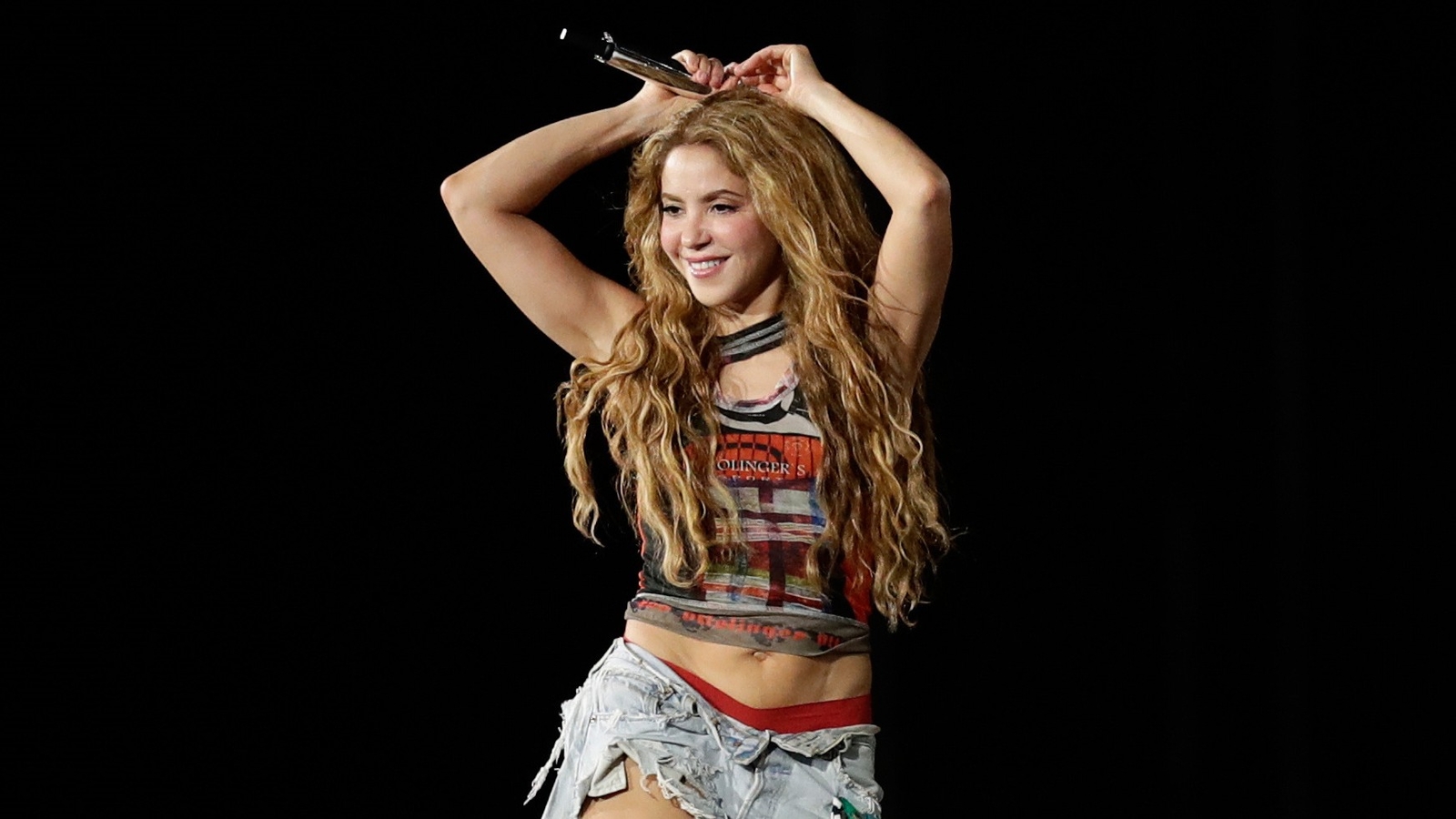
The world of sports entertainment is about to experience a seismic shift. For the first time ever, the FIFA World Cup final will feature a world cup halftime show modeled after the legendary Super Bowl, with global superstars Shakira, Madonna, and K-pop phenomenon BTS headlining the historic performance. Announced by FIFA, this groundbreaking spectacle will take place at the MetLife Stadium in New Jersey on July 19, marking a bold new chapter in how the beautiful game celebrates its biggest moments.
A Super Bowl-Style Concert Comes to Soccer’s Biggest Stage
FIFA confirmed that the upcoming World Cup final will break with tradition by incorporating a massive concert-style performance during halftime, transforming the championship match into a hybrid of athletic competition and entertainment extravaganza. The decision signals a dramatic evolution for soccer, a sport that has historically kept its on-field ceremonies more restrained compared to American football’s famously over-the-top productions.
The halftime concert will be curated by none other than Chris Martin, the charismatic frontman of Coldplay, who has been tapped to shape the musical direction of the entire event. Martin brings a wealth of experience orchestrating large-scale performances, and his involvement suggests the show will blend emotional resonance with global pop appeal.
The Star-Studded Lineup: Shakira, Madonna, and BTS
FIFA’s announcement read like a fantasy festival lineup. The world cup halftime show will feature three of the most internationally recognized acts in modern music:
- Shakira , The Colombian superstar brings decades of global hits and a personal connection to the World Cup, having co-written the tournament’s official song “Dai Dai” alongside Nigerian sensation Burna Boy.
- Madonna , The Queen of Pop returns to a halftime-style stage, having headlined the Super Bowl herself in 2012. Her presence adds nostalgic weight and theatrical flair.
- BTS , The South Korean boy band represents a new era of global music dominance, with an army of fans spanning every continent. Their inclusion reflects FIFA’s effort to engage younger and more diverse audiences.
This combination of artists represents multiple generations, genres, and continents, making the show a true reflection of the World Cup’s worldwide reach.
Shakira’s Special Connection to the Tournament
Shakira’s involvement runs deeper than just performing. The Colombian artist composed the official World Cup anthem “Dai Dai” with Burna Boy, embedding herself in the tournament’s cultural fabric months before stepping onto the halftime stage. In a statement released through FIFA, Shakira expressed her hopes that the performance would spotlight an important cause.
“I hope that on the planet’s biggest stage, the importance of investing in children’s education captures all the spotlight,” she said, according to the official FIFA communication.
More Than Entertainment: The Global Citizen Education Fund
Unlike many large-scale concerts that exist purely for spectacle, this world cup halftime show carries a powerful humanitarian mission. FIFA has aligned the performance with the Global Citizen Education Fund, an ambitious initiative aimed at raising $100 million to support children’s access to education and football programs worldwide.
The choice to pair entertainment with philanthropy reflects a growing trend in mega-events, where organizers recognize the unique platform such moments provide. With billions of viewers expected to tune in globally, even brief moments of awareness can translate into substantial real-world impact.
FIFA President Gianni Infantino captured the sentiment perfectly in an Instagram post, writing: “Every child should have the opportunity to dream, and together we can help make that possible.” He emphasized that the event would bring “music and football together on the biggest stage in sport for a very special cause.”
How the World Cup Halftime Show Differs from the Super Bowl
For decades, the Super Bowl halftime show has set the gold standard for sports entertainment. Iconic performances by Michael Jackson, Paul McCartney, the Rolling Stones, Prince, Bruce Springsteen, Rihanna, and most recently Bad Bunny have cemented the NFL’s championship as the premier global entertainment event. However, soccer has traditionally taken a more conservative approach to halftime entertainment.
The 15-minute halftime interval in football matches presents a unique logistical challenge. Unlike the Super Bowl, which allocates roughly 20 to 30 minutes for elaborate set changes and extended performances, soccer’s compressed window demands efficient production. FIFA has not yet disclosed exactly how long the show will run, but it must fit within the established 15-minute break without disrupting the flow of the match itself.
Pre-Match Concerts in European Football
While soccer has avoided halftime concerts, pre-match entertainment has become increasingly common in major club competitions. The UEFA Champions League final, for instance, traditionally features a musical act before kickoff. In a notable recent example, The Killers are set to headline the 2025 Champions League final between Paris Saint-Germain and Arsenal in Budapest. These pre-game concerts have helped bridge the gap between sporting spectacle and entertainment, but they remain distinct from the immersive halftime experience that the World Cup is now adopting.
FIFA itself described the upcoming performance as “a unique moment at the intersection of sport, culture, and purpose, broadcast live around the world.” That phrase encapsulates FIFA’s ambition to elevate the World Cup final into something more than a championship match , it aims to make it a global cultural moment.
The 2026 World Cup: A North American Spectacle
The decision to host such an ambitious halftime performance fits naturally within the broader context of the 2026 FIFA World Cup, which will be jointly organized by the United States, Canada, and Mexico. Scheduled for June and July, this edition of the tournament will be the largest in history, featuring an expanded format with 48 teams competing across multiple host cities.
By choosing the MetLife Stadium in New Jersey as the venue for the final, FIFA has placed the championship match in one of the most media-saturated markets in the world. The stadium’s proximity to New York City ensures maximum visibility, with the surrounding metropolitan area providing infrastructure, hospitality, and promotional opportunities that few other global venues can match.
The North American hosting arrangement also explains why FIFA felt comfortable borrowing the Super Bowl template. American audiences are already deeply familiar with the spectacle of halftime entertainment, and replicating that formula on soccer’s biggest stage should resonate strongly with both casual viewers and dedicated fans.
What This Means for the Future of Soccer Entertainment
The introduction of a world cup halftime show represents more than just one performance , it signals a potential transformation in how soccer presents itself to global audiences. For years, purists have argued that football’s simplicity is part of its charm, that the sport speaks for itself without the need for elaborate entertainment scaffolding. Others have countered that as the game continues to grow commercially, embracing entertainment elements helps attract new fans and retain casual viewers who might otherwise drift toward competing sports.
FIFA appears to be threading this needle carefully. The decision to support the Global Citizen Education Fund adds a layer of purpose that transcends pure spectacle. By tying the show to a charitable cause, FIFA positions the entertainment as something meaningful rather than gratuitous.
Whether this experiment succeeds will likely shape future World Cups and other major soccer tournaments. If ratings soar and charitable donations pour in, expect similar productions at upcoming finals. If the compressed halftime window proves too restrictive or the performance feels rushed, organizers may reconsider the format.
Final Thoughts: A Historic Moment Awaits
The upcoming world cup halftime show represents a watershed moment in the intersection of sports, music, and global culture. With Shakira, Madonna, and BTS sharing the stage under Chris Martin’s creative guidance, the performance promises to be as musically diverse as it is visually spectacular. Add in the charitable mission of the Global Citizen Education Fund, and the event carries a significance that extends well beyond entertainment.
As July 19 approaches, anticipation will only continue to build. The MetLife Stadium will host not just a football match, but a celebration of human achievement, artistic expression, and collective hope for a better world. For soccer fans and music lovers alike, this halftime show is poised to become one of the most memorable moments in modern sports history , a true fusion of the world’s game and its universal soundtrack.