
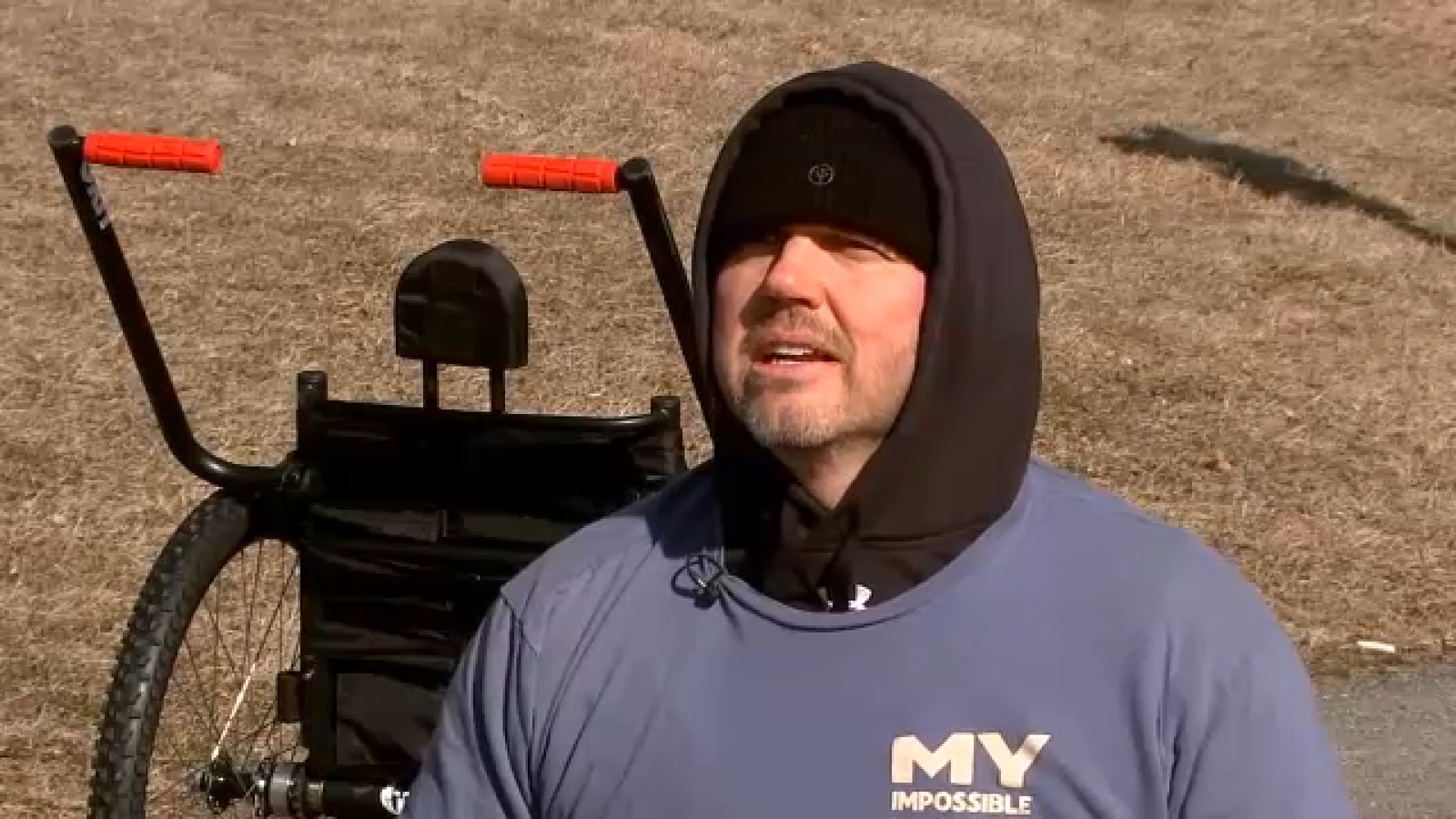
For most adventurers, the idea of climbing Mount Kilimanjaro in a wheelchair sounds impossible. Standing at a staggering 19,341 feet, this iconic Tanzanian peak has challenged even the most able-bodied mountaineers. Yet for Jeff Harmon, a New Jersey resident who has relied on a wheelchair since 2017 due to a neurological disease, the summit represents something far greater than altitude. It is a declaration that determination, community, and faith can move mountains,literally.
Harmon is not attempting this extraordinary feat alone. Backed by his dedicated team from Fitness, Fellowship and Faith (F-3) and supported by the disability advocacy organization “More Heart Than Scars,” his story has captured the attention of people across the country. This is a tale of grit, rigorous training, and the unshakable belief that no dream is too high to reach.
From Wheelchair to Summit Bid: The Origin of an Impossible Dream
Jeff Harmon’s journey into adaptive mountaineering began with a simple question: “Could I climb a mountain?” After being confined to a wheelchair following his diagnosis, he found himself searching for a new purpose,a challenge big enough to transform his perspective on life. He found it in the highest freestanding mountain in the world.
When he brought the idea to his friends at “More Heart Than Scars,” an organization dedicated to helping those with disabilities pursue extraordinary goals, the response was resounding. They told him point-blank: “Jeff, if you want to climb Kilimanjaro, you could do it.” That affirmation lit a fire that would burn for fourteen months of preparation and counting.
This is more than just a personal achievement. Harmon’s expedition is part of a broader movement of inspirational climbers with disabilities who are rewriting what the world believes is possible. His group carries a name that echoes its mission: “My Impossible Makes Every Dream Possible.”
The Grueling Training Behind the Dream
Climbing the highest peak in Africa is no walk in the park for anyone. For a wheelchair user, the physical conditioning required is intense, specialized, and absolutely essential. Harmon and his F-3 teammates have spent over a year preparing their bodies for the demands of high-altitude trekking.
What the Training Regimen Looks Like
According to his trainer Jamie Voit, Harmon’s workouts are nothing short of remarkable. The training program designed for this adaptive fitness training journey includes:
- Rope climbing to build upper body strength and grip endurance
- Pull-ups for back, shoulder, and arm power
- Customized burpees adapted to his abilities and mobility
- Cardiovascular conditioning to prepare for the thin air at elevation
- Strength training focused on the muscles most needed for the climb
“It is pretty impressive to watch,” Voit explained. And it is not just Harmon who is pushing limits,the entire F-3 crew has committed to the same rigorous standards, ensuring they can support their teammate every step of the way.
Mental Preparation Matters Just as Much
The physical demands of summiting Kilimanjaro are well documented, but the mental game is equally crucial. Mount Kilimanjaro summit attempts require climbers to push through altitude sickness, exhaustion, and moments of doubt. For Harmon, drawing on his faith and his community has been essential to maintaining focus during fourteen months of training.
Luke Iorio, one of Harmon’s dedicated climbing partners, expressed the excitement building within the group: “I am extremely looking forward to it. Fourteen months into the training right now, and so we’ve had the date circled for a while and the excitement just keeps building.”
The Climb Itself: What to Expect on the Mountain
The expedition officially kicks off on September 7, marking the beginning of a four-day ascent to the Uhuru Peak summit. The route will take Harmon and his F-3 crew through five distinct climate zones, from rainforest to arctic conditions at the top.
Breaking Down the Four-Day Journey
This is not a casual hike. Each day on the mountain presents new challenges:
- Day 1-2: Trekking through lower elevations to acclimatize, covering several miles per day on established trails
- Day 3: Higher altitude trekking as the team pushes through thinner air
- Day 4: The final summit push, typically beginning in the pre-dawn hours to reach the peak by morning
For someone climbing Mount Kilimanjaro in a wheelchair, additional considerations come into play. Specialized equipment, route planning with the assistance of experienced guides, and a support team trained in wheelchair accessibility adventures are all crucial components of making this ascent possible.
The Power of Community and Purpose
Behind every great adventure is a network of people who refuse to let limitations define what’s possible. Harmon’s expedition is fueled by two powerful communities working in tandem.
The Role of F-3
Fitness, Fellowship and Faith,better known as F-3,is more than a workout group. It is a brotherhood of men committed to supporting one another physically, emotionally, and spiritually. The members don’t just train alongside Harmon; they climb alongside him. This shared commitment transforms what could be a solo pursuit into a collective triumph.
The Mission of “More Heart Than Scars”
The disability advocacy climbing organization “More Heart Than Scars” exists to help individuals facing physical challenges reach heights they never imagined. Their mission is simple but profound: no one should be defined by their limitations. Harmon’s journey with their support is already inspiring others to dream bigger and aim higher.
A Message of Hope for Others Facing “Impossibles”
Perhaps the most powerful part of Harmon’s story is not the climb itself, but the message he hopes to leave behind for others navigating similar challenges. His words cut straight to the heart of what this journey represents:
“What I would say to people who are in my shoes, who have an impossible in their life, is you are capable of so much more than you might believe right now.”
This sentiment resonates far beyond the world of mountaineering. Whether someone is facing a neurological disease wheelchair diagnosis, battling another life-altering condition, or simply struggling with self-doubt, Harmon’s message is universal. The “impossible” is often just a boundary waiting to be challenged.
Why Stories Like This Matter
When we witness someone climbing Mount Kilimanjaro in a wheelchair, we are reminded of a fundamental truth: human potential is far greater than our assumptions about it. These stories of inspirational climbs with disabilities do more than entertain or even motivate,they shift cultural narratives about who belongs on the mountain, who deserves to chase big dreams, and who gets to write their own definition of success.
Harmon’s expedition is also carving new paths for adaptive athletes worldwide. Every successful summit attempt by a wheelchair user paves the way for better equipment, more inclusive training programs, and greater awareness of what is achievable.
Conclusion: The Summit Is Just the Beginning
As Jeff Harmon and his F-3 crew prepare to take on Mount Kilimanjaro, they are doing more than attempting a difficult climb. They are proving that faith, fellowship, and fierce determination can overcome almost any obstacle. Whether or not every step goes perfectly, the journey itself has already become a beacon for anyone who has been told their dreams are too big.
The mountain is steep, the air is thin, and the challenge is enormous. But with fourteen months of training, the backing of an unwavering community, and a heart full of purpose, Harmon and his team are ready. Their “impossible” is about to become someone else’s inspiration,and perhaps, just perhaps, a new definition of what it means to reach the summit.