
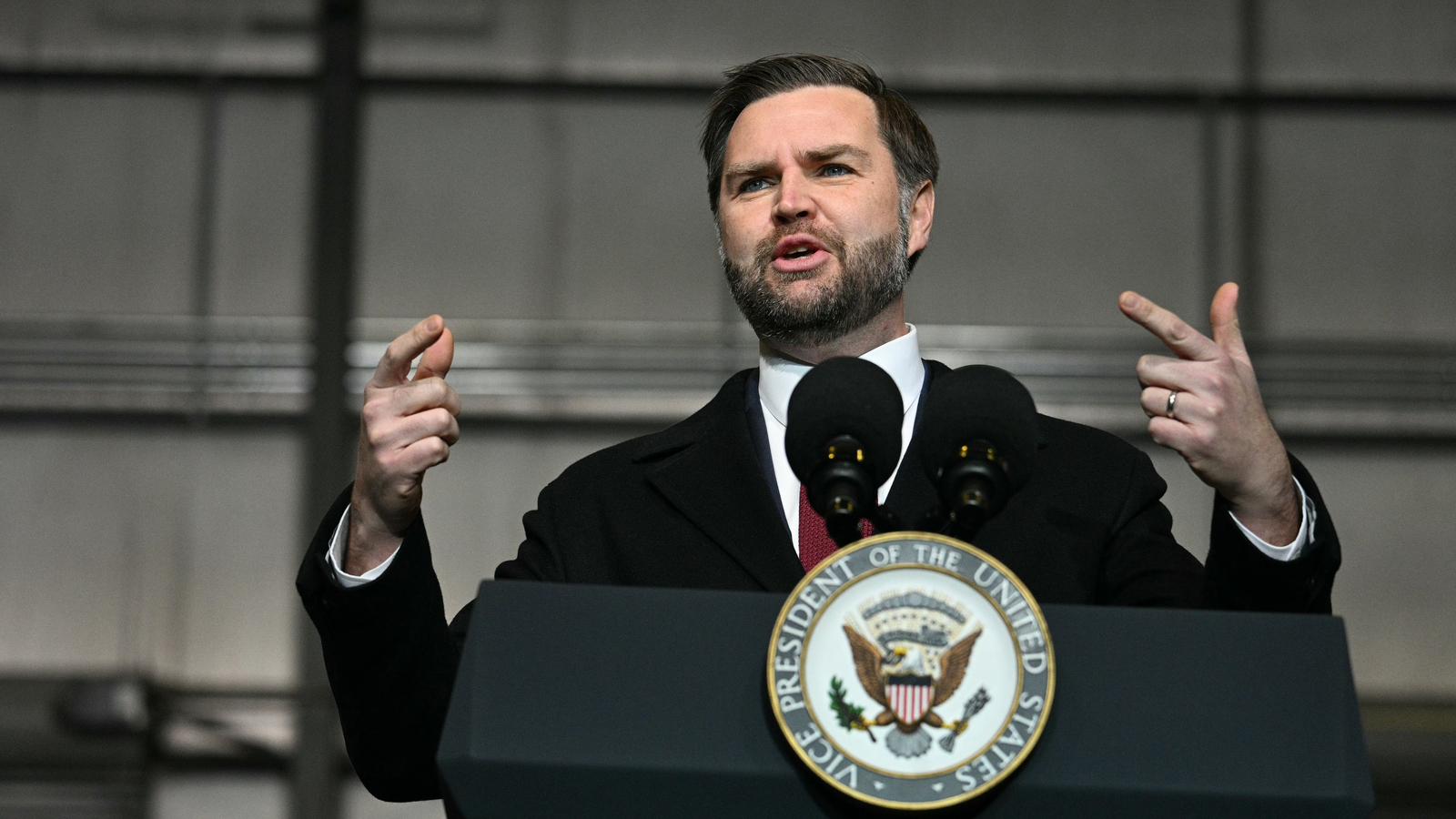
The ongoing Minneapolis immigration crackdown has become one of the most polarizing flashpoints in American politics, drawing Vice President JD Vance to the city to defend the White House’s deportation campaign while placing blame squarely on the political left. As tensions escalate between federal agents, local officials, and residents, this Minnesota metropolis has transformed into a national battleground over immigration policy, civil liberties, and the very nature of federal authority in American cities.
Vance’s visit comes amid weeks of unrest that began when an ICE agent fatally shot Renee Good, a mother of three, during a confrontation earlier this month. The shooting ignited protests across Minneapolis and thrust the city into the center of a broader debate about the Trump administration’s aggressive enforcement tactics. Speaking to reporters in Toledo, Ohio, before flying to Minnesota, Vance delivered a pointed message to critics of the crackdown.
Vance’s Message to Critics
The Vice President didn’t mince words when addressing the chaos unfolding in Minneapolis. According to Vance, the solution to the unrest is straightforward: stop resisting federal immigration operations and acknowledge the necessity of border security. His remarks reflect the administration’s increasingly combative stance toward cities and states that push back against deportation efforts.
“If you want to turn down the chaos in Minneapolis, stop fighting immigration enforcement and accept that we have to have a border in this country,” Vance stated during his Toledo stop. “It’s not that hard.”
This framing positions the administration’s opponents as the primary source of disruption rather than the enforcement actions themselves. Vance has been one of the most vocal defenders of the ICE agent involved in the Good shooting, going so far as to characterize her death as “a tragedy of her own making,” a statement that has drawn sharp condemnation from progressives and civil rights advocates alike.
The Church Protest and Its Aftermath
Adding fuel to the fire, protesters disrupted a Sunday church service in Minnesota, chanting “ICE out” and “Justice for Renee Good.” The interruption drew Vance’s particular ire, as he praised the subsequent arrests and promised additional prosecutions would follow.
“They’re scaring little kids who are there to worship God on a Sunday morning,” Vance said. “Those people are going to be sent to prison so long as we have the power to do so.” He added: “Just as you have the right to protest, they have a right to worship God as they choose. And when you interrupt that, that is a violation of the law.”
The church incident has become a rallying point for both sides. For administration supporters, it represents the lengths to which activists will go to obstruct enforcement. For opponents, it underscores what they describe as the heavy-handed nature of federal operations in their communities.
Friday’s Planned Day of Action
Minnesota faith leaders, backed by labor unions and hundreds of Minneapolis-area businesses, are organizing a coordinated day of protests on Friday to push back against the administration’s enforcement campaign. The scale of the response demonstrates how deeply the Minneapolis immigration crackdown has affected the local community.
Nearly 600 local businesses have announced plans to shut down in solidarity, while organizers expect hundreds of “solidarity events” to take place across the country. MoveOn spokesperson Britt Jacovich described the breadth of frustration among residents and business owners who feel targeted by federal operations.
Organizers issued a powerful statement capturing the sentiment driving the demonstrations: “Masked federal agents are teargassing babies and pastors, seizing our neighbors and shipping them off to foreign torture prisons, and killing innocent people.”
The Warrant Controversy
Perhaps the most alarming development in the crackdown involves assertions of authority by federal agents regarding private property. Gregory Bovino, the official leading the White House’s border patrol operations, claimed at a news conference that federal agents had the authority to enter private homes in Minnesota without a judicial warrant.
“We don’t break in anybody’s homes. We make entry in either a hot pursuit with a criminal arrest warrant or an administrative arrest warrant,” Bovino explained, attempting to clarify the scope of federal power.
However, an Associated Press report from Wednesday revealed that federal immigration officers were asserting sweeping authority to forcibly enter residences without warrants, citing an internal ICE memo. This represents what legal experts describe as a reversal of long-standing guidance designed to respect constitutional limits on government searches. The development has raised serious Fourth Amendment concerns and prompted criticism from constitutional scholars and civil liberties organizations.
Implications for Constitutional Rights
The warrant controversy strikes at the heart of American constitutional protections. For decades, immigration enforcement has operated within specific legal boundaries designed to balance effective border security with respect for individual rights. If federal agents are now operating outside those traditional constraints, the implications extend far beyond immigration policy itself.
Civil rights advocates warn that such practices could set dangerous precedents for federal law enforcement across multiple agencies. The debate over warrantless entry has become a central legal question surrounding the Minneapolis operations, with potential challenges already being prepared by advocacy groups.
Local Officials Push Back
Bovino didn’t limit his criticism to protesters. He condemned Minneapolis Mayor Jacob Frey and Governor Tim Walz, both Democrats, accusing them of using “violent rhetoric” while describing city police as “missing in action” and protesters as “anarchists.” This characterization of local law enforcement has created additional friction between federal and municipal authorities.
The tension between federal and local officials represents a significant escalation in the broader sanctuary city debate. Minneapolis has long been considered a welcoming city for immigrants, and its leaders have consistently pushed back against aggressive enforcement tactics. The current standoff suggests that the relationship between federal immigration authorities and local governments may reach a breaking point.
Economic Messaging Takes a Backseat
Vance’s Toledo appearance was originally intended to highlight the Republican administration’s positive economic message, coming on the heels of President Trump’s appearance at the World Economic Forum in Davos. However, the immigration situation in Minneapolis dominated his remarks.
The vice president also used the opportunity to boost key Republican candidates in Ohio’s upcoming midterm elections, including gubernatorial contender Vivek Ramaswamy and U.S. Senator Jon Husted. These candidates represent important pieces of the GOP’s strategy to maintain and expand its political influence in crucial swing states.
The Economic Challenge
Convincing voters that the nation is in strong financial shape has proven to be a persistent challenge for the Trump administration during the first year of his second term. Despite official claims of economic progress, polling consistently shows that the public remains unconvinced about the state of the economy. Majorities also disapprove of the president’s approach to foreign policy.
Vance urged voters to maintain patience, arguing that the administration inherited a troubled economy from former President Joe Biden. “You don’t turn the Titanic around overnight,” Vance remarked. “It takes time to fix what is broken.”
Broader National Implications
The Minneapolis situation reflects deeper divisions about the direction of American immigration policy. The Trump administration’s ICE enforcement Minneapolis operations represent a fundamental shift from previous approaches, prioritizing aggressive removal over the more measured tactics employed during earlier administrations.
For supporters, the crackdown represents necessary action to secure the border and enforce existing laws. They point to what they describe as years of inadequate enforcement that allowed unauthorized immigration to spiral out of control. In their view, resistance from local officials and activists only compounds the problem.
For critics, the situation exemplifies federal overreach that threatens civil liberties and community stability. They argue that aggressive enforcement tears apart families, instills fear in immigrant communities regardless of legal status, and transforms neighborhoods into zones of military-style occupation. The fatal shooting of Renee Good has become a symbol of what they describe as the human cost of these policies.
Looking Ahead
As Friday’s coordinated protests approach, Minneapolis stands at a crossroads. The convergence of business closures, faith leader involvement, and grassroots organizing suggests that opposition to the crackdown is broad-based and deeply rooted in the community. Whether this groundswell of resistance will alter federal policy remains uncertain, but it has already succeeded in drawing national attention to the human dimensions of immigration enforcement.
The Minneapolis immigration crackdown has become a defining issue for the Trump administration’s second term, testing the boundaries of executive authority, local autonomy, and constitutional protections. Vice President Vance’s visit signals that the White House intends to maintain its current course despite mounting criticism, while opponents are mobilizing for an extended fight. As both sides dig in, the residents of Minneapolis continue to bear the immediate consequences of a national policy debate playing out in their streets, their churches, and their homes.
Ultimately, this moment may be remembered not just for its policy implications but for the way it revealed the deep fractures in American society over questions of belonging, enforcement, and the proper limits of government power. The outcome will likely shape immigration politics and federal-local relations for years to come.