
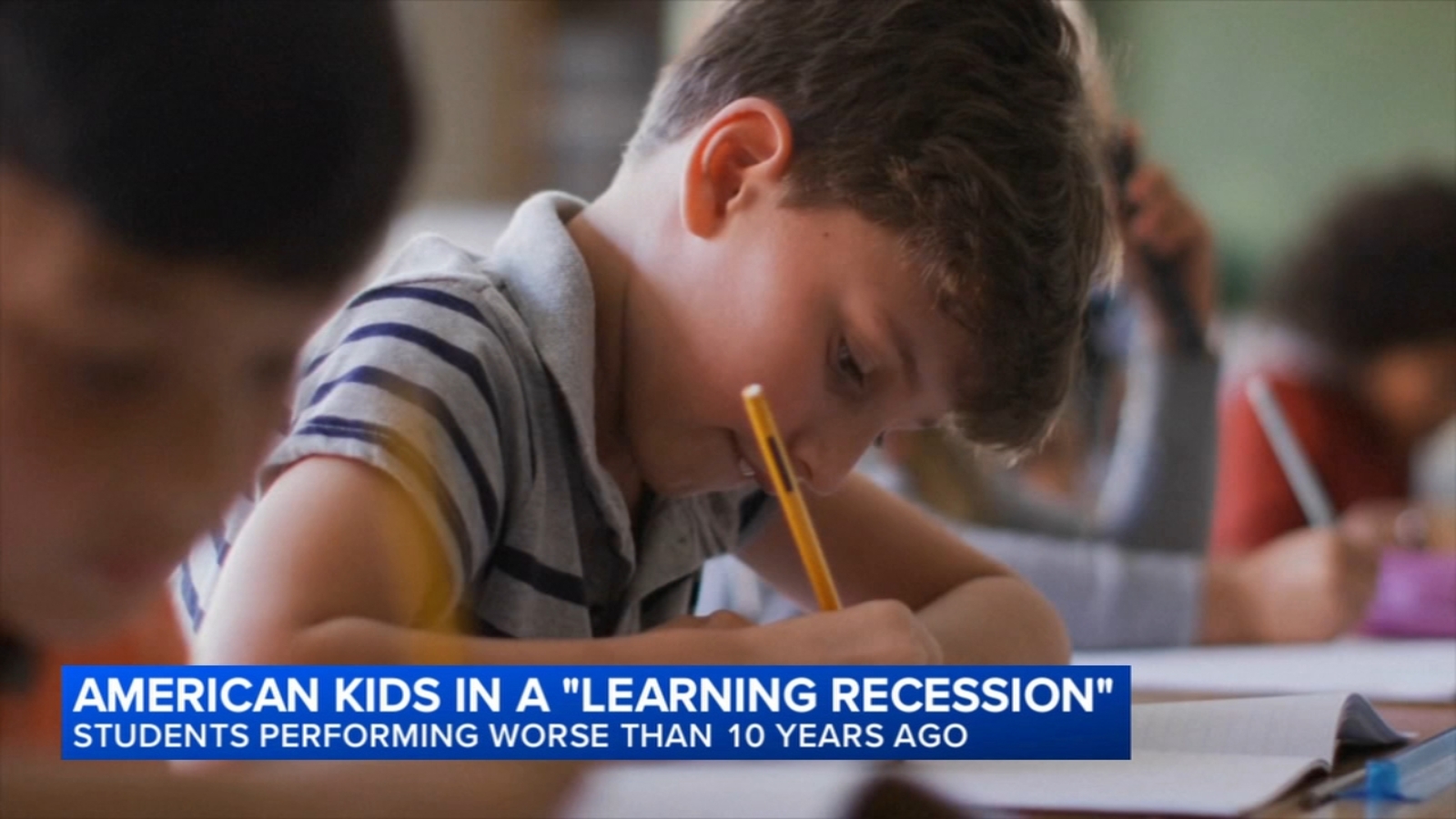
American classrooms are quietly experiencing what education researchers are now calling a learning recession , a sustained, multi-year slide in student achievement that predates the COVID-19 pandemic and shows few signs of reversing on its own. According to a sweeping new analysis of more than 100 school districts across the country, today’s students are performing measurably worse than their peers did just a decade ago, and the roots of the problem stretch back far further than most parents or policymakers realize.
The findings, released this week in a joint report from researchers at Harvard University, Stanford University, and Dartmouth College, challenge a common assumption: that pandemic-era school closures are the primary culprit behind falling student test scores. The data tells a more complicated , and more troubling , story.
What the Education Scorecard Actually Shows
The newly released Education Scorecard tracks reading and math performance for students in grades 3 through 8, drawing on standardized assessment data collected between 2009 and 2025. Researchers examined trends across more than 100 districts nationwide, creating one of the most comprehensive longitudinal snapshots of American academic performance assembled in recent years.
The headline finding is stark: the average rate of academic improvement turned negative in mathematics between 2013 and 2015 and flatlined in reading during the same window. In other words, students stopped getting meaningfully better at reading and math roughly a decade before most people had ever heard of COVID-19.
Perhaps most striking is what happened to reading scores. The report found that pre-pandemic reading performance from 2017 to 2019 had already deteriorated to levels comparable with the worst pandemic-era results between 2019 and 2022. By 2025, eighth-grade reading scores had fallen to their lowest point since 1990 , a full generation’s worth of academic ground lost in less than a decade.
The Pre-Pandemic Roots of the Learning Recession
Tom Kane, a Harvard education researcher and one of the report’s lead authors, has coined the phrase “learning recession” to describe this pattern, and he argues that its origins lie in two simultaneous shifts that began more than ten years ago.
First, federal accountability measures tied to standardized testing were scaled back. The No Child Left Behind Act (NCLB), which had required schools to publicly report student academic progress since 2002, was allowed to expire in 2015 and replaced by the Every Student Succeeds Act (ESSA). The new law gave states and districts far more discretion over how they measured and reported performance.
Critics of NCLB had long argued that the law incentivized schools to game the system , adjusting standards or curating which students took which tests to make progress look stronger than it really was. But according to Kane and his colleagues, removing those federally mandated measurements effectively turned off the “early warning system” that had previously alerted educators and families when students were falling behind.
“The ‘learning recession’ started a decade ago, after policymakers switched off the early warning system of test-based accountability and social media took over children’s lives,” Kane said in a statement accompanying the report.
Key Factors Behind Declining Academic Performance
The Rise of Social Media and Screen Time
The second major shift identified by the researchers is the explosion of social media and smartphone use among school-age children. Beginning around 2012 and accelerating rapidly through the mid-2010s, platforms like Instagram, Snapchat, and later TikTok became a constant presence in young people’s lives. The report’s authors argue this transformation has had a measurable impact on attention, reading habits, and academic engagement.
While the Education Scorecard doesn’t claim social media is the sole cause of the academic performance decline, it treats the correlation as significant enough to warrant serious attention from parents, schools, and regulators.
Chronic Absenteeism and Student Engagement
Beyond the headline factors, the report highlights a quieter but persistent contributor: rising student absences. Chronic absenteeism , defined as missing 10% or more of school days , has climbed steadily over the past decade, and the post-pandemic period has only intensified the trend. Students who are not physically present in classrooms cannot benefit from instruction, regardless of how well teachers are delivering it.
Compounding the problem, the report notes a notable lack of widespread literacy reform in many districts. Without coordinated efforts to update how reading is taught, schools have struggled to adapt to the changing realities of how children spend their time and attention.
A Reason for Hope: The Science of Reading
Not every signal in the data is discouraging. The Education Scorecard points to one notable bright spot: districts that have embraced the science of reading , a phonics-based, evidence-backed approach to literacy instruction , have reported measurable gains in student performance. These schools, scattered across various regions, demonstrate that targeted instructional reform can move the needle even when broader trends are heading in the wrong direction.
The science of reading emphasizes explicit, systematic instruction in phonemic awareness, phonics, fluency, vocabulary, and comprehension. Districts that have fully adopted this approach have begun to reverse reading declines within just a few years, suggesting that the learning recession is not inevitable.
This finding has important implications for policymakers weighing where to invest limited educational dollars. Rather than chasing broad technological solutions or expensive new programs, the evidence suggests that getting the fundamentals of reading instruction right may deliver the biggest returns.
Perspective: Crisis or Wake-Up Call?
Not every expert is convinced the data represents a full-blown emergency. Elaine Allensworth, executive director of the UChicago Consortium on School Research, offered a more measured interpretation when asked about the findings.
“The decline in scores doesn’t mean that students aren’t ready. It’s not something to panic about. It’s something to be aware of,” Allensworth said. She emphasized that test scores alone don’t capture everything important about a student’s preparation for life after graduation.
However, Allensworth agreed with the report’s authors on the urgent need for action. “We need to really start asking questions about what we can do to support students so they feel engaged in school and we’re addressing those factors that are leading students to be less engaged and leading to these smaller learning gains,” she added.
This balanced perspective matters because how parents, educators, and leaders frame the problem will shape the solutions they pursue. Framing the issue as a permanent crisis risks producing panic-driven policy responses, while treating it as a minor fluctuation would invite the kind of complacency that helped create the problem in the first place.
What Comes Next for American Schools?
The Education Scorecard arrives at a pivotal moment for American education. Federal education officials have been asked to weigh in on the findings, and districts across the country are already grappling with how to respond to post-pandemic learning loss on top of the longer-term decline the report documents.
Several clear action items emerge from the data:
- Restore meaningful measurement: Districts should consider reinstating transparent, comparable assessment systems so families and educators can identify problems early.
- Invest in evidence-based literacy instruction: The science of reading has demonstrated results. Scaling this approach nationally could meaningfully reverse the slide in reading scores.
- Address chronic absenteeism: Schools need strategies to re-engage students who have drifted away from regular attendance.
- Tackle screen time honestly: Districts, parents, and policymakers need open conversations about the impact of smartphones and social media on learning.
Conclusion
The learning recession is real, measurable, and long-standing. It began before the pandemic, continued through it, and shows no signs of reversing without deliberate intervention. Yet the same data that documents the problem also points toward solutions. Schools that have embraced the science of reading are already seeing gains. Districts that take chronic absenteeism seriously are seeing attendance recover. And researchers, by mapping the trend with new precision, have given educators and families a clearer picture of what needs to change.
The decade-long decline in student test scores is not a verdict on an entire generation of children. It is, instead, a challenge , one that demands honesty about what has gone wrong, courage to invest in what works, and patience to follow through. The learning recession did not begin overnight, and reversing it will not happen overnight either. But the path forward is becoming clearer, and the urgency has never been more apparent.