
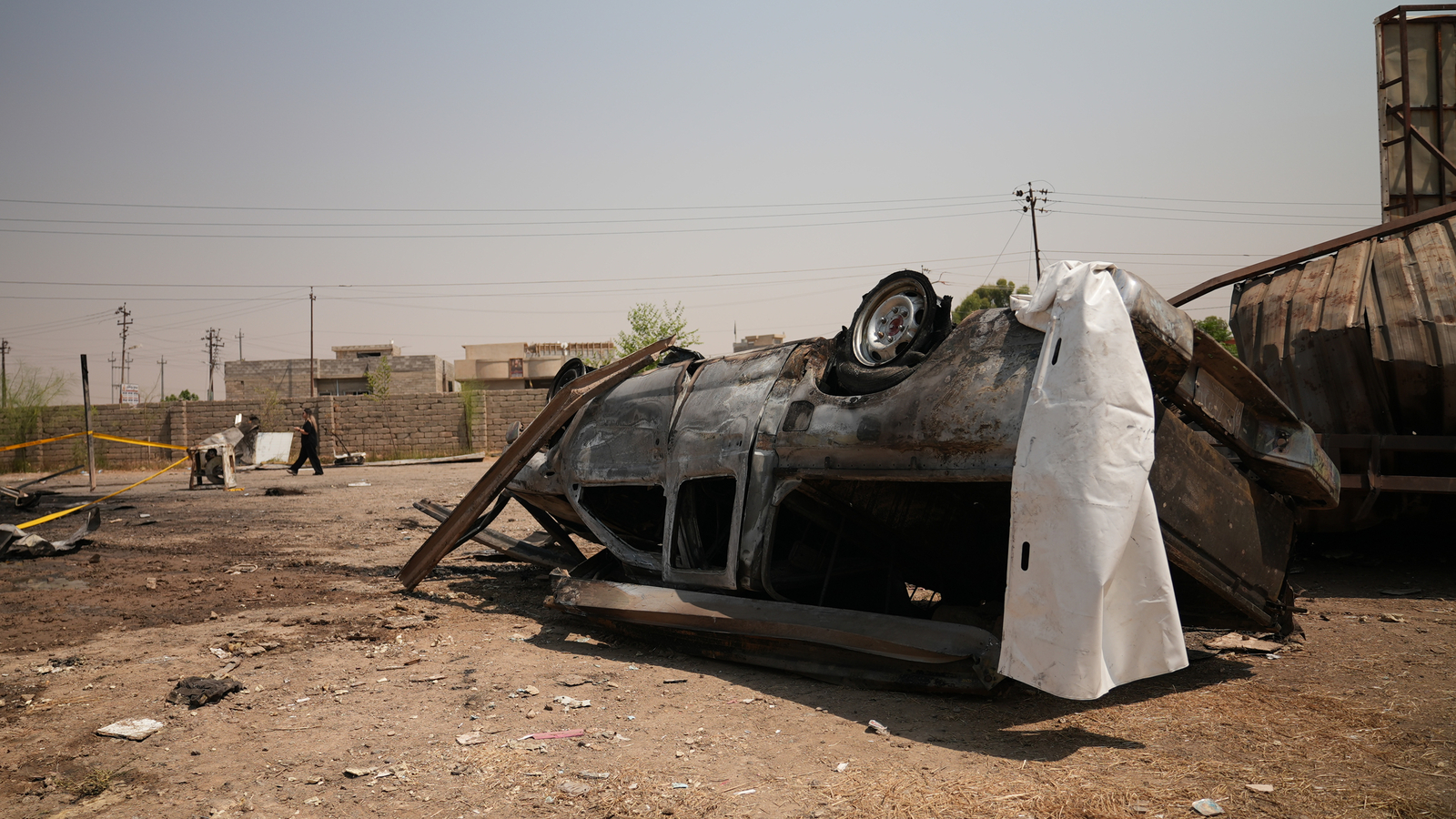
The ongoing us iran conflict has entered a dangerous new phase as both nations resumed heavy missile exchanges on Thursday, shattering hopes for a swift diplomatic resolution to what has become one of the most consequential military confrontations of the decade. After only a few days of relative calm, the pattern of tit-for-tat bombardments has reasserted itself, raising alarms across the region and beyond.
What began as a contained exchange of strikes has rapidly metastasized into a sprawling crisis involving multiple Middle Eastern nations, threatening to redraw the geopolitical map and destabilize global energy markets. The intensification marks a sobering moment for mediators who had glimpsed an opportunity for de-escalation just days earlier.
Regional Escalation Spreads Across Borders
The latest round of hostilities has pulled several U.S. allies directly into the crossfire. Jordan’s air defenses intercepted five Iranian missiles for the second day in a row, though no casualties were reported. The kingdom, which hosts American military forces, finds itself increasingly vulnerable as Iranian long-range capabilities extend deeper into its airspace.
Further south, Kuwait confirmed that an Iranian strike hit a Chinese-owned building in the northern part of the country, killing one worker and severely damaging the structure. The incident underscored the indiscriminate nature of the latest barrages, which appear to be targeting infrastructure with little regard for the nationality of the occupants.
Saudi Arabia has reported being struck by Iranian-backed militias operating out of Iraq, with drones targeting critical oil facilities. The kingdom’s decision to formally join the United States in striking these militia positions marks a significant hardening of its stance. Saudi Defense Minister Khalid bin Salman traveled to Washington to meet with President Trump and Vice President JD Vance, signaling the gravity with which Riyadh views the situation.
The Egyptian Complication
Perhaps the most concerning development of the week occurred at the Egyptian port of Damietta, where drone strikes ignited fires on two natural gas vessels. One belonged to a U.S.-owned floating storage facility, while the other was a Greek-owned tanker. Egypt has thus far been one of the few Middle Eastern nations spared direct military action, and any confirmed Iranian involvement would represent a dramatic expansion of the war’s geographic footprint.
Iran-backed Houthi rebels in Yemen denied responsibility for the Damietta incident, though they have claimed separate attacks on Saudi energy infrastructure and declared a blockade of Saudi shipping in the Red Sea. The complexity of proxy networks across the region makes attribution difficult and accountability elusive.
American Military Response and Strategic Calculations
The U.S. military announced it had completed “a heavy wave of strikes against Iran” targeting dozens of facilities belonging to Iran’s Revolutionary Guard. The operation struck command centers, missile and drone production sites, coastal surveillance installations, and defense positions. It came in direct response to an Iranian missile attack on an American base in Jordan earlier in the week.
Iran’s state-run IRNA news agency reported that three people were killed and two wounded on the strategic island of Qeshm, which sits just off the Iranian mainland in the Strait of Hormuz. The location of the strike is particularly significant given the waterway’s outsized importance to global energy supplies.
Behind the headlines, U.S. defense planners are wrestling with a sobering reality: the stockpile of precision-guided munitions and interceptors needed to protect American bases and allies is being depleted at an unsustainable rate. What was once viewed as a short, sharp campaign has stretched into its fifth month, with no clear endgame in sight.
Domestic Political Headwinds
The military stalemate is beginning to take a political toll at home. A new AP-NORC poll reveals that President Trump’s approval rating on his handling of the us iran conflict has dipped slightly since last month. The American public, weary of foreign entanglements and anxious about fuel prices, is showing diminishing patience for a war that the president himself initially predicted would last only four to five weeks.
That timeline, of course, has long since evaporated. Each new exchange of strikes pushes the conflict further from its original scope and complicates any path toward negotiated settlement.
The Strait of Hormuz Becomes the Economic Battleground
Few geographic features on earth carry as much strategic weight as the Strait of Hormuz. Under normal circumstances, approximately 20% of the world’s oil and natural gas shipments pass through this narrow chokepoint between Iran and the Arabian Peninsula. Since the conflict began, that traffic has plummeted.
According to data from Lloyd’s List Intelligence, ship transits through the strait collapsed from 82 during the week of July 13-19 to just 39 the following week. The wartime lows reflect both the physical danger to commercial vessels and the insurance premiums that have skyrocketed in response.
The economic ripple effects extend far beyond the Middle East. Energy prices have spiked globally, supply chains have been disrupted, and inflation concerns have intensified in import-dependent economies from Europe to Asia. Diplomatic efforts have largely focused on reopening the strait, recognizing that no comprehensive resolution is possible while this critical artery remains choked.
The Bab el-Mandeb Complication
Saudi Arabia has attempted to circumvent the Strait of Hormuz by routing more of its oil exports through the Bab el-Mandeb Strait, which connects the Red Sea to the Gulf of Aden. That workaround has now come under threat as Houthi forces declared a blockade of Saudi shipping and threatened to choke off this alternative trade route.
Some Saudi crude continues to flow, but the logistics have become absurdly complex. Oil now travels by tanker from Saudi Arabia to the Egyptian Red Sea port of Ain Sokhna, gets pumped overland through a pipeline to the Mediterranean port of Sidi Kerir, and is then loaded onto tankers again. The Suez Canal lacks the depth to accommodate fully loaded supertankers, forcing this expensive and time-consuming detour that adds significant cost to every barrel.
Diplomatic Channels Remain Open but Fragile
Pakistan, which has positioned itself as a key mediator in the crisis, acknowledged through Foreign Ministry spokesperson Tahir Andrabi that “the security situation remains precarious.” Andrabi confirmed that talks are ongoing, with particular focus on normalizing conditions in the Strait of Hormuz.
The brief pause in fighting over the weekend had raised hopes that mediators might be making genuine progress. That optimism has now evaporated. Each round of missile exchanges makes the diplomatic path steeper and more treacherous, as hardliners on both sides gain leverage from the continued hostilities.
The Saudi defense minister’s message to Washington was notably dual-edged. While reaffirming the kingdom’s commitment to striking Iranian-backed militias, he also conveyed Riyadh’s desire for de-escalation and a return to negotiations between the United States and Tehran. The Saudis, in other words, are hedging their bets, willing to fight but eager for a way out.
The Wider Stakes for the Global Economy
What started as a regional military confrontation has become a stress test for the entire global economic system. Energy markets are particularly vulnerable, with the combination of Hormuz disruption and Red Sea threats creating a perfect storm for supply chaos. Industrial economies that depend on stable Middle Eastern energy flows are watching nervously as each new missile exchange drives prices higher and injects fresh uncertainty into long-term planning.
Developing nations face even harsher consequences. Countries that lack strategic petroleum reserves or diversified energy sources are particularly exposed to price shocks, with some already experiencing fuel rationing and economic contraction.
Looking Ahead: A Conflict Without Clear End
The trajectory of the us iran conflict suggests no easy resolution lies ahead. Both sides have invested significant military and political capital in their current postures, making unilateral de-escalation politically costly. The involvement of multiple regional actors, each with their own grievances and strategic calculations, further complicates any potential negotiation framework.
For the United States, the challenge is balancing the demonstrated willingness to use military force against the very real constraints of weapons stockpiles, domestic political appetite, and the broader geopolitical environment. For Iran, the calculus involves regime survival, regional influence, and the economic devastation caused by disrupted energy exports.
The coming weeks will be crucial. Either the diplomatic efforts gain genuine traction, perhaps producing a framework for reopening the Strait of Hormuz and de-escalating military operations, or the pattern of escalation continues its destructive spiral. The world is watching, and the stakes could hardly be higher.