
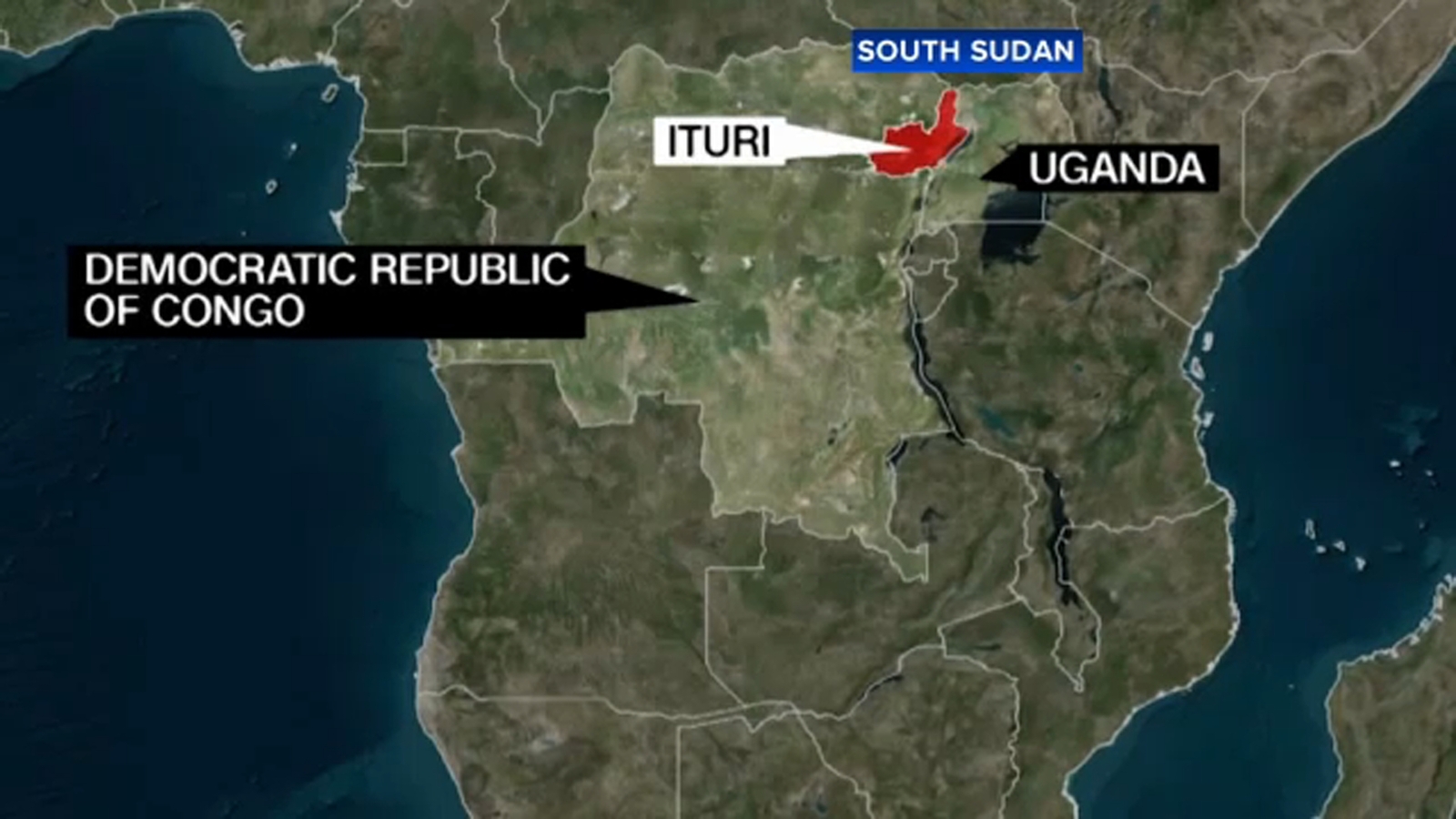
The United States has implemented new ebola outbreak arrival restrictions as health officials work to prevent the spread of the deadly virus from the Democratic Republic of Congo. The Department of Homeland Security announced that flights carrying passengers who have recently traveled to the DRC, Uganda, or South Sudan will be redirected to specific airports where enhanced public health screenings are in place.
This decisive action comes at a critical moment, as the ongoing ebola outbreak in central Africa continues to escalate, with hundreds of suspected cases and dozens of confirmed fatalities. Health authorities on both sides of the Atlantic are scrambling to contain what has now been classified as a public health emergency of international concern.
New Flight Restrictions and the Air France Boarding Error
In a striking incident that highlighted the seriousness of these new measures, Air France inadvertently boarded a passenger from the Democratic Republic of Congo onto a flight destined for the United States. According to a Customs and Border Protection spokesperson who spoke with ABC News, the passenger should never have been allowed to board given the entry restrictions now in effect.
The flight, originally bound for Detroit, was diverted to Montreal to address the situation. Officials emphasized that this was a procedural error rather than a security failure, but the incident underscored the heightened vigilance required during an active ebola outbreak scenario.
Under the new DHS directive, affected flights must now land at Washington Dulles International Airport in Virginia, where specialized public health protocols have been activated. These restrictions apply to travelers who have been in any of the three named countries within the previous 21 days , the known incubation period for the virus.
Which Countries Are Affected?
- Democratic Republic of Congo: The epicenter of the current outbreak, with widespread community transmission reported.
- Uganda: Has recorded at least two cases and one death in the capital city of Kampala.
- South Sudan: Has not reported confirmed cases but is considered high-risk due to its proximity to affected regions and limited healthcare infrastructure.
The Scope of the DRC Ebola Outbreak
The numbers paint a sobering picture of the current health crisis. As of the latest updates, the ebola outbreak in eastern DRC has resulted in approximately 139 suspected deaths and nearly 600 suspected cases, according to World Health Organization Director-General Dr. Tedros Adhanom Ghebreyesus. Of these, at least 51 cases have been officially confirmed through laboratory testing.
Perhaps most alarming is the geographic spread of the disease. Cases have now been documented in several urban centers, including the major cities of Goma and Bunia. Urban transmission is particularly concerning for health officials because it dramatically increases the potential for wider dissemination of the virus, which historically has been more manageable when confined to rural areas.
The outbreak was first detected in the northeastern province of Ituri, with the DRC’s health ministry officially confirming cases on May 15. This marks the 17th ebola outbreak in the country’s history, making it one of the most frequently affected nations in the world.
WHO Declares Public Health Emergency
In a historic move, Dr. Tedros declared the situation a “public health emergency of international concern” on Sunday , the highest alert level the WHO can issue short of declaring a pandemic. Notably, this was the first time a WHO Director-General had made such a declaration before formally convening the emergency committee for review.
The emergency committee met on Tuesday evening to assess the situation. While the committee ultimately agreed that the outbreak did not yet meet the threshold of a pandemic emergency (a designation previously applied only to COVID-19), the declaration itself signals the gravity of the evolving situation.
Investigating the Origin
Anais Legand, the WHO’s technical officer for viral hemorrhagic fevers, indicated that the current ebola outbreak may have actually begun several months ago. Investigations are ongoing to trace the earliest cases and identify the original source of transmission.
“Our priority is really to cut the transmission chain by implementing contact tracing, isolating and caring for all suspects and confirmed cases,” Legand stated during a recent briefing.
The Bundibugyo Strain: A Unique Challenge
One of the most challenging aspects of the current response is that this ebola outbreak is caused by the Bundibugyo virus, a relatively rare variant of the Ebola family. This particular strain presents several complications for healthcare responders:
- No approved vaccines currently exist for this specific variant
- No approved therapeutics have been developed for Bundibugyo
- Standard diagnostics designed for other Ebola strains may not detect it effectively
- Case fatality rates have historically ranged between 30% and 50%
However, there is some encouraging news on the diagnostic front. Dr. Satish K. Pillai, incident manager for the CDC’s ebola outbreak response, confirmed at a recent press conference that genetic testing has shown similarities between this strain and those responsible for outbreaks in 2007 and 2012. This means that existing diagnostic tools can effectively detect the Bundibugyo virus, even if treatment options remain limited.
An American Doctor’s Battle with Ebola
Among the confirmed cases is Dr. Peter Stafford, an American physician who contracted the disease while working in the DRC. Stafford has been flown out of the country and is currently receiving treatment at Berlin’s prestigious Charité University Hospital in Germany.
Matt Allison, executive director of Serge , the Christian missionary organization that employs Dr. Stafford , told reporters that the doctor has been receiving monoclonal antibodies as part of his treatment regimen. Encouragingly, Allison reported that Stafford is “responding quickly” to the therapy, providing a glimmer of hope amid the broader crisis.
CDC’s Comprehensive Response
The Centers for Disease Control and Prevention has activated its Emergency Operations Center through its country offices in both the DRC and Uganda. Technical experts from the agency’s Atlanta headquarters are being deployed to support field operations.
On Monday, the CDC also introduced entry restrictions for non-U.S. passport holders who have been in Uganda, the DRC, or South Sudan within 21 days of attempting to enter the United States. These measures complement the DHS flight restrictions announced shortly thereafter.
Risk Assessment for Americans
Despite the escalating situation, Dr. Pillai emphasized that “the risk to the U.S. general public remains low.” This assessment takes into account the existing screening protocols, the limited number of direct flights from the affected region, and the rapid response capabilities of U.S. health infrastructure.
Still, the diversion of the Air France flight serves as a reminder that vigilance must remain high. Even minor procedural errors can have significant implications during an active ebola outbreak, and multiple layers of defense are necessary to prevent the introduction of the virus into new populations.
Looking Ahead: What Comes Next
The global health community now faces a critical test of its pandemic preparedness systems. The current ebola outbreak in central Africa represents one of the most serious viral hemorrhagic fever emergencies in recent years, combining concerning geographic spread with the additional challenges posed by the Bundibugyo variant.
Key priorities moving forward include:
- Expanding contact tracing capabilities in affected urban areas
- Developing or adapting vaccines and therapeutics for the Bundibugyo strain
- Strengthening cross-border surveillance between the DRC, Uganda, and South Sudan
- Maintaining rigorous entry screening at international airports
- Supporting healthcare workers in the region who face significant personal risk
The response from international agencies, including the WHO, CDC, and various NGOs working on the ground, demonstrates the coordinated effort required to combat outbreaks of this magnitude. While the situation remains fluid and concerning, the rapid deployment of resources and the implementation of travel restrictions reflect lessons learned from previous Ebola crises in West Africa and elsewhere.
Conclusion
The current ebola outbreak in the Democratic Republic of Congo, with its spread into Uganda and the heightened risk to South Sudan, represents a serious international health concern that has prompted swift action from U.S. authorities. New flight restrictions requiring affected travelers to land at Washington Dulles, combined with CDC entry protocols and the WHO’s emergency declaration, reflect a multi-layered approach to preventing the introduction of Ebola into the United States.
With hundreds of suspected cases, dozens of confirmed infections, and the involvement of an American doctor now receiving treatment abroad, this crisis demands continued attention and resources. While the immediate risk to the U.S. general public remains low according to health officials, the Air France boarding incident demonstrates that even robust systems require constant refinement. As the international community works to contain this outbreak, the lessons being learned today will undoubtedly inform responses to future global health emergencies.