
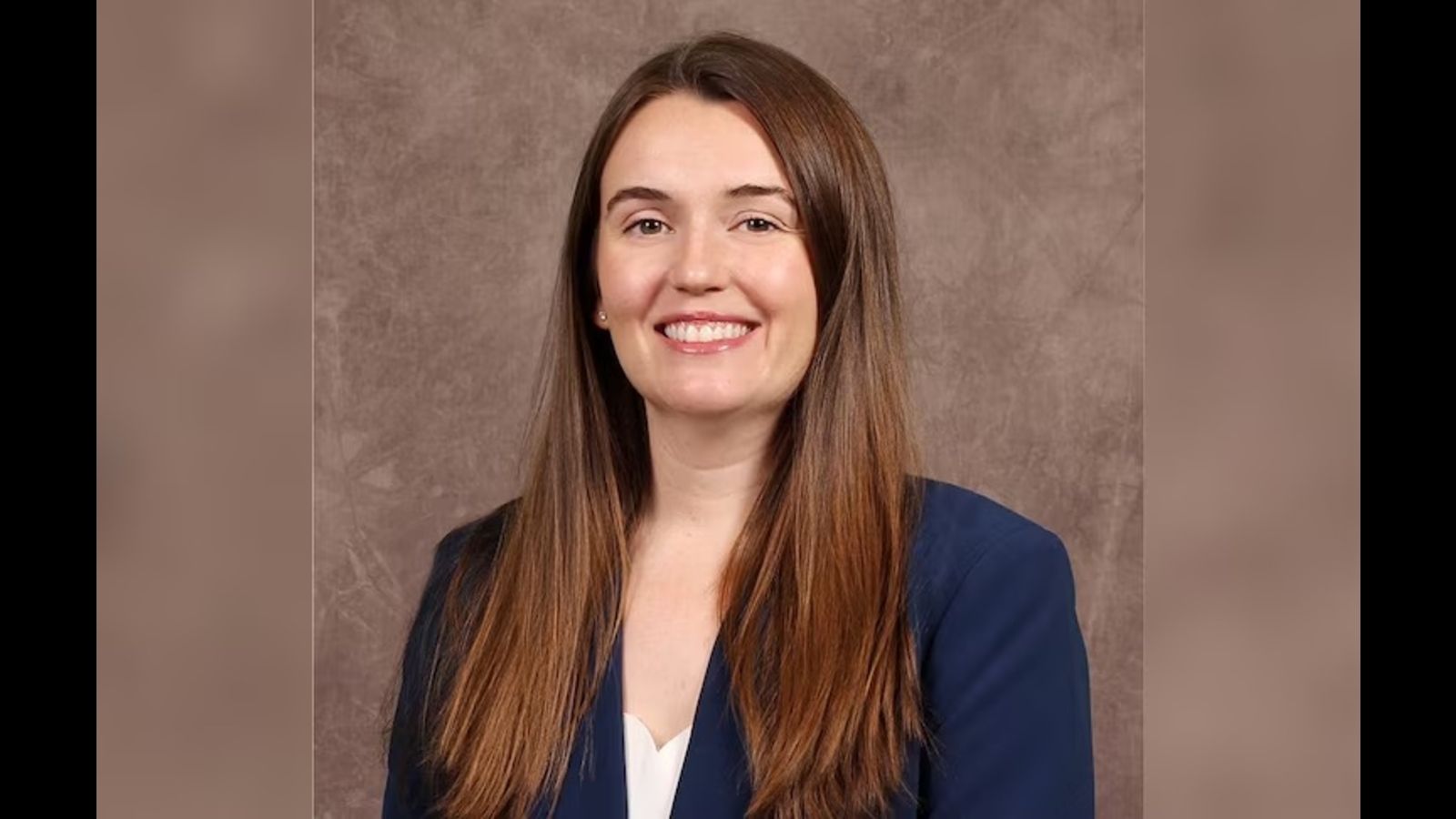
A tragic Times Square stabbing has left a community in mourning after a 32-year-old University of Pennsylvania graduate was killed in what police are calling a “random and unprovoked” attack in the heart of New York City. The incident, which unfolded on a Wednesday afternoon in one of the most heavily trafficked tourist destinations in the world, has raised urgent questions about public safety, mental health support, and the unpredictable nature of urban violence.
The Victim: A Promising Career Cut Short
The woman who lost her life has been identified as Erin Piacenti, a 32-year-old resident of Chester, New Jersey. According to her social media profiles and professional history, Piacenti was a highly accomplished young professional whose academic and career trajectory reflected years of dedication and hard work.
Piacenti graduated from the University of Pennsylvania in 2016 and went on to earn her law degree from Fordham Law in 2021. At the time of her death, she served as the Vice President of Business Selection and Conflicts for Bank of America, a role that reflected her expertise in corporate law and ethics.
In a statement following the tragedy, Bank of America expressed deep sorrow over the loss of their colleague: “We are shocked and deeply saddened by the tragic loss of our colleague. She was a valued teammate who will be greatly missed. Our hearts go out to her family and all of her loved ones.” The message underscored the profound impact Piacenti had on those who worked alongside her.
The Second Victim
In addition to Piacenti, a 68-year-old man was also stabbed during the violent outburst. He was transported to a local hospital where he remains in critical but stable condition. According to NYPD officials, the man had just exited the subway and was waiting to cross the street with his wife when the suspect suddenly pulled knives from a bag, brandished them, and stabbed him in the abdomen.
The randomness of the attack has left many in the community struggling to comprehend how such violence could unfold in broad daylight in a neighborhood typically associated with bright lights, Broadway shows, and throngs of tourists.
How the Times Square Stabbing Unfolded
The attack began near West 42nd Street and Seventh Avenue at approximately 4:26 p.m. on a Wednesday afternoon, according to investigators. The suspect, identified as Pamela Cisneros, a 39-year-old woman from Queens, was reportedly threatening passersby with two knives in the crowded area.
NYPD Commissioner Jessica Tisch provided detailed information about the sequence of events during a press briefing. The first victim, the 68-year-old man, was attacked without warning after exiting the subway. Cisneros then moved up Seventh Avenue toward 42nd Street, where she encountered Piacenti. In what authorities described as another random and unprovoked assault, Piacenti was also stabbed in the abdomen.
The brazen nature of the Times Square attack shocked witnesses and highlighted how quickly ordinary moments can turn into scenes of horror in public spaces.
The Police Confrontation
After allegedly committing both stabbings, Cisneros fled north toward the NYPD substation in Times Square. Witnesses quickly flagged down officers, who confronted the armed suspect for approximately four minutes, issuing numerous commands for her to drop the knives.
During the tense standoff, Cisneros made explicit threats to the officers. According to Commissioner Tisch, she told the officers, “I’m not dropping anything. I would rather kill both of you,” and repeated, “I will kill you.” The refusal to comply with police commands led officers to deploy tasers twice before two officers ultimately discharged their service weapons.
Cisneros was struck by gunfire and was subsequently pronounced dead at a hospital. Two knives were recovered from the scene, and the NYPD released photographs of the recovered weapons to the public.
Mental Health at the Center of the Conversation
As details of the suspect’s background emerged, it became clear that the tragedy was intertwined with broader concerns about mental health. Commissioner Tisch revealed that Cisneros had a “documented mental health history,” a disclosure that prompted renewed discussions about how cities can better address mental health crises before they escalate into violence.
Clyde Benjamin, a worker in Times Square, captured the sentiments of many New Yorkers when he spoke candidly to reporters: “I knew it was mental health issues. That’s a big epidemic out here, bro. We gotta get that under control.”
The random stabbing in Times Square has intensified calls for improved mental health intervention programs, particularly for individuals who may be in crisis and interacting with the public. Mental health advocates have long argued that many violent incidents could potentially be prevented through earlier intervention, better access to care, and stronger community support systems.
Police Response and Ongoing Investigation
In the aftermath of the deadly Times Square stabbing, the NYPD announced that it would conduct a thorough internal investigation into the use of force by officers. Mayor Zohran Mamdani confirmed that body-worn camera footage from the confrontation would be released to the public, a measure intended to promote transparency and accountability.
The release of body camera footage has become standard practice for the NYPD in incidents involving officer-involved shootings, allowing the public to better understand the decisions made in split-second, high-pressure situations. Investigators will examine whether the use of lethal force was justified given the circumstances.
Community Grief and Public Safety Concerns
The shocking nature of this NYC stabbing has reverberated throughout the city, particularly among professionals who work in and around Times Square. The neighborhood is one of the most surveilled and heavily patrolled areas in New York City, which has made the random nature of the attack especially unsettling for residents and visitors alike.
Piacenti’s death has struck a particularly painful chord because of the bright future she represented. A graduate of two prestigious institutions who had built a successful career at one of the world’s largest financial institutions, her life was taken in a matter of moments by someone she had never met.
Community members, colleagues, and friends have begun sharing tributes to Piacenti, remembering her as a talented, driven, and compassionate individual whose potential extended far beyond what she had already achieved. Her family, while grappling with unimaginable loss, has been supported by an outpouring of grief from across the professional and academic communities she was part of.
Looking Forward: Addressing the Roots of Violence
The tragedy has placed a spotlight on several interconnected issues that city leaders, law enforcement, and mental health professionals will need to grapple with in the weeks and months ahead. These include:
- Mental health crisis response: Developing more effective ways to identify and assist individuals experiencing mental health emergencies before they result in harm to themselves or others.
- Public space security: Evaluating whether existing security measures in high-traffic areas like Times Square are sufficient to respond to sudden violent incidents.
- Transparency and accountability: Ensuring that police use-of-force incidents are thoroughly investigated and that findings are shared with the public to maintain trust.
- Community support systems: Building stronger networks of care that can reach individuals before a crisis escalates.
Conclusion
The Times Square stabbing that claimed the life of Erin Piacenti and left another victim fighting for survival serves as a heartbreaking reminder that public safety is a complex, multifaceted challenge. While law enforcement responded to the immediate threat, the underlying factors that contributed to this tragedy,including untreated mental health conditions,demand sustained attention and investment from policymakers, healthcare providers, and community organizations.
As New York City mourns another life lost to senseless violence, the memory of those affected must fuel meaningful conversations and concrete action. Piacenti’s legacy, defined by her academic achievements, professional accomplishments, and the relationships she built throughout her life, deserves to be honored not only through remembrance but through the collective commitment to creating safer, more compassionate communities for everyone.