
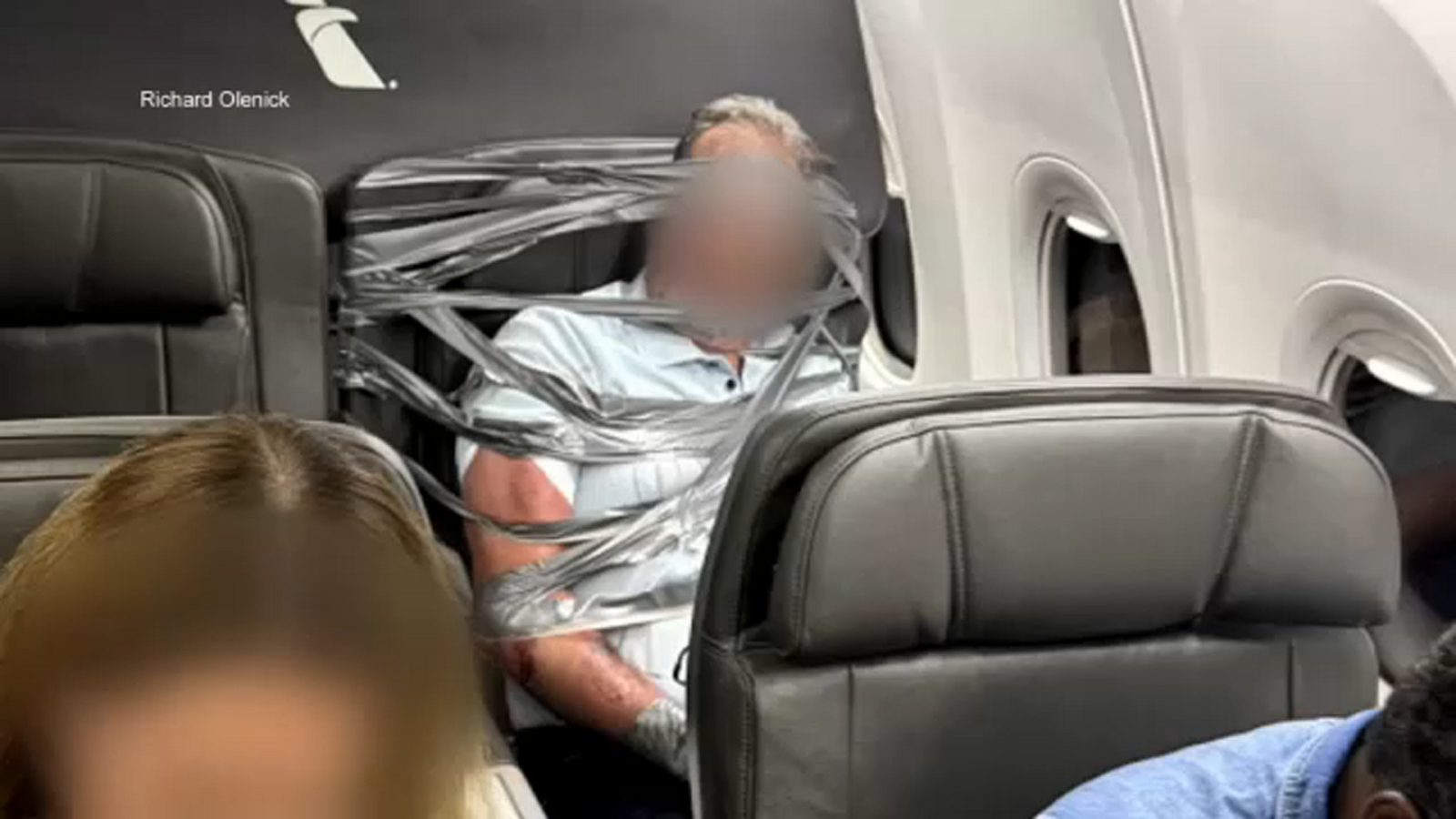
When an unruly passenger was duct taped to his seat during an American Airlines flight, passengers and crew were forced to act quickly to regain control of the cabin. The disturbance forced Flight 618 to divert to Baltimore, where the 67-year-old Arizona man was taken into custody and later charged.
The episode highlights the difficult decisions airline crews and travelers can face when disruptive behavior escalates during a flight. It also underscores the potentially serious legal consequences for passengers whose conduct threatens the safety of those aboard an aircraft.
What Happened Aboard American Airlines Flight 618
American Airlines Flight 618 departed Dallas and was headed to Newark on Thursday night when a passenger allegedly became increasingly disruptive roughly three-quarters into the trip, according to fellow travelers and investigators.
Passenger Juan Mejia, a former law enforcement officer, said he first heard the man becoming belligerent and directing derogatory remarks toward airline staff and other travelers. Mejia described the language as vulgar, offensive, and at times involving racial slurs.
As the situation developed, the passenger reportedly became physical. Mejia and another traveler, Richard Olenick, said they intervened because they believed immediate action was necessary to prevent the disturbance from escalating.
Olenick said Mejia moved into the seat beside the man and helped restrain him. The two passengers remained with the man until law enforcement officers boarded the aircraft after it landed in Baltimore.
“We weren’t looking to hurt this individual,” Mejia said. “We were looking more to restrain him and control him, so it didn’t escalate to go any further.”
How the In-Flight Disturbance Was Contained
When ordinary verbal requests failed to stop the disruption, those nearby used the limited resources available in the cabin. The unruly passenger was secured with zip ties, and duct tape was used to restrain him to his seat until the plane could land.
Although the image of someone being duct taped in an aircraft may appear unusual, the immediate priority was to prevent additional harm. Cabin incidents can become dangerous at cruising altitude because flight attendants have limited backup, movement through the aisle is restricted, and the aircraft is filled with passengers who may be unable to move away from a confrontation.
Quick intervention by passengers can be crucial, but it also carries risks. Airline crews are trained to assess threats, coordinate with the cockpit, communicate with air traffic control, and use appropriate restraint methods. Fellow travelers should follow crew instructions whenever possible rather than creating a second disturbance.
Flight Diverted to Baltimore
The crew changed the aircraft’s route and landed at Baltimore Washington International Airport at approximately 10:15 p.m. The Federal Aviation Administration later confirmed that the plane was diverted.
Once the aircraft arrived, Maryland Transportation Authority Police officers boarded and removed the man. Authorities identified him as Arthur Lundeen, 67, of Arizona.
Lundeen was subsequently charged with disorderly conduct and second-degree assault in connection with incidents aboard the aircraft at BWI Airport. Those are allegations, and the charges do not amount to a conviction.
American Airlines said the aircraft continued to Newark after law enforcement removed the passenger.
Medical Evaluation and Injury Reported
During the arrest, officers noticed an open wound on Lundeen’s arm. Paramedics evaluated him and cleared him, according to the Maryland Transportation Authority Police.
Police did not provide extensive details about how the injury occurred, and the available account did not establish whether it resulted from the restraint, an earlier physical confrontation, or another event during the flight. The limited disclosure leaves questions that may be addressed as the investigation continues.
Multiple Agencies Now Investigating
The FBI is investigating the reported conduct that occurred in the air, while the Federal Aviation Administration is also examining the incident. Maryland Transportation Authority Police handled the response after landing and announced the local charges.
Because disruptive conduct aboard an aircraft can violate federal aviation rules and may involve alleged assault or other criminal behavior, multiple agencies can participate in the same investigation. Their roles may differ:
- Airline crew: Protect passengers, secure the cabin, alert the cockpit, and request a diversion.
- FBI: Review whether any federal laws were violated during the flight.
- FAA: Investigate the event from an aviation-safety and regulatory perspective.
- Local airport police: Meet the aircraft, remove the passenger, and pursue applicable state or local charges.
- Paramedics: Assess anyone who may have been injured or requires medical attention.
The FBI said its investigation remained ongoing following Lundeen’s arrest. Authorities had not released additional findings at the time of the initial report.
Why Unruly Passenger Incidents Are Treated Seriously
Disruptive behavior on a commercial flight can delay the aircraft, trigger an emergency landing, increase risks to passengers and crew, and lead to substantial financial costs. Diverting a plane may also disrupt airport operations and require the airline to accommodate travelers whose connecting flights or arrival plans are affected.
Cabin crew members must act as first responders in the sky. Their responsibilities can include separating passengers, managing conflict, communicating with the flight deck, distributing instructions, and documenting what happened. In a confined space, even one person refusing to follow directions can create a wider safety risk.
Airlines generally instruct passengers to remain calm, avoid confronting a disruptive traveler, and alert a flight attendant immediately. Physical intervention should be a last resort, particularly when weapons, medical conditions, or uncertain circumstances may be involved.
Airline Response and Passenger Safety
American Airlines said the safety and security of its customers and team members is its top priority and that it does not tolerate violence aboard its aircraft.
For travelers, the incident is a reminder that routine safety instructions have real consequences. Seat belts remain important during unexpected changes in flight direction, and passengers should avoid interfering with crew members who are responding to an emergency. Clear communication, quick reporting, and compliance with instructions can help contain a dangerous situation more safely.
At the same time, restraint of any kind should be approached cautiously. The central objective is to stop an immediate threat without worsening the danger. That is why trained personnel and law enforcement typically assume control once the aircraft is on the ground.
What Comes Next in the Case
Lundeen faces disorderly conduct and second-degree assault allegations related to incidents aboard the aircraft at BWI Airport. The ongoing FBI inquiry will determine whether additional federal findings or charges are warranted.
As the investigation develops, more information may become available about the passenger’s conduct, the reported physical confrontation, the use of restraints, and the circumstances surrounding the arm injury. Until officials provide a fuller account, those details remain subject to verification.
Conclusion
The decision to divert American Airlines Flight 618 prevented an already serious in-flight disturbance from continuing toward its destination. Passengers assisted with restraint, the crew redirected the aircraft to Baltimore, and police arrested the man after landing. With local charges already filed and the FBI investigation still active, the case demonstrates how a single passenger’s behavior can quickly affect an entire cabin, disrupt an airline’s operations, and lead to criminal consequences.