
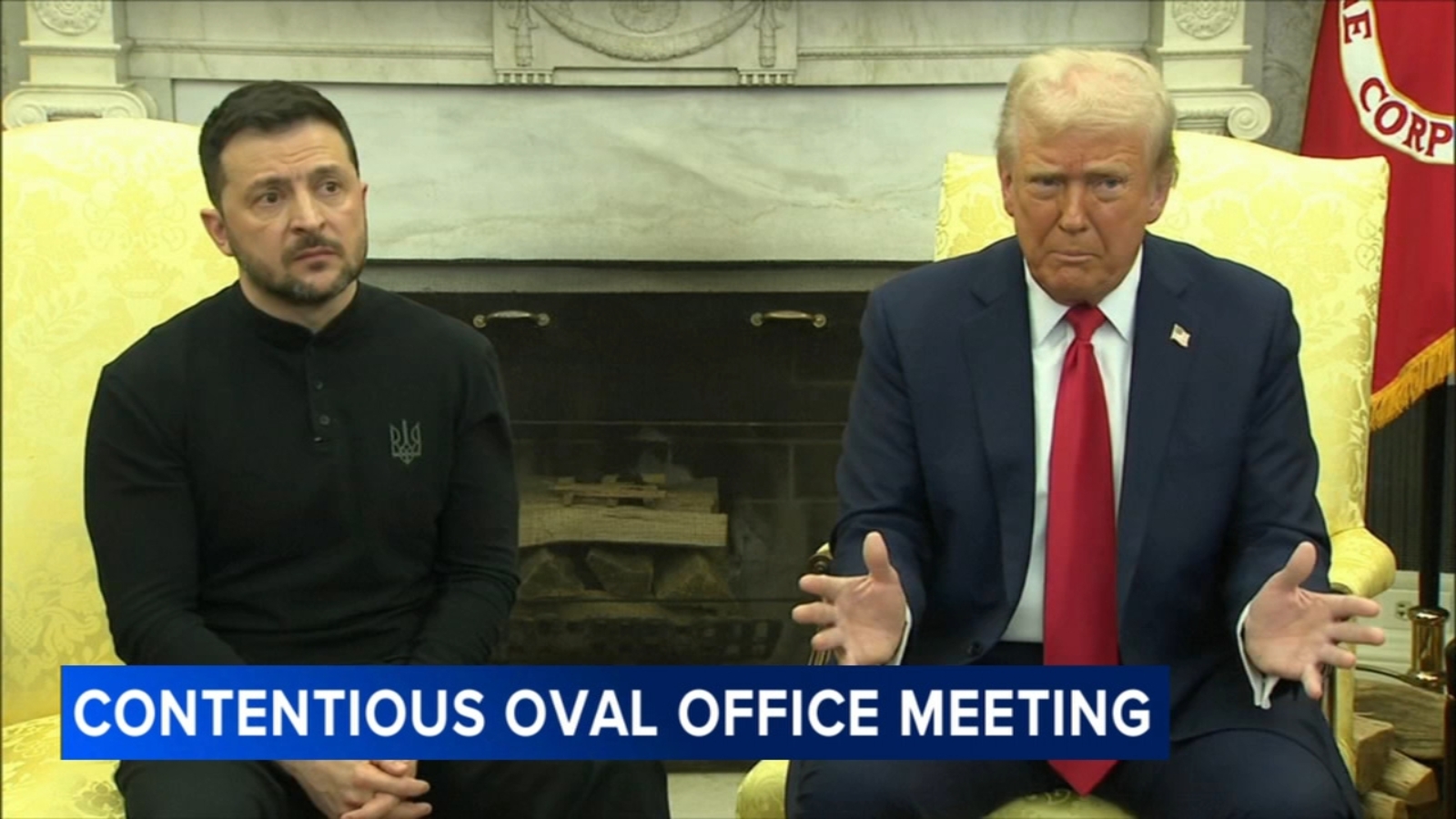
The Ukrainian community reaction in the Delaware Valley has been one of profound concern and dismay following a contentious Oval Office meeting between President Donald Trump, Vice President J.D. Vance, and Ukrainian President Volodymyr Zelenskyy. What was intended as a diplomatic discussion about ending the ongoing war between Ukraine and Russia quickly devolved into a shouting match that left community leaders, political analysts, and ordinary citizens grappling with feelings of betrayal, embarrassment, and fear for the future of transatlantic alliances.
This extraordinary televised confrontation has triggered waves of analysis across the political spectrum, but perhaps nowhere has the response been more personal than within Ukrainian American communities, particularly in regions like the Philadelphia area where diaspora ties to the homeland run deep and generationally strong.
A Community’s Disillusionment Spreads Quickly
Eugene Luciw, who leads the Philadelphia Chapter of the Ukrainian Congress Committee of America, did not mince words when describing the impact of the fiery exchange on Friday. In his assessment, any political support that President Trump had cultivated among Ukrainian Americans would dissolve rapidly in the aftermath of such a public display.
Luciw went further, suggesting that the entire episode appeared almost choreographed from Moscow’s perspective. His characterization carried the weight of someone who has spent years advocating for Ukrainian interests on American soil. When a community leader compares a diplomatic meeting to something that could have been orchestrated by a foreign adversary, it signals a profound rupture in trust between the diaspora and the current administration.
Strategic Implications Beyond the Headlines
The diplomatic fallout extends far beyond emotional reactions. Nonpartisan observers have raised concerns that the confrontation represents a significant departure from established diplomatic norms that have governed American foreign policy for decades. The episode has prompted serious questions about America’s continued reliability as a global partner.
St. Peter’s University Political Science Professor Emeritus Alain Sanders articulated these concerns with particular clarity, warning that aggressive posturing might actually undermine American security rather than enhance it. His analysis touched on a crucial point often overlooked in heated political debates: the value of allies extends well beyond military cooperation.
Intelligence sharing, counterterrorism partnerships, trade relationships, and diplomatic coalitions form an interconnected web of mutual support that has kept America secure for generations. When these relationships fray, the consequences extend to every American household, not just to foreign policy theorists in Washington think tanks.
The Intelligence Alliance Question
One of the most underappreciated aspects of the Trump-Zelenskyy fallout involves the intelligence-sharing relationships that have developed between the United States and its allies over decades of cooperation. Sanders specifically highlighted how America relies on partners not just for military hardware but for the kind of behind-the-scenes intelligence work that prevents terrorist attacks before they materialize.
When trust erodes between nations, the immediate consequence often involves the curtailment of intelligence cooperation. Partners become reluctant to share sensitive information, joint operations get suspended, and the early warning systems that have protected countless lives begin to develop blind spots. The phrase “America First” carries a certain political appeal, but Sanders’ warning that it might transform into “America Last and Alone” echoes concerns voiced by foreign policy experts across the ideological spectrum.
This intelligence dimension matters enormously to the Ukrainian community reaction because Ukraine has been one of the most valuable intelligence partners the United States has possessed, particularly regarding Russian military movements and intentions. Losing this cooperation would represent a significant strategic setback that no amount of trade deal posturing could offset.
Congressional Voices: Bipartisan Concern Emerges
The reaction on Capitol Hill revealed an interesting political dynamic. While Congressional Republicans offered nearly unanimous praise for the president’s handling of the meeting, notable exceptions emerged from legislators with deep personal connections to Ukraine and its struggle for sovereignty.
Pennsylvania Republican Representative Brian Fitzpatrick, who serves as co-chair of the House Ukraine caucus, called the episode genuinely heartbreaking. His statement struck a careful balance between acknowledging the emotional nature of the confrontation while insisting that diplomatic engagement must continue. Fitzpatrick emphasized that a strong, sovereign Ukraine remains essential for global stability, particularly given what he characterized as Putin’s ongoing aggression against Ukrainian territory and people.
His call for all parties to return to the negotiation table reflects the practical recognition that while televised arguments make headlines, the actual work of diplomacy happens in quieter, less dramatic settings. The question of whether such work can resume after such a public breakdown remains one of the most pressing concerns for anyone invested in Ukrainian sovereignty.
A Republican Veteran’s Personal Reflection
Perhaps the most emotionally resonant response came from Retired US Army Colonel Roman Andryczyk, whose family fled the region during earlier conflicts when he was a child. His perspective carries particular weight because he represents a rare combination: a military veteran with direct personal ties to Ukrainian heritage, a Republican, and a graduate of Penn State who served his adopted country for 26 years.
Andryczyk expressed deep shame at what transpired in the Oval Office, emphasizing that Ukraine represents a strategically vital partner for the United States. His voice represents thousands of similar stories across America, individuals who fled conflicts, built new lives, and watched with pride as their homeland fought to preserve its democracy and independence against a much larger aggressor.
The fact that a Republican veteran felt compelled to publicly criticize his own party’s president speaks volumes about how seriously the Ukrainian community and its allies viewed the breakdown in protocol and diplomacy.
What Comes Next for US-Ukraine Relations
Following the explosive meeting, questions immediately arose about the future of the mineral deal between the United States and Ukraine that had brought the leaders together in the first place. The White House press secretary indicated Friday evening that the path forward remained uncertain, with much depending on whether the two leaders could find a way to rebuild enough trust to continue negotiations.
President Trump told reporters as he was leaving the White House that America seeks peace, not a partner who refuses to negotiate from a position of strength. His characterization suggested frustration with what he perceived as Zelenskyy’s reluctance to make concessions despite Ukraine’s military difficulties.
Zelenskyy, appearing on Fox News that evening, responded to Trump’s claim that he had disrespected the American president and the United States. The Ukrainian leader expressed profound gratitude to Americans and to the President personally, while expressing hope that diplomatic channels would eventually reopen.
The Trust Deficit
Sanders captured the broader significance of the confrontation with a single phrase: significant destruction of trust had occurred that day. Trust, once shattered in diplomatic relationships, takes years or even decades to rebuild. The televised nature of the confrontation multiplied its impact, ensuring that millions of viewers worldwide witnessed the breakdown in real time.
This trust deficit will likely manifest in several concrete ways:
- Reduced intelligence cooperation as partners reassess the reliability of American commitments
- Delayed or cancelled military aid packages that Ukraine desperately needs
- European allies accelerating independent defense initiatives as they question American security guarantees
- Diplomatic isolation as other nations hedge their relationships with Washington
- Moral authority erosion when advocating for democratic values abroad
The Broader American Ukrainian Community
While this article focuses on the Delaware Valley response, similar reactions have echoed throughout Ukrainian American communities nationwide. From the large diaspora populations in New York, New Jersey, Illinois, and California, the message has been consistent: the community feels let down at a moment when support was most needed.
Ukrainian Americans have consistently voted in significant numbers and contributed substantively to political campaigns, particularly those advocating for continued support of Ukraine against Russian aggression. The community’s electoral influence, while perhaps smaller than more established ethnic voting blocs, remains meaningful in swing states and competitive congressional districts.
The political calculation that may have motivated the confrontation will likely backfire with this constituency. Luciw’s prediction that support would evaporate seems prescient given the swift and unified response from community leaders across the country.
Conclusion: A Pivotal Moment for American Diplomacy
The Delaware Valley Ukrainian community reaction to the Oval Office confrontation represents more than just a passing political controversy. It marks a potential inflection point in how America conducts its foreign policy and how its allies perceive its reliability during moments of crisis.
For Ukrainian Americans, particularly those with personal memories of conflict and displacement, the events of that Friday carried weight beyond ordinary political theater. When a retired colonel whose family fled violence describes feeling ashamed of his government’s behavior, when a community leader compares an Oval Office meeting to Russian orchestration, when a Republican congressman calls the episode heartbreaking, these voices deserve serious consideration.
The path forward remains unclear. Whether the parties can reconvene, rebuild trust, and pursue the diplomatic settlement that serves both American and Ukrainian interests will depend on leadership, humility, and a recognition that peace requires partners, not subordinates. The Ukrainian community, having watched the confrontation unfold with horror and concern, will be watching just as closely to see whether wisdom ultimately prevails over spectacle.