
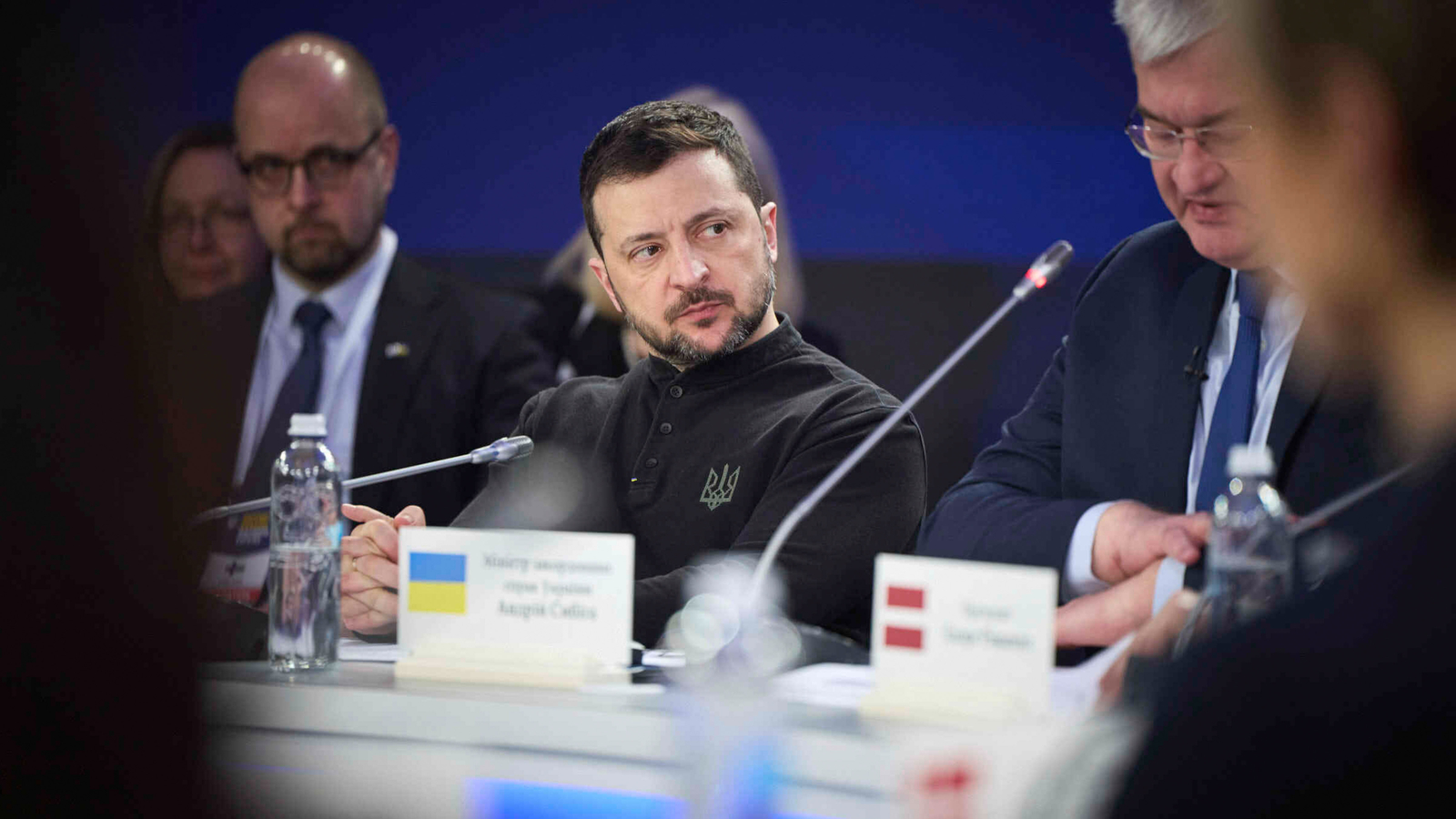
In a decisive move that has captured international attention, Ukraine’s parliament has formally affirmed that no elections will be held during wartime, delivering a clear rebuff to critics including U.S. President Donald Trump and Russian President Vladimir Putin, both of whom have questioned the legitimacy of Volodymyr Zelenskyy’s presidency. The resolution, passed this week in Kyiv, underscores the constitutional realities facing a nation at war and sets the stage for an important conversation about democratic governance amid conflict.
The Background: Why Zelenskyy’s Legitimacy Was Being Questioned
When Volodymyr Zelenskyy swept to victory in Ukraine’s 2019 presidential election, he won by a landslide, capturing roughly 73% of the vote. His five-year term, however, was set to expire in May 2024. With Russia engaged in a full-scale invasion and martial law declared across the country, holding a national vote became constitutionally impossible. This vacuum created an opening for critics , most notably Trump and Putin , to argue that Zelenskyy’s continued leadership lacked democratic grounding.
Trump, in particular, has repeatedly suggested that any peace deal with Russia would require new leadership in Kyiv. Putin echoed that sentiment, casting doubt on the Ukrainian president’s authority to negotiate on behalf of his nation. These statements triggered alarm among European allies and within Ukraine itself, where lawmakers feared that questioning Zelenskyy’s mandate could weaken his position at the negotiating table.
What the Ukrainian Parliament’s Resolution Actually Says
The resolution passed by Ukraine’s parliament, known as the Verkhovna Rada, leaves little room for ambiguity. It declares that Zelenskyy was chosen through legitimate democratic elections and that his mandate as president is not in doubt. More importantly, it formally states that no elections can be held in Ukraine until martial law is lifted , a condition tied to the arrival of what the resolution describes as a “just and lasting peace.”
This framing is significant because it ties the question of democratic renewal not to a fixed calendar but to the restoration of conditions in which meaningful participation is possible. Members of parliament made clear that without security, without freedom of movement, and without access for displaced citizens, any vote would be neither free nor fair.
Zelenskyy’s Remarkable Peace Offer
In a statement that surprised many observers, Zelenskyy said on Sunday that he would be willing to step down from the presidency if doing so would bring peace to Ukraine. He went even further, indicating that he would also resign if such a sacrifice would secure NATO membership for his country , a long-sought security guarantee that has been the cornerstone of Ukrainian foreign policy since 2014.
This offer was not the desperate plea of a leader clinging to power. Rather, it was a strategic signal to international audiences that Zelenskyy views his personal political future as secondary to Ukraine’s sovereignty and security. Critics who argue he holds on to power for its own sake now face a more complicated narrative, one in which the Ukrainian president appears willing to sacrifice his position for the greater good.
Why Elections During Wartime Are Practically Impossible
The logistical and ethical case against holding Ukraine elections wartime is overwhelming, and the parliamentary resolution reflects broad national consensus on this point. Several practical obstacles stand in the way:
- Mass displacement of citizens: Millions of Ukrainians have fled the country as refugees since the Russian invasion began. Organizing an election that excludes such a significant portion of the population would be inherently undemocratic.
- Military service obligations: Hundreds of thousands of Ukrainians are actively serving in the armed forces. Wartime conscription and combat duties make it nearly impossible for soldiers to participate in traditional campaigning and voting.
- Russian interference: Intelligence officials have warned that any election held during wartime would provide Russia with an opportunity to meddle, fund spoiler candidates, and divide the country through disinformation campaigns.
- Voter access and security: Large portions of Ukraine remain under threat of missile strikes and drone attacks, making polling stations dangerous and inaccessible for many citizens.
- Constitutional prohibition: Ukraine’s own constitution explicitly forbids elections while martial law is in effect, providing a legal barrier that would require significant constitutional reform to overcome.
Parliamentary Politics Behind the Scenes
The road to passing the resolution was not entirely smooth. On Monday, an initial vote failed to achieve the necessary support, primarily because too few members of Zelenskyy’s own party, Servant of the People, were present in the chamber. Oleksandr Merezhko, a parliamentary representative from the ruling party, explained that many MPs had not yet returned to Kyiv from their home districts.
By Tuesday, the situation had changed. With more lawmakers present and aware of the international implications, the resolution passed comfortably. This procedural hiccup, while minor, revealed the depth of disagreement that exists within Ukraine’s political class , not about whether elections should be held now, but about the best way to communicate that position to the world.
Notably, the resolution enjoyed support from major opposition parties as well. This rare display of political unity reflected a shared understanding that questioning Zelenskyy’s legitimacy during wartime serves only Russian interests and undermines Ukraine’s negotiating position.
International Implications and the Trump Factor
The resolution cannot be divorced from the broader diplomatic context in which it was issued. Trump has made the Russia-Ukraine conflict a priority of his second-term foreign policy, repeatedly claiming he can broker a deal that previous administrations could not. His skepticism toward Zelenskyy has created friction with traditional U.S. allies in Europe, many of whom view continued support for Kyiv as a moral and strategic imperative.
By formally affirming Zelenskyy’s legitimacy, Ukraine’s parliament has sent a clear message to Washington: any negotiation about Ukraine’s future must include the duly elected representatives of the Ukrainian people. This is not a government clinging to power through legal technicalities , it is a constitutional democracy operating within its own legal framework during an existential conflict.
European leaders, who have largely maintained their support for Zelenskyy throughout the war, are likely to view the resolution as further justification for continued military and economic aid. The message from Kyiv is that democratic legitimacy, however imperfect under wartime conditions, remains the foundation upon which any peace deal must be built.
The Constitutional Foundation of the Decision
It is worth emphasizing that Ukraine’s prohibition on elections during martial law is not an improvised policy designed to protect Zelenskyy personally. It is a constitutional provision that applies to any sitting president during a state of emergency. The legal framework exists precisely because wartime governance requires continuity, decisive leadership, and the absence of politically divisive campaigning that could weaken national unity.
This constitutional principle mirrors similar provisions in other democracies that have faced wartime conditions, including the United Kingdom during the Second World War and Israel during periods of active conflict. Democratic governance does not require constant elections , it requires adherence to the rule of law and accountability through other institutional mechanisms, including a functioning parliament, independent judiciary, and free press.
What Comes Next for Ukraine’s Political Future
The parliamentary resolution is not the final word on this issue, but it represents an important moment of institutional clarity. As peace negotiations continue , whether facilitated by Trump, European mediators, or international institutions , Ukraine’s democratic credentials will remain central to any settlement. A peace deal negotiated without the full participation of a legitimate Ukrainian government would lack the moral authority to endure.
For now, Ukrainians have signaled that they will continue to defend their country under their existing leadership, with the understanding that the question of elections will be revisited only when peace is secured. That position, endorsed across the political spectrum and grounded in constitutional law, deserves the respect of international partners who claim to support Ukrainian democracy.
Conclusion
The Ukrainian parliament’s resolution affirming that no elections will be held during wartime is both a constitutional necessity and a political statement. It tells Trump, Putin, and the rest of the world that Zelenskyy remains the legitimate leader of a democratic nation fighting for its survival. It reminds observers that wartime conditions make meaningful elections impossible, and it reinforces the principle that any peace agreement must be built on the foundation of Ukrainian self-determination. As the conflict continues and diplomatic efforts intensify, the world would do well to remember that democracy does not pause during war , but it does adapt to the extraordinary circumstances that conflict creates.