
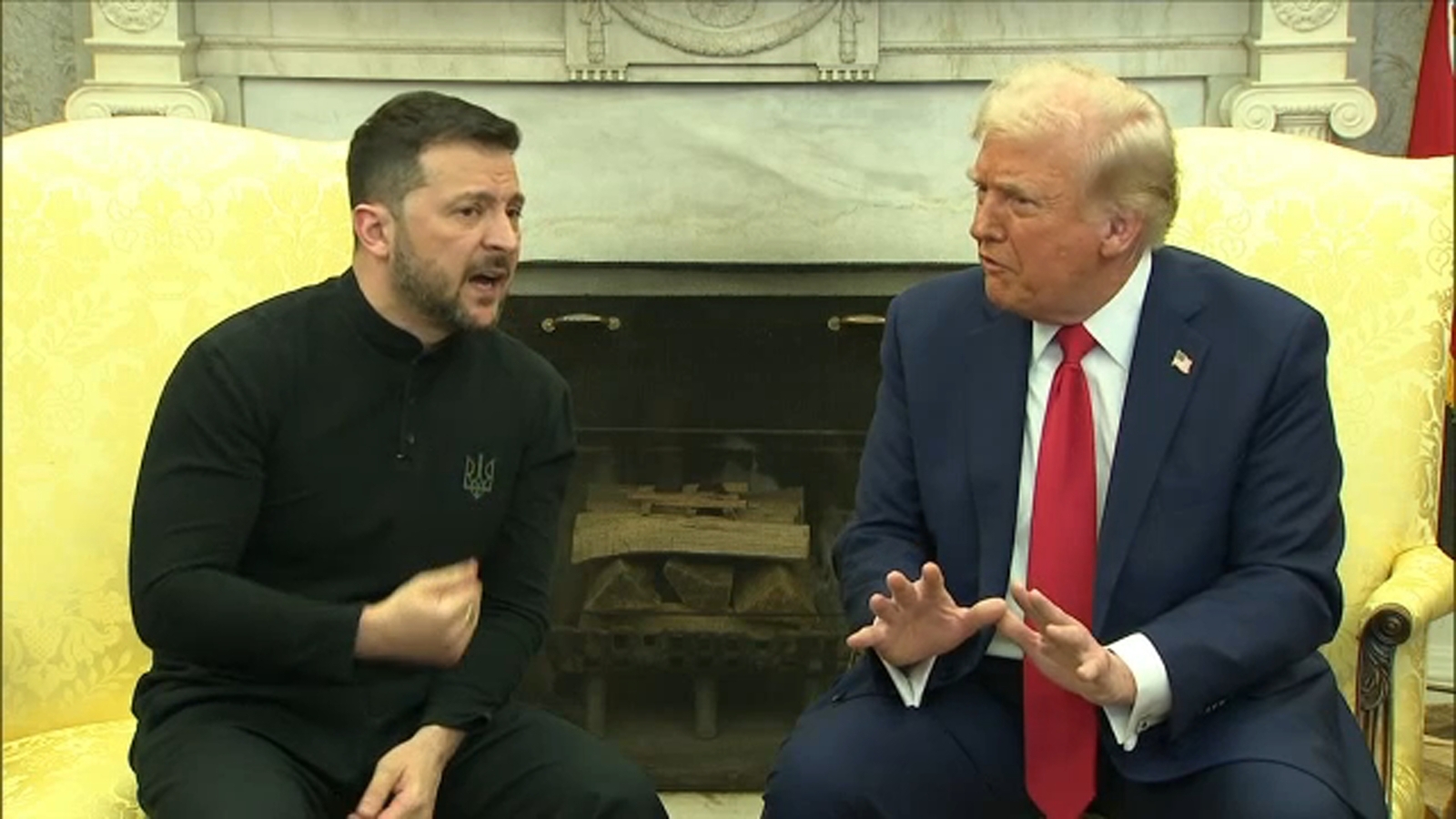
The Trump Zelenskyy Oval Office meeting on Friday devolved into an unprecedented shouting match that has sent shockwaves through international diplomacy. What was supposed to be a historic signing ceremony for a mineral resources agreement instead became a fiery confrontation broadcast live on camera, leaving allies and adversaries alike scrambling to interpret the fallout. The extraordinary scenes in the White House have raised serious questions about the future of U.S.-Ukraine relations and the trajectory of peace negotiations in Eastern Europe.
A Meeting That Was Meant to Seal a Deal
President Volodymyr Zelenskyy traveled to Washington with what appeared to be a clear mission: finalize an agreement granting the United States access to Ukraine’s valuable mineral resources. The deal was widely seen as a symbolic gesture of continued American partnership and a stepping stone toward broader economic cooperation. Diplomats on both sides had spent weeks laying the groundwork, and the atmosphere in the lead-up to the visit was cautiously optimistic.
However, what unfolded in the Oval Office defied every expectation. Within minutes of the cameras rolling, the Trump Zelenskyy Oval Office meeting transformed from a diplomatic occasion into one of the most contentious exchanges ever witnessed in that historic room. The carefully choreographed event collapsed entirely, with the planned news conference abruptly canceled. Zelenskyy departed the White House shortly after, leaving behind an unsigned deal and a diplomatic crisis in his wake.
The Confrontation Unfolds
The argument erupted as Trump and Vice President JD Vance accused Zelenskyy of being “disrespectful” toward the United States. The Ukrainian president attempted to push back against what he characterized as misinformation about the origins of the conflict, but found himself outnumbered and increasingly isolated in the room. Trump, in particular, repeatedly interrupted Zelenskyy, speaking over him and dismissing his concerns with pointed rebukes.
The core of the Trump Zelenskyy Oval Office shouting match centered on differing approaches to ending the war. Trump has positioned himself as a dealmaker determined to broker peace quickly, while Zelenskyy has insisted on security guarantees and a just resolution that acknowledges Russia’s full-scale invasion. These fundamental disagreements, long simmering beneath the surface, boiled over in real-time before the watching world.
Trump’s Ultimatum: “Make a Deal or We’re Out”
Perhaps the most chilling moment of the entire confrontation came when Trump delivered what amounted to a direct warning to the Ukrainian leader. With tensions already running high, the American president laid out his position in stark terms.
- “You’re gambling with World War III,” Trump told Zelenskyy as the two men spoke over each other.
- “You’re either going to make a deal or we’re out,” he continued, his voice rising.
- “And if we’re out, you’ll fight it out. I don’t think it’s going to be pretty, but you’ll fight it out.”
This Trump Zelenskyy argument represented more than a heated exchange between two leaders. It signaled a fundamental shift in American policy toward Ukraine, with Trump making clear that continued U.S. involvement comes with strings attached. The ultimatum sent a powerful message not only to Kyiv but also to European allies who have relied on American leadership in supporting Ukraine’s defense.
JD Vance Steps Into the Fray
Vice President Vance played a pivotal and aggressive role in the confrontation, directly challenging Zelenskyy on multiple fronts. Vance defended Trump’s diplomatic outreach to Russian President Vladimir Putin and questioned whether the Ukrainian leader had shown sufficient gratitude for American support.
“Mr. President, with respect, I think it’s disrespectful for you to come into the Oval Office and try to litigate this in front of the American media,” Vance said pointedly. He went further, suggesting that Ukraine’s manpower problems and conscription challenges meant Zelenskyy should be “thanking the president for trying to bring an end to this conflict.”
Zelenskyy attempted to defend his nation’s position, asking Vance whether he had ever visited Ukraine to witness the destruction firsthand. The Ukrainian leader pushed back firmly, noting that while America enjoys the protection of oceans, Ukraine has borne the direct brunt of Russian aggression. Trump’s response was swift and sharp: “Don’t tell us what we’re going to feel. We’re trying to solve a problem. Don’t tell us what we’re going to feel.”
Zelenskyy’s Stand on Putin
Before the confrontation reached its boiling point, Zelenskyy delivered a passionate appeal regarding Russian President Vladimir Putin. Standing in the Oval Office, the Ukrainian president made his case with characteristic intensity.
“I really count on your strong position to stop Putin,” Zelenskyy said. “He is a killer and terrorist. But I hope that together we can stop him.”
These words highlighted the stark philosophical divide that has emerged between Washington and Kyiv. Zelenskyy’s characterization of Putin as a terrorist stands in sharp contrast to Trump’s more measured language about the Russian leader. Just one day before the meeting, Trump had publicly stated that he trusts Putin to “keep his word” if a deal is reached, a statement that drew sharp criticism from Ukraine’s supporters and members of Congress alike.
The “Dictator” Disparity
One of the more puzzling aspects of the current American diplomatic posture has been the apparent asymmetry in how Trump characterizes the two leaders. Trump has repeatedly called Zelenskyy a “dictator” without elections, yet has declined to use similar language for Putin, despite Russia holding elections under widely criticized conditions. This inconsistency has not been lost on observers of the Trump Zelenskyy Oval Office meeting, who note that it reflects a broader pattern in which Trump appears to maintain warmer relations with Moscow than with Kyiv.
When pressed on his relationship with Putin during the heated exchange, Trump pushed back against suggestions of alignment. “I’m not aligned with Putin. I’m not aligned with anybody. I’m aligned with the United States of America,” he declared. Yet he immediately followed by criticizing Zelenskyy’s visceral opposition to the Russian leader, suggesting that such “hatred” makes negotiations more difficult.
The Mineral Deal That Never Was
Perhaps the most tangible casualty of the Trump Zelenskyy Oval Office meeting was the Ukraine mineral resources deal that brought the two leaders together in the first place. The agreement, designed to give the United States preferential access to Ukraine’s rare earth minerals and other valuable natural resources, was intended as a concrete demonstration of ongoing partnership. Instead, it remains unsigned, with both leaders walking away empty-handed from what should have been a diplomatic triumph.
Economic analysts have noted that Ukraine sits on significant deposits of titanium, lithium, and other minerals critical to modern technology and defense industries. The deal represented a strategic opportunity for the United States to diversify its supply chains while providing Ukraine with a tangible symbol of American commitment. Its collapse raises questions about whether such an agreement can be salvaged in the future, or whether the diplomatic damage from the shouting match has rendered it politically untenable.
Broader Implications for Ukraine Peace Negotiations
The fallout from this extraordinary meeting extends far beyond the two men in the room. European leaders, many of whom have committed significant resources to supporting Ukraine, watched with alarm as their key American ally publicly berated the leader of a nation under siege. NATO partners are now reassessing their own strategies, wondering whether the security guarantees they have extended to Ukraine remain backed by Washington’s full weight.
What Comes Next?
Following the confrontation, Trump took to social media to make his position unmistakably clear. In a statement posted shortly after Zelenskyy’s departure, the president declared that he had “determined that President Zelenskyy is not ready for Peace if America is involved.” Trump wrote that Zelenskyy “disrespected the United States of America in its cherished Oval Office” and added, “He can come back when he is ready for Peace.”
This public admonition effectively placed the burden of any future rapprochement squarely on Zelenskyy’s shoulders. For Ukraine, which depends heavily on American military aid and intelligence sharing, the stakes could not be higher. The Ukrainian leader now faces a difficult choice: make concessions that satisfy Trump’s demands for quick resolution, or risk losing American support altogether.
Historical Context and Expert Analysis
Diplomatic historians have struggled to find parallels for what transpired in the Oval Office. According to DePaul University history professor Tom Mockaitis, the scene reflected a radical departure from traditional American statecraft. Throughout the post-World War II era, the United States has generally maintained a posture of supporting democratic allies facing external aggression. The Trump Zelenskyy Oval Office meeting appeared to upend that convention in real-time.
Mockaitis and other experts have noted that previous administrations, regardless of political affiliation, have generally sought to project strength and unity when meeting with foreign leaders, particularly those representing nations under threat. The very public nature of the dressing-down delivered to Zelenskyy represents a new chapter in how America engages with its allies, one that allies worldwide are watching with growing concern.
Conclusion: A Diplomatic Reckoning
The Trump Zelenskyy Oval Office meeting will likely be remembered as one of the most extraordinary diplomatic encounters in modern American history. What was intended as a celebration of partnership ended as a public rupture that has called into question the foundations of U.S. foreign policy toward Ukraine and, by extension, the broader international order. As the dust settles, the world is left watching to see whether this was a momentary flare-up or the beginning of a more profound realignment. For Zelenskyy and the people of Ukraine, who have endured years of war and sacrifice, the stakes could hardly be higher. The path forward remains unclear, but one thing is certain: the events of that day in the Oval Office have already reshaped the conversation about America’s role in the world and the future of European security.