
As anticipation builds around a highly anticipated prime time address focused on the Trump 2020 election speech, Democrats have wasted no time firing back with their own prebuttal. With the president expected to revisit his long-standing claims about the 2020 presidential contest, political tensions in Washington have reached a boiling point just as the midterm election cycle heats up. The clash underscores how the battle over past elections is reshaping the political landscape heading into 2026.
Democrats Set the Tone Ahead of the Address
Rather than waiting for the president to take the airwaves, Democratic leaders moved swiftly to frame the narrative. Senate Minority Leader Chuck Schumer captured the party’s sentiment in stark terms, declaring that Trump is “scared to death” of the upcoming midterm elections and is attempting to redirect national attention away from pressing economic and governance concerns.
Schumer’s sharp critique went beyond the 2020 election controversy itself. He argued that the president would be better served focusing on issues that actually affect American families. “The bottom line is, if Trump wants to win the American people over, instead of the nonsense about 2020, he ought to focus on lowering people’s costs, getting rid of the chaos in administration, and getting rid of the corruption,” Schumer told reporters.
Ossoff Takes the Fight to Georgia
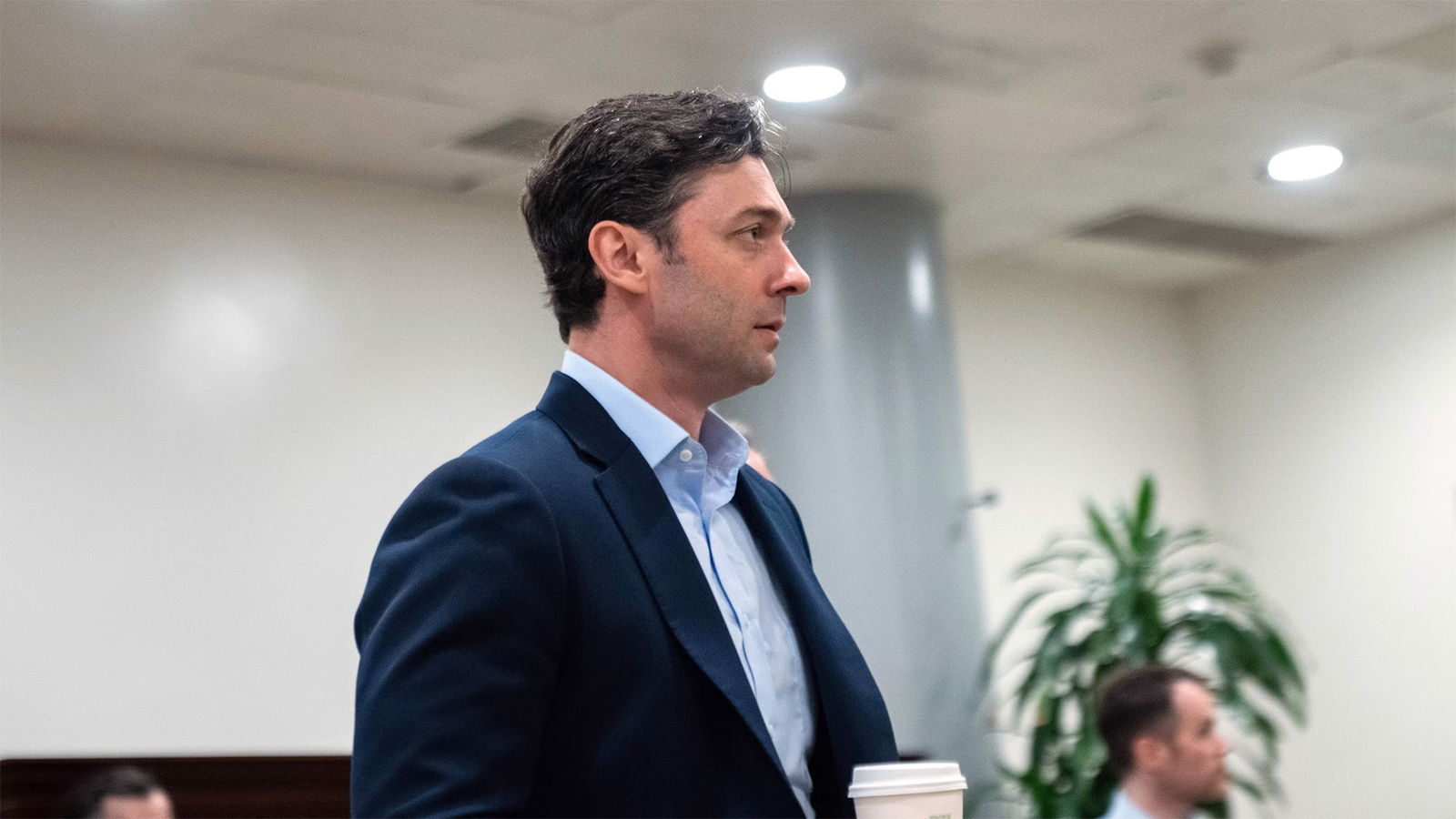
Few Democrats have been as vocal in the prebuttal effort as Georgia Senator Jon Ossoff, whose state has been at the epicenter of the administration’s post-2020 election challenges. Ossoff, who faces his own re-election battle in November, didn’t hold back when discussing what he expects from the Trump 2020 election speech.
“Here’s what’s going to happen tonight: the world’s most famous sore loser will deliver a prime-time presidential sour grapes address to pursue his six-year-old grievances about the 2020 election, while his war in the Middle East spirals out of control and the cost of living continues to rise for Americans across the country,” Ossoff predicted with characteristic bluntness.
Ossoff went further by drawing a sharp line between his state’s voters and the president’s claims. He argued that questioning Georgia’s election results is essentially questioning the legitimacy of Georgia voters themselves. “If the president declares Georgia’s elections illegitimate, or if the president declares Georgia’s sitting United States senators illegitimate, he is declaring Georgia voters illegitimate. It’s Donald Trump who tried to defraud Georgia voters in that election,” Ossoff said.
The White House Preview: Tight-Lipped and Defensive
At the White House daily briefing, Press Secretary Karoline Leavitt offered only minimal details about what the president planned to say, confirming only that the address would touch on “protecting the integrity of our elections.” When pressed by reporters about whether revisiting the 2020 election could alienate swing voters, Leavitt pushed back firmly against the speculation.
“I’ve seen a lot of reporting and, frankly, misreporting about what the president will say. I think the American people will be relieved to hear what they are hearing from the president of the United States and his commitment to transparency and the focus on the integrity of our elections tonight,” she stated.
When ABC News correspondent Rachel Scott raised the political concerns expressed by some members of the president’s own party, Leavitt simply encouraged patience. Her responses suggested a White House strategy of staying on offense while keeping specifics under wraps until the prime time moment arrived.
Republican Voices of Dissent Emerge
Perhaps the most striking development heading into the Trump 2020 election speech wasn’t Democratic opposition but rather public criticism from members of the president’s own party. Several prominent Republicans openly questioned whether rehashing 2020 was strategically wise with midterms looming.
Senators Tillis and Cornyn Sound the Alarm
Outgoing North Carolina Senator Thom Tillis offered one of the clearest warnings about the political implications of the speech. Asked directly whether Trump focusing on the 2020 election heading into the midterms was a good message for Republicans, Tillis was unequivocal.
“No, not at all. Look, we can’t re-prosecute that campaign. Anytime you’re looking back, you’re not looking ahead and I’m looking ahead to these elections, and the president should as well,” Tillis said.
Texas Senator John Cornyn echoed this concern while also expressing frustration with Jay Clayton’s recent confirmation hearing performance before the Senate Intelligence Committee. Clayton, Trump’s nominee for director of national intelligence, declined to answer questions about who won the 2020 election during his hearing, drawing criticism from both sides of the aisle.
“I thought a lot of it was pretty silly,” Cornyn remarked about Clayton’s responses. “I don’t know why we’re still talking about the 2020 election on either side of the aisle. We got important work to do and I think the most important is coming up here in the midterms.”
Representative Massie Calls It a “Ruse”
Kentucky Representative Thomas Massie took an even more direct approach, accusing the White House of attempting a strategic distraction. He argued that the focus on election integrity is itself a deflection from broken political promises.
“The problem is not that we didn’t win the elections. The problem is that we broke our promises when we got here. So, it’s a ruse because they’re trying to convince the American people the problem is the elections. The problem is the people that they’ve elected,” Massie stated bluntly.
The Clayton Confirmation Complication
The controversy surrounding Jay Clayton’s nomination has added another layer of complexity to the political environment surrounding the Trump 2020 election speech. Senator Mark Warner, the top Democrat on the Senate Intelligence Committee, indicated that the president’s address could directly influence how he votes on Clayton’s confirmation.
Warner warned that if Trump uses the speech to make what he characterized as “outrageous claims” about the 2020 election, it would strengthen the case for having a director of national intelligence willing to “take truth to power.” This framing positions Clayton’s confirmation as a potential referendum on the administration’s commitment to factual accuracy.
Broader Political Stakes Heading Into the Midterms
The prebuttal to the Trump 2020 election speech reveals something fundamental about the current political moment: both parties recognize that messaging matters enormously with voters already casting attention toward November’s midterm elections. Democrats are eager to paint the president as obsessed with past grievances while ignoring economic pain. Republicans, meanwhile, are divided between loyalty to Trump’s broader political movement and pragmatic concerns about winning elections.
The geographic dimensions of this fight are particularly noteworthy. Georgia remains a critical battleground where Ossoff’s seat could determine Senate control. Arizona, Michigan, Pennsylvania, and Wisconsin continue to feature prominently in national conversations about election procedures. And senators facing competitive races in states like North Carolina and Texas are openly worried about national messaging that emphasizes 2020 rather than kitchen-table concerns.
Economic Concerns Loom Large
One thread running through the Democratic prebuttal is the emphasis on economic issues that directly affect voters. References to rising costs of living, foreign policy challenges in the Middle East, and what Schumer characterized as administrative chaos all point to a Democratic strategy of contrasting the president’s focus on past elections with tangible present-day concerns.
This approach reflects a broader recognition that inflation, healthcare costs, housing affordability, and global conflicts tend to drive voter decisions more powerfully than procedural disputes over past elections. By positioning the Trump 2020 election speech as an unwelcome distraction from these issues, Democrats hope to frame the choice voters face in November on their preferred terms.
What to Watch Moving Forward
Several developments will be worth monitoring in the days following the address. First, the immediate polling reaction among swing voters will provide critical data on whether Trump’s approach energizes his base or alienates moderate voters. Second, how vulnerable Republican senators navigate between supporting the president and appealing to broader constituencies will shape the midterm trajectory. Third, the Clayton confirmation vote will serve as an early test of whether Senate Republicans are willing to break with the administration on election-related matters.
The underlying tension here is timeless: how does a political party balance the demands of its most passionate supporters with the need to win over persuadable voters? Trump’s continued focus on 2020 clearly satisfies a vocal segment of the Republican base. But as Tillis, Cornyn, and Massie have publicly noted, that strategy carries real political risks that could materialize in November.
Conclusion
The prebuttal to the Trump 2020 election speech has exposed the deep fault lines running through American politics on the eve of a critical midterm cycle. Democrats have seized the opportunity to portray the president as disconnected from voter concerns, while notable Republicans have broken with the administration to warn against looking backward rather than forward. As the speech itself airs and reactions pour in, one thing is certain: the fight over how Americans understand the 2020 election shows no signs of fading from the national conversation. Whether this focus becomes a winning strategy or a costly distraction will only become clear when voters head to the polls later this year.