
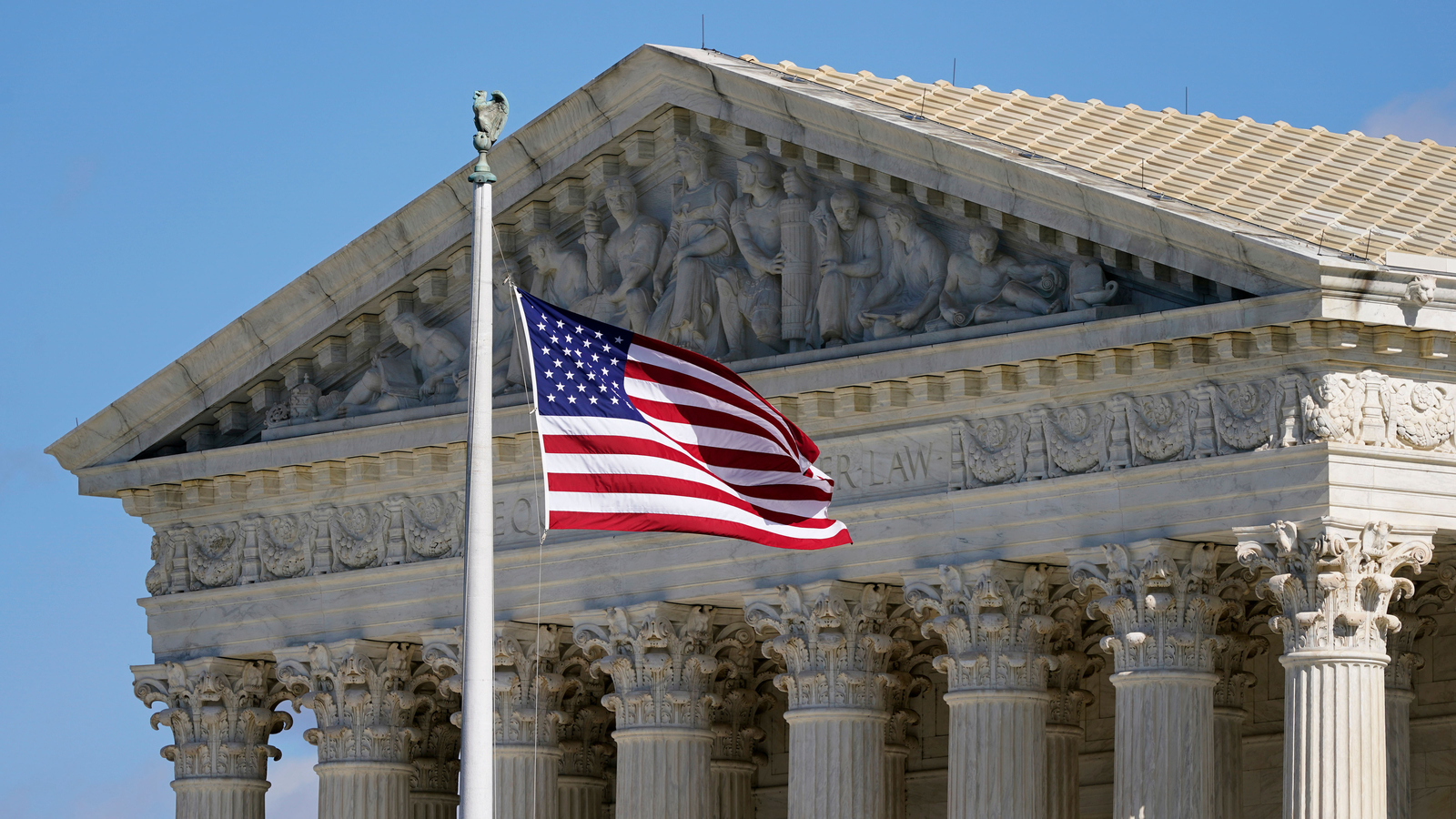
In a decision that has sent shockwaves through American democracy, the Supreme Court has fundamentally weakened the voting rights act, striking down a majority-Black congressional district in Louisiana and reshaping the legal landscape for minority political representation nationwide. The 6-3 ruling, delivered by the court’s conservative majority, represents the most significant erosion of the landmark 1965 civil rights legislation in decades and could have profound consequences for congressional redistricting heading into the 2028 election cycle.
What the Court Decided
The case centered on Louisiana’s 6th Congressional District, represented by Democrat Cleo Fields. The district, which stretches more than 200 miles across the state connecting Shreveport, Alexandria, Lafayette, and Baton Rouge, was found to rely too heavily on racial considerations in its boundaries. Chief Justice John Roberts famously described the district’s shape as resembling a “snake” winding across the Louisiana landscape.
Justice Samuel Alito, writing for the six conservative justices, declared the map “an unconstitutional gerrymander.” The majority’s interpretation dramatically narrows Section 2 of the Voting Rights Act, which has served as the primary legal tool for challenging racially discriminatory voting practices since the law’s passage during the height of the civil rights movement.
“Allowing race to play any part in government decisionmaking represents a departure from the constitutional rule that applies in almost every other context,” Alito wrote. The decision effectively raises the bar for plaintiffs, limiting successful claims to those involving intentional discrimination rather than patterns that have the effect of diluting minority voting power.
The Liberal Dissent and What Remains of Section 2
Justice Elena Kagan, writing for the three dissenting liberal justices, delivered a blistering critique of the ruling. She warned that the court’s action “puts that achievement in peril,” referencing the decades of progress the Voting Rights Act had enabled since President Lyndon Johnson signed it into law more than 60 years ago. Johnson had famously described the legislation as “a triumph for freedom as huge as any victory on any battlefield.”
Kagan’s dissent painted a sobering picture of what the future may hold: states, she argued, “can, without legal consequence, systematically dilute minority citizens’ voting power.” Her words echoed concerns voiced by voting rights advocates who see the ruling as a fundamental rollback of protections for Black and Brown Americans at the ballot box.
Rep. Fields himself issued a statement warning that the “practical effect is to make it far harder for minority communities to challenge redistricting maps that dilute their political voice.” The uncertainty surrounding how much of Section 2 remains legally viable has left civil rights attorneys scrambling to understand the new terrain.
The Political Stakes and the 2028 Midterms
While the immediate impact may be muted this election cycle because most filing deadlines have passed, the ruling sets the stage for a dramatically different political map in 2028. Election law expert Nicholas Stephanopoulos has estimated that nearly 70 of the 435 congressional districts currently rely on Section 2 protections. The decision potentially opens the door for Republican-led states to redraw boundaries in ways that could dismantle many of these districts.
The political calculus is straightforward: by weakening protections for minority-majority districts, the court may enable Republicans to convert seats currently held by Democrats into more competitive districts, strengthening the party’s grip on the House of Representatives. Former President Barack Obama weighed in on the decision, stating that it showed “how a majority of the current Court seems intent on abandoning its vital role in ensuring equal participation in our democracy.”
President Donald Trump celebrated the ruling as “the kind of ruling I like,” underscoring how the decision fits within his ongoing effort to encourage Republican states to redraw their congressional maps. This nationwide redistricting competition kicked off earlier this year, with several states already engaged in aggressive map-drawing to boost GOP electoral prospects.
Florida’s Rush to Redraw
The decision’s timing proved especially consequential in Florida, where Republican Gov. Ron DeSantis had submitted a proposed congressional map designed to potentially give his party four additional seats in the state’s U.S. House delegation. As the ruling came down, Florida legislators were already debating the proposal on the floor.
Democrats in the Florida Senate urged their Republican colleagues to delay the debate, at minimum to allow time for lawmakers to read the decision and consult legal counsel about its implications. Republicans refused. The episode illustrated precisely how the court’s ruling could be weaponized almost immediately by state legislatures eager to maximize partisan advantage.
A Long-Running Campaign Against the Voting Rights Act
Chief Justice Roberts emerged as a central figure in the broader conservative effort to limit race-conscious decision-making in American government. His commitment to this project extends back decades, to his time as a young lawyer in the Reagan-era Justice Department. In a 2006 dissenting opinion, his first major vote-related decision as chief justice, Roberts wrote that “it is a sordid business, this divvying us up by race.”
In 2013, Roberts authored the majority opinion in Shelby County v. Holder, which gutted a different provision of the Voting Rights Act by striking down the requirement that certain states and localities with histories of discrimination obtain federal approval before changing election procedures. “Our country has changed,” Roberts wrote at the time, “and while any racial discrimination in voting is too much, Congress must ensure that the legislation it passes to remedy that problem speaks to current conditions.”
The latest decision represents a second major blow to the legislation, this time targeting Section 2’s enforcement mechanisms. Notably, Roberts and Justice Brett Kavanaugh, who had joined the liberal justices to uphold a second Black-majority district in Alabama just three years ago, joined the conservative side this time. That earlier Alabama decision had prompted Louisiana to add a second majority-Black district of its own, the very district now declared unconstitutional.
Partisan Reactions and What Comes Next
Predictably, reaction to the ruling fell along sharply partisan lines. The White House praised the decision as “a complete and total victory for American voters,” with spokeswoman Abigail Jackson declaring that “the color of one’s skin should not dictate which congressional district you belong in.”
Meanwhile, Rep. Suzan DelBene of Washington, chair of the Democratic Congressional Campaign Committee, called the decision “appalling” and characterized it as the latest in a series of attacks by Trump and the conservative court “against the fundamental right of every American citizen to vote.” She insisted that Democrats remained well-positioned to reclaim the House majority in November despite the ruling.
Perhaps the most sobering assessment came from Jonathan Cervas, a political scientist at Carnegie Mellon University who has served as an outside legal expert in multiple voting rights cases. He concluded bluntly: “The Voting Rights Act as a means to protect minority voters from vote dilution is essentially dead.”
Conclusion
The Supreme Court’s decision marks a watershed moment in American constitutional law and political practice. By hollowing out Section 2 of the Voting Rights Act, the conservative majority has fundamentally altered the mechanisms by which minority communities have sought to defend their political representation for generations. The full consequences will unfold over the coming years, particularly visible in the 2028 redistricting cycle, when legislatures across the country will have new opportunities to redraw district lines in ways that may dramatically reduce minority representation in Congress. As civil rights advocates and legal scholars grapple with the ruling’s implications, one thing remains certain: the long struggle over voting rights in America has entered a new and deeply uncertain chapter.