
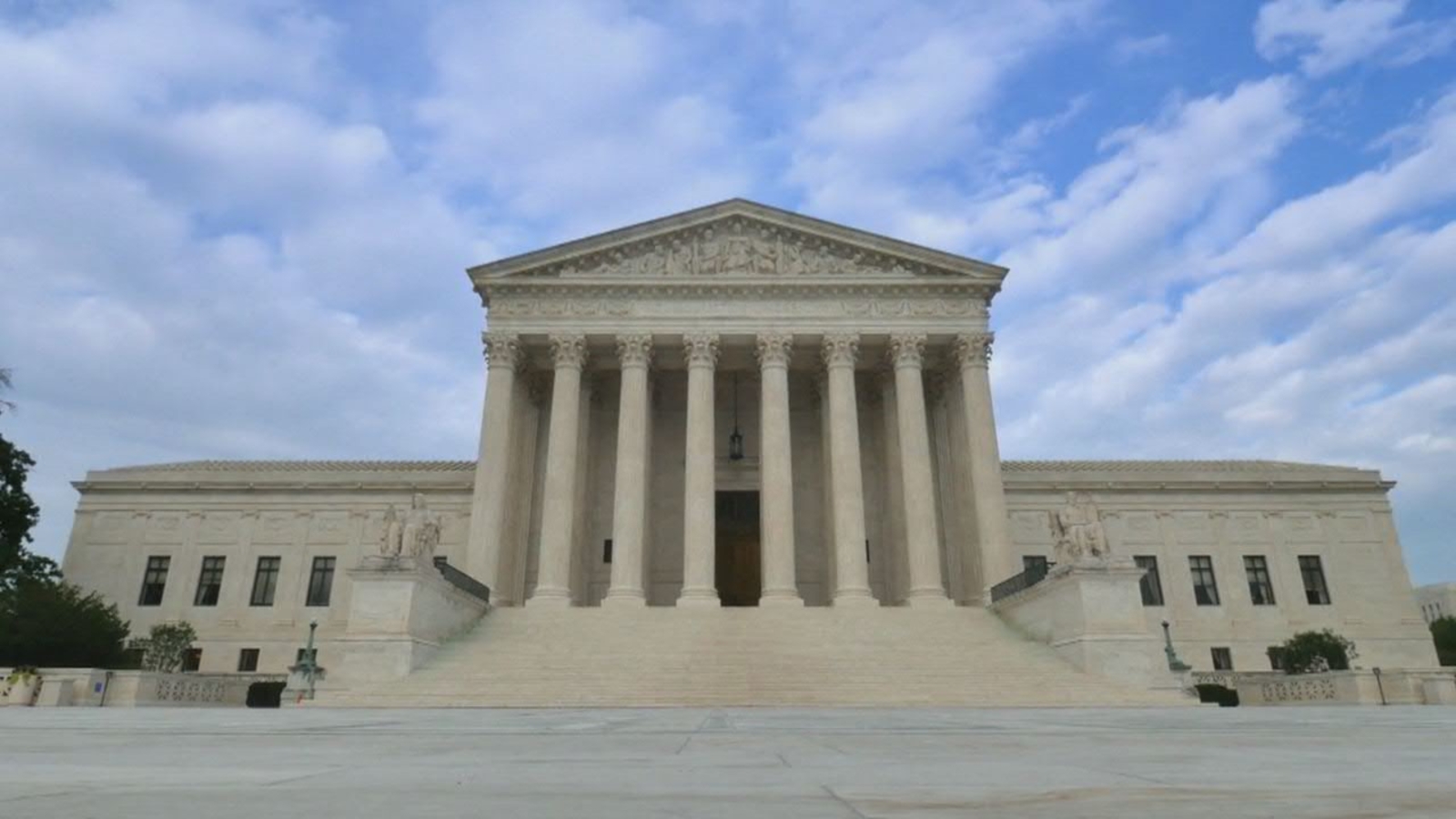
In a rare moment of judicial unity, the U.S. Supreme Court appeared to reach what Justice Neil Gorsuch characterized as “radical agreement” during oral arguments in a landmark reverse discrimination case that could reshape how employment discrimination claims are evaluated across the country. The case, Ames v. Ohio Department of Youth Services, centers on whether a straight white woman can pursue a discrimination claim when she alleges she was passed over for a promotion and later demoted in favor of less-qualified gay candidates.
Background of the Ames Case
Marlean Ames spent more than 15 years working for the Ohio Department of Youth Services before alleging that her employer engaged in unlawful workplace discrimination. According to her complaint, she was denied a promotion and subsequently demoted, with gay candidates selected in both instances despite having less experience and fewer qualifications than she did. Adding another layer to her allegations, Ames noted that her supervisor at the relevant time was also gay.
Ames brought her claims under Title VII of the Civil Rights Act of 1964, the landmark federal statute that prohibits employment discrimination on the basis of sex, race, color, religion, and national origin. The Supreme Court has previously ruled that Title VII’s protections extend to discrimination based on sexual orientation as well.
The Sixth Circuit’s Decision
Before the case reached the nation’s highest court, the Sixth Circuit U.S. Court of Appeals had dismissed Ames’s lawsuit. The appeals court ruled that she failed to establish a prima facie case of discrimination, which is the initial evidentiary burden plaintiffs must satisfy to move forward with a Title VII claim.
More specifically, the Sixth Circuit applied what is known as the “background circumstances” requirement. This judicial standard demands that plaintiffs who belong to majority demographic groups (such as white, male, or straight individuals) provide additional evidence demonstrating that their employer has a history of discriminating against such groups. Because Ames could not meet this heightened evidentiary threshold, her case was dismissed.
Ames challenged this requirement before the Supreme Court, arguing that the background circumstances rule imposes an unfair and discriminatory burden on majority-group plaintiffs simply because of who they are. Her argument struck a chord with nearly every justice on the bench.
A Rare Moment of Consensus
Perhaps the most striking development during oral arguments was the broad agreement that emerged across ideological lines. Even Ohio’s own Solicitor General, Elliot Gaiser, who was defending the lower court’s decision, conceded the point during questioning from Justice Amy Coney Barrett.
“We agree, Ohio agrees, that it’s wrong to treat people differently,” Gaiser told the Court.
Justice Sonia Sotomayor, the court’s senior liberal member, went further. She suggested that Ames’s circumstances presented something “suspicious” that warranted closer examination by the lower courts rather than outright dismissal. Justice Neil Gorsuch captured the prevailing mood with his characterization of “radical agreement” on the fundamental principle that Title VII’s protections must apply equally to all Americans, regardless of which demographic group they belong to.
A Likely Narrow Ruling
Despite the apparent consensus on the broader legal principle, Justice Brett Kavanaugh signaled that the Court would likely deliver a narrow decision. Rather than resolving the factual disputes in Ames’s case, the Court appears poised to issue what Kavanaugh described as “a really short opinion that says discrimination on the basis of sexual orientation, whether it’s because you’re gay or because you’re straight, is prohibited, and the rules are the same whichever way that goes.”
This approach would send the case back to the lower courts for further fact-based proceedings while reaffirming the equal application of federal anti-discrimination law. The Ohio Solicitor General urged the Court to make clear that even if the background circumstances rule is overturned, Ames may still face significant hurdles in proving her actual case of discrimination.
Broader Implications for Workplace Discrimination Law
Employment law experts have noted that this case could have far-reaching consequences well beyond the fate of one former Ohio state employee. Jonathan Segal, an employment lawyer and partner at Duane Morris LLP in Philadelphia, explained that a ruling favorable to Ames would send a powerful message about equal treatment under the law.
“On a broader level, the ruling will reinforce to the public that the law prohibits discrimination equally against majority and minority groups alike,” Segal said. “This likely will increase in all circuits the already increasing number of claims by members of so-called majority groups.”
The DEI Connection
One of the most significant downstream effects may involve corporate diversity, equity, and inclusion (DEI) programs, which have come under intense legal and political scrutiny in recent years. If the Court makes it easier for majority-group plaintiffs to pursue employment discrimination claims, employers may find their DEI initiatives exposed to greater legal risk.
“Of course, the Ames decision cannot be viewed in isolation,” Segal added. “It will take place at a time when DEI programs already are under the legal microscope. A finding of ‘reverse discrimination’ may subject an employer’s DEI programs to federal and state investigations.”
This concern is amplified by the broader cultural and political climate surrounding workplace discrimination and corporate diversity initiatives. As companies grapple with evolving legal standards and shifting public expectations, the Supreme Court’s ruling will likely add another layer of complexity to compliance efforts nationwide.
What to Watch in the Coming Months
A formal decision in Ames v. Ohio Department of Youth Services is expected by the end of June, when the Supreme Court traditionally concludes its annual term. Until then, employers, employees, and legal practitioners will be watching closely for signals about how the Court intends to frame its opinion.
Several key questions remain unanswered:
- Will the Court explicitly overturn the background circumstances requirement, or will it apply the rule more flexibly?
- How will the ruling affect the viability of DEI programs across different industries?
- Will majority-group plaintiffs see a meaningful uptick in successful discrimination claims in the months and years following the decision?
- How will other federal circuits respond, particularly those that have applied the background circumstances rule more strictly?
The Equal Protection Message
Whatever the precise wording of the final opinion, the oral arguments made one thing clear: the justices from across the ideological spectrum view the principle of equal treatment under Title VII as fundamental to American employment law. The “radical agreement” described by Justice Gorsuch suggests that the Court will not tolerate legal doctrines that effectively create different standards of justice for different demographic groups.
This unified front is notable in an era when Supreme Court decisions frequently divide along ideological lines on culturally charged issues. The fact that even Ohio’s own legal representative agreed with the plaintiff’s core argument underscores how broadly accepted the principle of equal application has become.
Conclusion
The Supreme Court’s consideration of the Ames case represents a pivotal moment in the ongoing national conversation about workplace discrimination, equal protection, and the legal boundaries of diversity initiatives. By all indications, the Court is preparing to reaffirm that Title VII’s protections apply equally to everyone, regardless of sexual orientation, race, or gender. While the formal ruling may be narrow in scope, its ripple effects could reshape employment discrimination litigation for years to come. For employers navigating the complex landscape of DEI programs and anti-discrimination compliance, the decision will demand careful attention and potentially significant adjustments to existing practices. As Justice Kavanaugh’s hypothetical opinion suggests, the simplest and most enduring message may be the one that resonates most clearly: discrimination is wrong, no matter who it targets.