
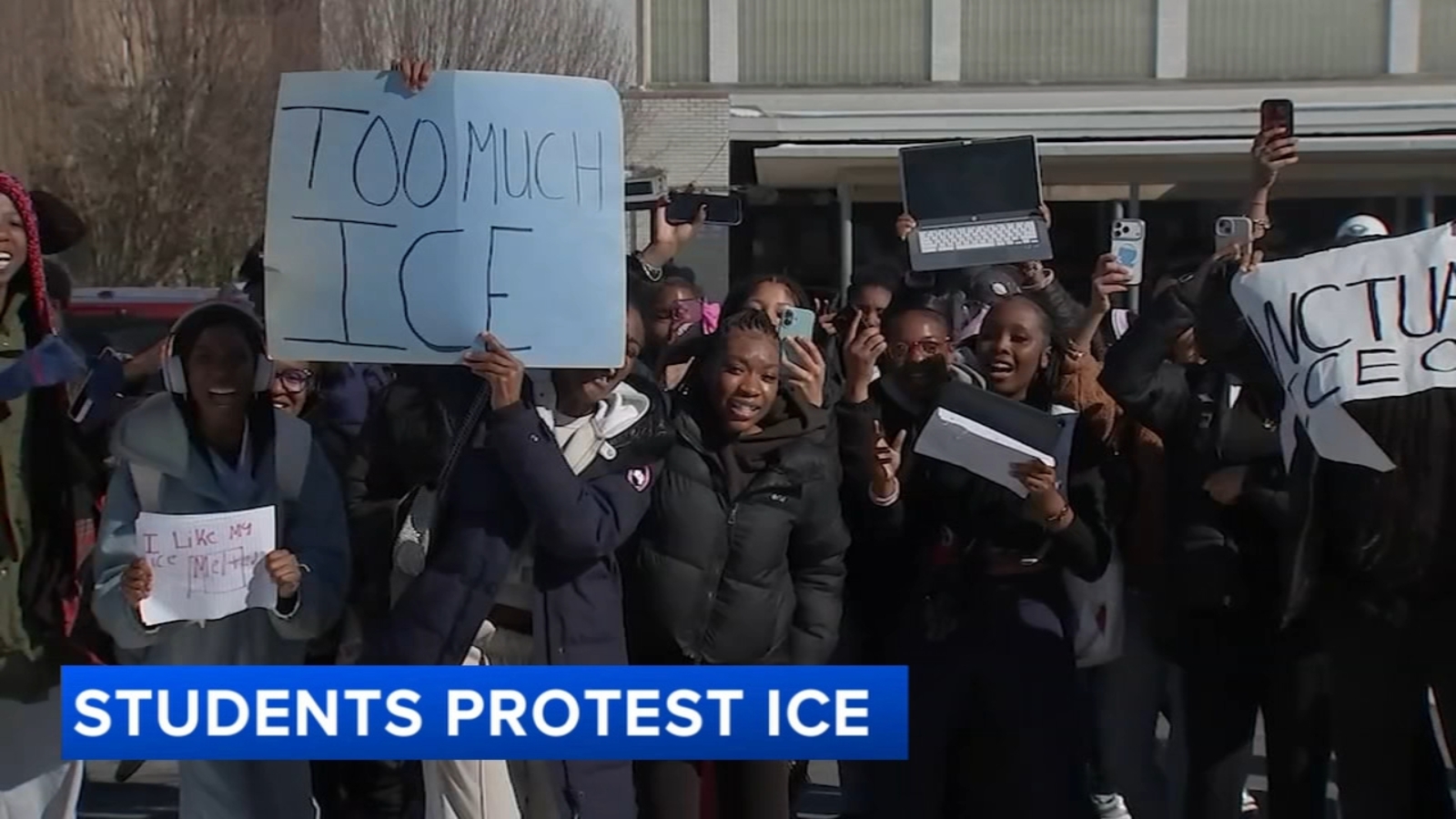
Hundreds of students at Upper Darby High School in Pennsylvania staged a powerful student walkout ICE protest on a recent Thursday afternoon, leaving their classrooms at 12:30 p.m. to voice opposition to immigration enforcement and to show solidarity with classmates from immigrant families. The demonstration highlighted the deeply personal impact federal immigration policies have on young people, while also reflecting a growing wave of student activism that has swept across the country.
The Walkout at Upper Darby High School
The Upper Darby walkout drew hundreds of participants who gathered outside the school building with a unified message: they want peace, justice, and an end to the fear they say immigration enforcement has brought into their community. The school district, which serves a student body representing more than 80 countries, is one of the most diverse in the region, and many of the students who participated said the issue touches their lives directly.
Senior Emma Kramer, who helped organize the demonstration, summed up the mood of the gathering in a simple but powerful statement. “We’re just gonna speak out because we choose peace. We choose people,” she told reporters. Fellow senior Dwayne Mills echoed a similar sentiment about opportunity and inclusion. “This is the land of opportunity. And everybody have the opportunity to do their own thing,” Mills said.
For many of the students who walked out, the ICE protest was not an abstract political exercise but a deeply emotional response to anxiety they feel at home. Junior Jasmin Guerra made this point clear when she described the daily fears that follow her throughout her school day. “I shouldn’t have to go home and worry if my parents are home,” Guerra said. Her words underscore the human reality behind the headlines, and they help explain why the Upper Darby school protest drew such a large turnout.
Student Voices Lead the Way
One of the defining features of this particular demonstration was that students took the lead in shaping both the message and the method. Junior Aniayah Pittman, who helped organize the walkout, explained why young people wanted to control the narrative. “At the end of the day, the kids, they want to hear from kids. Because we matter! We make the school,” Pittman said. Her comments captured the spirit of an emerging generation of student leaders who are finding their voice on national issues, particularly around immigration enforcement and the rights of immigrant communities.
Organizers were careful to frame the demonstration as a peaceful expression of solidarity rather than a disruption. After the walkout, students returned to their classrooms, and the district confirmed that no participants faced disciplinary action for taking part.
A National Wave of Student Activism
The Upper Darby High School protest was not an isolated event. It was part of a much broader wave of student walkouts held in cities across the United States in recent weeks. From Indianapolis to Los Angeles, young people have been leaving their classrooms to protest federal immigration policies and demand protections for immigrant families. This growing movement suggests that high schoolers are increasingly unwilling to remain silent on issues that they view as moral, personal, and urgent.
The Upper Darby walkout came just two days after a widely circulated incident in Phoenixville, where two Guatemalan men were arrested by ICE. Video of the arrest, which showed one man being pulled from a vehicle as onlookers screamed, drew national attention and helped fuel local frustration. Advocates and students alike pointed to the Phoenixville footage as a clear example of why so many families in their community live in fear of everyday encounters with law enforcement.
Community Response and Local Leadership
Before students stepped outside, school and township officials held a coordination forum to ensure the demonstration would remain peaceful and that students felt supported throughout the process. Both the school superintendent and the township’s police superintendent participated, signaling a collaborative approach to handling the walkout.
In an official statement, the school district emphasized its commitment to diversity and student voice. “Our students are beautifully diverse, and their feelings and voices are important to us,” the district told local news outlets. For many student organizers, that public affirmation carried real weight. “To have their support, it meant everything to us,” Pittman said.
Township councilmembers also voiced their backing for the students, with Councilmember Kyle McIntyre pointing to upcoming local legislation as a meaningful response to community concerns. McIntyre described a proposed resolution that would formally establish a policy against cooperating with ICE in civil immigration enforcement matters. “It’s a resolution to establish a policy that we will not work with ICE in civil immigration enforcement,” McIntyre explained. The measure is expected to come up for a vote in the coming weeks, and if passed, it could position Upper Darby as one of a growing number of municipalities taking a more cautious stance toward federal immigration operations.
Why This Walkout Matters
The Upper Darby demonstration carries significance on several levels. First, it illustrates how immigration policy debates are no longer confined to Washington, courtrooms, or border towns. They have moved into suburban school hallways, classrooms, and family kitchens across the country. When a high school junior says she fears her parents might not be home when she arrives, the conversation shifts from political talking points to lived experience.
Second, the walkout highlights the leadership capacity of young people, particularly in diverse communities where multiple languages, cultures, and histories intersect on a daily basis. Students at Upper Darby did not wait for adults or political leaders to define the moment. They organized, communicated, and acted , and they did so while still attending classes, completing assignments, and managing the typical pressures of adolescence.
Third, the local government’s response suggests that elected officials are beginning to recognize that immigration enforcement policy has real, measurable consequences at the community level. The proposed township resolution limiting cooperation with ICE in civil matters represents one of the clearest signals yet that some local leaders are listening to their youngest constituents.
The Personal Stakes for Immigrant Families
Perhaps the most powerful element of the Upper Darby High School protest is the way students tied national headlines to individual lives. For too many teenagers in immigrant households, school is not a refuge from worry but a pause in it. The walkout offered a rare public platform for young people to express what they usually carry in silence.
That emotional core helped explain both the size and the discipline of the demonstration. Students gathered, made their voices heard, and returned to class without incident , a deliberate choice that organizers hoped would reinforce the seriousness of their message rather than diminish it.
Looking Ahead
In the coming weeks, attention will likely shift to the Upper Darby township council vote on the proposed resolution limiting cooperation with ICE. If passed, the policy would join a growing patchwork of local measures around the country that seek to draw clearer lines between local policing and federal immigration enforcement. For student organizers, the resolution represents a tangible outcome of their activism , proof that walking out of class, when done with purpose and planning, can translate into real policy debate.
Meanwhile, the broader movement of student walkouts ICE protests shows no sign of slowing. As more young people across the country witness the consequences of aggressive immigration enforcement in their own neighborhoods, classrooms, and families, the call for peace, justice, and dignity is likely to keep growing louder.
Conclusion
The Upper Darby High School walkout stands as a vivid reminder that immigration is not just a federal policy debate , it is a daily reality for millions of American families, including the children in those families. By stepping outside their classrooms to speak for themselves, hundreds of students transformed a school day into a historic moment of civic engagement. Their message was simple, consistent, and deeply felt: they want peace, they want justice, and they want their communities to be places where no child has to worry whether their family will still be intact when the school bell rings at the end of the day. That message , delivered by students, supported by educators, and echoed by local leaders , is one that will resonate well beyond Upper Darby in the weeks and months ahead.