
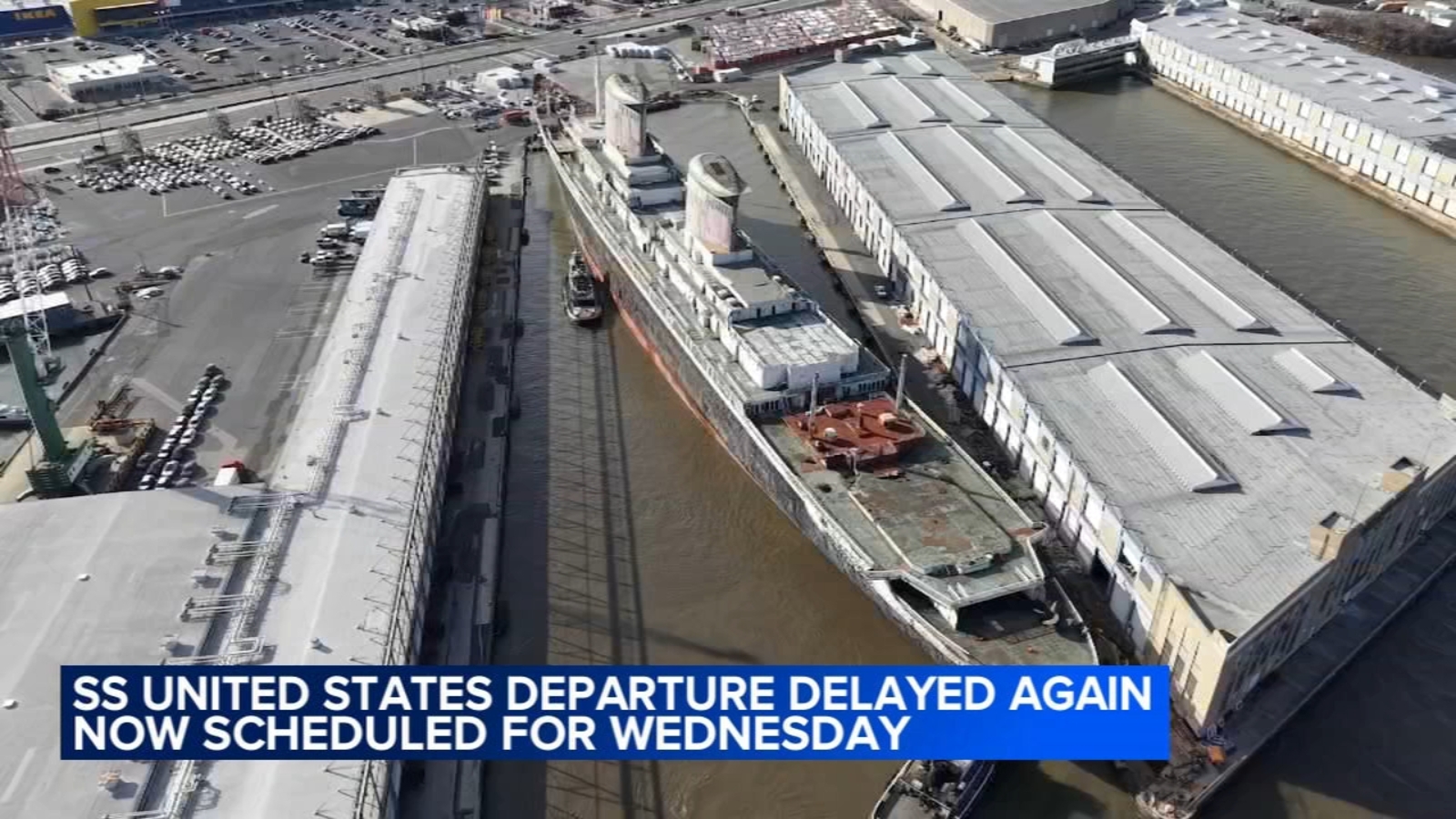
The departure of the SS United States, one of America’s most storied ocean liners, has been postponed once again. Originally scheduled to leave Philadelphia on Presidents Day and then pushed to Tuesday, the historic vessel’s final voyage has now been rescheduled for Wednesday, with tugboats expected to begin maneuvering the ship into the Delaware River around 12:51 p.m. High winds proved to be the latest obstacle in a string of delays that have plagued the ship’s long-anticipated exit from the port city where it has rested for nearly three decades.
Why the SS United States Departure Keeps Getting Pushed Back
This marks the third delay in just one week for the iconic ocean liner. According to officials, a high wind warning in the Philadelphia area forced the cancellation of Tuesday’s planned departure. The ship must be towed during specific tidal windows, and adverse weather conditions make navigating the Delaware River channel too risky for such a massive vessel.
The journey had already faced numerous setbacks before this most recent weather-related delay. Originally, the SS United States was supposed to depart Philadelphia back in November, but “logistical details” postponed that timeline. A tropical disturbance in the Gulf of Mexico added another complication. Earlier this month, plans were again disrupted due to a pier transition delay that prevented the vessel from moving forward.
Despite these ongoing challenges, the ship’s new owners have confirmed they have completed all necessary safety requirements to begin the move. Phase one of the relocation was completed on Friday, when the ship was moved from Pier 82 to Pier 80 , a significant milestone that occurred alongside Philadelphia’s Eagles victory parade.
The Route: Bridges, Rivers, and the Open Atlantic
When Wednesday’s departure finally happens, the historic ocean liner will embark on a carefully choreographed journey through one of America’s busiest waterways. Tugboats will guide the vessel out into the Delaware River channel during low tide, which is expected to occur around 12:29 p.m.
The ship will pass beneath several major bridges along its route, requiring coordination with the Delaware River Port Authority (DRPA):
- Walt Whitman Bridge (I-76)
- Commodore Barry Bridge (US 322)
- Delaware Memorial Bridge (I-295)
These bridge closures will need to be coordinated carefully to accommodate the towering vessel, which stands as a testament to mid-20th century American shipbuilding prowess.
From Philadelphia to Mobile: A Two-Week Journey
Once the SS United States clears Philadelphia, it will begin a roughly two-week voyage along the eastern seaboard, heading toward Mobile, Alabama. The ship will be towed, not self-propelled, making this a slow and steady procession rather than a triumphant sail.
Mobile serves as an interim stop where the vessel will undergo extensive preparation before its ultimate destination. The interior of the ship must be stripped of any hazardous materials, including asbestos and other toxins, before it can be scuttled. This remediation process is expected to take approximately one year to complete.
A New Life as the World’s Largest Artificial Reef
The destination that awaits the SS United States is both unusual and ambitious. Okaloosa County, Florida, purchased the derelict ship in fall 2024 after approving a $10.1 million plan that will see the vessel transformed into the world’s largest artificial reef.
Once environmental cleanup is finished, the ship will be towed back out to the Gulf of Mexico, traveling approximately 20 miles southeast to waters just off the coast of Destin-Fort Walton Beach. There, it will be intentionally sunk in about 180 feet (55 meters) of water, creating an underwater habitat roughly 20 miles (32 kilometers) from shore.
Why an Artificial Reef?
Okaloosa County has significant experience with shipwreck habitats and sees tremendous potential in the SS United States project. Officials hope the vessel will:
- Attract scuba divers from around the world
- Create marine habitats for fish and other sea life
- Boost tourism in the Destin-Fort Walton Beach area
- Complement existing artificial reef structures in the Gulf
A $1 million seaside museum is also planned to chronicle the storied history of this remarkable cruise liner, ensuring that visitors can learn about the ship’s legacy both above and below the waterline.
The Illustrious History of America’s Flagship
To understand why this ship matters so much, one needs to appreciate its remarkable past. Christened in 1952, the SS United States was once considered the pinnacle of American engineering and maritime achievement. Known affectionately as “America’s Flagship,” the vessel served a dual purpose as both a luxurious ocean liner and a military transport capable of carrying thousands of troops.
On its maiden voyage in 1952, the SS United States accomplished something extraordinary , it shattered the transatlantic speed record in both directions. The ship reached an average speed of 36 knots, or just over 41 mph (66 kph), crossing the Atlantic in just three days, 10 hours, and 40 minutes. This feat bested the legendary RMS Queen Mary’s time by an impressive 10 hours.
To this day, the SS United States still holds the transatlantic speed record for an ocean liner , a record that has stood for over 70 years.
From Glory to Decline
Despite its triumphant early years, the SS United States eventually fell victim to the changing economics of transatlantic travel. The rise of jet aviation made ocean liners increasingly obsolete. The ship became a reserve vessel in 1969 and subsequently bounced between various private owners who hoped to redevelop it but found their ambitions too expensive or poorly timed for the market.
The vessel found its way to Pier 82 in South Philadelphia in 1996, where it has remained for nearly three decades. During that time, the SS United States Conservancy, a nonprofit organization, saved the ship from the scrapyard in 2011, but their plans to rehabilitate the vessel never came to fruition.
For many years, the deteriorating ship sat at the Philadelphia pier at a cost of $1,000 per week , a constant drain on the resources of those trying to preserve it.
Preserving a Legacy Beneath the Waves
Florida officials have expressed their commitment to honoring the SS United States’ storied history and the countless memories the vessel has created for generations of travelers. While some may mourn the idea of scuttling such a historically significant ship, supporters argue that its new role as an artificial reef represents the best possible outcome given the vessel’s deteriorated condition.
The combination of the underwater destination and the planned museum ensures that the SS United States will continue to educate and inspire, even in its final form. Scuba divers exploring the wreck in the decades to come will swim through corridors that once hosted heads of state, Hollywood celebrities, and thousands of American troops during the mid-20th century.
Tracking the Final Voyage
For those wanting to witness the historic departure, the ship’s journey will be trackable online once it begins moving. The Destin-Fort Walton Beach website will provide real-time updates on the vessel’s progress as it makes its way south along the eastern seaboard. Given the route’s complexity, with major bridges requiring temporary closures and tugboats coordinating every maneuver, this promises to be one of the more unusual maritime events in recent American history.
Conclusion: The End of an Era, The Beginning of Another
The repeated delays of the SS United States’ departure from Philadelphia may be frustrating for those eager to see this chapter of maritime history unfold, but they underscore the complexity of moving such a massive and historically significant vessel. From navigating wind warnings to coordinating bridge closures and tidal schedules, every aspect of this journey requires meticulous planning and a healthy respect for the forces of nature.
As the SS United States finally sets sail on Wednesday, it will leave behind nearly 30 years docked at Pier 82 and embark on its ultimate transformation , from proud ocean liner to underwater monument. While it may seem strange to deliberately sink such a magnificent ship, the project represents a fitting second act for America’s Flagship: a vessel that once conquered the Atlantic at record speeds will now become a destination for divers, a habitat for marine life, and a lasting tribute to a bygone era of transatlantic travel. The SS United States may soon rest beneath the waves, but its legacy as the fastest ocean liner ever built will continue to capture imaginations for generations to come.