
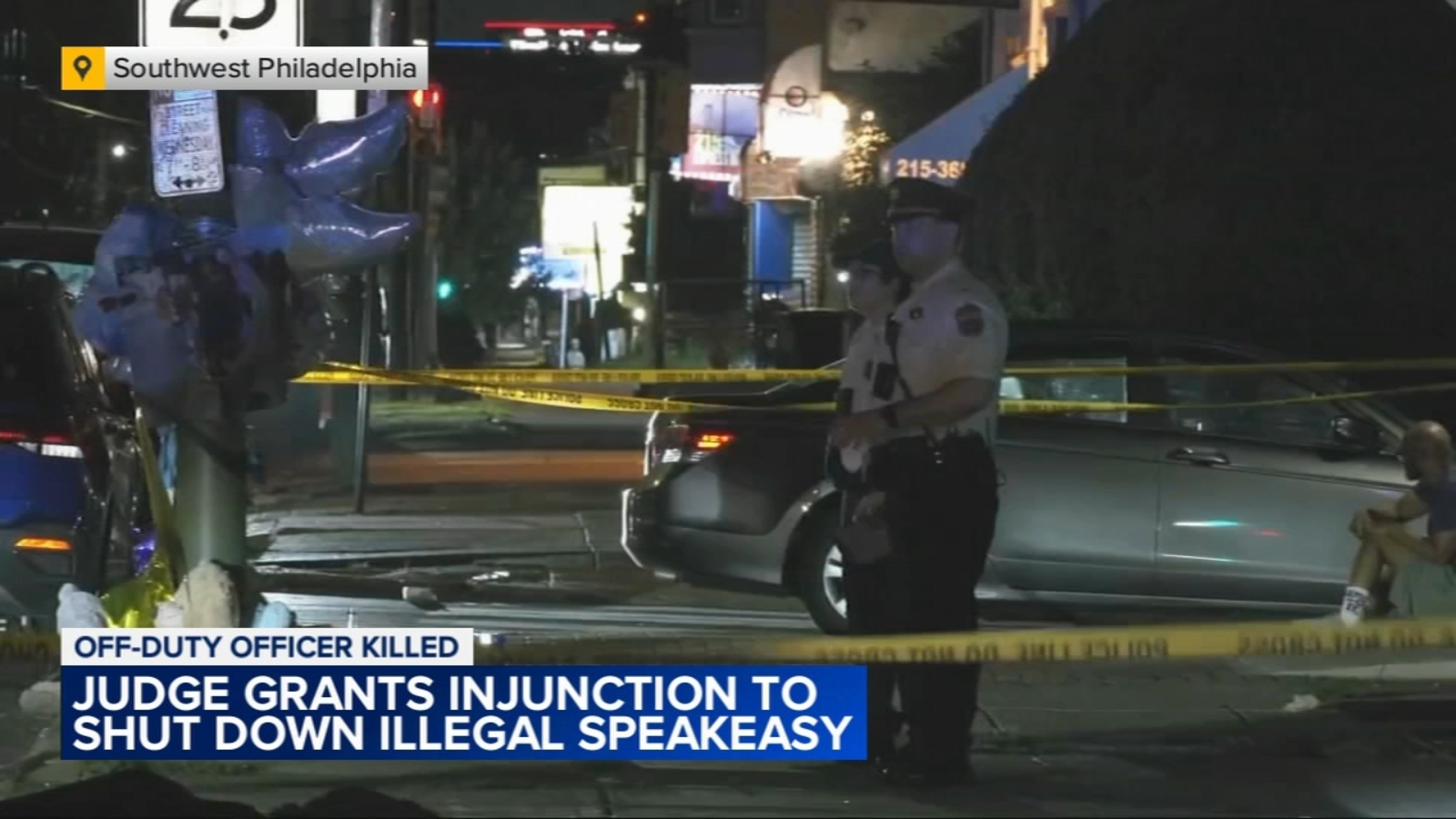
A Philadelphia judge has issued a speakeasy injunction ordering the permanent closure of an alleged illegal establishment in Southwest Philadelphia where an off-duty police officer was shot and killed. The ruling represents a significant step in the city’s efforts to crack down on unlicensed nightlife venues operating outside the bounds of law and public safety regulations.
The injunction, requested by the Philadelphia District Attorney’s Office, targets Nipsey’s Hookah Lounge, located on the 7200 block of Elmwood Avenue. The establishment has been at the center of a tragedy that has shaken the local law enforcement community and prompted renewed calls for tougher action against so-called “speakeasies” , unlicensed bars and lounges that operate without proper permits and often become hotbeds of criminal activity.
Background of the Fatal Shooting
The incident that triggered the speakeasy injunction unfolded last month, when Officer Alhassane Barry, a two-year veteran of the Philadelphia Police Department, was fatally shot at the Elmwood Avenue lounge. According to investigators, surveillance footage captured from inside the establishment shows the off-duty officer and another man engaged in a heated argument before the confrontation escalated outside the venue.
The details of what led to the deadly encounter remain under investigation. Authorities have indicated that no charges had been filed as of the most recent update on the case. During a news conference held the previous week, District Attorney Larry Krasner confirmed that a firearm believed to have been involved in the shooting was undergoing forensic testing.
A Community in Mourning
The loss of Officer Barry has reverberated throughout Philadelphia’s law enforcement community. Colleagues have remembered the fallen officer as a dedicated public servant who had committed himself to protecting the city’s residents. His death underscores the very real dangers that off-duty officers can face, particularly in environments where oversight and regulation are minimal or entirely absent.
Understanding the Speakeasy Injunction
A speakeasy injunction is a legal tool used by prosecutors and municipalities to force the closure of establishments operating outside the law. The term “speakeasy” historically referred to illicit bars that operated during the Prohibition era in the United States. Today, it describes unlicensed or improperly licensed venues that often operate in plain sight while violating a range of municipal codes, fire safety regulations, and zoning laws.
The legal mechanism behind such an injunction typically falls under nuisance abatement statutes. These laws empower prosecutors to seek court orders compelling property owners and operators to shut down businesses that have become a chronic source of crime, violence, or other public nuisances. In Philadelphia, the District Attorney’s Office has increasingly turned to this strategy as part of broader efforts to address quality-of-life issues and violent crime in neighborhoods burdened by rogue operators.
Why Nuisance Abatement Matters
Nuisance abatement actions serve several important purposes in the urban justice toolkit:
- Protecting public safety by removing venues where violent crime frequently occurs
- Deterring future violations by demonstrating that illegal operations carry serious legal consequences
- Preserving neighborhood quality of life for residents who deserve to live free from the disruptions caused by unregulated nightlife
- Reassigning resources by reducing the burden on emergency services that respond to incidents at these locations
The granting of this particular injunction signals a strong judicial endorsement of the District Attorney’s position that Nipsey’s Hookah Lounge had become a public nuisance warranting extraordinary legal intervention.
The Broader Crackdown on Illegal Nightlife in Philadelphia
The closure order represents part of a wider pattern of enforcement against unlicensed establishments in the city. Philadelphia, like many major American cities, has grappled with the proliferation of venues that operate without proper zoning approval, business licenses, or compliance with fire and safety codes. These establishments often cater to late-night crowds and can attract the very elements , drugs, guns, and violent confrontations , that authorities seek to keep out of residential neighborhoods.
How These Establishments Operate
Illegal lounges and unlicensed bars frequently operate under several common patterns:
- They function as private membership clubs to skirt public assembly regulations
- They hold events advertised primarily through social media to avoid public scrutiny
- They frequently change names or locations when law enforcement attention increases
- They often have inadequate security, poor lighting, and limited emergency exits
These conditions create environments where disputes can escalate rapidly and where emergency response is complicated by the unofficial nature of the operation.
District Attorney Larry Krasner’s Approach
Philadelphia District Attorney Larry Krasner has made the use of civil legal tools like injunctions a notable feature of his approach to crime prevention. While his tenure has often been defined by criminal justice reform measures, the pursuit of nuisance abatement against rogue establishments reflects a pragmatic recognition that some problems require shutdowns rather than prosecutions alone.
By securing the injunction, Krasner’s office has signaled that the loss of Officer Barry will not be treated merely as an isolated criminal matter but as evidence of a systemic failure requiring structural intervention. The legal action targets the venue itself rather than waiting solely for individual criminal charges in the underlying shooting.
The Investigation Continues
While the injunction addresses the venue, the criminal investigation into Officer Barry’s death remains active. The forensic testing of the suspected firearm is a critical step that could lead to charges against the individual believed responsible. The video evidence recovered from inside the lounge will likely play a central role in any prosecution that follows.
Investigators have not yet publicly identified a suspect or confirmed the precise sequence of events that led to the fatal shooting. The slow pace of forensic testing, while frustrating to those seeking immediate accountability, reflects the careful standards required to ensure that any charges filed can withstand the scrutiny of a criminal trial.
What the Injunction Means Going Forward
With the court order in place, the operators and property owners associated with Nipsey’s Hookah Lounge are now legally required to cease all operations at the location. Violations of the injunction could result in contempt of court charges and additional legal consequences. The closure sends a powerful message to other would-be operators of similar establishments throughout the city.
Implications for Other Unlicensed Venues
Legal observers suggest that this ruling could serve as a template for future actions against illegal lounges in Philadelphia. Neighborhood associations and civic leaders have long complained about the disturbances, noise, and violence associated with such venues, and the successful use of a speakeasy injunction provides a roadmap for other communities seeking relief.
For residents of Southwest Philadelphia and other neighborhoods affected by illegal nightlife, the ruling offers a measure of reassurance that authorities have tools to respond when tragedy strikes. The challenge moving forward will be sustaining enforcement momentum and ensuring that new venues do not simply replace shuttered ones.
A Tragic Loss and a Legal Response
The death of Officer Alhassane Barry is a profound loss , not only for his family, friends, and fellow officers but for the entire city of Philadelphia. His service as a two-year veteran represented a commitment to public safety that ended too soon and in circumstances that highlight the dangers lurking in unregulated spaces.
The speakeasy injunction granted by the court does not bring Barry back, but it does ensure that the venue linked to his death cannot continue to operate as a potential source of further harm. By treating the establishment itself as a public nuisance, the legal system has acknowledged that addressing violent crime sometimes requires confronting the environments in which it flourishes.
As the investigation into Barry’s killing continues and as prosecutors await forensic results on the recovered firearm, the closure of Nipsey’s Hookah Lounge stands as both a tribute to a fallen officer and a warning to those who would operate illegal venues in the city. Philadelphia’s neighborhoods deserve safe, regulated spaces , and the courts have made clear that the law will be used to enforce that standard.