
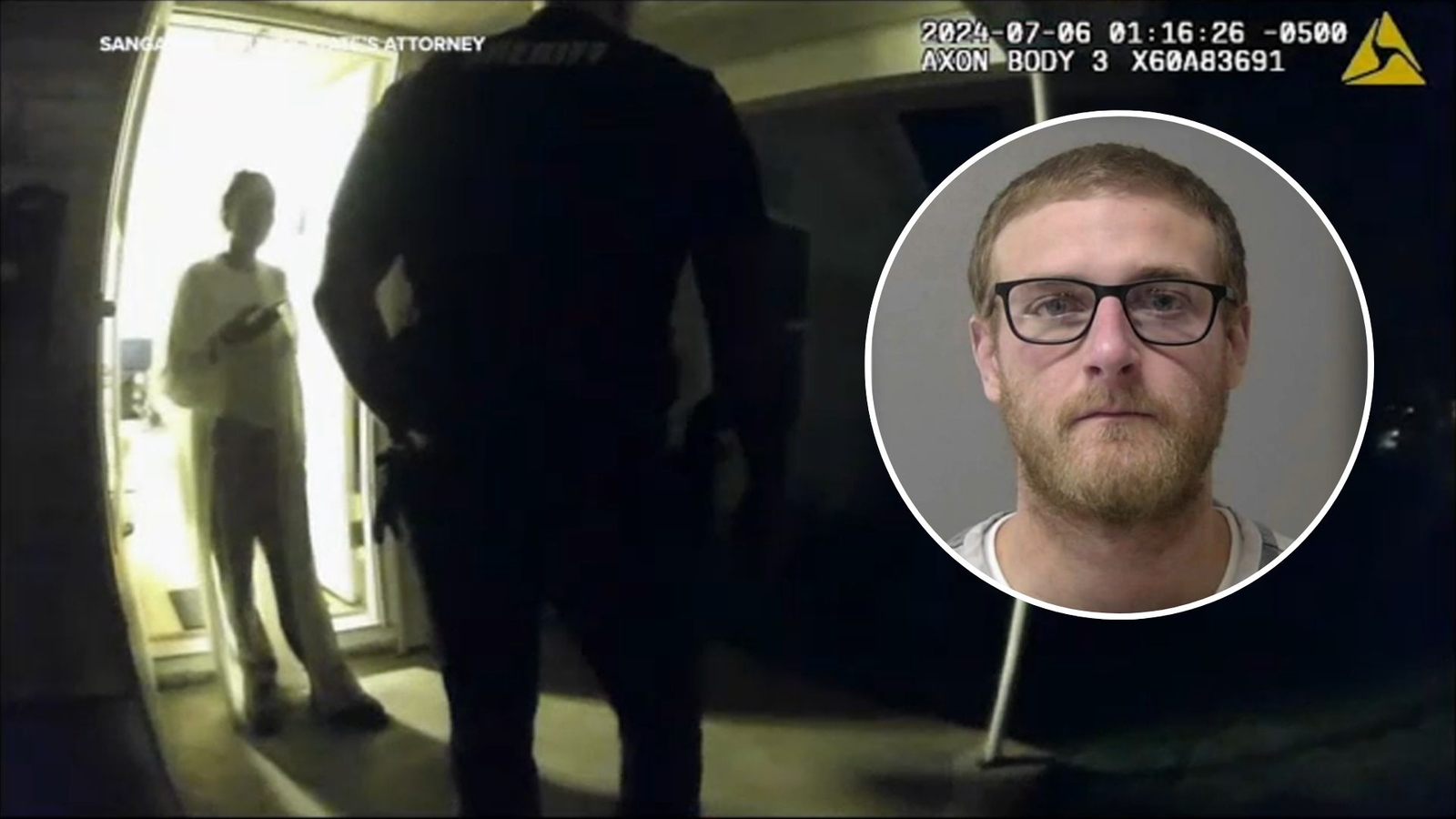
The Sonya Massey killing has reached a critical juncture in the pursuit of accountability. Former Illinois sheriff’s deputy Sean Grayson, 31, was sentenced to 20 years in prison,the maximum allowable penalty,for fatally shooting the 36-year-old Black woman inside her Springfield home in July 2024. The sentencing marks a significant chapter in a case that ignited national outrage and reignited urgent conversations about police conduct, mental health response, and the value of Black lives in encounters with law enforcement.
While the family and advocates acknowledge the gravity of the sentence, many feel it falls short of the justice Sonya Massey deserved. The verdict and subsequent punishment have become a focal point for examining systemic failures within American policing and the legal system’s treatment of victims from marginalized communities.
A Sentence Years in the Making
Grayson was convicted in October on a lesser charge of second-degree murder, despite prosecutors pursuing three counts of first-degree murder that could have carried a life sentence. Illinois law permits a second-degree murder conviction when evidence indicates the defendant genuinely believed they were in danger,even if that belief was objectively unreasonable. The jury’s decision to opt for the lesser charge deeply troubled those who followed the case, sparking debates about how the justice system evaluates fear, reasonableness, and the use of lethal force by police officers.
At the sentencing hearing, Grayson addressed the court directly, expressing remorse for his actions on the night of July 6, 2024. “I made a lot of mistakes that night. There were points when I should’ve acted, and I didn’t. I froze,” he said, his voice reportedly trembling. “I made terrible decisions that night. I’m sorry.” He also stated that he wished he could bring Massey back and spare her family the pain he had caused.
Despite the apology, the Massey family made clear that no words could undo the devastation. Her two children, who had actively lobbied for the maximum sentence, spoke about growing up without a mother. Her mother, Donna Massey, delivered a particularly powerful statement that underscored the lasting trauma inflicted by her daughter’s death. “Today, I’m afraid to call the police in fear that I might end up like Sonya,” she told the court.
When Judge Ryan Cadigan announced the 20-year sentence, family members in the gallery reacted with a loud cheer of “Yes!”,a visceral expression of relief and partial victory. The judge admonished them for the outburst, but the moment revealed the immense emotional weight carried by those who loved Sonya.
The Daughter’s Painful Truth
After the hearing, Sonya Massey’s daughter Summer spoke with reporters and articulated what many in her position feel. “Twenty years is not enough,” she said, capturing the sentiment that while the legal system delivered a punishment, it could never truly balance the scales of loss. Her words reflect a broader truth about homicide cases involving police officers: even maximum sentences cannot restore what was taken.
The Night That Changed Everything
To understand the magnitude of the Sonya Massey killing, one must revisit the early morning hours of July 6, 2024. Massey, who struggled with mental health issues, called 911 because she believed someone was prowling outside her Springfield home. What should have been a routine response to a frightened resident seeking help instead became a tragedy that would draw national attention.
Body camera footage, which later became central to the prosecution’s case, showed Grayson and another sheriff’s deputy, Dawson Farley, searching Massey’s yard before approaching her door. Massey, visibly confused and frightened, repeatedly uttered “Please, God” as the deputies made contact with her. Her distress was palpable,a vulnerable woman seeking protection from those she believed would provide it.
Escalation in the Kitchen
The situation took a catastrophic turn once the deputies entered Massey’s home. Grayson noticed a pot of water heating on the stove and ordered Farley to move it. Massey, perhaps misunderstanding the instruction or simply attempting to comply, went to the stove herself, retrieved the pot, and,according to testimony,even teased Grayson for moving away from “the hot, steaming water.”
What happened next remains the most contested sequence of events. Massey reportedly said, “I rebuke you in the name of Jesus,” prompting Grayson to draw his sidearm and shout at her to drop the pan. She set the pot down and ducked behind a counter. But she appeared to pick it up again, and at that moment, Grayson opened fire, shooting the 36-year-old single mother in the face.
During the trial, Grayson testified that he feared Massey would scald him with the hot water. This claim of perceived danger,however unreasonable it appeared to many observers,became the basis for the jury’s decision to convict on second-degree murder rather than first-degree.
Family Outrage and the Search for True Justice
The jury’s decision to convict Grayson of the lesser charge devastated the Massey family, who felt the verdict validated the very patterns of injustice they had come to fear. Following the October conviction, Sonya Massey’s cousin Sontae Massey articulated the family’s frustration in stark terms. “The justice system did exactly what it’s designed to do today. It’s not meant for us,” he told reporters, encapsulating the deep mistrust that many Black Americans harbor toward legal institutions.
This sentiment resonates powerfully in the broader context of police accountability. When officers are charged, convicted, and sentenced, the outcomes frequently feel inadequate to the families left behind. In the Sonya Massey killing case, the maximum sentence,while significant,still represented only a fraction of what prosecutors had sought.
Reforms and Reckoning
The fallout from the Sonya Massey killing extended far beyond the courtroom. Civil rights attorney Ben Crump, who has represented numerous families of Black victims in high-profile police violence cases, negotiated a $10 million settlement with Sangamon County on behalf of Massey’s relatives. This substantial settlement reflected both the county’s acknowledgment of its role in the tragedy and the immense value of Massey’s life.
Federal Intervention and Policy Changes
The U.S. Justice Department launched an inquiry into the circumstances surrounding Massey’s death. The investigation concluded with an agreement requiring Sangamon County to implement several critical reforms:
- Enhanced de-escalation training for law enforcement personnel responding to mental health crises
- Improved data collection on use-of-force incidents to increase transparency and accountability
- Leadership changes, including the forced retirement of the sheriff who had hired Grayson
Additionally, the case prompted legislative action in Illinois. A new state law now requires fuller transparency regarding the backgrounds of candidates for law enforcement positions, aiming to prevent officers with troubled histories from slipping through hiring processes at agencies across the state.
Grayson’s Motion Denied
At the start of the sentencing hearing, Judge Ryan Cadigan dismissed a motion filed by Grayson’s attorneys seeking a new trial. This ruling cleared the path for the sentencing to proceed without further delay, delivering a measure of closure to the family,though, as Summer Massey noted, “closure” may be an impossible concept when a mother has been lost so violently.
A National Conversation Reframed
The Sonya Massey killing brought renewed scrutiny to law enforcement shootings of Black people inside their own homes,a particularly painful category of police violence that strips away any notion of safety in spaces considered sanctuaries. When someone calls 911 for help and is met with lethal force, the implications extend far beyond one tragic incident. They challenge the very premise of community policing and the trust necessary for public safety to function.
Mental health response has emerged as one of the most pressing issues highlighted by this case. Massey’s documented struggles with mental health should have signaled to responding officers that a specialized, compassionate approach was warranted. Instead, the encounter ended in gunfire,a catastrophic failure that reform advocates hope will drive systemic change in how law enforcement trains for and responds to individuals in psychological distress.
Conclusion: Accountability as a Starting Point
The 20-year sentence handed to Sean Grayson represents the maximum consequence available under Illinois law for his conviction on second-degree murder. For the Massey family, it is both a hard-won victory and an insufficient remedy. The Sonya Massey killing has exposed fault lines in how the American justice system addresses police violence, particularly when victims are Black women navigating mental health challenges.
While reforms at the county and state levels offer hope that future tragedies might be prevented, no policy change can undo the harm done to Donna Massey, Summer Massey, and the entire family whose lives were forever altered on that July morning in 2024. Their courage in pursuing accountability,through courts, settlements, and legislative advocacy,has ensured that Sonya Massey’s name will continue to drive conversations about justice, equity, and the urgent need to reimagine public safety in America.
The sentence marks the end of one chapter, but the work of transforming a system that too often fails the most vulnerable continues. Sonya Massey’s memory deserves nothing less.