
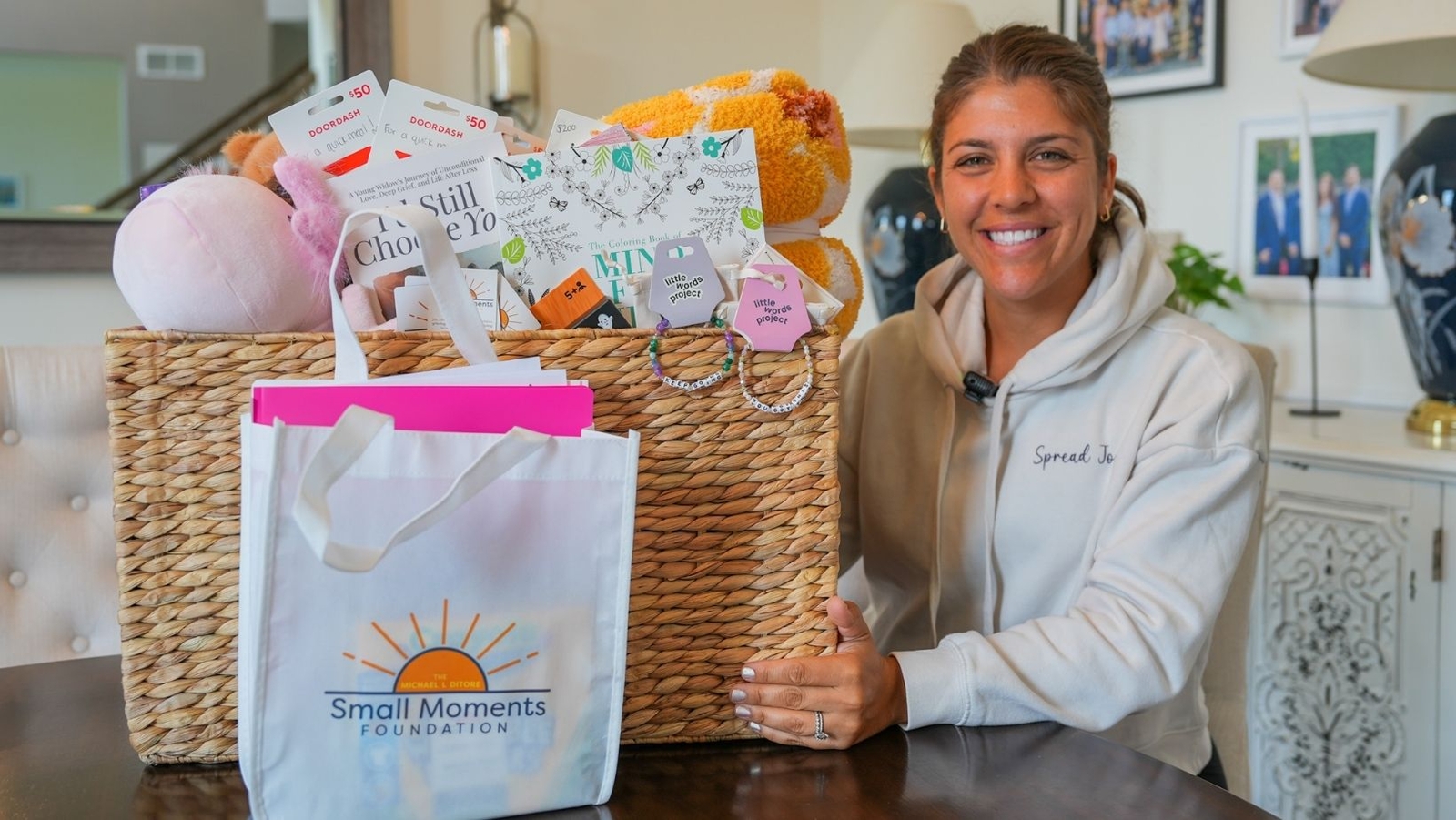
When someone we love passes away, the world doesn’t stop spinning , but for the person left behind, it can feel like it did. The flood of support that arrives during a loved one’s illness often vanishes the moment they’re gone, leaving surviving family members isolated in one of the most painful chapters of their lives. This painful reality is exactly what inspired the Small Moments nonprofit grief support organization in Montgomery County, Pennsylvania, founded by a woman who lived through that isolation herself and decided no other family should have to endure it alone.
Rebecca DiTore created Small Moments after losing her husband, Mike, to brain cancer. During the 17 months he battled the disease, their community rallied around them with meals, visits, and unwavering encouragement. But after Mike died, much of that presence quietly slipped away. “Everyone else’s lives go on, seemingly go back to normal, when yours is stopped,” DiTore explains. That stark contrast , between the abundance of care during illness and the sudden silence after loss , became the catalyst for a nonprofit that has now touched more than 30 families and over 60 children.
The Origin Story Behind Small Moments
Every nonprofit has a moment of origin , a single event, realization, or heartbreak that transforms an ordinary person into a changemaker. For DiTore, that moment came during the painful transition from caregiver to widow.
Mike DiTore’s 17-month battle with brain cancer was marked by an outpouring of community support. Friends organized meal trains. Neighbors checked in regularly. Extended family flew in to help. For 17 months, the DiTores were enveloped in a network of compassion that carried them through the darkest days of terminal illness.
Then Mike died.
And as is so common in our culture, the casseroles stopped coming. The phone calls tapered off. The visitors became rare. Society has well-established rituals for the early days of bereavement , sympathy cards, funeral flowers, initial check-ins , but those gestures often fade within weeks. Meanwhile, the grieving person’s pain does not fade. If anything, it deepens as the reality of permanent absence settles in.
“That’s where ‘Small Moments’ was born,” DiTore says. The name itself reflects the philosophy: grief support doesn’t have to be grand or expensive to be meaningful. Sometimes the smallest gestures , a handwritten note, a thoughtful care package, knowing that someone remembers your loss months after everyone else has moved on , can make an immeasurable difference in someone’s healing journey.
Understanding the Non-Linear Journey of Grief
One of the most important things DiTore recognizes , and that her organization is built around , is that grief is not a linear process. Many people still imagine grief as a tidy series of “stages” that one moves through sequentially, eventually reaching some kind of resolution or “closure.” But modern grief research and lived experience tell a far different story.
Grief ebbs and flows. It resurfaces unexpectedly during holidays, anniversaries, and ordinary Tuesday afternoons when a familiar song plays on the radio. It looks different for every person, and it changes shape over time without ever fully disappearing. For families who have lost a spouse, a parent, or a child, this reality can be profoundly lonely , especially when the world around them seems to expect them to “be over it” after a socially acceptable period of mourning.
Small Moments exists in the space beyond the initial loss. The nonprofit provides ongoing grief support for families who have felt that isolation, ensuring they know someone is still thinking of them, still walking alongside them, long after the funeral flowers have wilted.
What Small Moments Does for Grieving Families
At the heart of the Small Moments nonprofit is a simple but powerful act: delivering care packages to grieving families. These packages are designed to bring comfort, encouragement, and , most importantly , a sense of connection to people navigating the unimaginable.
While the specific contents of each package may vary depending on the family’s circumstances, the intent is consistent. Each delivery carries with it a message: You are not forgotten. You are not alone.
“When her care packages get delivered to a family, all she hopes is that for a moment, they feel less alone,” the source notes about DiTore’s vision. That singular hope , reducing the loneliness of bereavement, even briefly , is the driving force behind every initiative the organization undertakes.
Reaching Grieving Children
Perhaps one of the most heartbreaking dimensions of family grief is the experience of children who lose a parent. With over 60 children served by Small Moments to date, childhood grief support has emerged as a vital component of the organization’s mission.
Children grieve differently than adults. They often lack the vocabulary to express their emotions, and their understanding of death evolves as they grow. A child who loses a parent at age 7 will process that loss differently at age 10, age 15, and age 25. Providing comfort and resources to these young grievers , and the surviving parent or guardian caring for them , requires sensitivity, intentionality, and a long-term commitment that extends well beyond the immediate aftermath of loss.
Honoring a Legacy
Every item Small Moments sends, every family they reach, is done in memory of Mike DiTore. His life and his death are both woven into the fabric of the organization. By carrying his memory forward through this work, Rebecca DiTore has turned her family’s deepest wound into a source of healing for dozens of others.
This kind of legacy-building is a powerful form of meaning-making after loss. It allows bereaved spouses, parents, and family members to channel their grief into something constructive , something that helps others , while also keeping the memory of their loved one alive in a tangible, positive way.
Why Ongoing Bereavement Support Matters
Society has become increasingly aware of the importance of mental health support, but grief support remains an area that is often overlooked or misunderstood. Many people don’t know how to help a grieving friend or family member beyond the first few weeks, so they retreat into silence , not out of indifference, but out of discomfort.
Nonprofits like Small Moments fill a critical gap. They provide community grief support in a way that individuals often cannot, offering professional sensitivity, sustained outreach, and the kind of consistent presence that grieving families desperately need.
The statistics paint a sobering picture. Studies have shown that bereaved individuals face elevated risks of depression, anxiety, physical illness, and even premature death. Widows and widowers, in particular, experience notably higher mortality rates in the months and years following a spouse’s death. The emotional toll of grief is not just metaphorical , it has real, measurable consequences for health and wellbeing.
By supporting bereaved families with care packages, outreach, and ongoing connection, organizations like Small Moments are doing more than offering kindness. They are potentially saving lives.
The Future of Small Moments Nonprofit
Having already reached over 30 families and over 60 children, DiTore has her sights set on growth. “I hope that we continue to grow, reach more families who are in need, who are feeling that loneliness after a loss, and to have a deeper impact on all of those families,” she shares.
This vision reflects a broader truth about grassroots nonprofits: they often begin as one person’s response to their own pain and evolve into institutions that serve entire communities. With continued awareness and community support, Small Moments has the potential to touch hundreds , even thousands , of lives in the years ahead.
For families interested in learning more about the organization, accessing support, or contributing to its mission, additional information is available through the nonprofit’s official website and the original news coverage that first brought their story to light.
How You Can Support Grieving Families in Your Community
Inspired by DiTore’s work? Here are a few ways you can make a difference for grieving families in your own community:
- Reach out after the funeral. Most people stop checking in after a few weeks. Send a text, drop off a meal, or simply let someone know you’re thinking of them six months after their loss , when the world has moved on but they haven’t.
- Listen without trying to fix. Grieving people don’t need advice or silver linings. They need someone willing to sit with their pain without flinching.
- Remember the children. Kids often grieve quietly. Check in with them, acknowledge their loss, and let them know it’s okay to feel sad , even long after the adults around them have “recovered.”
- Support local grief nonprofits. Organizations like Small Moments rely on community support to continue their work. Volunteering, donating, or simply spreading the word can help them reach more families.
- Mark anniversaries. Birthdays, death anniversaries, and holidays are particularly difficult. A simple message acknowledging these dates can mean the world to someone who is grieving.
A Final Reflection on Small Moments and Big Impact
The story of Small Moments nonprofit grief support is a powerful reminder that meaningful change often begins with one person recognizing an unmet need and refusing to look away. Rebecca DiTore saw a gap in how her community cared for grieving families , the painful silence that follows initial loss , and she built something beautiful to fill it.
In doing so, she has ensured that Mike DiTore’s memory lives on in every care package delivered, every family comforted, and every child reminded that they are not alone. That’s the kind of legacy that transforms grief into purpose , and small moments into something truly extraordinary.