
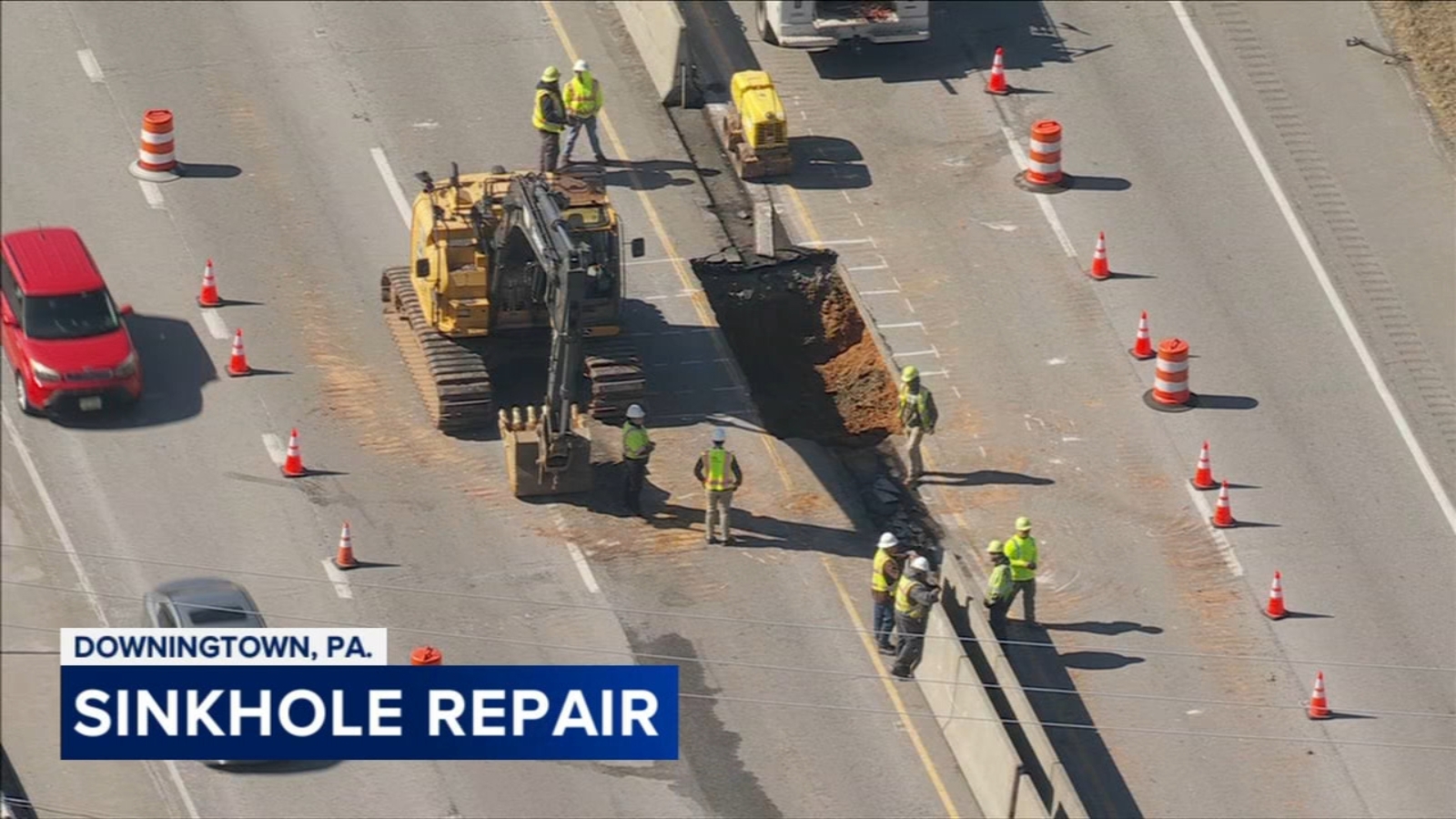
A sinkhole on Route 30 Bypass in Downingtown, Chester County, caused significant traffic disruption this week when a large cavity opened beneath the center median of one of the region’s busiest highways. PennDOT crews responded quickly, working through the day to repair the damage and reopen all lanes to motorists. The sudden appearance of the sinkhole raised concerns among local commuters and transportation officials, prompting an ongoing investigation into what caused the road to give way.
What Happened on the Route 30 Bypass
On Monday, crews from the Pennsylvania Department of Transportation (PennDOT) were dispatched to the Route 30 Bypass in Downingtown after a sizeable sinkhole developed in the roadway. Aerial footage captured by Chopper 6 showed workers actively filling in the hole, which had opened beneath the center median between Route 113 and Wallace Avenue.
The sinkhole’s location in the median,a relatively unusual spot for such road collapses,presented both a logistical challenge and an opportunity for repair crews. Because the damage occurred in the central portion of the bypass rather than in an active travel lane, crews were able to close several lanes to create a safe work zone while still allowing some traffic to flow during the repair operation.
PennDOT officials confirmed that all lanes have since been restored to full operation, marking a successful turnaround for a repair that could have resulted in prolonged closures and extensive traffic delays along this heavily traveled corridor.
Where the Sinkhole Opened
The sinkhole on Route 30 Bypass appeared between two well-known landmarks in the Downingtown area: Route 113 and Wallace Avenue. This stretch of highway serves as a critical connector for commuters traveling through Chester County, linking residential neighborhoods, commercial districts, and access points to other major roadways in southeastern Pennsylvania.
The Route 30 Bypass is particularly important because it diverts traffic around the heart of historic downtown Downingtown, allowing through-travelers to bypass local streets while providing convenient access to businesses and communities along the corridor. Any disruption to this roadway tends to create ripple effects throughout the regional transportation network.
Impact on Local Traffic
When news of the sinkhole spread, motorists traveling through the area faced lane reductions and potential delays. PennDOT’s quick response helped minimize the disruption, but the incident serves as a reminder of how vulnerable road infrastructure can be to sudden geological events. Local drivers reported seeing equipment and personnel on-site as repairs progressed throughout the day.
How PennDOT Responded to the Emergency
PennDOT crews demonstrated the kind of rapid-response capability that transportation agencies rely on when unexpected infrastructure failures occur. Workers arrived on-site to assess the damage, secure the area, and begin the process of filling the void that had opened beneath the pavement.
Repairing a sinkhole in a highway median involves several critical steps:
- Assessment and safety perimeter establishment – Crews first evaluate the extent of the underground void and establish a safe working area to protect both workers and passing motorists.
- Material selection – Depending on the size and depth of the cavity, repair teams may use a combination of stone aggregate, concrete, flowable fill, or specialized grout materials to stabilize the area.
- Void filling – The cavity is carefully filled and compacted to prevent future settling or collapse.
- Surface restoration – Once the underlying void is addressed, crews restore the pavement surface to match surrounding road conditions.
- Inspection and monitoring – Final inspections ensure the repair meets safety standards before lanes are reopened to traffic.
The fact that PennDOT was able to complete the repairs and reopen all lanes within a relatively short timeframe reflects the agency’s preparedness for infrastructure emergencies along the Route 30 Bypass corridor.
What Causes Sinkholes on Highways?
Sinkholes are not uncommon in certain regions of the United States, and Pennsylvania’s geology makes the state particularly susceptible to these sudden ground collapses. Several factors can contribute to the formation of a sinkhole beneath a roadway:
Underground Water Erosion
One of the most common causes of sinkholes is the gradual erosion of underground soil and rock by flowing water. When groundwater moves through limestone or other soluble rock formations, it can slowly dissolve the material, creating voids that eventually collapse under the weight of surface structures like roads and buildings.
Aging Infrastructure
Cracked or deteriorating underground utilities,including water mains, storm drains, and sewer lines,can leak over time, washing away supporting soil and creating cavities beneath pavement. A sudden pipe failure can accelerate this process dramatically, leading to rapid ground collapse.
Heavy Rainfall and Weather Events
Significant precipitation can saturate the ground and increase the pace of underground erosion. In areas with already-weakened subsurface conditions, heavy rain events sometimes trigger sinkhole formation.
Construction and Vibration
Nearby construction activity, heavy vehicle traffic, or even minor seismic events can contribute to sinkhole development by stressing already-compromised underground spaces.
PennDOT has indicated that an investigation is underway to determine the specific cause of the sinkhole that opened on Route 30 Bypass in Downingtown. The findings of this investigation may inform future prevention and monitoring efforts along the corridor.
PennDOT’s Ongoing Investigation
While the immediate repair has been completed and all lanes are back open, PennDOT is still working to understand what led to the formation of the sinkhole. This investigative phase is crucial because it helps transportation officials determine whether additional repairs or preventive measures are needed in the surrounding area.
Depending on the cause, follow-up actions could include:
- Additional subsurface testing and ground-penetrating radar surveys
- Inspection of nearby drainage infrastructure
- Soil stability assessments in adjacent areas
- Long-term monitoring of the repaired section
- Coordination with local utility companies if water or sewer lines are implicated
PennDOT has a strong track record of responding to sinkhole events across the state, particularly in regions where karst geology,the type of landscape characterized by underground drainage systems and sinkhole-prone terrain,is prevalent.
Why Route 30 Bypass Matters to Chester County
The Route 30 Bypass serves as a vital transportation artery for Chester County, one of Pennsylvania’s fastest-growing regions. The roadway handles a significant volume of daily traffic, connecting commuters to employment centers, shopping destinations, and residential communities throughout the area.
When incidents like the Downingtown sinkhole occur, they highlight just how dependent the region has become on a relatively small number of major roadways. Even brief disruptions can cascade into longer delays as traffic diverts onto local streets not designed to handle bypass-level traffic volumes.
For Downingtown specifically, the bypass supports the local economy by providing efficient access to the borough’s commercial corridors while preserving the character of its historic downtown. Maintaining the integrity of this roadway is essential for both safety and economic vitality.
Staying Informed About Local Road Conditions
Motorists who travel the Route 30 Bypass regularly are encouraged to stay informed about road conditions, especially in the wake of recent repair work. PennDOT provides several resources for real-time traffic updates, including:
- The 511PA traveler information system (available by phone and online)
- PennDOT’s official social media channels
- Local news coverage and traffic reports
- Digital highway message boards displaying current conditions
These resources can help drivers plan alternate routes, anticipate delays, and stay aware of any follow-up work that may be scheduled in the area.
Looking Ahead
The swift repair of the sinkhole on Route 30 Bypass in Downingtown represents a positive outcome to what could have been a much more disruptive event. PennDOT’s rapid mobilization, combined with effective coordination and experienced field crews, allowed all lanes to reopen without extended closure.
However, the incident underscores the importance of ongoing investment in infrastructure monitoring and maintenance. Sinkholes and other sudden road failures can occur without warning, and having well-trained response teams and adequate resources in place makes all the difference in keeping the public safe and traffic moving.
As PennDOT continues its investigation into the cause of the Downingtown sinkhole, residents and commuters can take some comfort in knowing that the affected section has been thoroughly repaired and that transportation officials are actively working to prevent similar incidents in the future. The sinkhole on Route 30 Bypass may have been a frightening sight for those who witnessed it, but the response demonstrated the kind of preparedness that helps protect both drivers and infrastructure across Pennsylvania’s road network.
For now, all lanes are open and traffic is flowing normally. Local drivers are advised to remain vigilant and report any unusual road conditions,such as new depressions, cracks, or settling pavement,to PennDOT so that potential issues can be addressed before they develop into more serious problems.