
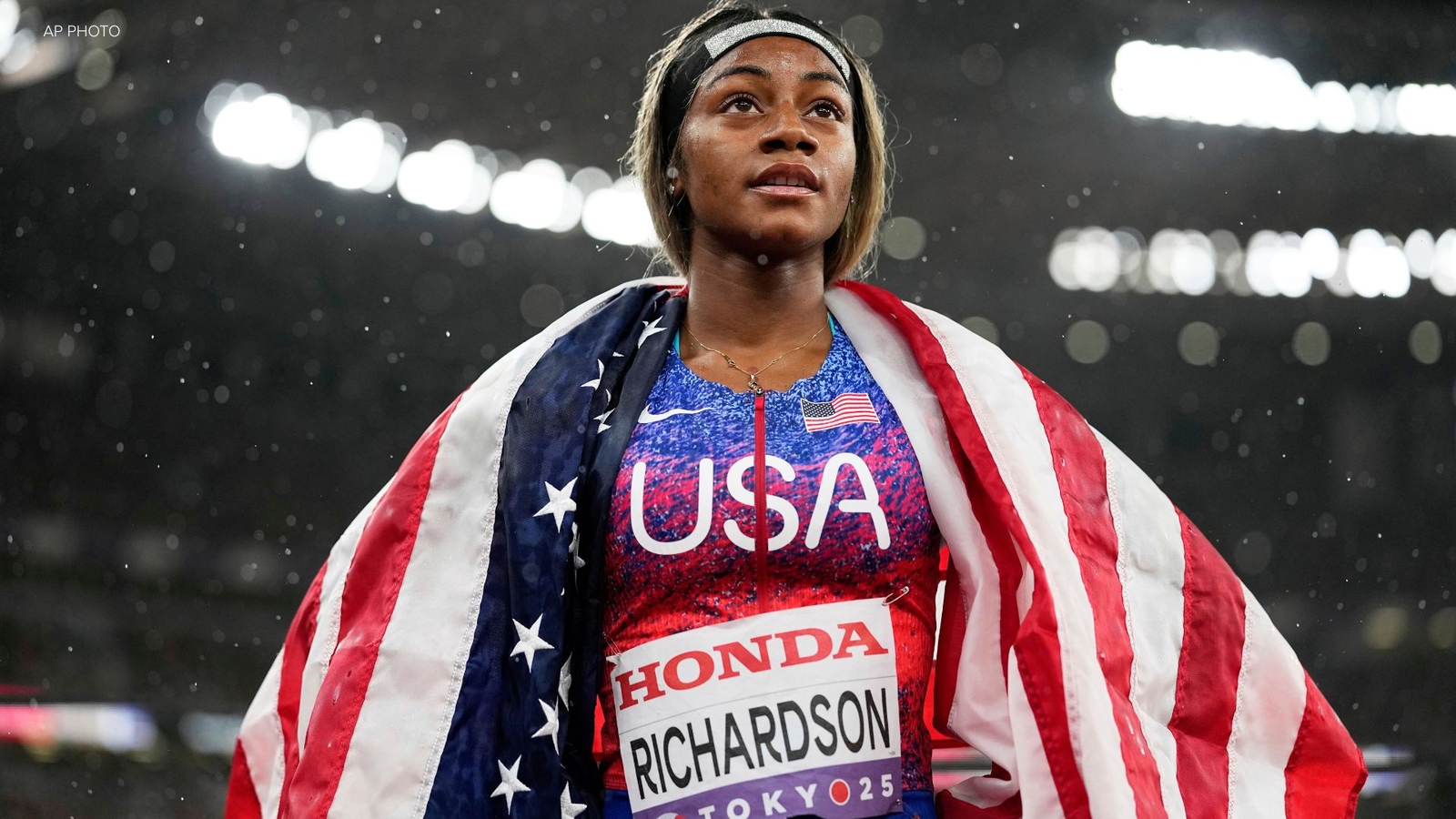
Olympic gold medalist Sha’Carri Richardson arrested for allegedly driving over 100 miles per hour in Orange County, Florida, according to local jail records. The celebrated American sprinter, fresh off her triumphant performance at the 2024 Paris Olympics, was booked on a charge of dangerous excessive speeding, sending shockwaves through the sports world and reigniting public conversations about the pressures faced by elite athletes.
Richardson, widely regarded as one of the most electrifying figures in modern track and field, was taken into custody on a Thursday in Florida. Authorities cited her for operating a vehicle at speeds exceeding 100 mph, a violation classified under state law as “dangerous excessive speeding.” As of the latest reports, the Olympic champion remained in custody with bond set at $500.
What We Know About the Arrest
The booking took place in Orange County, a jurisdiction that covers the Orlando metropolitan area. While the exact circumstances surrounding the traffic stop have not been fully disclosed, jail records confirm that Richardson faces a serious moving violation that carries significant legal consequences in the state of Florida.
Dangerous excessive speeding in Florida is no minor infraction. The state has historically taken aggressive stances against high-speed driving, classifying speeds over 100 mph as a criminal traffic offense rather than a simple citation. Penalties can include hefty fines, mandatory court appearances, potential license suspension, and even possible jail time depending on the circumstances.
The news of Sha’Carri Richardson arrested for this violation spread rapidly across social media platforms, with fans, fellow athletes, and commentators weighing in on the incident. Many expressed concern for the sprinter’s wellbeing, while others questioned the decision-making that led to such a dangerous act behind the wheel.
Bond and Legal Proceedings
With a $500 bond set for her release, Richardson’s case will proceed through the Orange County court system. First-time offenders in similar situations often have the opportunity to complete traffic school or other diversion programs, though the specifics depend on the charges, prior driving history, and the discretion of the presiding judge.
It remains unclear whether Richardson has prior traffic violations on her record, and her legal representation has not publicly commented on the case at the time of this writing. The incident adds an unexpected chapter to what has otherwise been a career-defining year for the young athlete.
A Tumultuous Journey to Olympic Glory
To fully appreciate the weight of this latest headline, it’s important to understand the remarkable and often turbulent path Richardson has traveled to reach the pinnacle of her sport. The Dallas-native sprinter burst onto the national scene with a combination of blazing speed, vibrant personality, and unapologetic self-expression that captured the attention of millions.
The 2020 Tokyo Olympics Controversy
Three years before her triumphant return to the Olympic stage, Richardson faced one of the most heartbreaking moments of her career. Just weeks before the Tokyo Games in 2021, she tested positive for THC, the primary psychoactive compound found in cannabis. The positive test resulted from a sample collected during the U.S. Olympic Trials, where she had just won the 100-meter dash in dominant fashion.
The consequences were swift and devastating. The U.S. Anti-Doping Agency (USADA) handed down a 30-day suspension, which prevented her from competing in the event she had worked her entire life to win. The decision was particularly painful because Richardson openly discussed how she had used marijuana to cope with the emotional turmoil of learning about the biological death of her biological mother during the trial period.
The incident sparked national debates about drug testing policies in athletics, the mental health challenges faced by young athletes, and the broader conversation surrounding cannabis use. Richardson received widespread support from athletes, celebrities, and fans who believed the punishment was disproportionate given the circumstances and the fact that THC is now legal in many jurisdictions.
Triumph at the 2024 Paris Olympics
If Tokyo was defined by heartbreak, Paris was defined by redemption. At the 2024 Paris Olympics, Sha’Carri Richardson finally had her moment of glory on the sport’s biggest stage. She competed in the women’s 100-meter final and captured a silver medal, narrowly missing gold in a photo-finish race that captivated global audiences.
More importantly, Richardson played a starring role in one of the most memorable moments of the entire Games. The U.S. women’s 4x100m relay team, featuring Richardson as the anchor leg, dominated the competition and brought home the Olympic gold medal. The victory was especially sweet given the United States’ long history of struggles in the relay event, including a disqualification for a botched baton exchange in Tokyo.
Her Olympic gold medal performance cemented her status as not just a champion, but as a symbol of perseverance and resilience. The hashtag #ShaCarri trended worldwide, and she became a cultural icon whose influence extended far beyond the track.
Public Reaction to the Speeding Arrest
The news that Sha’Carri Richardson arrested for driving over 100 mph has generated a wide spectrum of reactions from the public and media. Some fans expressed disappointment, emphasizing that as a public figure and role model, the Olympic sprinter carries a responsibility to make sound decisions. Others pointed to the immense pressures placed on young athletes and suggested that the incident may reflect deeper struggles that require compassion rather than condemnation.
Sports commentators have also weighed in, noting that high-profile athletes often face unique stressors that can contribute to risky behaviors. The constant travel, intense public scrutiny, rigorous training schedules, and the weight of national expectations can take a significant toll on mental health and decision-making.
A Pattern or an Isolated Incident?
Richardson’s traffic violation comes at a time when conversations about athlete wellness and support systems are more prominent than ever. Critics have raised questions about whether professional sports organizations, sponsors, and federations are doing enough to provide holistic support for athletes who suddenly find themselves in the global spotlight.
While this arrest does not involve any illegal substances and is unrelated to her previous doping controversy, it has nonetheless prompted comparisons to other high-profile athletes who have faced legal challenges after achieving success at a young age. The pattern highlights the need for comprehensive support structures that address not just athletic performance but also personal development and decision-making.
The Broader Implications
This incident carries several broader implications worth examining. From a legal perspective, the case will test how Florida’s traffic courts handle high-profile defendants and whether the outcome differs significantly from how an ordinary citizen might be treated under similar circumstances.
From a brand and sponsorship standpoint, Richardson’s marketability has been one of her greatest strengths. Her endorsements, partnerships, and personal brand have flourished since her Olympic success. How this incident affects those business relationships will depend on how she responds publicly and whether the legal matter results in any lasting consequences.
From a personal perspective, the arrest presents an opportunity for growth and reflection. Many athletes have navigated similar setbacks to emerge stronger and more focused. Whether Richardson channels this experience into positive change remains to be seen.
Looking Ahead
As Richardson navigates the legal process in Orange County, her focus will likely remain on training and preparing for future competitions. The 2025 World Athletics Championships and the 2028 Los Angeles Olympics are both on the horizon, providing significant motivation and milestones for the sprinter.
For now, the situation serves as a reminder that even the most accomplished athletes are human. They face the same temptations, pressures, and occasional poor decisions as anyone else, magnified by the unforgiving lens of public attention. The path forward for Richardson will involve not just resolving her legal matters but also continuing to build on the remarkable legacy she has already established.
The story of Sha’Carri Richardson arrested in Florida is still developing, and further details are likely to emerge in the coming days and weeks. What is certain, however, is that the Olympic gold medalist’s journey , with all its triumphs, setbacks, and ongoing chapters , continues to captivate a global audience invested in both her athletic excellence and her personal evolution as one of the most compelling figures in modern sports.