
In a groundbreaking move toward enhancing public transportation safety, SEPTA (Southeastern Pennsylvania Transportation Authority) has begun testing bulletproof bus driver glass as part of a newly launched pilot program. The initiative comes after years of advocacy from transit workers and follows a tragic incident that galvanized union leaders to demand stronger protections for operators across the Philadelphia region.
A Response to Tragedy
The push for bulletproof barriers in city buses traces directly back to the 2023 death of Bernard Gribbin, a SEPTA bus driver who was fatally shot while operating his route in Germantown. His killing sparked outrage among transit workers and prompted immediate calls for enhanced security measures. TWU Local 234, the union representing SEPTA workers, made driver protection a central demand in contract negotiations, ultimately securing the pilot program as part of the latest collective bargaining agreement.
“The I’s are dotted, the T’s are crossed, and we got a product we’re going to work and try to get them installed in every vehicle in every neighborhood,” said Brian Pollitt, president of TWU Local 234, during a recent demonstration. His comments underscore the union’s commitment to ensuring no other driver meets a similar fate.
Putting the Glass to the Test
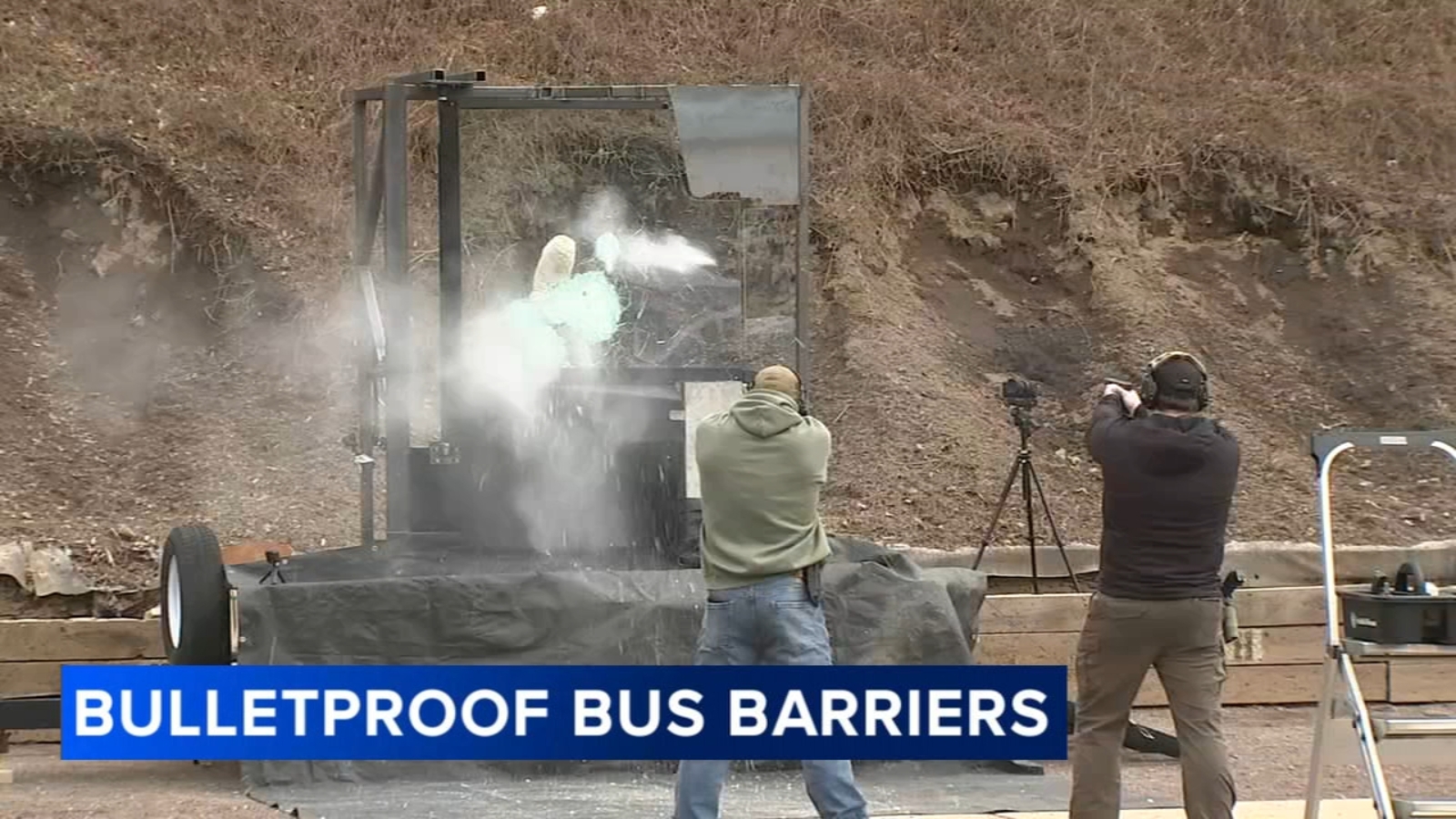
Earlier this week, Custom Glass Solutions, the manufacturer contracted to produce the protective barriers, hosted a live demonstration at the Bucks County Police Association range. SWAT officers fired multiple rounds at a prototype cockpit panel to evaluate its real-world performance under extreme conditions. During the stress test, 16 rounds were unloaded at the glass shield, with one bullet managing to break through and lodge in the silk-clothed dummy positioned behind it.
However, engineers were quick to characterize the breach as a “less than lethal pass through,” meaning that while the projectile penetrated the barrier, it had lost enough velocity and energy to potentially allow survival. Chad Beach of Custom Glass Solutions examined the aftermath and noted, “That’s more power than anyone is going to be carrying on the bus,” suggesting that typical threats drivers might encounter would be significantly less powerful than the weapons used in the test.
The Science Behind the Shield
According to Matt Eder, Vice President of Marketing for Custom Glass Solutions, the protective barrier is engineered using sophisticated materials science. “It is layers of glass and PVB [polyvinyl butyral] and polycarbonate that essentially diffuses the energy from a bullet,” Eder explained. This multi-layered construction works to:
- Absorb and distribute kinetic energy across the surface
- Prevent bullet penetration by fragmenting the projectile
- Maintain structural integrity even after multiple impacts
- Provide clear visibility for the driver during daily operations
The polycarbonate layer, in particular, plays a crucial role in preventing dangerous spalling,the dangerous shower of glass fragments that can cause secondary injuries even when bullets don’t fully penetrate traditional safety glass.
Inside the Pilot Program
SEPTA and the union have outlined a strategic rollout for the protective bulletproof bus driver glass across the transit system. The pilot phase will include installation in eight buses stationed at different depots throughout Philadelphia, with particular emphasis on routes deemed high-risk by both SEPTA leadership and TWU Local 234 representatives.
Cost and Coverage Considerations
Each protective cockpit carries a price tag of approximately $15,000, a significant investment that reflects the advanced engineering and ballistic-rated materials used in production. While this cost may seem substantial, transit officials and union leaders view it as a necessary expenditure to safeguard the lives of operators who serve millions of riders annually.
If the pilot proves the technology’s worth in real-world conditions, SEPTA could eventually expand the program to cover its entire fleet,a goal Pollitt has championed since negotiations began. The initial eight-bus deployment will allow engineers and transit officials to monitor performance under actual operating conditions, including wear and tear from daily use, exposure to weather, and varied threat scenarios.
What Comes Next for Transit Security
SEPTA spokesman Andrew Busch confirmed that the authority is moving forward with implementation. “We’re very happy with the test. We’re moving forward on this pilot program, and we’re going to see how it performs in the real world when it’s on the buses,” Busch stated. He added that transit police had already completed their own independent testing of the glass and expressed satisfaction with the results.
The pilot program is expected to launch within the next month, marking a significant milestone in American public transit safety. Philadelphia could potentially serve as a model for other major metropolitan transit systems grappling with similar driver safety concerns, particularly in cities where operator assaults have become an increasing concern.
Broader Implications for Public Transit
This pilot program represents more than just a localized safety upgrade,it signals a potential shift in how transit agencies nationwide approach operator protection. As incidents of violence against bus drivers continue to make headlines across the country, the SEPTA initiative could pave the way for similar investments in cities like New York, Chicago, Los Angeles, and beyond.
The conversation surrounding bulletproof bus driver glass also raises important questions about the evolving nature of public transportation work. Bus operators serve on the front lines of urban mobility, often working alone in unfamiliar neighborhoods during late hours. Enhanced physical protections, combined with improved training, mental health support, and de-escalation resources, could form a comprehensive approach to keeping these essential workers safe.
Looking Ahead
The coming months will prove critical as SEPTA deploys the first eight bulletproof-equipped buses onto Philadelphia streets. Transit officials, union representatives, and the manufacturer will closely monitor how the protective glass performs under daily operational stresses, including door opening and closing cycles, vibrations from city driving, and varying weather conditions.
For the family of Bernard Gribbin and all transit workers who have advocated for safer working conditions, this pilot program represents hope that meaningful change is possible. While no piece of equipment can eliminate all risks, the bulletproof bus driver glass being tested by SEPTA offers a tangible layer of protection that could mean the difference between life and death in a dangerous encounter.
As the pilot progresses, riders may begin to notice the subtle but significant change in their buses’ interior layouts. The protective cockpit will create a more defined separation between drivers and passengers, fundamentally altering the open-access feel that has historically characterized urban bus service. This shift, while potentially controversial among some riders, reflects an acknowledgment that protecting the people who keep cities moving must remain a top priority.
The success or shortcomings of this SEPTA initiative will likely shape national conversations about transit worker safety for years to come, making the Philadelphia pilot one of the most watched developments in public transportation safety today.