
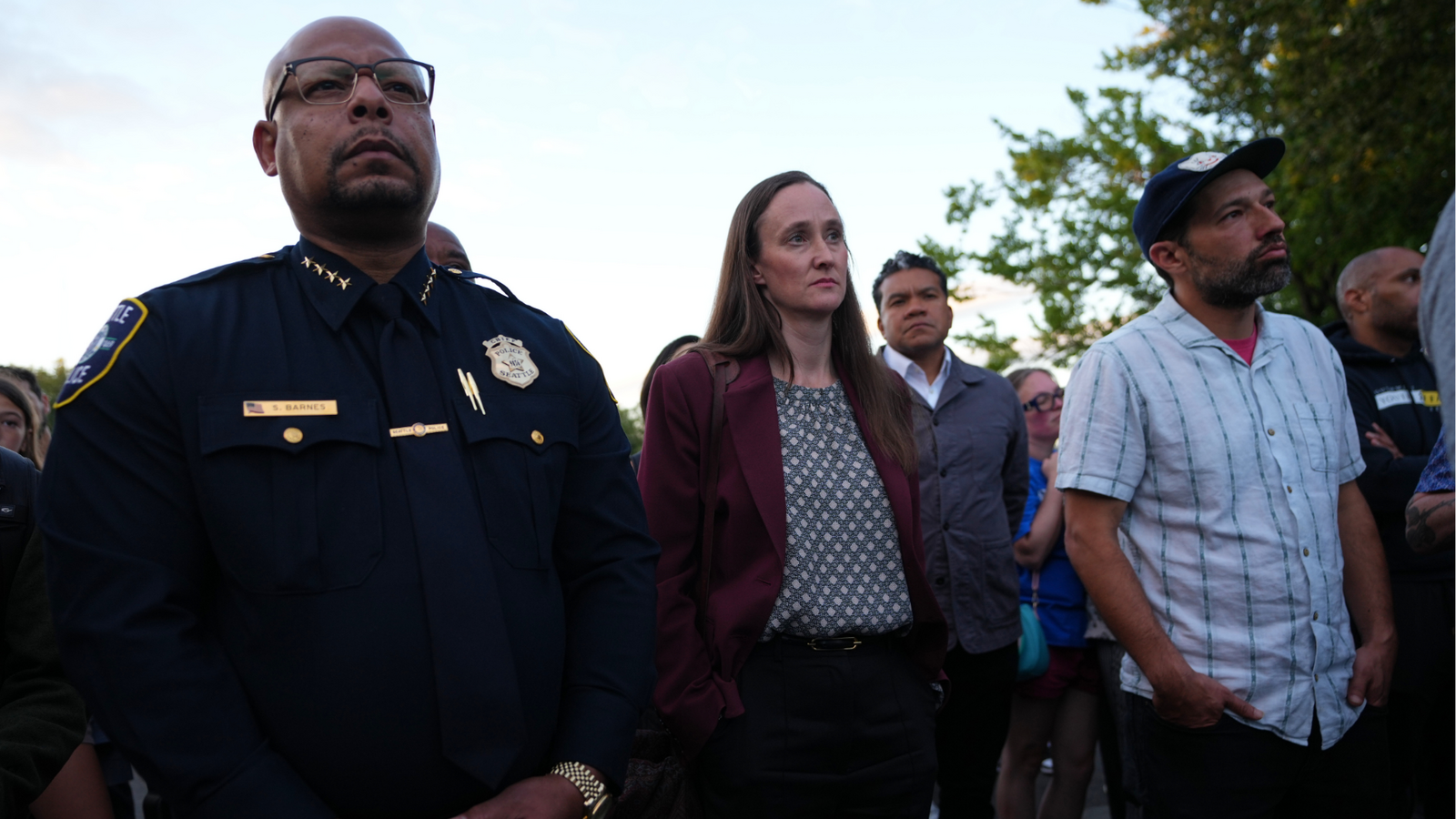
The Seattle police chief resignation has become the latest flashpoint in a city already grappling with questions about public safety, leadership, and community trust. Mayor Katie Wilson announced Thursday that Police Chief Shon Barnes had stepped down, ending days of speculation about whether he would keep his position following fierce criticism over the city’s chaotic response to a deadly shooting at the popular Bite of Seattle food festival.
The resignation marks a dramatic turn for a chief who had spent barely a year on the job and who had earned praise from several Black community organizations for improving police-community relations. It also raises uncomfortable questions about who ultimately bears responsibility when a high-profile tragedy exposes deep communication failures inside a major city government.
What Happened at the Bite of Seattle Shooting
Last weekend, what should have been a celebration of food, music, and community turned into tragedy. The Bite of Seattle, an annual three-day festival drawing hundreds of vendors and performers, became the site of a fatal shootout that left three people dead,including one suspect,and wounded four others. Among the injured was a 2-year-old boy.
Dozens of officers had been deployed to the event. According to court documents, at least one officer witnessed a 15-year-old suspect firing into a crowd and was able to convince him to surrender. Police are still searching for at least one additional person connected to the shooting.
The violence alone would have been enough to shake any city. But what followed in the hours afterward proved almost as damaging to public confidence as the gunfire itself.
The Communication Breakdown That Sparked the Crisis
In the critical hours following the Bite of Seattle shooting, both the Seattle Police Department and Mayor Wilson faced widespread criticism for what many described as slow, confusing, and contradictory communication.
An initial social media post confirmed that a shooting with multiple victims had occurred. Then, for nearly five hours, the public received no meaningful updates about whether there was any ongoing threat. During that vacuum, the mayor announced that two people had been taken into custody,a statement she was later forced to retract.
It wasn’t until approximately 11 p.m. on Sunday night that Assistant Seattle Police Chief Tyrone Davis finally provided a substantive briefing at a news conference attended by Wilson, Governor Bob Ferguson, and U.S. Rep. Pramila Jayapal. By then, residents had endured hours of uncertainty, conflicting information, and growing frustration.
The Mayor’s Decision to Push for Change
Behind the scenes, Wilson had been pressing Barnes to resign. Some of his supporters indicated he initially rebuffed her request, setting the stage for a tense standoff that played out publicly throughout the day Thursday. When asked about his status, Barnes told The Seattle Times only that whether he remained chief was “up to the mayor.”
Wilson ultimately announced the Seattle police chief resignation, framing the leadership change as necessary to restore confidence. She named Deputy Chief Andre Sayles, a 22-year law enforcement veteran, as interim chief while the city searches for a permanent replacement.
Community Leaders Push Back Against the Ouster
The decision did not sit well with several prominent Black community organizations, including the Seattle NAACP and the Urban League of Metropolitan Seattle. In an open letter to the mayor’s office, these groups argued that Barnes should not be made a scapegoat for broader systemic challenges.
“This is the wrong decision at the wrong time and would disrupt Seattle’s progress in public safety,” the letter read. “The tragic fatal shooting at the Bite of Seattle was heartbreaking for our city, but Chief Barnes should not be made a scapegoat for the complex challenges of public safety.”
The organizations credited Barnes with strengthening ties between the department and the community, helping reduce gun violence, and improving internal operations. Civil rights attorney James Bible met with Wilson alongside a small group of Black leaders earlier in the day, urging her to pause the decision and create clearer criteria for evaluating future leadership decisions.
“I’m hopeful that she will take a step back and make a different decision for now and then create criteria for any future decisions,” Bible said.
The Complicated Political Backdrop in Seattle
Barnes had only been on the job since December 2024, when he was appointed by former Mayor Bruce Harrell. His hiring came just five days after he was thrust into the national spotlight for his handling of a shooting at a religious school in Wisconsin that killed a teacher and a student. Harrell praised Barnes at the time for demonstrating “impressive leadership capabilities” during the investigation.
When Wilson,a democratic socialist who once supported defunding the police,won the mayor’s race last year, keeping Barnes on as chief sent a deliberate signal to Seattle’s business community and civic groups. It suggested she was not planning a radical overhaul of public safety policy.
That signal now appears to have faded. Wilson entered office with no prior elected or management experience but with a reputation for thoughtful policy analysis. Her handling of the Barnes situation has prompted critics to question her decisiveness. Seattle political consultant Sandeep Kaushik captured the mood bluntly: “She looks weak and vacillating. There’s almost 24 hours now where it’s not clear whether the police chief is still the police chief.”
Questions About the Chief’s Travel
Adding fuel to the controversy were reports about Barnes’s travel schedule. Sgt. Patrick Michaud, a department spokesperson, confirmed that Barnes had made four trips to Chicago this year,where his family lives,spending roughly 18 days total in the city. Barnes also attended several police executive and recruitment conferences during his tenure.
Critics pointed to those trips, particularly the fact that he was out of town at a law enforcement conference when the Bite of Seattle shooting occurred, as evidence of misplaced priorities. Supporters countered that conference participation and family time were reasonable for any chief balancing a high-pressure role.
What the Resignation Means for Public Safety in Seattle
The Seattle police chief resignation lands at a particularly sensitive moment. The city is heading into another major festival weekend with Seafair 2026, an event featuring a boating regatta, air show, and large crowds along the waterfront. Public safety planning is already underway.
Interim Chief Andre Sayles now faces the immediate challenge of stabilizing a department in turmoil while reassuring a city still processing the trauma of the Bite of Seattle shooting. The leadership transition will likely influence how officers respond to large gatherings in the coming weeks and how residents perceive the department’s commitment to transparency.
Broader Implications for Mayor Wilson
For Wilson, the decision carries significant political weight. By forcing out a chief who had strong support from Black community leaders, she risks alienating important constituencies. Yet by keeping him on after such a high-profile failure, she risked appearing unwilling to hold anyone accountable for a disastrous public communication breakdown.
Either path was politically costly. She chose decisive action,but the way the Seattle police chief resignation unfolded has left many wondering whether the process could have been handled with more clarity and less public turbulence.
Looking Ahead: Can Seattle Rebuild Trust?
The coming weeks will likely determine whether the leadership change stabilizes the city or deepens divisions. Community leaders who opposed Barnes’s ouster have called for clear, transparent criteria going forward, so future decisions about police leadership are not made under the heat of crisis and public pressure.
Residents, meanwhile, are still waiting for answers about the Bite of Seattle shooting itself. Police are still searching for at least one additional suspect, and questions remain about how such a violent incident could unfold at a heavily policed public event with hundreds of officers on hand.
The Seattle police chief resignation may close one chapter, but it opens several others. As interim leadership takes hold and the city prepares for Seafair, Seattle will need more than a change at the top,it will need a renewed commitment to clear communication, genuine community engagement, and a public safety strategy that meets the moment. Only then can the city begin to move beyond the painful questions raised by the events at the Bite of Seattle.