
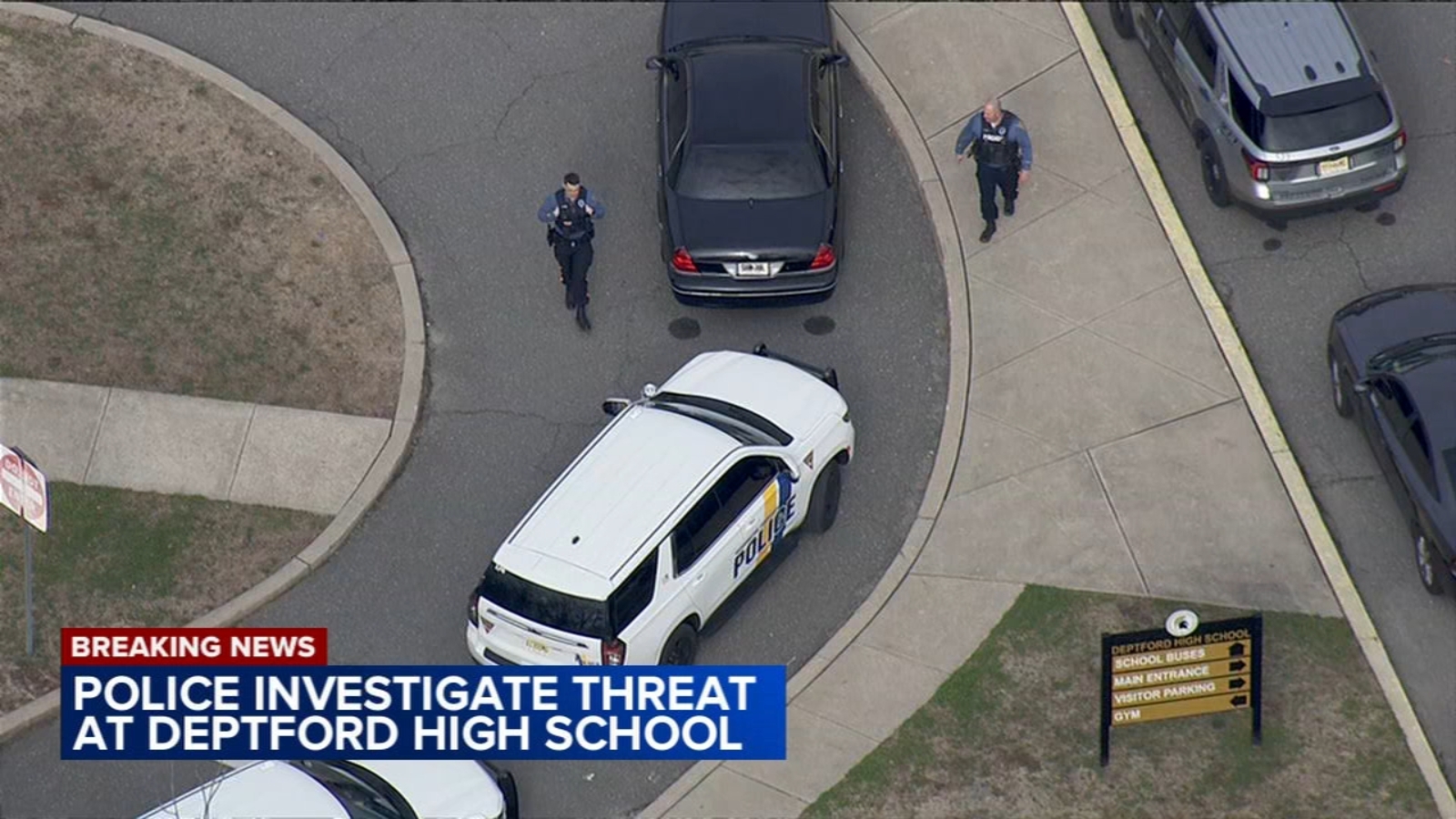
On a recent Thursday morning, two Gloucester County high schools in southern New Jersey became the focus of urgent attention after school threats were reported within minutes of each other. While both incidents prompted immediate responses from law enforcement and school officials, authorities ultimately determined that neither threat appeared to be credible. Here is what we know so far about the situation, the response, and what it reveals about how communities handle these alarming events.
The Morning the Threats Came In
It was just before 7:30 a.m. when the first report surfaced. According to local authorities, a school threat was directed at West Deptford High School in Deptford Township, New Jersey. Within roughly fifteen minutes, a second report followed,this one aimed at Deptford High School, also located in Gloucester County.
The timing, just as students, teachers, and staff were arriving for the school day, created an immediate sense of urgency. Both schools quickly coordinated with local police departments, and officers were dispatched to investigate. By the time the morning progressed, officers had conducted thorough searches of both campuses and concluded that no weapons or dangerous items were found on school grounds.
Timeline of Events
- Before 7:30 a.m.: Initial threat reported against West Deptford High School
- Just after 7:40 a.m.: Second threat reported against Deptford High School
- Mid-morning: Police units arrive on both campuses and begin sweeping the buildings and surrounding areas
- Later in the day: Officials announce that neither threat is believed to be credible and that no dangerous materials were located
Law Enforcement Response and Investigation
When school threats are reported, law enforcement agencies typically follow well-established protocols designed to balance urgency with caution. In Gloucester County, the response appeared swift and coordinated. Officers arrived at both high schools, secured the perimeters, and conducted comprehensive searches of the buildings, parking lots, athletic fields, and surrounding areas.
The fact that two schools were targeted within the same hour raised questions among local residents about whether the incidents might be connected. Investigators have not yet publicly confirmed any link between the two reports, but the proximity in timing and geography prompted a coordinated response from multiple departments.
Local authorities emphasized that their priority was to ensure the safety of students, faculty, and staff while simultaneously preserving any potential evidence that could help identify the source of the threats. Investigations into who made the threats,and through what means, whether social media, written note, phone call, or other channel,were reportedly ongoing at the time of the announcement.
How Officials Determine Whether a School Threat Is Credible
One of the most difficult aspects of responding to school threats is determining credibility. School districts and law enforcement agencies across the country have developed threat assessment protocols to evaluate the seriousness of any reported danger.
Common Factors in Threat Assessment
- Specificity: Threats that include specific details about timing, location, weapons, or methods are often considered more serious than vague or generalized statements.
- Means and opportunity: Investigators consider whether the person making the threat has the tools, access, or capability to carry it out.
- Behavioral indicators: Prior concerning behavior, online activity, or statements from peers and family members can all influence credibility.
- Source of the threat: Whether the threat originated from a known individual, an anonymous source, or a copycat pattern can affect how seriously it is taken.
- Context: Threats made during emotionally charged times, such as after disciplinary action or following publicized incidents elsewhere, may be evaluated differently.
In this case, officials concluded that the threats against West Deptford and Deptford High Schools were not believed to be credible. However, that determination does not mean the reports were dismissed. Even non-credible threats are investigated thoroughly, and in many states, making a false threat against a school carries serious legal consequences.
The Broader Context of School Threats in America
The incidents in Gloucester County are part of a much larger national conversation about student safety, school security, and the rising number of threats reported at schools across the United States. Studies have shown that the frequency of school threats has increased significantly over the past decade, driven in large part by social media, where rumors, jokes, and copycat warnings can spread within minutes.
According to data collected by organizations that track school safety incidents, the majority of reported school threats ultimately turn out to be non-credible. However, every single report triggers an emergency response that can disrupt learning, strain law enforcement resources, and create lasting anxiety for students, parents, and educators.
The Impact on Students and Families
Even when a threat is determined to be non-credible, the emotional toll on a school community can be significant. Students may struggle with fear and anxiety, parents may worry about their children’s safety, and teachers may feel heightened stress as they try to maintain a normal learning environment.
School counselors and mental health professionals often play an important role in the days and weeks following a threat, helping students process their emotions and reassuring them that adults are taking their safety seriously. Many districts also use these moments as opportunities to reinforce safety drills, communication procedures, and reporting systems such as anonymous tip lines.
Legal Consequences of Making School Threats
It is important to remember that making a threat against a school is a serious matter, regardless of whether the person intends to carry it out. In New Jersey, as in most states, individuals who make school threats can face criminal charges including terroristic threats, making false alarms, and disorderly conduct. Depending on the circumstances, charges can be filed in juvenile or adult court, and penalties can include fines, probation, mandatory counseling, and even incarceration.
Law enforcement officials often use high-profile cases to remind the public that even words spoken in jest, posted sarcastically online, or shared among friends can trigger significant legal consequences. The phrase “it’s just a joke” offers little protection when a school community is forced into lockdown and emergency response protocols.
What Parents and Communities Can Do
The Gloucester County incidents serve as a reminder that school safety is a shared responsibility. While school administrators and law enforcement lead the immediate response, parents and community members play a critical role in prevention.
- Talk to your children: Open conversations about the seriousness of threats, even those made online or as jokes, can help prevent incidents.
- Encourage reporting: Most schools have anonymous tip lines or reporting apps. Make sure students know how to use them.
- Monitor social media: Many school threats originate or spread through social platforms. Parents should be aware of what their children are posting and sharing.
- Stay informed: Subscribe to alerts from your local school district and law enforcement agencies so you receive accurate information quickly.
- Support mental health resources: Schools that invest in counseling and mental health support often see better outcomes in both prevention and recovery.
Looking Ahead
As investigations continue in Gloucester County, school officials in both West Deptford and Deptford are working to restore a sense of normalcy for students and staff. The quick determination that the threats were not believed to be credible provided relief to many families, but the incident underscored just how rapidly a normal school morning can be disrupted by alarming reports.
Communities across the country continue to grapple with the challenge of balancing vigilance with calm, preparedness with perspective. Every reported school threat,no matter how quickly it is resolved,reinforces the importance of strong communication between schools, law enforcement, parents, and students.
Conclusion
The school threats reported at West Deptford High School and Deptford High School on Thursday morning were ultimately determined to be non-credible, but their impact on the community was very real. Police responded promptly, searches were conducted, and officials worked to keep families informed throughout the morning. As investigations into the sources of the threats continue, the incident serves as a powerful reminder of why threat assessment protocols, community awareness, and open communication matter. Whether threats are made in person, by phone, or through social media, the response from schools and law enforcement must always be swift, thorough, and taken seriously,because the safety of every student depends on it.