
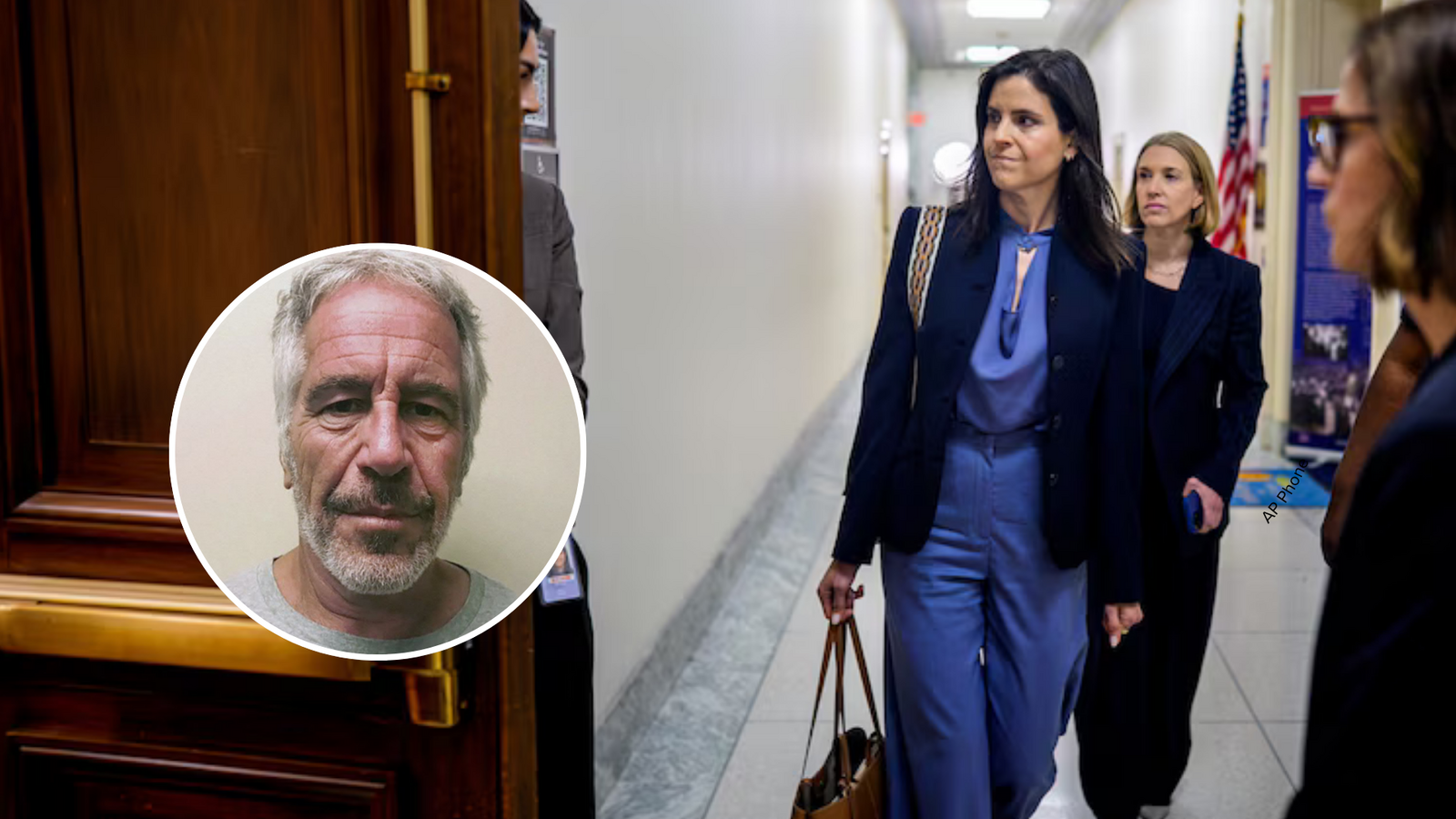
In a stunning development that has reignited public scrutiny of the Jeffrey Epstein case, the recent Sarah Kellen testimony before the House Oversight Committee has surfaced new allegations against two prominent figures in Epstein’s inner circle. Kellen, who served as a longtime personal assistant to the disgraced financier, disclosed for the first time that she was sexually abused not only by Epstein but also by Ghislaine Maxwell and two other men , celebrity hairstylist Frédéric Fekkai and former Miami Beach mayor Philip Levine. Her revelations have prompted House lawmakers to formally request a Department of Justice investigation into these additional alleged abusers.
New Allegations Surface from Kellen’s Closed-Door Interview
The Sarah Kellen testimony, which took place on May 21 and was made public in transcript form recently, marks a pivotal moment in the ongoing congressional inquiry into the federal government’s handling of the Epstein case. Kellen appeared voluntarily before the committee, accompanied by two attorneys, and provided detailed accounts of abuse she says she endured for more than a decade while working for Epstein.
Perhaps most significant were her first-time allegations against Fekkai and Levine. According to her testimony, Fekkai allegedly abused her in the early 2000s when she was in her early twenties and seeking modeling opportunities. Kellen described being lured to Hawaii under the pretense of a fashion show that did not exist, after which Fekkai allegedly took advantage of her vulnerable situation. She claims Fekkai later introduced her to Epstein, describing him as a model scout for Victoria’s Secret.
The allegations against Levine, she testified, occurred during a trip to Saint-Tropez around 2003 when he was a houseguest at a property rented by Epstein and Maxwell. Kellen claimed that after Epstein and Maxwell had gone to sleep, Levine “basically forced himself” on her , an incident she says was repeated during a walk on the beach.
Both men have denied the allegations through representatives. Fekkai’s spokesperson called the claims “astonishing” and asserted that Fekkai “never abused anyone.” Levine’s spokesperson acknowledged “a brief intimate encounter with another consenting adult” but denied any non-consensual conduct.
Congress Requests DOJ Investigation
House Oversight Committee Chairman James Comer (R-Ky.), along with three other Republican lawmakers, sent a formal letter to the Justice Department urging an investigation into the new allegations. The letter specifically requests that the DOJ “use all available tools, including immunity for certain witnesses, to investigate the allegations against, and any other criminal conduct committed by, Philip Levine and Frédéric Fekkai.”
The committee also asked the DOJ to explain why Kellen was never interviewed by law enforcement until Epstein’s arrest in July 2019 , a question that strikes at the heart of longstanding concerns about the federal government’s handling of Epstein’s case.
The Non-Prosecution Agreement Controversy
Kellen’s testimony also cast new light on the controversial 2007 non-prosecution agreement that allowed Epstein to avoid federal charges. Kellen was one of four women named as potential co-conspirators in that secret deal, despite never being interviewed by authorities about its contents.
“The Federal Government of the United States branded me a criminal in a secret deal with my own abuser, without ever once speaking to me,” Kellen told the committee. “I have spent every year since trying to live underneath that piece of paper.”
This revelation has intensified criticism of the original Epstein investigation and raised fresh questions about the Justice Department’s decision-making processes during that era.
Inside the Abuse: Kellen’s Account of Working for Epstein
Kellen’s account of her time working for Epstein painted a picture of total control and sustained victimization. She described how Epstein dictated virtually every aspect of her life , her clothing, haircut, hair color, and even where she lived. She told the committee that Epstein used a code phrase, “cold sheets,” to summon her for sexual encounters, referring to her as his “human hot water bottle.”
“I was being paid, in part, to be raped,” Kellen stated during her opening remarks.
According to her testimony, the abuse occurred on average once a week and continued even during Epstein’s jail sentence in Florida, when he allegedly made a video call to her from inside the Palm Beach County Stockade and ordered her to undress on camera.
Maxwell’s Alleged Role in the Abuse
The Sarah Kellen testimony also provided fresh allegations against Ghislaine Maxwell, who is currently serving a 20-year sentence at a federal prison camp in Texas. Kellen described Maxwell as both a participant in and enabler of her abuse, recounting an incident on Epstein’s private island where Maxwell allegedly touched her and instructed her on how to please Epstein.
Kellen further described Maxwell as a psychological force who reinforced Epstein’s dominance, allegedly calling Kellen her “slave” and “minion.” Reflecting on Maxwell’s influence, Kellen told the committee: “I always felt like she turned him into the monster that he became.”
Maxwell could not be reached for comment but has consistently maintained her innocence. She is currently seeking to have her conviction vacated or her sentence reduced, arguing that the government prosecuted her as a substitute for Epstein following his death in custody in 2019.
Obstruction Allegations and the Original Investigation
Kellen’s testimony also suggested possible efforts by Epstein to obstruct the first investigation into his conduct. She described two specific incidents from the mid-2000s that raised questions about evidence preservation.
In 2005, while on Epstein’s private island, Kellen said she overheard Epstein instructing another assistant by phone to go to the Palm Beach house and remove computers. The following February, she claimed Epstein directed her to collect his printed contact directories and certain framed photographs and deliver them to his lawyers.
Perhaps most striking was her account of a 2007 incident at an airport, where an employee informed her and another woman that FBI agents wanted to speak with them. According to Kellen, Epstein told them to wait, walked over to the agents himself, and returned ten minutes later saying, “OK, let’s go.”
Federal Prosecutors’ Decision Not to Charge Kellen
The DOJ investigation into Kellen herself spanned more than a year following Epstein’s death. Documents released earlier this year revealed internal deliberations about whether to bring charges against her. Ultimately, federal prosecutors decided not to file charges, despite acknowledging that Kellen scheduled some of the massages at the center of the criminal case against Epstein.
In a proposed “statement of facts” sent to Kellen’s attorneys in late 2020, prosecutors detailed that several minor victims reported to federal agents that Epstein paid them for sexualized massages, including during sessions that Kellen had scheduled. However, Kellen claimed she was provided a directory of names by Epstein and instructed on whom to call, denying any knowledge that some individuals were underage.
Her attorneys argued that given her own victimization, she was “a very vulnerable victim” and essentially “a cog in Epstein’s wheel, acting entirely at his direction.” The government ultimately accepted this characterization.
The Path Forward: What Comes Next
The House Oversight Committee investigation is entering a critical phase, with several high-profile witnesses scheduled to appear in coming weeks. These include longtime Epstein assistant Lesley Groff, former Goldman Sachs chief counsel Kathryn Ruemmler, Epstein’s former personal banker Jes Staley, and billionaires Bill Gates and Leon Black.
Comer has indicated that the committee plans to produce a comprehensive report on its findings before the end of the year , a document that could significantly reshape public understanding of the Epstein case and the broader network of individuals connected to his crimes.
Conclusion
The Sarah Kellen testimony represents a watershed moment in the long-running Epstein saga. By disclosing new allegations against Fekkai, Levine, and Maxwell, Kellen has expanded the scope of potential accountability beyond the figures previously charged. Her account also raises troubling questions about why federal authorities failed to interview her during the original investigation and why she was named as a co-conspirator in a secret deal without ever being consulted. As the House Oversight Committee continues its work and the DOJ weighs whether to investigate the newly named individuals, Kellen’s haunting words , “I was being paid, in part, to be raped” , serve as a stark reminder of the human cost of the Epstein case and the importance of pursuing justice for all survivors.