
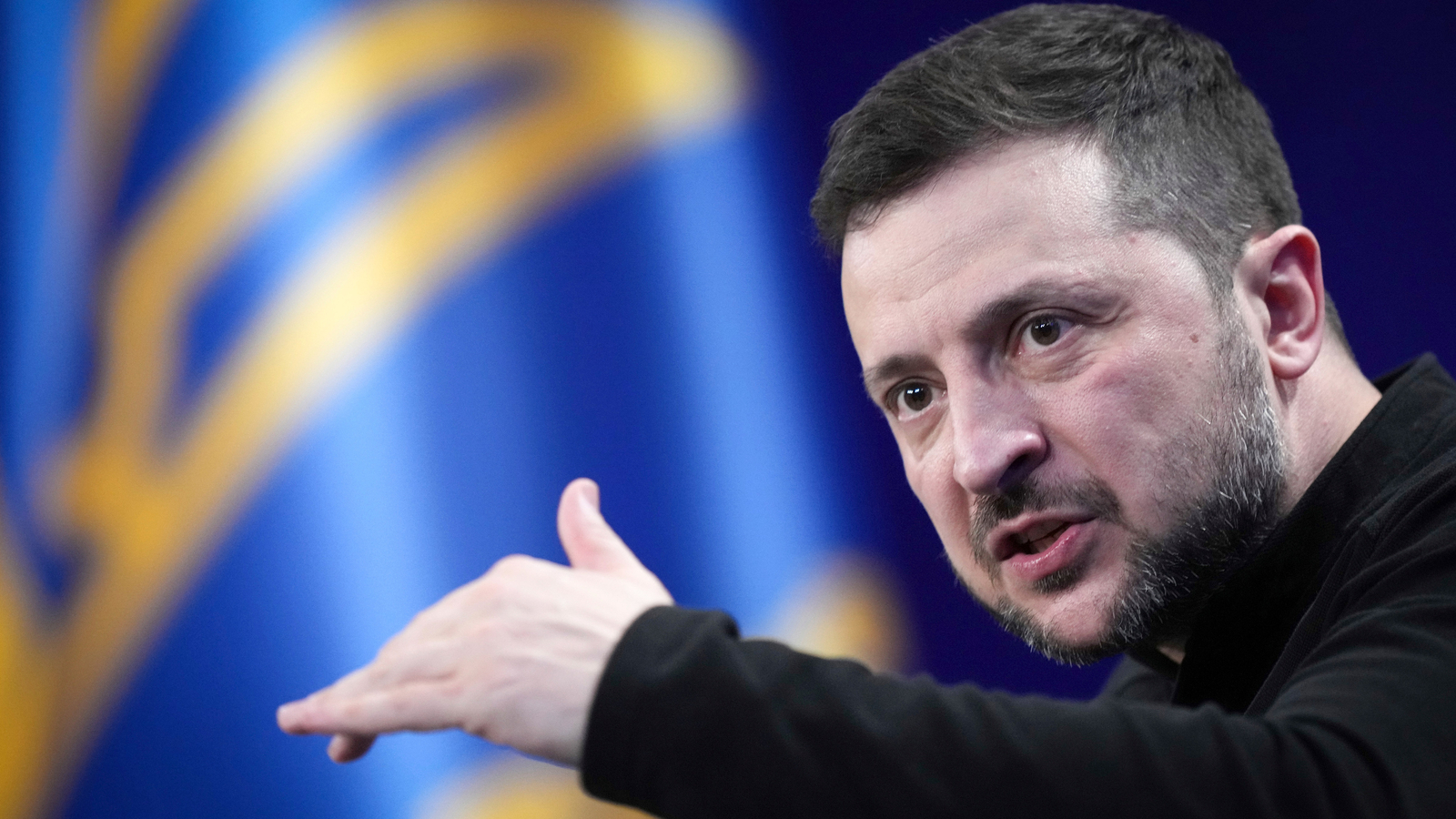
After three brutal years of the russia-ukraine war, the conflict has reached a pivotal moment where the path to peace now hinges on the decisions of just three men: President Volodymyr Zelenskyy of Ukraine, President Vladimir Putin of Russia, and President Donald Trump of the United States. With recent high-stakes diplomatic meetings in Saudi Arabia, shifting American foreign policy, and unprecedented battlefield developments, the international community finds itself watching closely as these leaders determine whether the war will end through negotiation, escalation, or continued stalemate.
The Saudi Arabia Meeting: Diplomacy Without Ukraine
In a striking diplomatic development, Secretary of State Marco Rubio and Russian Foreign Minister Sergey Lavrov met last week in Saudi Arabia to discuss ending the war “as soon as possible.” The White House declared that President Trump “wants to stop the killing” and is “using its strength in the world to bring countries together.”
Yet what made the meeting remarkable was not what was discussed, but who was absent. There was no Ukrainian delegation present, despite the administration’s pledge to find a path to peace “acceptable to all sides.” This omission has raised serious questions about whether any peace negotiations can genuinely address Ukraine’s concerns or simply impose terms that serve Moscow and Washington.
Zelenskyy’s Conditions for Peace
President Zelenskyy responded forcefully to the diplomatic developments, emphasizing that any security guarantees must be both robust and reliable. He warned that anything less, such as a fragile ceasefire, “would only serve as another deception by Russia and a prelude to a new Russian war against Ukraine or other European nations.”
In conversations with the French president, Zelenskyy outlined his vision for a meaningful resolution, one that would protect Ukrainian sovereignty and prevent future aggression. He even went so far as to say he would step down from the presidency if doing so would bring peace to his country or secure Ukraine’s NATO membership. Such statements reveal a leader willing to make personal sacrifices for national stability.
The Turning Tide in Washington
The shift in American policy did not happen overnight. The 2024 presidential campaign set the stage for a dramatic transformation in U.S.-Ukraine relations. Throughout his campaign, Trump repeatedly suggested that Ukraine would need to make political and territorial concessions as part of any peace deal.
While the Biden administration worked to protect military and economic aid for Kyiv, European allies scrambled to “Trump-proof” the NATO structures supporting Ukraine’s defense. Critics of Biden argued that American assistance was calculated to be enough for Ukraine to survive, but not enough for Ukraine to win.
Trump’s Pressure Campaign
Following his decisive victory, Trump’s administration moved quickly to reshape American policy toward Ukraine. By February, the president had labeled Zelenskyy a “dictator with no elections” and suggested Ukraine “should have never started” the war, both statements that closely mirrored Russian disinformation narratives.
Perhaps most controversially, the administration pushed Ukraine to sign a deal granting American access to hundreds of billions of dollars worth of Ukrainian mineral resources. When Zelenskyy refused to “sell the state,” Trump posted on Truth Social: “Zelenskyy better move fast or he is not going to have a country left.”
The two leaders also clashed over the value of American aid. Trump claimed the U.S. had provided $500 billion, while Zelenskyy countered with a figure of approximately $100 billion. According to the Kiel Institute for the World Economy, the actual amount is closer to $119 billion over three years, with $67 billion in military equipment.
Ukraine’s Surprise Counteroffensive in Kursk
As the third year of the war began, the conflict expanded both geographically and geopolitically. In a bold and unexpected move, Ukrainian forces launched a counteroffensive into Russia’s Kursk border region, putting Moscow on its back foot and subverting the expectations of military analysts.
“Ukraine’s military objectives for the attack remain largely undisclosed,” noted Ben Barry, a senior fellow at the International Institute for Strategic Studies. “But Ukrainian President Volodymyr Zelenskyy has spoken of creating a ‘buffer zone,’ perhaps as a bargaining chip.”
The Kursk offensive demonstrated Ukraine’s ability to project military power beyond its borders while potentially strengthening its negotiating position. Yet throughout the year, Ukrainian forces also suffered significant losses, with the official death toll rising to over 45,000, according to Zelenskyy.
North Korea and the Expansion of War
The war’s third year brought unprecedented international involvement. North Korea sent approximately 10,000 troops to Kursk to fight alongside Russian forces, marking a dramatic escalation in Pyongyang’s support for Moscow. Hundreds of these soldiers were killed in the fighting, according to the White House.
This deployment signaled Putin’s increasingly difficult position on the battlefield. As then-Defense Secretary Lloyd Austin III observed, “This is an indication that he may be even in more trouble than most people realize.”
The Long-Range Weapons Decision
In a major policy shift, the Biden administration approved the use of American-made ATACMS missiles for strikes on select military targets within Russia. This decision came after months of pressure from Zelenskyy, who had argued that long-range weapons were essential for Ukraine’s defensive efforts.
Throughout the year, Russian missiles and drones struck Ukrainian cities and energy infrastructure relentlessly, causing devastating civilian casualties. In June, eight people were killed when Russian missiles targeted Kryvyi Rih, Zelenskyy’s hometown, prompting the Ukrainian president to declare, “The time for compromises is over.”
Three Leaders, Three Visions
As the war’s anniversary approached, the conflict increasingly appeared to be boiling down to the wills of three leaders, two of whom have been engaged in this struggle since its first day.
Zelenskyy
The Ukrainian president spent the past year pushing for deeper allied support while leading his nation’s military operations. His Kursk counteroffensive and persistent advocacy for advanced weaponry strengthened his position in any potential negotiations.
Putin
The Russian leader, weakened but not defeated, has sought to leverage his relationships with world powers while expanding alliances with countries like North Korea. Russia’s refusal to release casualty figures has made it difficult to assess its true battlefield position.
Trump
The American president has positioned himself as the only leader capable of brokering peace between the two nations. As State Department spokesperson Tammy Bruce put it, “President Trump is the only leader in the world who can get Ukraine and Russia to agree to that.”
The Path Forward
Rather than Ukraine forcing Russia into talks, Moscow appears to be stepping around Kyiv entirely, engaging instead with its most powerful ally, now led by Trump. This development has created a troubling dynamic in which the country most affected by the war has been excluded from high-level negotiations about its future.
Russian and Ukrainian casualty figures tell the human cost of this war: over 45,000 Ukrainian deaths and an estimated 854,280 total Russian casualties since the invasion began. These numbers represent families shattered, communities destroyed, and a region forever changed by three years of brutal conflict.
Conclusion: A World Watching
The russia-ukraine war stands at a critical juncture where decisions made in Washington, Moscow, and Kyiv will shape not only the future of Eastern Europe but the broader international order. As Trump pushes for rapid resolution, Zelenskyy demands meaningful security guarantees, and Putin calculates his next move, the world watches to see whether these three leaders can find common ground, or whether their competing visions will extend a conflict that has already claimed far too many lives. The coming months will determine whether the path leads to genuine peace or continued bloodshed, and history will judge these leaders accordingly.