
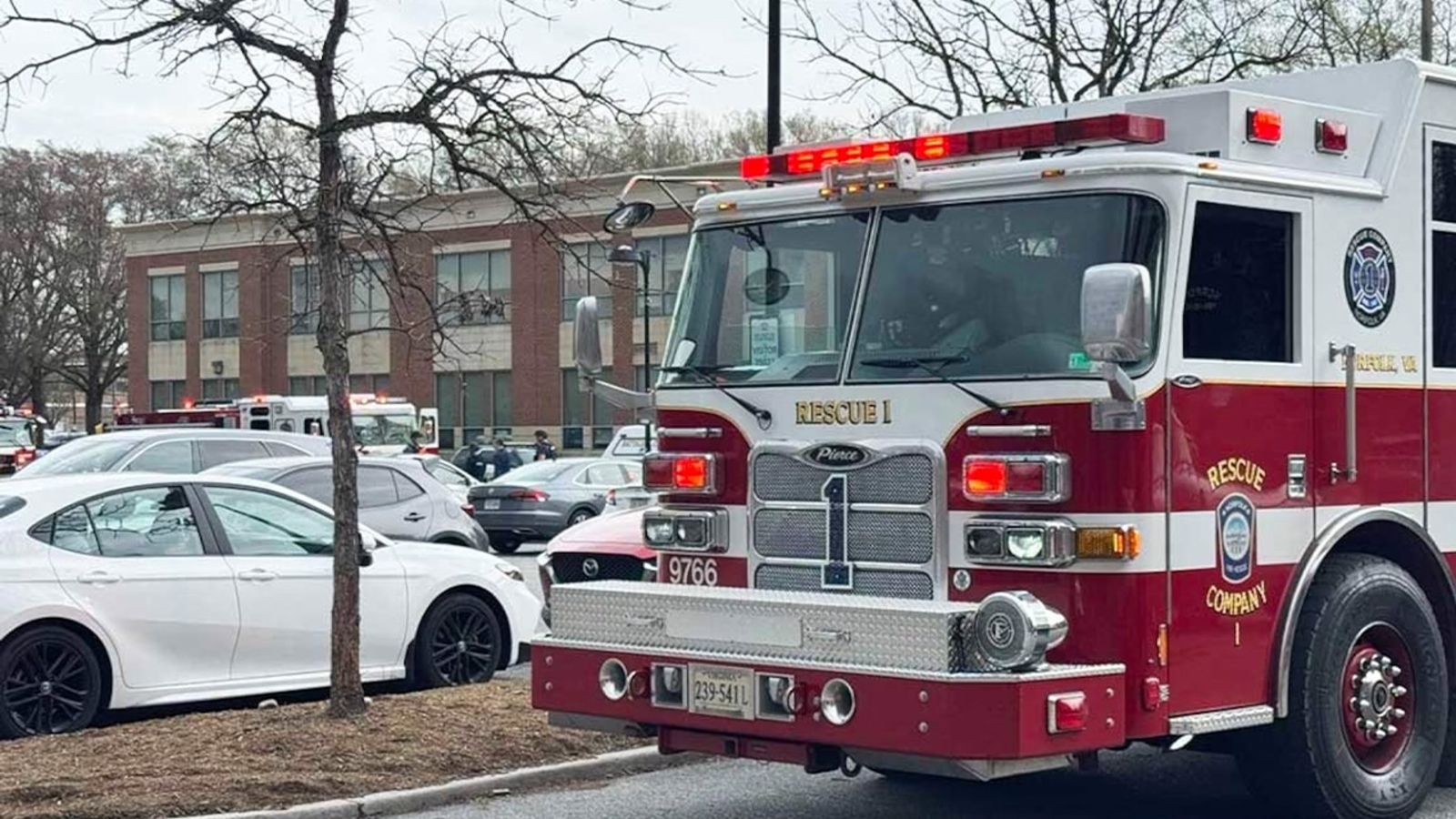
A tragic Old Dominion University shooting unfolded on Thursday morning in Norfolk, Virginia, when a gunman opened fire inside an academic building on campus, killing a beloved ROTC instructor and injuring two others before being subdued and killed by ROTC students who were present in the classroom. The incident has sent shockwaves through the university community and beyond, prompting investigations by local authorities, the FBI, and federal counter-terrorism agencies who are treating the attack as an act of terrorism.
What Happened at Old Dominion University
The violence erupted around 10:43 a.m. inside Constant Hall, an academic building located on the Old Dominion University campus. According to officials who briefed reporters in the hours following the incident, a gunman entered the building and inquired whether he had found an ROTC classroom. When a student confirmed that he had, the suspect immediately opened fire, striking the instructor multiple times before attention turned to the students who would soon take matters into their own hands.
Old Dominion University Police Chief Garrett Shelton confirmed during a press briefing that officers arrived at the scene within minutes and found the suspect deceased shortly thereafter. The university has since canceled all classes for the remainder of Thursday and the entirety of Friday, citing the ongoing investigation and the need to thoroughly sweep the campus for any additional threats or evidence.
The Heroic Response of ROTC Students
In a stunning display of courage and decisive action, Reserve Officers’ Training Corps students who were present in the classroom physically confronted the gunman and rendered him “no longer alive,” according to FBI Special Agent in Charge Dominique Evans. While Evans declined to elaborate on the specific tactics used by the students, she emphasized that the suspect was not shot by responding officers.
“They basically were able to terminate the threat,” Evans told reporters, underscoring the critical role that these young cadets played in preventing what could have been an even more devastating loss of life. Their actions stand as a powerful testament to the leadership training and composure that ROTC programs instill in their participants, qualities that proved essential when confronted with an active shooter scenario.
The Victim: Lt. Col. Brandon Shah
Virginia Governor Abigail Spanberger identified the instructor who lost his life as Lieutenant Colonel Brandon Shah, a dedicated military officer who had devoted his career to serving his country and mentoring the next generation of military leaders. In a heartfelt statement shared on social media, Spanberger described Shah as someone whose commitment to service extended far beyond his own military duties.
“A devoted ROTC instructor, Lt. Col. Shah didn’t just lead a life of service to our country, he taught and led others to follow that path,” the governor’s statement read. Shah’s death represents a profound loss not only for his family and loved ones but also for the countless cadets whose lives he helped shape during his tenure at Old Dominion University.
The Suspect: Mohamed Jalloh’s Background
Law enforcement authorities identified the gunman as Mohamed Jalloh, a former Army National Guardsman whose troubled history raised serious questions about how he was able to carry out this attack. According to the FBI, Jalloh had a prior conviction related to terrorism that should have placed him under strict scrutiny by federal authorities.
Prior Terrorism Conviction and Early Release
Jalloh had been convicted in 2016 on charges of attempting to provide material support to the Islamic State, commonly known as ISIS. He was sentenced in 2017 to 11 years in federal prison but was released in December 2024, several years before his sentence was set to expire. While federal prosecutors had originally recommended a 20-year sentence, Jalloh was freed after serving roughly seven years of his term, a circumstance that has drawn significant attention in the wake of the shooting.
Federal Bureau of Prisons records confirm his release, though it remains unclear precisely why he was allowed to exit the system well before completing his full sentence. Early release is not uncommon in the federal prison system, though the nature of Jalloh’s underlying conviction has prompted calls for explanations from lawmakers and oversight bodies.
Military Service and ISIS Communications
Jalloh served in the Virginia Army National Guard as a combat engineer from April 2009 to April 2015, though he never deployed overseas during his time in uniform. He left military service at the rank of Specialist, a junior enlisted rank that soldiers typically achieve automatically within their first four years of service.
When Jalloh pleaded guilty in 2016, court documents revealed that he had communicated with an ISIS operative believed to be located overseas. This individual introduced Jalloh to another person in the United States, who turned out to be a confidential FBI informant. According to prosecutors, the ISIS member believed that Jalloh would help the informant carry out an attack, and during one meeting, Jalloh reportedly suggested that any operation would be more impactful if planned during the holy month of Ramadan.
Motive and Terrorism Classification
During Thursday’s shooting, Jalloh reportedly shouted “Allah Akbar” as he carried out the attack, a detail that aligns with his prior extremist affiliations and has led investigators to classify the assault as an act of terrorism. FBI Director Kash Patel announced in an official statement that the bureau is treating the incident as terrorism and that the FBI’s Joint Terrorism Task Force has been deployed to work alongside local police on the investigation.
Speaking at the press briefing, Evans stated that Jalloh was allegedly attempting to commit a terrorist attack at the university, a characterization that reinforces the gravity of the situation and the connections to his prior conviction. Only one weapon was found on the suspect, though investigators have not disclosed the specific type of firearm used in the attack.
Community Response and Aftermath
The university community was left reeling in the immediate aftermath of the shooting. Sophomore Jennifer, who was waiting for a midterm exam in a nearby area when the attack unfolded, described the harrowing moments when the violence began. She told a local ABC affiliate that she heard a group of people urgently instructing others to evacuate the building.
“All of a sudden, we heard a commotion. A lot of people rumbling, starting to get up,” she recalled. “The guy next to me, we looked at each other, we started running, and that’s when we heard, you know, gunshots.” Despite the terror of the moment, Jennifer praised the university’s emergency notification system, noting that the alerts reached students quickly and efficiently during the crisis.
Ongoing Investigation
Police Chief Shelton indicated that the investigation remains in its early stages and that officers were methodically searching every room in Constant Hall to locate any additional victims, evidence, or potential threats. Officers encountered numerous students, faculty members, and staff who had taken refuge in various parts of the building during the incident.
“We now have to search every single room in that facility,” Shelton explained. “There were students that we found that were hiding and faculty and staff.” The painstaking process of securing the building and gathering evidence will likely take several days, particularly given the terrorism designation that has drawn additional federal resources to the scene.
University Leadership Speaks Out
Old Dominion University President Brian Hemphill addressed the media with visible emotion, acknowledging the profound grief gripping the campus community. “Today was a tragic day for the campus of Old Dominion University,” Hemphill said during the press briefing. The president’s remarks echoed the sentiments of countless students, parents, alumni, and faculty members who were grappling with the sudden and senseless loss of life.
Broader Implications and Questions Raised
The Old Dominion University shooting has raised urgent questions about how a convicted terrorist, previously sentenced for attempting to provide material support to ISIS, was able to walk onto a university campus and carry out an armed attack. Critics have pointed to Jalloh’s early release from federal prison as a potential failure of the federal justice system to appropriately monitor individuals convicted of terrorism-related offenses.
The incident also highlights the invaluable role that ROTC programs and military-trained students can play in responding to active shooter situations. Without the quick thinking and physical intervention of the cadets present in that classroom, the casualty count could have been significantly higher, a sobering reality that underscores the importance of emergency preparedness on college campuses across the nation.
Conclusion
The Old Dominion University shooting stands as a tragic reminder of the persistent threats facing educational institutions in America, while simultaneously highlighting extraordinary human courage in the face of unimaginable danger. The ROTC students who confronted the gunman embody the very values of service, sacrifice, and protection that their training aspires to instill. As the investigation continues and the community begins the long process of healing, the memory of Lt. Col. Brandon Shah and the heroic actions of those who risked everything to save their fellow students will not be forgotten. Authorities from multiple agencies continue to pursue every lead in this case, working to provide answers to a shaken community while seeking to prevent similar tragedies from occurring in the future.