
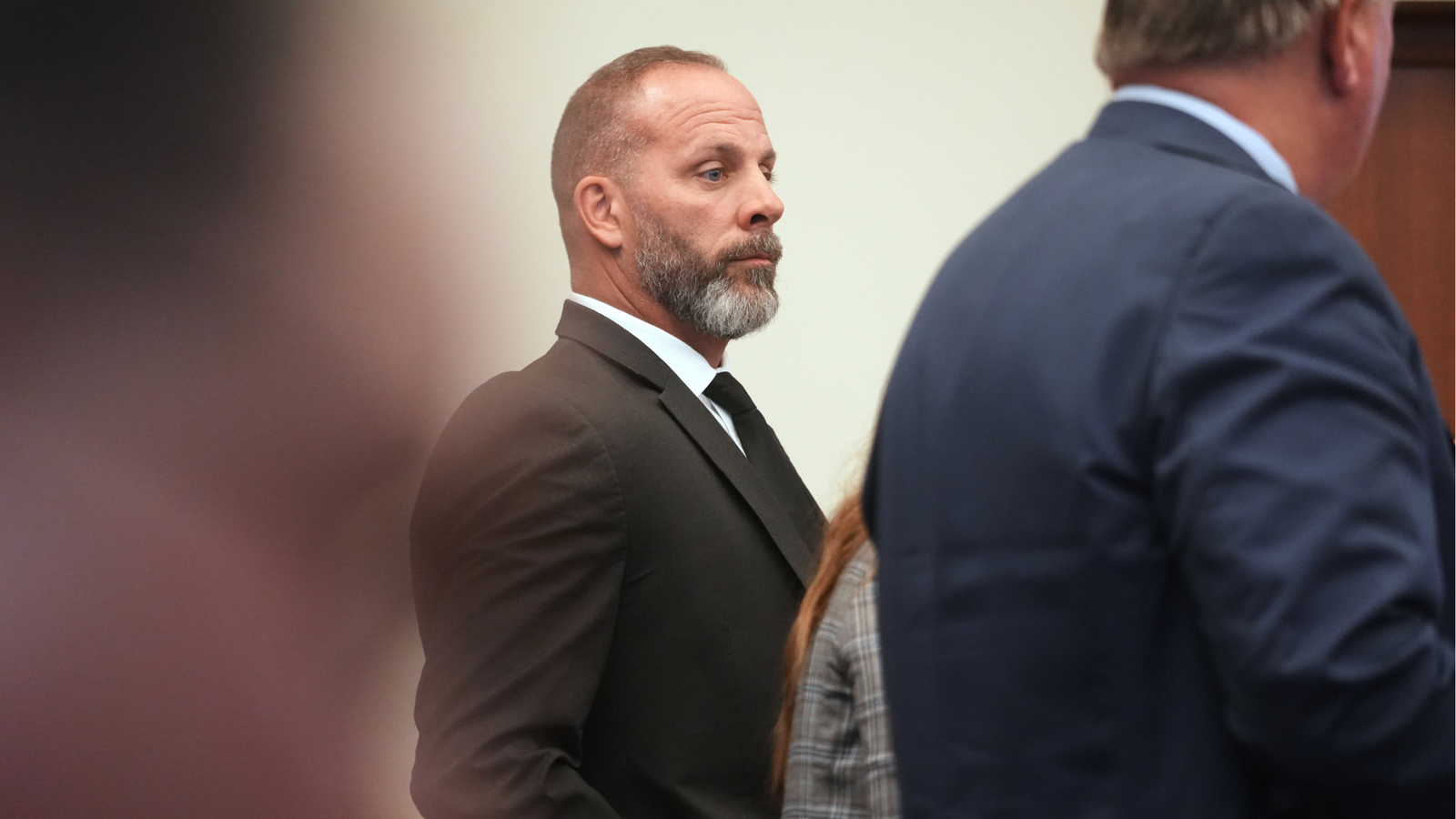
A former Franklin County sheriff’s deputy has been convicted of reckless homicide in connection with the December 2020 shooting death of Casey Goodson Jr., a 23-year-old Black man who was delivering Subway sandwiches to his grandmother’s home in Columbus, Ohio. The reckless homicide verdict, delivered after a lengthy and emotionally charged trial, marks only the second time a white law enforcement officer in Ohio has been held criminally responsible for killing a Black man since the 2020 murder of George Floyd ignited nationwide protests against police brutality.
Jason Meade, who is white and now 47, shot Goodson five times in the back and once in the side as the young man entered his grandmother’s kitchen. Although prosecutors pursued a murder charge, the jury was unable to reach a unanimous decision on that count, leading the judge to declare a mistrial on the more serious offense. The conviction on the lesser charge represents a rare measure of accountability in a state where similar prosecutions have historically struggled to secure guilty verdicts.
The Events of December 2020
On the afternoon of December 4, 2020, Casey Goodson Jr. left his home carrying a bag of sandwiches, his keys, and earbuds playing music. According to his family and prosecutors, he had no weapon in his hands. He was a licensed gun owner, but investigators concluded the firearm was secured in a flimsy holster beneath his belt, with the safety mechanism still engaged when officers later retrieved it from beneath his body.
Meade, who was working as a deputy at the time, claimed he had encountered Goodson moments earlier as the two drove past each other. He testified that Goodson waved a gun at him, prompting him to follow the young man to the grandmother’s house. Once there, Meade alleged that Goodson turned toward him in the doorway holding the firearm, forcing him to open fire in self-defense.
Conflicting Witness Testimony
No cameras captured the shooting, and no other eyewitnesses corroborated Meade’s account that Goodson was holding a gun at the moment he was shot. Christopher Corne, who was driving nearby during the incident, testified for the prosecution at both trials. He described seeing Goodson dancing and singing in his truck shortly before the fatal encounter but said he never observed a weapon in the young man’s hands.
Meade’s defense attorney attempted to discredit Corne’s account by pointing out inconsistencies, including the witness’s description of Goodson having either an Afro or a ponytail, when in fact Goodson had been wearing a skullcap that day. Despite these challenges, the testimony contributed to the jury’s inability to fully accept Meade’s narrative of justified force.
Columbus police Officer Samuel Rippey, who arrived on the scene to administer emergency treatment, testified during the second trial that he observed a gun with an extended magazine lying on the grandmother’s floor. Prosecutors argued, however, that this evidence was consistent with their theory that the firearm had remained holstered throughout the encounter and was only displaced after Goodson fell to the kitchen floor.
The Trials and Legal Journey
This most recent outcome represents the conclusion of Meade’s second murder trial. His first trial, held approximately two years earlier, ended in a mistrial when jurors could not reach a unanimous verdict. The retrial allowed prosecutors another opportunity to present evidence and witnesses, ultimately resulting in the reckless homicide verdict rather than the murder conviction they had sought.
Meade retired from the Franklin County Sheriff’s Department in 2021, following the initial trial. Outside of his law enforcement career, he also serves as a Baptist pastor, a detail that became part of the broader public conversation surrounding the case. Throughout both trials, his defense team relied heavily on his own oral and written statements about the shooting, arguing that his actions were reasonable given the circumstances he perceived.
A Rare Conviction in Ohio
Before the Goodson case, only one other white law enforcement officer in Ohio had been convicted in the killing of a Black person since George Floyd’s death. Columbus police officer Adam Coy was indicted on charges including murder for the 2020 shooting of Andre Hill, and his conviction set a significant, if limited, precedent. The Meade verdict now extends a small but meaningful pattern of accountability within a state that has witnessed numerous high-profile police-involved deaths.
Community Response and National Context
The shooting of Casey Goodson Jr. sparked significant public outrage in Columbus and across Ohio. In the months following his death, demonstrators hung banners from highway overpasses bearing messages such as “Justice for Casey Goodson Jr.” and “Convict Murderer Meade.” The judge ordered law enforcement to remove the banners during the trial, citing concerns about influencing jurors.
Goodson’s case became part of a broader reckoning with police conduct in America, particularly in cases involving white officers and Black victims. Advocacy groups pointed to the killing as yet another example of the urgent need for comprehensive police reform, improved use-of-force standards, and greater transparency in officer-involved shootings.
A Pattern of Tragic Losses
The Goodson case fits within a painful pattern of police killings in Ohio. At least three Black children have been fatally shot by law enforcement in the state, including:
- Tamir Rice, age 12, killed in Cleveland in 2014
- Tyre King, age 13, killed in Columbus in 2016
- Ma’Khia Bryant, age 16, killed in Columbus in 2021
Other Black individuals killed by white officers in Ohio include John Crawford III in Beavercreek in 2014, Samuel DuBose in Cincinnati in 2015, Miles Jackson in Westerville in 2021, Donovan Lewis in Columbus in 2022, Jayland Walker in Akron in 2022, and Ta’Kiya Young, who was pregnant, in Columbus in 2023. Each case has contributed to growing demands for systemic change in how law enforcement interacts with Black communities.
Implications of the Reckless Homicide Verdict
The reckless homicide verdict against Jason Meade carries weight beyond the individual case. For Goodson’s family, who spent years seeking justice for their son, grandson, and brother, the conviction represents a partial acknowledgment that his death was not justified. While the mistrial on the murder charge leaves some questions unresolved, the guilty plea on reckless homicide establishes a legal finding that Meade acted with disregard for human life.
For advocates of criminal justice reform, the verdict offers a measured but real example of accountability. Reckless homicide in Ohio carries significant penalties, and the conviction prevents Meade from escaping responsibility entirely. However, critics argue that such outcomes remain too rare and that prosecutors should continue pursuing murder charges in cases where the evidence suggests an unjustified use of deadly force.
Looking Ahead
As communities across Ohio and the nation continue to grapple with the legacy of police violence, the reckless homicide verdict in the Casey Goodson Jr. case stands as both a milestone and a reminder. It demonstrates that sustained advocacy, thorough investigation, and persistent courtroom efforts can yield results, even when the path to justice is long and difficult.
For the Goodson family, the verdict closes one chapter but leaves many others open. They continue to mourn a young man whose life was cut short while performing an ordinary act of kindness , delivering sandwiches to his grandmother. Their persistence, alongside that of community organizers and legal advocates, helped ensure that his story would not be forgotten and that the officer responsible for his death would face the consequences of his actions.
Conclusion
The conviction of former Ohio sheriff’s deputy Jason Meade on a reckless homicide charge represents a significant moment in the ongoing national conversation about police accountability and racial justice. While the jury’s inability to reach a unanimous verdict on the murder charge may leave some feeling that full justice was not achieved, the reckless homicide verdict nonetheless affirms that Casey Goodson Jr.’s life mattered and that those sworn to protect the public can be held accountable when they abuse their authority. As Ohio and other states continue to confront a history of police violence against Black communities, cases like this one underscore both the progress that has been made and the work that remains to be done in pursuit of true equality under the law.