
If you’ve been hearing buzz about a rare planetary alignment lighting up the night sky, you’re not alone. February 2025 brings one of the most anticipated celestial events of the year , a stunning parade of seven planets stretching across the heavens just after sunset. Whether you’re a seasoned astronomer or someone who simply enjoys looking up, this guide will walk you through everything you need to know to make the most of this extraordinary skywatching opportunity.
What Is a Planet Parade?
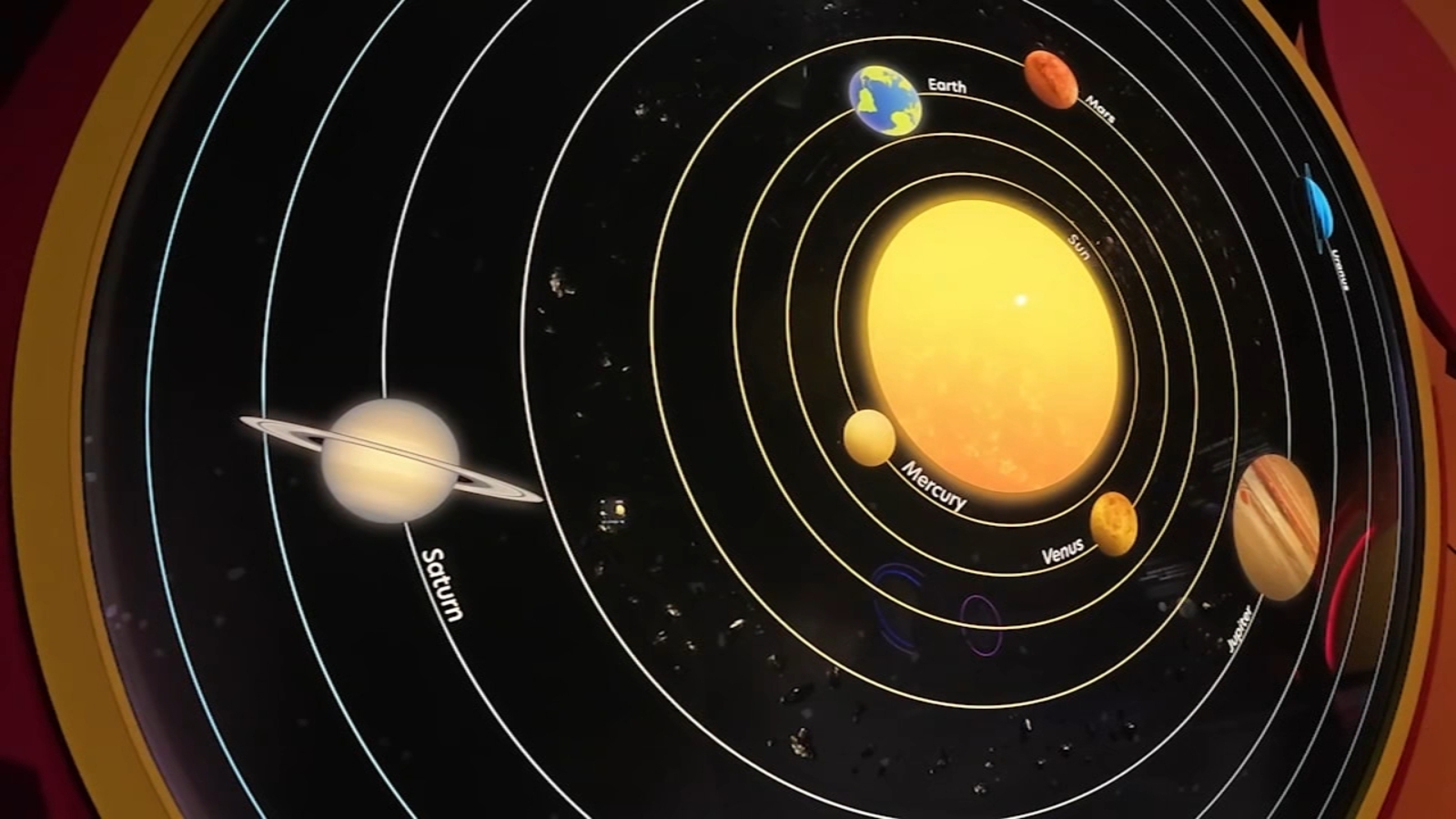
A planet parade (sometimes called a planetary alignment) occurs when multiple planets in our solar system appear to line up along the same arc of the sky as seen from Earth. This happens because all the planets orbit the sun in roughly the same flat plane, known as the ecliptic. From our vantage point on the ground, this plane appears as a curved line stretching from east to west across the night sky.
“All of our planets go around the sun in a flat disk,” explains Shannon Schmoll, director of the Abrams Planetarium at Michigan State University. “From our perspective on Earth, that disk looks like a curved line across the sky stretching from east to the west. As a result, all our planets will always be seen along this line.”
While planets are always loosely strung along the ecliptic, what’s special about this February is that they’re all clustered on the same side of the sun from Earth’s perspective, causing them to appear together in the sky in one gorgeous stretch.
Which Planets Can You See?
Seven planets will grace the sky during this rare planetary alignment:
- Mercury
- Venus
- Mars
- Jupiter
- Saturn
- Uranus
- Neptune
However, not all of them will be easy to find. Some will shine brilliantly to the naked eye, while others will require a bit of equipment.
The Easy Targets
Venus and Jupiter are the headliners of this show. Their incredible brightness makes them unmistakable, even in areas with moderate light pollution. Venus, in particular, will act as your guiding star , more on that shortly.
Mars will also stand out clearly thanks to its distinctive reddish-orange hue. High in the eastern sky, the Red Planet will remain visible for another three to four months, according to EarthSky contributor John Goss.
The Challenging Targets
Mercury and Saturn are what astronomers affectionately call “horizon huggers.” They’ll be sitting low on the western horizon, dangerously close to the sun’s glare. Spotting them requires a clear, unobstructed view of the western horizon, perfect timing, and likely a pair of binoculars.
“Mercury and Saturn are particularly close to the sun and will be lost in the sun’s glare, though Mercury will get higher and higher each day and easier to spot,” Schmoll notes.
Then there’s Neptune and Uranus , the shy members of the lineup. These distant ice giants are simply too faint to see without optical aid. A telescope or strong binoculars will be essential if you’re hoping to catch them.
When and Where to Look
The best window for viewing this planetary alignment is just after sunset on Thursday and Friday evenings in late February 2025. The planets will all be above the horizon during this time, but timing is critical , especially for Mercury and Saturn, which will only be visible during a brief twilight window.
Here’s a rough breakdown of where to find each planet:
- Southwest: Saturn and Mercury (close to the horizon)
- South: The general arc across the sky
- Southeast: Mars and Jupiter (higher in the sky)
- In between: Neptune, Venus, and Uranus
“The planets will be in the southern half of the sky,” says Emily Elizondo, a doctoral student of physics and astrophysics at Michigan State University. “Toward the southwest is where Saturn and Mercury are going to be, and then toward the southeast is where Mars and Jupiter will be, and then Neptune, Venus and Uranus will be in between.”
Pro tip: There are several excellent astronomy apps that use motion-sensing technology. Simply type in a planet’s name, and the app will point you directly to its location in real time. This is a game-changer for beginners trying to navigate the night sky.
Let Venus Be Your Guide
If you’re feeling lost among the stars, Venus is your best friend. It will be the brightest object in the western sky (after the moon), making it impossible to miss. Unlike stars, which tend to twinkle, Venus shines with a steady, brilliant light , a telltale sign you’ve found a planet rather than a distant sun.
“Let bright Venus be your guide , it’s going to show up first because it’s higher in the sky, it’s obviously brighter,” advises Marcy Curran, editor at EarthSky. “So once you find Venus, below it towards the horizon look for a skinny little moon and Mercury.”
One important note: Venus will be dropping closer to the horizon each night and will disappear from the evening sky by mid-March. If you want to catch it again, you’ll have to wait until April, when it reappears in the morning sky.
Bonus: The Cheshire Moon Makes an Appearance
Adding even more magic to this celestial event, the waxing crescent moon will make a brief appearance just after sunset. This particular phase has earned a whimsical nickname , the Cheshire moon , because the thin sliver of light resembles the famous grin of the Cheshire Cat from Lewis Carroll’s “Alice’s Adventures in Wonderland.”
Hawaiian mythology also has a poetic name for it: the wet moon, since the shape resembles a bowl that could hold liquid.
The crescent moon will appear low on the western horizon and set just a couple of minutes later. Mercury will sit a few degrees above the moon, with Venus positioned higher still. Together, the moon, Venus, and Mercury will form a striking diagonal across the western sky through Sunday.
What You’ll Need to See Everything
To maximize your experience during this planetary alignment, here’s a quick checklist:
- A clear view of the western horizon: Get away from tall buildings, trees, or mountains that could block your view of Mercury, Saturn, and Venus.
- Binoculars: Essential for spotting Mercury, Saturn, and the crescent moon in twilight.
- A telescope: Necessary if you want to glimpse Uranus and Neptune.
- An astronomy app: Helpful for pinpointing exact locations and tracking the planets in real time.
- Patience: Allow your eyes about 20-30 minutes to adjust to the darkness.
Can’t See It? Watch the Live Stream
If clouds, weather, or geography get in the way of your viewing plans, you’re not out of luck. The Virtual Telescope Project will be sharing a live stream captured by robotic telescopes based in Manciano, Italy, under the famously dark skies of Tuscany. This is a fantastic backup option for anyone who wants to witness the alignment without battling the elements.
How Long Will the Planets Stick Around?
While the peak of the parade is happening right now, several of these planets will remain visible for weeks or even months to come:
- Venus: Visible in the evening sky until mid-March, then returns in the morning sky in April.
- Mercury: Will climb higher each evening, making it progressively easier to spot in the coming days.
- Jupiter: Will remain high in the southern sky for another couple of months.
- Mars: Stays visible in the eastern sky for another three to four months.
This means even if you miss the exact peak, you’ll have ongoing chances to enjoy several of these planets.
Why Do Planet Parades Happen?
The reason multiple planets can appear together comes down to orbital mechanics. Each planet travels around the sun at its own pace, but because they all orbit within roughly the same plane, they regularly line up from Earth’s perspective. Most of the time, the planets are spread out along the ecliptic , but occasionally, they cluster on the same side of the sun, creating a visual spectacle like the one we’re witnessing this February.
“This February is special because instead of being spaced far apart, they happen to be found along just a part of the path, so they all show up in the sky at the same time,” explains Seth Jacobson, an assistant professor at Michigan State University.
Final Thoughts
A seven-planet planetary alignment is the kind of event that reminds us just how extraordinary our solar system is. Whether you make it outside with binoculars, set up a telescope in your backyard, or tune into the live stream from Tuscany, take a moment to appreciate the cosmic choreography unfolding above us. The planets aren’t really aligned in a straight line , they’re just on the same side of the sun at the right time , but the resulting view is nothing short of breathtaking.
So grab a blanket, step away from the city lights, and look up. Venus will be waiting to lead the way.
