
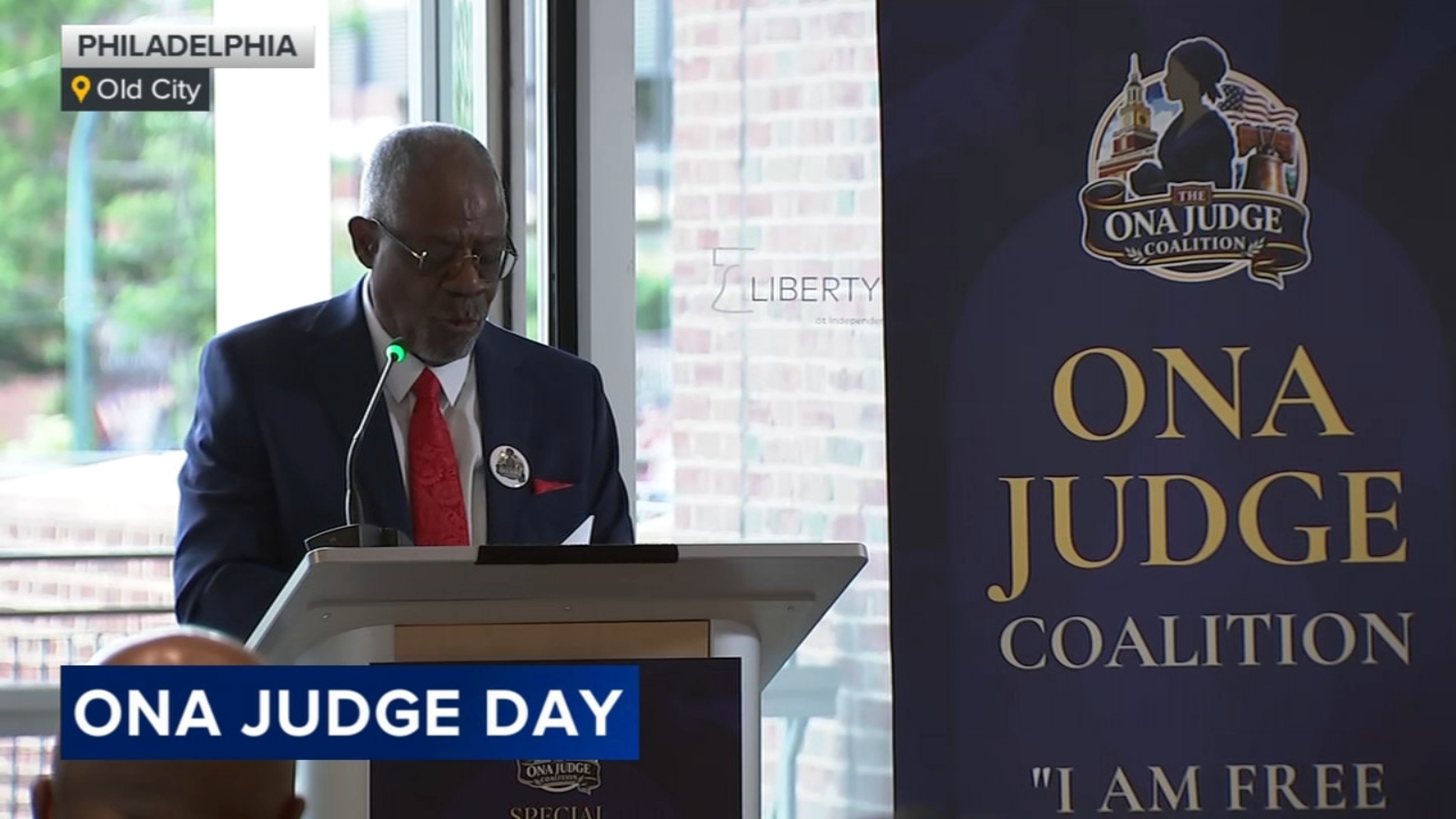
In a historic move that brings long-overdue recognition to one of America’s most courageous freedom seekers, the City of Philadelphia has officially proclaimed May 21st as Ona Judge Day. The announcement was made on a bright Thursday morning at the Independence Visitor Center in Old City, drawing attention to a woman whose remarkable escape from bondage has, for centuries, remained in the shadows of the nation’s founding narrative.
This proclamation marks exactly 230 years since Ona Judge, an enslaved woman held by George and Martha Washington, made her daring bid for freedom from the President’s House in Philadelphia on May 21, 1796. The timing of the declaration is intentional, connecting Judge’s legacy to the broader effort by the Ona Judge Coalition to ensure her story is illuminated as part of the nation’s 250th birthday celebrations.
Who Was Ona Judge?
Ona Judge, sometimes referred to as Ona Maria Judge, was born into slavery at Mount Vernon, the Virginia plantation owned by the Washington family. Her mother, Betty, was an enslaved woman of African descent, and her father was a white English immigrant named Andrew Judge. From her earliest days, Ona was trained as a domestic servant, learning skills in sewing, weaving, and household management that would later define her work in the Washington household.
When Martha Washington married George Washington in 1759, Ona Judge became part of the personal retinue that served the first family. Her dedication and skill caught the attention of the Washingtons, and she was eventually brought to the presidential residence in Philadelphia, where she served as Martha’s personal attendant during the Washington administration’s time in power.
Life in the President’s House
Philadelphia, though the cradle of American liberty and democracy, was also a city deeply entangled with the institution of slavery. While the city had passed a gradual abolition act in 1780, loopholes allowed enslavers from out of state to keep their enslaved workers in Philadelphia for extended periods. The Washington family exploited these legal loopholes, rotating their enslaved workers in and out of the city to avoid triggering Pennsylvania’s emancipation provisions.
For Ona Judge, life in the President’s House was complex. She was a prized possession, well-dressed, and treated with a degree of respect befitting her status as a personal servant to the First Lady. However, the trappings of relative comfort could not mask the fundamental reality of her condition: she was not free. She could not choose her own life, her own marriage, or her own future. Every aspect of her existence was controlled by the family that owned her.
The Daring Escape of 1796
The events leading to Ona Judge’s escape reveal both her courage and the increasingly untenable position of enslaved people in the new American republic. In the spring of 1796, Martha Washington began planning to give Ona Judge away as a wedding gift to her granddaughter, Elizabeth Parke Custis. This prospect horrified Ona, who had formed a romantic relationship with a free Black sailor named Jack Staines.
Rather than accept a future of permanent separation from her loved ones and continued bondage, Ona Judge made the brave decision to flee. On the evening of May 21, 1796, while the Washingtons were preparing for dinner, she slipped away from the President’s House and disappeared into the streets of Philadelphia. Her escape was meticulously planned, and she used her knowledge of the city to navigate toward freedom.
The Washington’s Relentless Pursuit
What happened next demonstrates the complicated legacy of the founding fathers. Despite George Washington’s stated anti-slavery sentiments in certain letters, he actively pursued Ona Judge for years after her escape. He placed advertisements in newspapers, hired slave catchers, and even attempted to lure her back through deceptive means, including having a relative approach her under false pretenses in Portsmouth, New Hampshire, where she had settled under the protection of the free Black community.
Ona Judge recognized the man trying to capture her and fled once again, eventually finding refuge among the free Black community of Portsmouth. Though technically a fugitive, she lived openly under her own name, married Jack Staines, and started a family. The Washingtons never succeeded in recapturing her, though they maintained interest in her whereabouts until the end of their lives.
The Significance of the Proclamation
The decision to designate Ona Judge Day in Philadelphia represents a powerful act of historical reckoning. For too long, the story of America’s founding has focused on the men who signed declarations and fought battles, while the stories of enslaved people who also shaped this nation’s history have been marginalized or forgotten entirely. By proclaiming this day, Philadelphia acknowledges that true American history includes all who lived it, not just those who held power.
Connection to America’s 250th Birthday
The Ona Judge Coalition has indicated that this proclamation is part of a larger effort tied to the nation’s 250th birthday celebrations. As the country approaches its semiquincentennial, there is a growing movement to expand the narrative of American history to include the experiences of enslaved people, Indigenous communities, women, and other groups whose contributions have been historically overlooked. Ona Judge’s story is central to this expanded narrative.
Her escape occurred during the early years of the American republic, a time when the ideals of liberty and freedom proclaimed in the Declaration of Independence existed in stark tension with the reality of slavery. Ona Judge’s act of self-emancipation challenged the hypocrisy of a nation that celebrated freedom while practicing bondage, and her persistence in evading recapture demonstrated that the spirit of liberty could not be contained by legal structures designed to oppress.
The Ona Judge Coalition’s Mission
The Ona Judge Coalition, which played a central role in advocating for this proclamation, is dedicated to preserving and sharing Judge’s story with broader audiences. The organization has been instrumental in raising awareness about her life, her escape, and her significance to American history. Through educational programming, public events, and advocacy work, the coalition ensures that Ona Judge’s name and legacy are not lost to time.
As part of the upcoming events tied to America’s 250th birthday, the coalition is planning a series of initiatives that will use Ona Judge’s story as a lens through which to examine the contradictions of the founding era. These events will likely include lectures, exhibits, walking tours of historical sites, and educational materials for schools. The goal is not merely to celebrate Ona Judge’s courage, but to use her story to spark deeper conversations about the complex and often painful realities of American history.
Philadelphia’s Complicated Relationship with Slavery
Philadelphia’s decision to honor Ona Judge is particularly meaningful given the city’s complicated role in the history of American slavery. As the seat of the federal government during the early years of the republic, Philadelphia was home to the President’s House, where Ona Judge lived in bondage. The city was also a hub for abolitionist activity, home to figures like Benjamin Franklin and the free Black communities that provided refuge for freedom seekers.
The physical location of the proclamation, the Independence Visitor Center, is itself symbolic. Situated near Independence Hall, where the Declaration of Independence was signed and the Constitution was drafted, the proclamation ties Ona Judge’s story directly to the founding documents that proclaimed liberty while permitting slavery to persist. This juxtaposition invites reflection on the gap between American ideals and American realities, a gap that Ona Judge courageously challenged through her act of self-emancipation.
Why Ona Judge’s Story Matters Today
The recognition of Ona Judge Day is not merely an exercise in historical commemoration. It is a reminder that the fight for freedom and dignity is ongoing, and that the stories of those who came before us can provide inspiration and guidance for contemporary struggles. Ona Judge’s courage in the face of overwhelming odds, her determination to live as a free woman despite the constant threat of recapture, and her resilience in building a life in freedom all serve as powerful examples for modern audiences.
Her story also challenges us to confront difficult truths about the nation’s founding. George Washington, often called the father of his country, was also a slaveholder who pursued an escaped woman across state lines. This complexity does not erase Washington’s contributions, but it does demand a more honest and nuanced understanding of the figures who shaped early America.
Educational Implications
The establishment of Ona Judge Day creates new opportunities for education and dialogue. Schools, museums, and cultural institutions can use this occasion to teach about slavery in the founding era, the experiences of enslaved people in Philadelphia, and the long tradition of resistance and self-emancipation that predated the Civil War. Such education is essential for building a more complete and accurate understanding of American history.
Conclusion
The proclamation of May 21st as Ona Judge Day in Philadelphia represents a significant step toward honoring the full scope of American history. By recognizing the 230th anniversary of Ona Judge’s courageous escape from the President’s House, the city has acknowledged a woman whose story embodies both the contradictions of the founding era and the unbreakable human desire for freedom. As the nation prepares to celebrate its 250th birthday, the Ona Judge Coalition and its partners are ensuring that Ona Judge’s name will be spoken, her story will be told, and her legacy will endure. Her act of defiance, performed in the shadow of Independence Hall, reminds us that liberty has always required brave souls willing to claim it for themselves, regardless of the risks. Philadelphia’s proclamation is a fitting tribute to one such soul, and a powerful invitation for all Americans to engage more deeply with the complex truths of their shared history.