
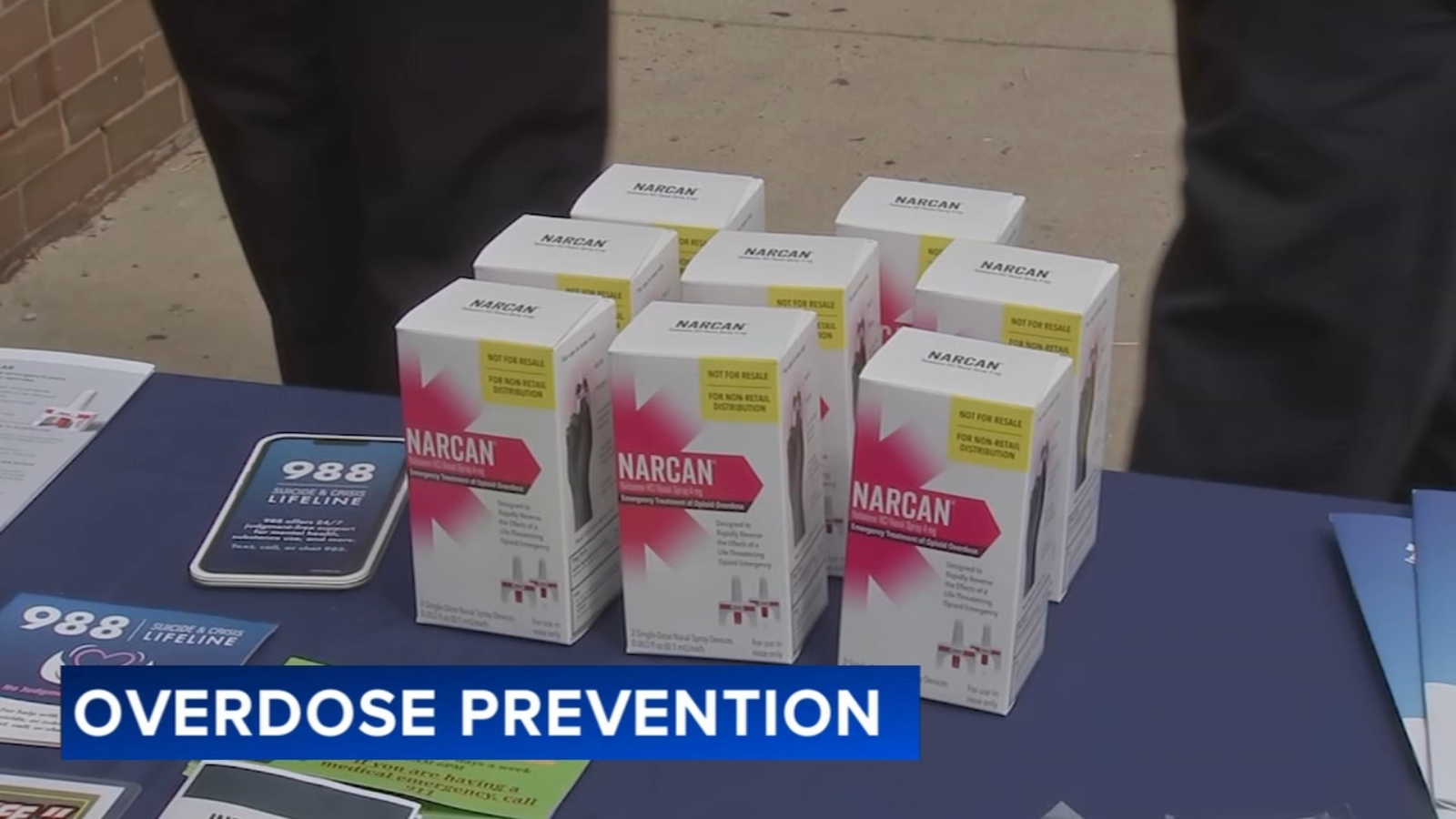
Philadelphia is quietly winning a battle that has devastated communities across the country for decades. A citywide naloxone distribution program, launched just one year ago through an unlikely network of fire stations, has contributed to an 18% drop in overdose deaths,a figure that public health officials are calling one of the most meaningful declines the city has seen in years. As Pennsylvania marked Overdose Awareness Day with a proclamation from Governor Josh Shapiro, city leaders gathered to celebrate the progress while acknowledging how much work remains.
A Turning Point in the Overdose Crisis
For years, Philadelphia has wrestled with one of the most visible overdose epidemics on the East Coast. Streets like Kensington have become shorthand for the nation’s broader struggles with opioids, fentanyl, and the devastating ripple effects on families and first responders. But in the past twelve months, something has shifted.
“Overdose rates declined by 18% last year,” said Carlton Williams, Philadelphia’s managing director. “That’s worth celebrating.”
That single statistic represents thousands of lives spared, parents who got to come home, and children who didn’t grow up without a parent. Officials credit a significant portion of this decrease to a single, deliberate intervention: making naloxone,a medication capable of reversing opioid overdoses within minutes,accessible to anyone, anywhere, at any time.
How the Naloxone Distribution Program Works
The genius of Philadelphia’s approach lies in its simplicity. Rather than burying the medication behind pharmacy counters or inside clinical settings, the city placed it where help is always available: all 61 fire stations across Philadelphia. Each station now has a naloxone box mounted outside in a newspaper-style dispenser. There are no forms to fill out, no appointments to schedule, and no personal information exchanged.
“It is available 24 hours a day, seven days a week at no cost; no appointment, conversation or personal information is required,” explained Philadelphia Fire Deputy Commissioner Martin McCall.
This 24/7 accessibility was a deliberate choice. Overdoses don’t follow business hours, and they don’t happen in convenient locations. By placing naloxone in neighborhood fire stations,buildings already trusted by the public and staffed by trained first responders,Philadelphia removed every traditional barrier to access. A person walking down the street at 2 a.m. can grab a dose just as easily as a parent worried about a loved one during a Sunday afternoon visit.
The results in just twelve months have been remarkable:
- More than 41,000 doses of naloxone picked up from Philadelphia fire stations
- Over 17,600 overdose reversals reported by those who used the medication
- An 18% decline in overall overdose deaths citywide
Each of those 17,600 reversals represents a person who woke up, who had another chance, who could make a different choice the next day.
The People Behind the Numbers
Statistics tell part of the story, but they can never capture the human cost of an overdose,or the human joy of preventing one. Dr. Latika Davis-Jones of the Pennsylvania Department of Drug and Alcohol Programs drove this point home during the Overdose Awareness Day event.
“These numbers are about much more than doses or boxes or kits. They represent people,” she said.
That sentiment is what transforms a public health initiative into something deeper. Every naloxone box outside a fire station is, in some sense, a promise: that the city values the life of every resident, regardless of their circumstances, their address, or their history with substance use.
Honoring Lives Lost on Overdose Awareness Day
Governor Shapiro’s proclamation for Overdose Awareness Day served as both a celebration and a memorial. While the 18% decline is genuinely good news, public officials used the moment to remember those who didn’t survive the epidemic,families whose empty chairs will never be filled again. The proclamation underscored that progress in overdose prevention is not a reason to look away from the crisis, but a reason to push harder.
Addressing Racial Disparities Through the “Naloxone in Black” Initiative
Philadelphia’s program carries a specific name that reflects an uncomfortable truth: overdose deaths do not affect all communities equally. African Americans in Philadelphia die from overdoses at more than twice the rate of their white counterparts, a disparity that has persisted for years even as overall overdose numbers have fluctuated.
The initiative, formally known as the Naloxone in Black initiative, was designed to confront these inequities head-on. By placing naloxone boxes in every neighborhood,particularly those hit hardest by the epidemic,the city aims to ensure that life-saving medication reaches the communities that need it most. Fire stations are deliberately spread across the city’s geography, including predominantly Black neighborhoods that have historically been underserved by public health resources.
The funding for this effort flows through Pennsylvania’s Overdose Prevention Program, a state-level commitment that recognizes overdose as the public health emergency it has always been. Notably, Engine 11 on South Street has distributed more naloxone than any other fire station in the city,a data point that speaks to both the scale of need in that corridor and the effectiveness of placing boxes in high-traffic, highly visible locations.
What Comes Next: Expansion and Accountability
City leaders were quick to note that the 18% decline is not a finish line,it’s a checkpoint. Public safety officials announced two significant moves designed to build on the program’s early success.
Mandatory Overdose Prevention Training
Beginning this year, annual overdose prevention training will become a standard requirement for all Office of Public Safety staff. This training will equip police, firefighters, emergency dispatchers, and other public safety personnel with the latest knowledge about overdose response, naloxone administration, and connecting people to long-term treatment. By embedding this training into routine professional development, the city is signaling that overdose response is a permanent part of public safety work,not a temporary project.
Geographic Expansion
Officials also committed to expanding the program beyond the fire station network, with plans to make naloxone available in additional communities and through additional touchpoints. While specific new locations have not yet been announced, the direction is clear: Philadelphia intends to push naloxone access deeper into neighborhoods where overdoses remain stubbornly high.
“Now is not the time to become complacent,” one city leader noted. “The progress we’ve made shows prevention works, and we need to build on that momentum.”
Why This Model Matters Beyond Philadelphia
Philadelphia’s naloxone distribution program offers a blueprint that other cities struggling with similar crises would be wise to study. Three elements stand out as especially transferable:
- No-questions-asked access. Removing every possible barrier,cost, identification, time of day, location,dramatically increases the number of people willing to obtain naloxone.
- Use of trusted public infrastructure. Fire stations already exist in every neighborhood, are staffed around the clock, and are widely recognized as places of help. Repurposing them as naloxone hubs required minimal capital investment.
- Explicit focus on equity. Naming the initiative and designing it with racial disparities in mind ensured that the program would not simply replicate existing inequalities in healthcare access.
For cities watching Philadelphia’s numbers closely, the message is straightforward: naloxone saves lives, but only if people can actually get it when they need it.
Conclusion
One year ago, Philadelphia made a bet that an unconventional approach,placing a life-saving medication in boxes outside fire stations,could change the trajectory of the overdose epidemic. That bet has paid off, with more than 17,600 overdose reversals and an 18% decline in deaths. The naloxone distribution program stands as proof that smart, equitable, low-barrier public health interventions can move the needle even on problems as complex and entrenched as the opioid crisis. But officials are right to warn against complacency. As the medication reaches more hands and more communities, the goal isn’t just to celebrate a single year of progress,it’s to ensure that every Philadelphian, in every neighborhood, has the tools and the support they need to survive and recover. The boxes outside fire stations are a powerful start, and the work of saving lives continues with every single dose distributed.