
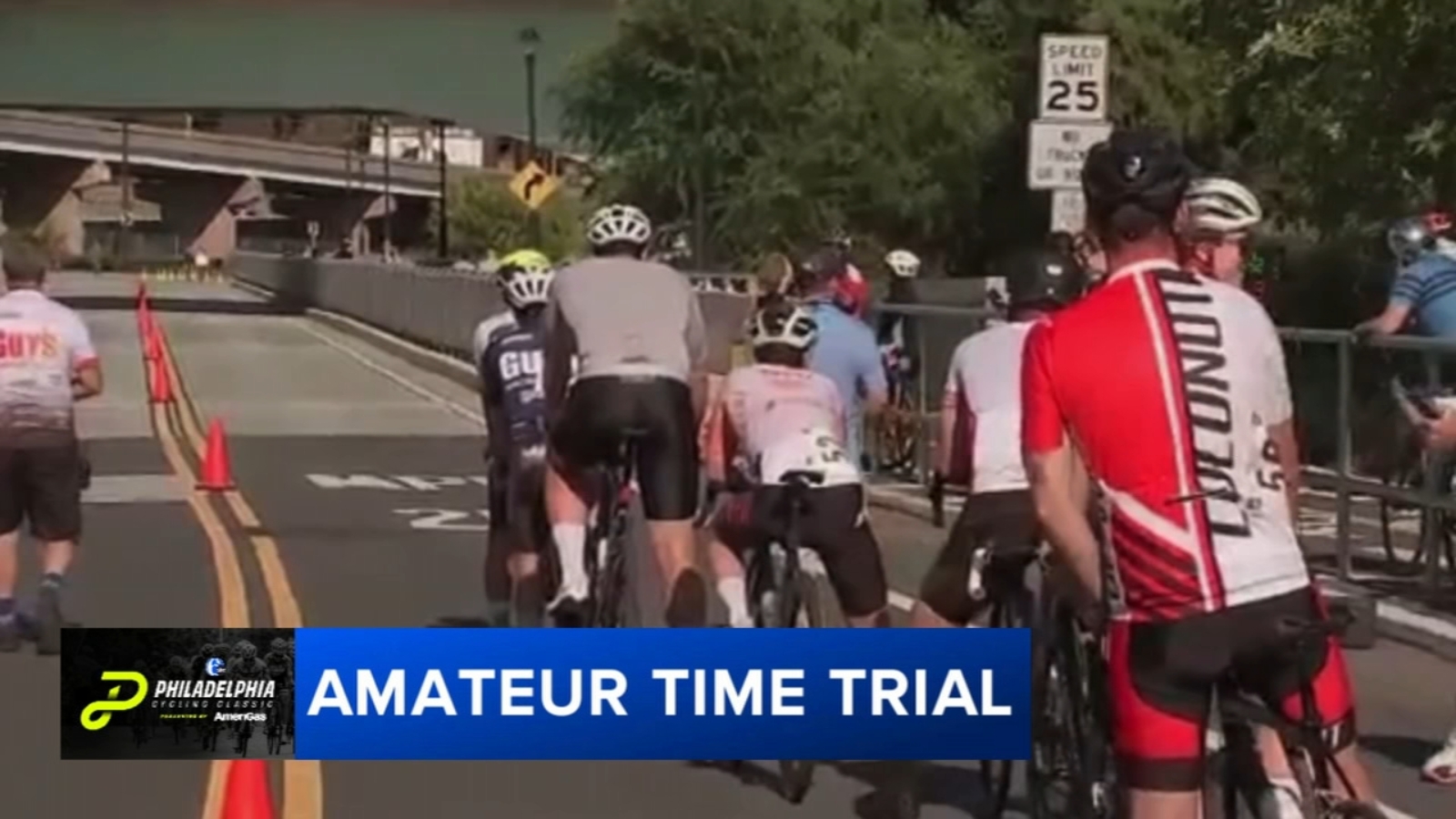
The Philadelphia Cycling Classic gave amateur cyclists a chance to compete on a closed city route before the professional riders took over the streets. More than 200 cyclists, ranging from young riders to experienced adults, participated in an amateur time trial along an eight-mile course on Martin Luther King Jr. Drive. The event offered a mix of competition, community, and a rare opportunity to race through one of Philadelphia’s most recognizable stretches of roadway.
Amateur Riders Take Center Stage on MLK Drive
While the professional race was scheduled for Sunday, Saturday’s amateur time trial allowed local cyclists to experience the Philadelphia Cycling Classic atmosphere for themselves. Riders of different ages and abilities lined up to test themselves against the clock on a course that ran from the Ben Franklin Parkway to the Falls Bridge and back.
The event demonstrated that the Philadelphia Cycling Classic is not only about elite competition. It also provides a platform for everyday riders, weekend racers, cycling clubs, and emerging athletes to take part in a high-profile sporting weekend. The course gave participants a meaningful challenge while allowing spectators to enjoy the excitement of bike racing in the heart of the city.
What Is an Amateur Time Trial?
A time trial is a race against the clock rather than a direct contest between riders competing in a large group. Each cyclist’s performance is measured individually, with the goal of completing the course in the fastest possible time. Even when riders share the same roads, they must manage their own pace, effort, and strategy from start to finish.
This format places a strong emphasis on fitness, concentration, and consistency. On an out-and-back course, riders must establish a sustainable pace early, maintain momentum through the return section, and avoid losing valuable time as the course changes direction. Wind, road conditions, cornering, and positioning can all influence a rider’s result.
For amateur participants, the appeal of a time trial is that success depends on individual preparation and execution. Riders can compare their performance with fellow cyclists, track progress over time, and experience the discipline of racing without relying on a teammate to set the pace. It is an accessible but demanding event for anyone who enjoys structured road cycling.
An Eight-Mile Challenge Through Philadelphia
The eight-mile course followed MLK Drive and stretched from the Ben Franklin Parkway to the Falls Bridge before returning along the route. The distance made the event substantial enough to require endurance and pacing while remaining approachable for a broad range of amateur cyclists.
Starting near the Ben Franklin Parkway placed the race within Philadelphia’s prominent cultural and civic corridor. MLK Drive, meanwhile, provided a long, relatively direct roadway where riders could settle into a rhythm. The turnaround at Falls Bridge created a natural focal point and gave participants the experience of racing both outbound and inbound.
For spectators, an out-and-back route is especially convenient because the action can be viewed in more than one location. Friends and family could gather near the start, watch riders head toward the bridge, and then see the field return along the same corridor. That layout also created repeated opportunities to cheer for participants throughout the day.
A Welcoming Event for Cyclists of All Ages and Abilities
One of the defining features of the Philadelphia Cycling Classic amateur time trial was the diversity of its field. More than 200 cyclists took part, including riders of different ages and experience levels. That variety reflects the broad appeal of competitive cycling: the same course can challenge a seasoned racer, a club rider, a newcomer, or someone returning to the sport after time away.
Events like this are important because they connect organized racing with the wider cycling community. Riders who spend much of the year training on local roads can experience the structure of a timed event, complete a marked course, and share the excitement of a major race weekend. They can also learn what a formal race feels like before deciding whether to pursue more competitive opportunities.
At the same time, an amateur time trial offers valuable experience. Riders must focus on warming up, following race procedures, managing effort, and maintaining control on a closed course. Those lessons are useful beyond the event itself and can help cyclists become safer and more confident on public roads.
The Value of Racing Against the Clock
Time trials require a different mindset from mass-start races. Instead of reacting constantly to other riders, each participant must make decisions independently. A rider who begins too quickly may lose energy before the turnaround, while someone who starts conservatively may be unable to make up the lost time on the return leg.
This individual format also makes the event appealing to spectators. Rather than following a tightly packed group, viewers can watch cyclists arrive one at a time and compare their riding styles, speed, and endurance. Every rider contributes to the event’s energy, even if the field is spread along the course.
For many participants, completing a timed course is a personal achievement. A rider may be focused on beating a previous result, testing a training plan, or simply finishing a competitive event. Because the Philadelphia Cycling Classic attracts attention beyond the amateur ranks, taking part also gives cyclists a chance to be part of a larger celebration of the sport.
A Prelude to the Professional Race
The amateur time trial took place one day before the professionals were set to race, making Saturday an important prelude to the main event. It allowed the city’s cycling scene to build momentum before the professional competition began. Riders and spectators could gather, exchange encouragement, and enjoy the course before the weekend’s highest-level competition took center stage.
This progression is part of what makes race weekends memorable. Amateur athletes experience the same sense of anticipation as professional cyclists, while fans get a full weekend of riding rather than a single race. The energy created by more than 200 participants can help set the tone for the professional event and highlight the depth of interest in road cycling throughout Philadelphia.
The Philadelphia Cycling Classic also showcases the city as a venue for major sporting events. Ben Franklin Parkway, MLK Drive, and the Falls Bridge are familiar landmarks, but during a bike race they become part of a competitive course. That transformation gives residents and visitors a new perspective on familiar streets and demonstrates how urban spaces can support active recreation and community events.
Why Community Cycling Events Matter
Amateur races provide benefits that extend beyond results and finishing times. They encourage physical activity, introduce riders to organized competition, and create opportunities for spectators to learn more about cycling. They can also inspire people who may not consider themselves racers to participate in a safe, supportive environment.
For local cycling clubs, events like the Philadelphia Cycling Classic help strengthen connections among riders. Participants can share training advice, celebrate one another’s achievements, and build a sense of belonging. For families, the range of ages and abilities makes the event a reminder that cycling can be enjoyed throughout a lifetime.
The amateur time trial also gives organizers and volunteers a chance to welcome new people into the sport. A well-organized course allows riders to focus on the experience while publicizing the value of cycling, fitness, and safe road use. That broader impact is one reason amateur divisions are such an important part of major cycling events.
What Riders and Fans Can Take Away
The Philadelphia Cycling Classic amateur time trial offered a full day of competition on an eight-mile route, with MLK Drive providing the central setting. Riders traveled from the Ben Franklin Parkway to the Falls Bridge and back, testing their endurance and racing against the clock. More than 200 cyclists turned that challenge into a collective celebration of cycling.
For participants, the experience likely serves as both a personal milestone and a source of motivation for future races. A time trial can reveal strengths, identify areas for improvement, and provide a clear benchmark for training. For spectators, it delivered an up-close look at the effort and determination involved in road racing.
As the professional riders prepared for Sunday’s competition, Saturday’s event had already made an important contribution. It brought cyclists together, filled a major city route with activity, and showed that the Philadelphia Cycling Classic is about more than the professionals. The amateur time trial gave hundreds of riders their own moment to race, test themselves, and be part of Philadelphia’s cycling tradition.