
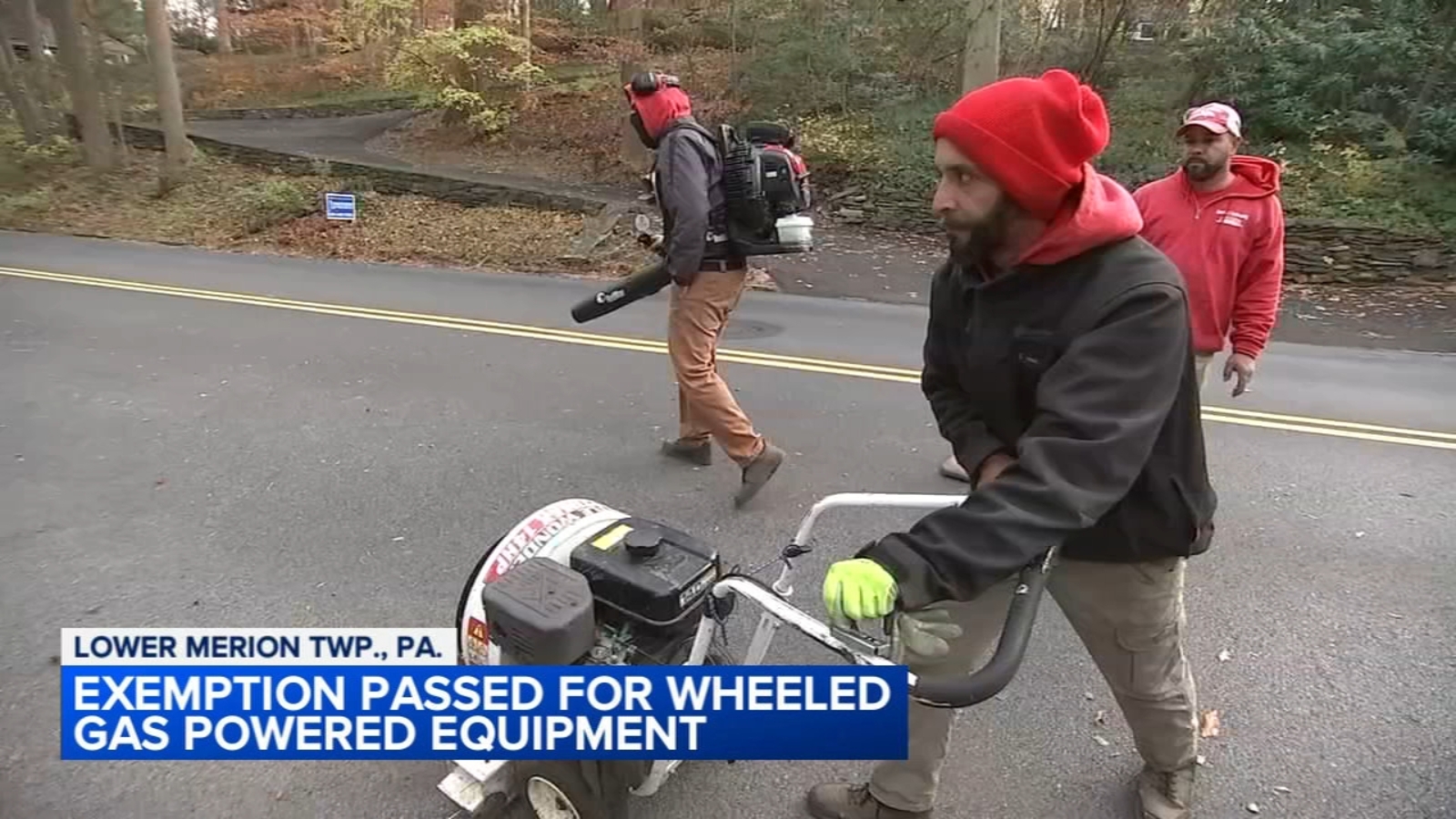
The debate over gas powered leaf blowers has reached a new chapter in Lower Merion Township, Pennsylvania, where local leaders recently voted to amend their groundbreaking ban on the popular landscaping tool. After passing one of the most ambitious restrictions on combustion lawn equipment in the region last November, the township’s Board of Commissioners has now introduced specific exemptions, particularly for wheeled, gas-powered equipment. The revisions aim to address practical concerns from residents and professional landscapers while keeping the township on track toward its environmental and noise-reduction goals.
Background: Lower Merion’s Original Gas Powered Leaf Blowers Ban
When Lower Merion Township first passed its ordinance banning gas powered leaf blowers in November, the legislation made national headlines as one of the more aggressive municipal efforts to curb noise and air pollution. The original law targeted handheld, gasoline-driven blowers commonly used by homeowners and landscaping crews to clear leaves, grass clippings, and debris from lawns, driveways, and sidewalks.
Supporters of the original measure pointed to several concerns tied to gas-powered lawn equipment. These machines are notorious for producing high-decibel noise, releasing volatile organic compounds (VOCs) and other harmful emissions, and contributing to localized air-quality issues. For a suburban township like Lower Merion, where residential properties sit close together and tree-lined streets create a leafy environment, the cumulative impact of dozens of leaf blowers running simultaneously can be significant.
Why Communities Target Gas Powered Leaf Blowers
The pushback against gas powered leaf blowers isn’t unique to Lower Merion. Across the United States, municipalities from California to Massachusetts have grappled with how to regulate small-engine equipment that is disproportionately polluting and noisy. Compared to electric alternatives, a typical gas-powered leaf blower can produce:
- Hearing damage-level noise often exceeding 90 to 100 decibels at the operator’s ear
- Higher emissions per minute than many full-sized pickup trucks due to inefficient two-stroke engines
- Airborne particulates that affect neighbors, pedestrians, and especially vulnerable populations such as children and the elderly
- Operator fatigue due to vibration and weight, leading to longer working times and more neighborhood disruption
For Lower Merion, the issue was personal. Residents had voiced concerns about early-morning noise disrupting sleep, the smell of exhaust on summer mornings, and the way these machines kick up dust, pollen, and allergens.
The New Amendments: What Changed
At a recent board meeting, Lower Merion’s commissioners voted to refine the ordinance, passing exemptions that allow the use of wheeled, gas-powered equipment. The commissioners emphasized that the amendments don’t weaken the spirit of the original ban but rather clarify its scope and address concerns raised since November.
The key distinction in the updated rules centers on whether the equipment is handheld or wheeled. Handheld gas-powered leaf blowers remain prohibited under the seasonal restrictions. However, larger wheeled machines,those mounted on carts or wheels and typically used by commercial landscaping operations for bigger properties,can continue to operate under specific conditions.
The Logic Behind the Wheeled Equipment Exemption
Why draw the line at wheeled equipment? Commissioners explained that wheeled gas-powered machines are generally used on larger commercial or institutional properties, including golf courses, athletic fields, and extensive municipal grounds. These tools are:
- Less commonly deployed in residential neighborhoods, reducing everyday disruption
- Often operated by trained professionals with regulated schedules
- Less likely to be used in the casual, ad-hoc manner that creates most of the noise complaints
- More difficult to replace with electric alternatives because battery technology has not yet matched the power and runtime of their gas counterparts
By exempting these larger machines, the township preserves flexibility for commercial operators while still curbing the most disruptive use cases in residential settings.
The Implementation Timeline
The amended ordinance maintains the phased approach originally laid out in November. Here’s how the rollout now looks:
- June 1, 2025: The first phase of a seasonal ban on handheld gas powered leaf blowers takes effect. During this phase, restrictions apply during specified seasons,typically the peak leaf-clearing months,when the noise and emission impacts are most acute.
- By 2029: A full, year-round ban on handheld gas powered leaf blowers will be in place. This final phase eliminates the equipment from the township entirely.
The staged approach was designed to give residents, lawn-care companies, and homeowners associations time to transition to electric or battery-powered alternatives. Electric leaf blowers have grown dramatically in capability over the past five years, with many models now offering comparable,if not superior,airflow for residential needs.
Reactions from Residents and Landscapers
The amendments drew a mixed but largely constructive response. Some residents who had pushed for the original ban worried that allowing gas-powered equipment exemptions might create loopholes. Others, particularly commercial landscapers, welcomed the clarification, noting that some of their larger equipment simply doesn’t have a viable electric replacement yet.
What Homeowners Need to Know
For the average homeowner in Lower Merion, the practical implications are relatively simple:
- If you currently use a handheld gas powered leaf blower on your property, you’ll need to transition to an electric or battery-powered model before the seasonal ban kicks in on June 1.
- If you hire a landscaping company, confirm that their equipment complies with the new ordinance to avoid fines or service disruptions.
- Wheeled equipment used on larger properties remains permissible, though operators should still be mindful of local noise ordinances and posted quiet hours.
What Landscaping Professionals Should Know
Commercial operators should review the updated ordinance carefully and consider:
- Transition planning: Begin phasing in electric blowers for residential clients now to be fully prepared by 2029.
- Equipment audits: Identify which pieces of your fleet fall under the wheeled exemption versus which are subject to the handheld ban.
- Customer communication: Inform clients about the timeline so they understand any service adjustments.
- Charging infrastructure: For crews running multiple battery-powered tools, dedicated charging stations and spare battery packs will become essential.
The Broader Movement Against Gas Powered Lawn Equipment
Lower Merion’s evolving ordinance reflects a wider trend in American municipalities. Cities and towns from Burlington, Vermont, to Los Angeles, California, have passed measures limiting or banning gas powered leaf blowers and other small combustion engines. Often, these efforts are driven by:
- Climate goals: Even small engines contribute meaningfully to greenhouse gas emissions when used in large numbers.
- Air quality concerns: Suburban areas frequently violate federal air-quality standards, and lawn equipment is a part of the equation.
- Public health: Reducing particulate matter and noise improves outcomes for those with asthma, heart conditions, and hearing sensitivities.
- Quality-of-life priorities: Quiet, clean neighborhoods consistently rank high on resident satisfaction surveys.
The Role of Electric Alternatives
The rapid improvement of battery technology has made the transition away from gas powered leaf blowers far more practical than it would have been a decade ago. Modern cordless blowers from leading brands deliver impressive airflow, run for 30 to 60 minutes on a single battery, and operate at noise levels that are noticeably lower than their gas-powered counterparts. As prices continue to fall and battery capacity rises, the case for electric equipment grows stronger every year.
Looking Ahead: What This Means for Pennsylvania and Beyond
Lower Merion’s careful, phased approach,originally ambitious, then thoughtfully refined,may serve as a model for other Pennsylvania municipalities and suburban communities nationwide. By combining firm environmental goals with practical exemptions for harder-to-replace equipment, the township is attempting to balance ecological responsibility with operational realism.
The coming years will be telling. As the 2029 full ban approaches, residents and landscapers will need to adapt, and electric options will need to continue improving. The exemption for wheeled equipment provides a useful bridge, ensuring commercial operations can still function on larger properties while the residential sector transitions fully to cleaner tools.
Conclusion
The recent amendments to Lower Merion Township’s gas powered leaf blowers ban illustrate how environmental policy often evolves through dialogue and refinement. What began as a sweeping restriction on combustion lawn equipment has become a more nuanced framework,one that targets the noisiest, most polluting uses while accommodating the practical realities of commercial landscaping. With a seasonal ban taking effect June 1 and a complete ban on handheld gas powered leaf blowers scheduled for 2029, Lower Merion is firmly on the path toward quieter, cleaner neighborhoods. As more communities weigh similar decisions, the lessons learned in this Pennsylvania township may well shape the future of suburban lawn care across the country.