
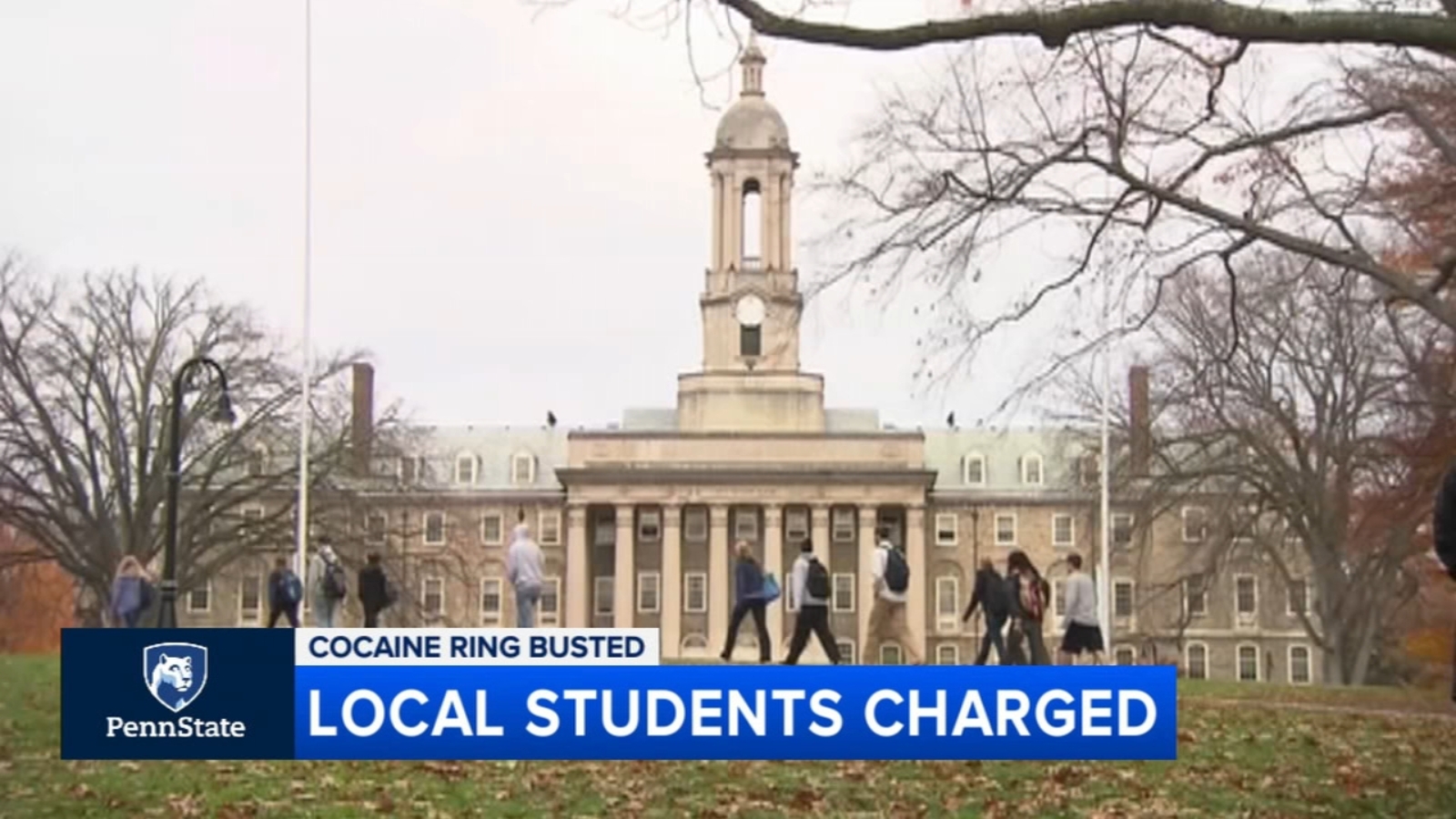
A major Penn State drug trafficking investigation has led to charges against two Philadelphia-area men, Kyle Ridpath and Daniel Price, both 21, who allegedly participated in a sprawling cocaine distribution ring that operated out of fraternity houses at the university. Newly released court documents have shed additional light on how the operation allegedly functioned, how drugs moved from major cities to central Pennsylvania, and how fraternity culture may have played a central role in the alleged criminal enterprise.
The case has captured widespread attention, not only because of its scale but also because of the unusual detail revealed about how authorities say the ring was organized, executed, and ultimately uncovered. Below is a comprehensive look at the latest developments, the individuals charged, and what the evidence allegedly reveals about one of the most publicized campus drug investigations in recent memory.
Background of the Alleged Drug Trafficking Operation
According to Pennsylvania Attorney General Dave Sunday, investigators uncovered what they describe as a significant drug trafficking organization connected to Penn State University in State College. The operation allegedly relied on fraternity houses as packaging and distribution hubs, with drugs being transported from New York City and Philadelphia into the central Pennsylvania college town.
The attorney general’s office has stated that of the 14 individuals charged in connection with the investigation, 13 were Penn State students at the time of the alleged offenses. This makes the case particularly notable in the broader conversation about Penn State drug trafficking, Greek life accountability, and the vulnerabilities that large campus communities can present to organized criminal activity.
Cocaine was allegedly brought into State College, weighed, cut with adulterants, repackaged into smaller plastic baggies for street-level distribution, and then sold to buyers within and around the university community. The packaging process, according to investigators, took place primarily at the Delta Upsilon and Sigma Chi fraternity houses.
The Philadelphia Connection: Ridpath and Price
The two most recently detailed defendants in the case, Kyle Ridpath of Media, Pennsylvania, and Daniel Price of Torresdale in Northeast Philadelphia, each face two misdemeanor charges. Court filings allege that in March 2024, both men possessed cocaine and helped package it into plastic bags at the direction of one of the alleged ringleaders, Thomas Robinson.
Investigators contend that Ridpath and Price were working under Robinson’s instruction, a detail that has raised questions about how far the alleged drug network reached beyond State College itself. The involvement of individuals from the Philadelphia suburbs suggests a coordinated supply chain rather than an isolated, campus-only operation.
Both defendants are scheduled to appear for preliminary hearings in October. Media outlets have attempted to reach both men, as well as Ridpath’s attorney, but have not received responses. No attorney has yet been listed for Price.
The geographic spread of defendants underscores how this Penn State drug trafficking case differs from typical small-scale campus drug busts. Rather than being confined to State College, the alleged network appears to have stretched along the I-95 corridor, connecting Philadelphia and New York to central Pennsylvania through a coordinated pipeline.
Thomas Robinson: The Alleged Ringleader Known as “T-Rob”
Much of the courtroom focus has centered on Thomas Robinson, identified by authorities as one of the two principal organizers of the trafficking ring. According to newly unsealed court documents, Robinson allegedly used the nickname “T-Rob” when communicating with a confidential informant and accepted payment for cocaine through a Venmo account registered under the name “Tom-Robinson-53.”
Investigators also say Robinson used a personal Snapchat account to coordinate drug transactions, a detail that highlights how modern social media platforms have become tools in alleged narcotics distribution. The use of Venmo and Snapchat for what authorities describe as drug proceeds and transaction coordination has become an increasingly common pattern in investigations into Penn State drug trafficking and similar cases nationwide.
Robinson was arrested in 2024 at the Delta Upsilon fraternity house. In a striking detail included in the court filings, Robinson allegedly told officers he thought they were fraternity brothers playing a prank when they moved in to detain him. A Taser was deployed during the arrest.
Robinson’s father has also been charged in connection with the investigation, adding another layer of complexity to the case and suggesting that authorities believe the alleged operation may have had family involvement beyond the student-level participants.
Agostino Abbatiello: The Second Alleged Organizer
Alongside Robinson, investigators identified senior fraternity member Agostino Abbatiello as a co-organizer of the alleged trafficking network. Abbatiello reportedly turned himself in on a recent Tuesday and was subsequently denied bail, signaling the seriousness with which the court is treating the allegations against him.
The involvement of two senior fraternity figures as the alleged architects of the operation has intensified scrutiny of Greek life oversight at Penn State. Attorney General Sunday has emphasized that fraternity members and pledges were not peripheral players but central actors in the packaging and distribution phases of the alleged scheme.
How the Alleged Ring Operated
The mechanics of the operation, as described in court documents and public statements from the attorney general’s office, paint a troubling picture of how the alleged trafficking ring allegedly functioned on a daily basis.
- Drug sourcing: Cocaine was allegedly transported from New York City and Philadelphia into State College, where it would be received by members of the operation.
- Cutting and packaging: The drugs were allegedly cut with bulking agents and then divided into smaller plastic baggies at fraternity houses, primarily Delta Upsilon and Sigma Chi.
- Packaging labor: Court filings and statements from Attorney General Sunday indicate that much of the packaging work was performed by fraternity brothers and, in many cases, fraternity pledges.
- Distribution and payment: Alleged sales were coordinated through Snapchat, with payments collected through Venmo and other digital platforms.
Perhaps the most disturbing allegation is that the packaging of cocaine was used, in some instances, as a form of indoctrination for new fraternity pledges. Attorney General Sunday stated publicly that “the evidence showed the cocaine was primarily packaged at the fraternity houses and the packaging was primarily done by fraternity brothers and oftentimes fraternity pledges.” This claim has sparked broader conversations about hazing, coercion, and the responsibilities of Greek organizations when criminal activity allegedly intersects with their rituals.
Charges and the Road Ahead
The legal landscape of the case involves a mix of felony and misdemeanor charges. Authorities have stated that six defendants face felony charges, while eight student-aged defendants, including Ridpath and Price, face misdemeanor counts. The distinction reflects the differing levels of alleged involvement, with senior organizers like Robinson and Abbatiello facing the most serious potential penalties.
For Ridpath and Price, the path forward includes preliminary hearings scheduled for October, at which a magistrate will determine whether sufficient evidence exists to move the cases forward toward trial. Given the misdemeanor classification of their charges, the consequences, while serious, are notably less severe than those potentially facing the alleged ringleaders.
Still, a conviction on misdemeanor drug charges can carry lasting consequences, including criminal records that may affect future employment, education, and professional licensing. Both men, at 21 years old, are at the very start of their post-college lives, making the outcomes of these proceedings especially consequential for their personal and professional futures.
Broader Implications for Penn State and Greek Life
The case has reignited long-standing debates about the role of Greek life on college campuses, the oversight of fraternities, and the susceptibility of large university communities to organized drug distribution. Penn State, like many major universities, has faced scrutiny in past years over issues ranging from hazing to alcohol abuse, and this investigation adds a new and troubling chapter to those discussions.
The alleged use of fraternity pledges as labor for drug packaging is particularly concerning to student safety advocates. If true, the allegations suggest that younger and more vulnerable members of the Greek community were drawn into criminal activity under the guise of brotherhood rituals, raising serious questions about consent, peer pressure, and institutional responsibility.
University administrators have not been directly implicated in the alleged scheme, but the case may prompt policy reviews regarding fraternity operations, visitation, and the relationship between Greek organizations and law enforcement. It may also encourage universities nationwide to reexamine how their social structures can be exploited for illegal activity.
Conclusion
The unfolding Penn State drug trafficking case represents one of the most significant alleged campus narcotics operations to surface in recent years. With 14 individuals charged, drugs allegedly flowing from New York and Philadelphia to State College, and fraternity members allegedly serving as both organizers and laborers in the scheme, the investigation exposes the complex intersection of college social life, peer influence, and organized criminal enterprise.
As preliminary hearings approach for Kyle Ridpath and Daniel Price, and as the cases against Thomas Robinson, Agostino Abbatiello, and others continue to move through the courts, the broader implications for Penn State, its Greek system, and the wider conversation about drug enforcement on college campuses will continue to unfold. What is clear is that the case has already served as a stark reminder of how vulnerable large university communities can be when criminal networks allegedly embed themselves within trusted social institutions, and how digital tools like Venmo and Snapchat have transformed the way such operations allegedly function in the modern era.