
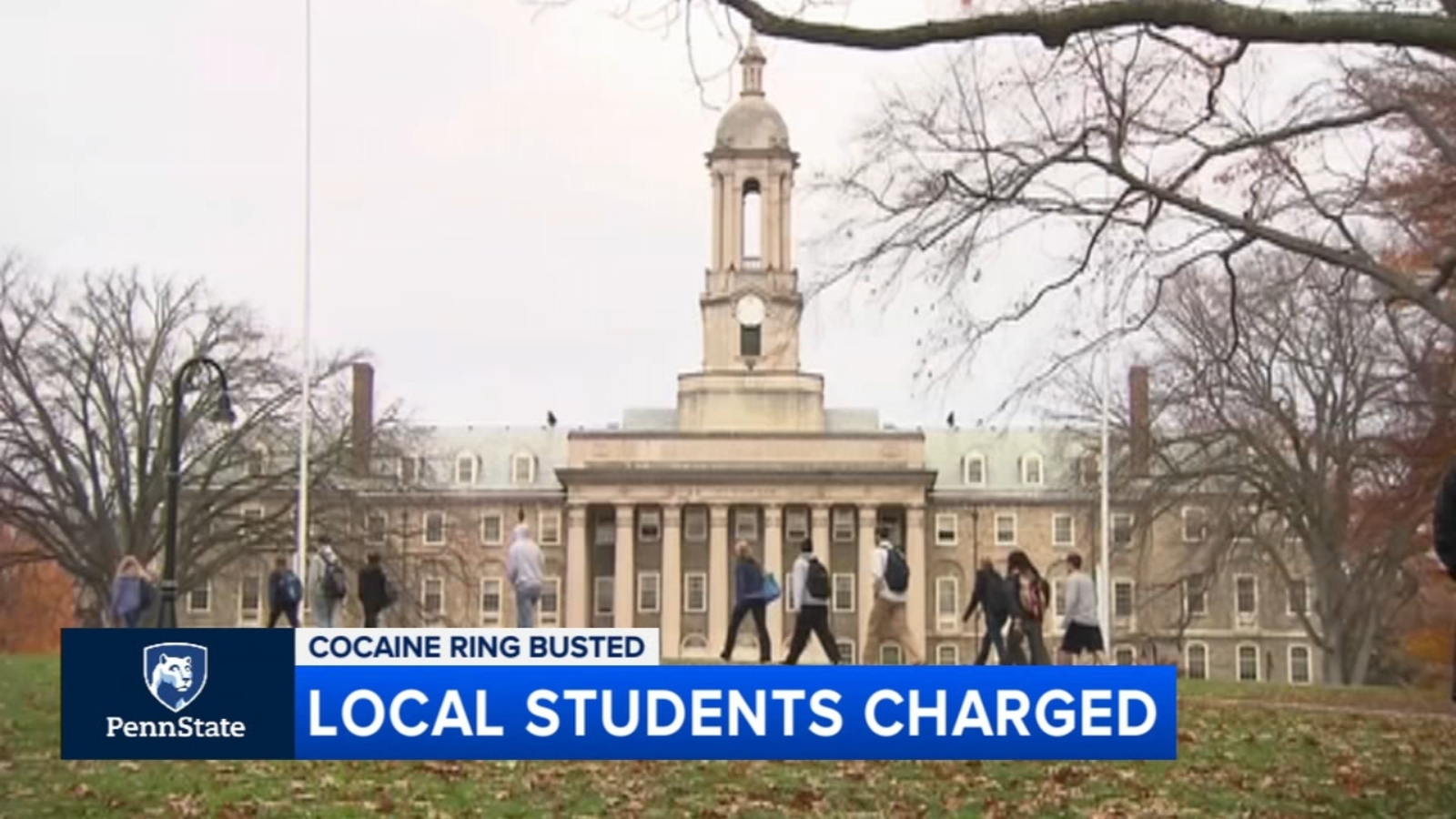
Two Philadelphia-area men are among 14 people charged in an alleged penn state drug trafficking operation involving cocaine distribution, cutting, and packaging at Penn State University fraternity houses. Court documents identify 21-year-olds Kyle Ridpath of Media and Daniel Price of Torresdale as defendants facing two misdemeanor drug charges each.
The larger case has drawn attention because investigators say members and pledges of two fraternities helped prepare cocaine for sale. Authorities also allege that the process was sometimes used as part of pledge initiation. The defendants remain presumed innocent unless proven guilty in court, and the allegations are detailed in charging documents and statements from law enforcement.
What the Penn State drug trafficking investigation alleges
According to the Pennsylvania Attorney General’s Office, cocaine was transported from New York and Philadelphia to State College, where it was cut, divided into smaller quantities, packaged, and distributed. Investigators say this work occurred primarily at the Delta Upsilon and Sigma Chi fraternity houses.
Prosecutors have identified Thomas Robinson and Agostino Abbatiello as senior fraternity members and alleged organizers of the operation. Robinson’s father has also been charged. Of the 14 defendants, authorities said 13 were Penn State students when the alleged activity occurred.
The investigation has produced a mix of felony and misdemeanor cases. Six defendants reportedly face felony charges, while eight are charged with misdemeanors. Ridpath and Price are among those accused of lower-level participation, with authorities alleging that they possessed cocaine and packaged it in plastic bags in March 2024 at Robinson’s direction.
Ridpath and Price face misdemeanor drug charges
Ridpath and Price, both 21, are each charged with two misdemeanors. The allegations against them differ from the more serious accusations reportedly faced by other defendants, but they are still part of the same alleged trafficking network.
Court filings reportedly connect the pair to the March 2024 possession and packaging of cocaine. Prosecutors allege the work was carried out under Robinson’s supervision. Neither man should be treated as having been convicted based solely on the charges, and the exact elements of each count will be addressed as the cases move through court.
Ridpath and Price are scheduled to return for preliminary hearings in October. At that stage, a judge may consider whether prosecutors have presented enough evidence to send the cases toward trial. Preliminary hearings are not the final determination of guilt or innocence.
Fraternity houses reportedly served as packaging locations
Pennsylvania Attorney General Dave Sunday said evidence indicates that cocaine was primarily prepared at fraternity residences, with fraternity members and sometimes pledges handling the packaging. Investigators further allege that cutting and packaging cocaine was incorporated into the treatment or indoctrination of certain pledges.
That allegation is particularly significant because it may matter to questions of coercion, peer pressure, and voluntary participation. However, the available source material does not provide detailed information about which defendants were minors at the time, whether any were formally initiated, or what defenses have been raised.
The reported conduct forms part of the broader Penn State cocaine ring investigation, but authorities have not suggested that either fraternity, Penn State University, or every fraternity member was collectively involved. The charges are individual, and investigators say the alleged network included a limited group of people.
Digital records and financial transactions are central to the case
Investigators reportedly used a confidential informant and examined electronic communications to establish the organization of the alleged drug operation. Court documents say Robinson used the nickname “T-Rob” when speaking with the informant. Prosecutors also allege that he accepted cocaine payments through a Venmo account registered under his name.
A personal Snapchat account was reportedly used to arrange drug transactions. These digital records may allow prosecutors to show alleged communications, payments, coordination, and delivery arrangements. Financial transactions can also help investigators identify transfers between participants, although possessing a payment record or discussing a transaction does not by itself establish every person’s role.
The use of commonly available social media and payment applications highlights how modern college drug trafficking allegations can be investigated through overlapping forms of digital evidence, including account records, messages, transaction histories, location data, and cooperating witnesses.
Robinson’s arrest at the Delta Upsilon house
Robinson was arrested in 2024 at the Delta Upsilon fraternity house, according to court documents. The filings reportedly state that he initially believed the approaching officers were fraternity brothers playing a prank. Officers used a Taser while taking him into custody.
Although Robinson’s arrest occurred before the latest wave of charges, evidence collected during that arrest appears to have contributed to the continuing investigation. Prosecutors are now using later filings and witness information to outline the wider distribution network.
The case has also expanded beyond students. The inclusion of Robinson’s father and other individuals may reflect allegations that the network extended beyond campus events or involved assistance outside the university. The precise accusations against each person have not all been detailed in the source material.
Abbatiello surrenders as the case moves forward
Abbatiello, identified by authorities as another organizer, surrendered to authorities this week. A judge denied him bail, indicating that the court found the applicable legal requirements for release were not met at that point.
A denial of bail is not a verdict. It only determines whether a defendant will remain in custody while the criminal proceedings continue. By contrast, some other defendants are scheduled to appear at future preliminary hearings, suggesting that judges may have imposed different release conditions based on their individual circumstances.
Because cases progress separately, the schedule and procedural posture of one defendant may not match those of another. Convictions, dismissals, reductions, or other outcomes could also change as defense attorneys review the evidence and challenge the prosecution’s theory.
What the charges mean for the broader case
The distinction between felony and misdemeanor charges may reflect the quantity of drugs allegedly involved, the claimed role in the organization, or other statutory factors. It can also depend on how prosecutors frame each defendant’s conduct.
For example, someone accused of possessing and packaging a small amount of cocaine may face lesser allegations than a person allegedly directing the supply chain. The misdemeanor cases involving Ridpath, Price, and six other student-aged defendants therefore should not be treated as identical to the more serious charges reported against six defendants.
Ultimately, a Pennsylvania State College drug trafficking case of this size will likely depend on proof of each person’s knowledge, intent, and conduct. The attorney general’s office may rely on confidential sources, seized materials, messages, payment records, witness testimony, and physical evidence. Defense attorneys may question the reliability of those sources or argue that a defendant’s involvement was narrower than prosecutors claim.
Institutional and community impact
The allegations have raised difficult questions about hazing, peer pressure, and supervision within Greek life at Penn State. Investigators say the fraternity drug trafficking allegations included the participation of pledges, but no broad institutional finding has been made against either fraternity.
University communities can respond by strengthening anti-hazing education, reviewing substance-use policies, improving reporting channels, and ensuring that students do not face retaliation for raising safety concerns. Fraternity organizations may also examine how leaders monitor social events, new-member programs, and access to chapter properties.
For students, the case is a reminder that casual participation in drug packaging, storage, delivery, or payment can lead to serious legal consequences. Social pressure, fraternity expectations, or fear of exclusion are not legal defenses, but the facts surrounding coercion and individual responsibility will remain important as the cases proceed.
What happens next
The immediate procedural milestone for Ridpath and Price is their October preliminary hearing schedule. A judge will determine whether the prosecution can establish a prima facie case, meaning sufficient evidence to move forward.
At the same time, authorities may continue presenting evidence against the remaining defendants. Any additional arrests, hearings, plea agreements, or dismissals could alter the shape and timeline of the investigation. Media reports may also be updated as court files become available and attorneys respond to the accusations.
Members of the public should distinguish verified court records from speculation, especially in a high-profile Penn State drug trafficking case involving students. The allegations are serious, but each defendant retains the right to challenge the evidence and obtain a fair legal process.
Conclusion
The alleged Penn State cocaine distribution network has resulted in 14 charges, with six defendants facing felonies and eight accused of misdemeanors. Philadelphia-area students Kyle Ridpath and Daniel Price are among those charged with possessing and packaging cocaine, while authorities identify Robinson and Abbatiello as alleged organizers. With digital communications, financial records, witness accounts, and evidence from fraternity properties at the center of the case, upcoming court hearings will be critical in establishing what each defendant is alleged to have done and how the law applies.