
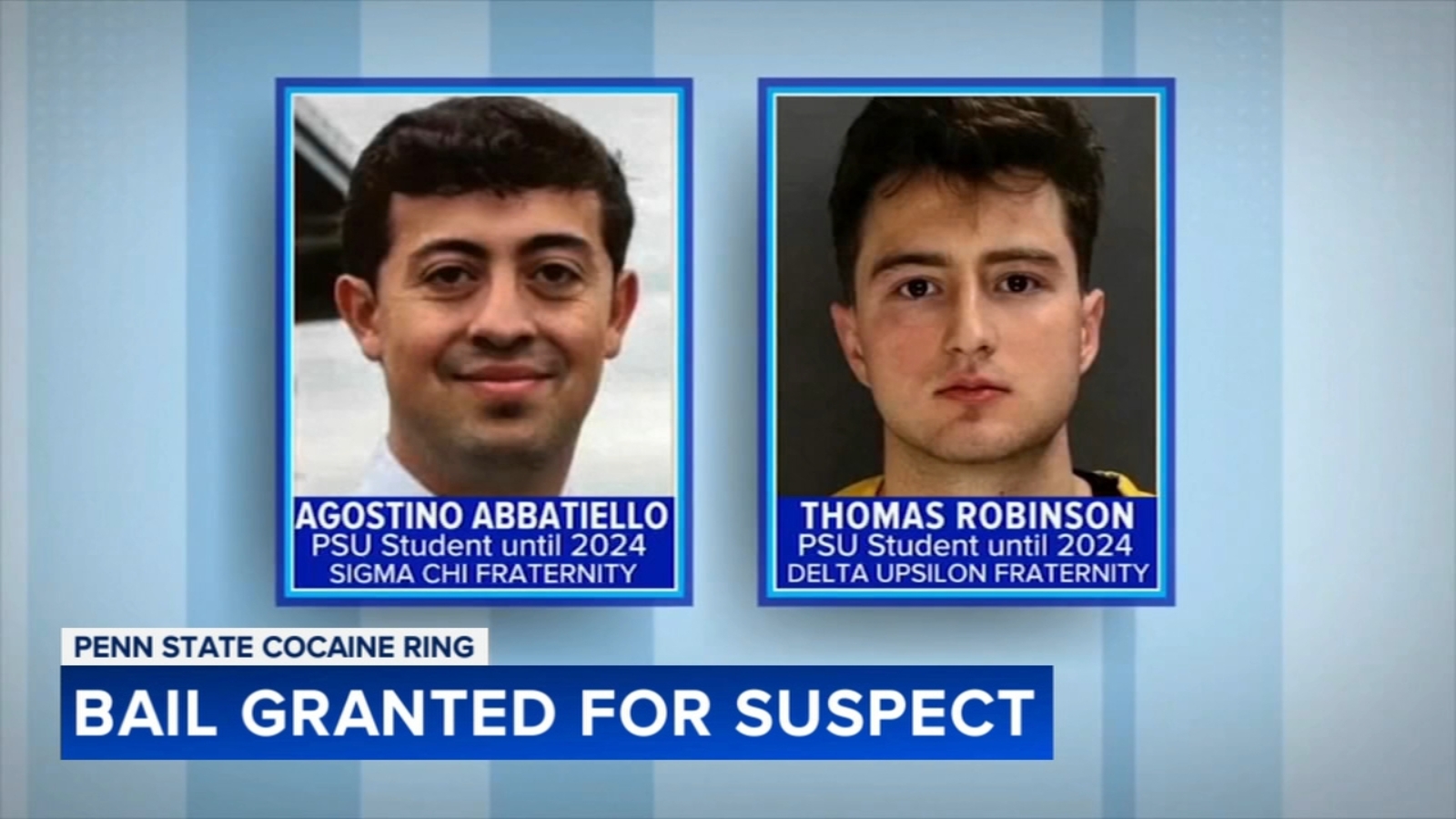
A significant development unfolded in State College, Pennsylvania, as a judge granted bail to the alleged ringleader of a penn state cocaine ring that has rocked the university community. Agostino Abbatiello appeared in court alongside four other current and former Penn State students, all of whom face serious charges stemming from an extensive drug trafficking investigation that authorities say stretched well beyond the campus borders.
The case has captured national attention, not only because of the scale of the alleged operation but also because of the young ages of those involved and the disturbing connection to a recognized fraternity house on one of the country’s largest university campuses. With more than a dozen individuals charged in connection with the cocaine distribution network, the investigation continues to unravel a complex web of alleged drug activity that investigators believe operated for months before coming to light.
The Court Appearance and Bail Decision
When Abbatiello stood before the judge, the courtroom was filled with the weight of testimony from law enforcement officials who had spent considerable time building their case. The presiding judge ultimately decided that bail could be set at $250,000, a substantial amount that reflects the severity of the charges. However, the bail came with strict conditions designed to ensure the defendant would remain within the jurisdiction and pose no threat to the community while awaiting trial.
Among the most notable conditions of Abbatiello’s release was the requirement that he surrender his passport to the court. This provision signals the court’s concern that the defendant might attempt to flee the country given the gravity of the charges and the potential prison sentence he faces if convicted. Additionally, the judge ordered Abbatiello to return to live with his parents, effectively removing him from the State College area and the environment where the alleged crimes took place.
These bail conditions represent a careful balancing act between the presumption of innocence and the practical realities of managing a defendant accused of being the primary supplier in a significant drug operation. The judge’s decision reflects the seriousness with which the court views the allegations while still allowing the legal process to proceed toward a formal trial.
Testimony From Law Enforcement
During the proceedings, a detective involved in the investigation provided compelling testimony that painted Abbatiello as the central figure in the entire operation. According to the detective, every witness who provided information to investigators identified Abbatiello as the primary source of cocaine for the network. This consistent testimony from multiple sources likely played a significant role in the judge’s decision regarding bail and conditions of release.
The weight of this testimony cannot be overstated. When multiple individuals independently identify a single person as the chief supplier in a drug distribution network, it creates a pattern that is difficult for defense attorneys to dismiss. The prosecution appears to have built a case with corroborating statements from various witnesses, strengthening their position as the legal proceedings move forward.
The Second Alleged Ringleader
While Abbatiello has been identified as the primary source of cocaine, the investigation has also focused on Thomas Robinson, who authorities describe as another key figure in the operation. Robinson allegedly began his involvement in drug dealing in 2023, and according to court testimony, he utilized the Delta Upsilon fraternity house as a storage location for cocaine.
The revelation that a recognized fraternity house allegedly served as a stash location for illegal drugs has sent shockwaves through both the Penn State community and Greek life organizations nationwide. The Delta Upsilon fraternity now faces intense scrutiny, and questions are being raised about oversight, monitoring, and the responsibility of fraternity leadership in preventing such activities from occurring within their houses.
Robinson’s alleged role appears to have been somewhat different from Abbatiello’s. While Abbatiello is characterized as the supplier, Robinson allegedly functioned as a distributor who helped move the product through his network of contacts. This division of labor is common in drug trafficking organizations, where different individuals take on specialized roles to maximize efficiency and minimize personal risk.
The Scope of the Investigation
What began as a focused investigation into suspicious activity has expanded into a sprawling case involving more than a dozen individuals connected to the alleged cocaine distribution network. The breadth of the investigation suggests that law enforcement spent considerable time mapping out the entire operation before making arrests, ensuring they could build comprehensive cases against everyone involved.
The sheer number of defendants indicates that this was not a small-scale operation confined to a handful of individuals. Rather, investigators believe they have uncovered a sophisticated network with multiple layers of distribution, each person playing a specific role in moving cocaine from supplier to end user. This organizational structure is reminiscent of larger drug trafficking operations typically associated with urban areas rather than college campuses.
Impact on the Penn State Community
The allegations have had a profound effect on the Penn State community, raising difficult questions about drug culture, peer pressure, and the vulnerabilities that exist within college environments. University administrators have been forced to address the situation publicly, emphasizing their commitment to maintaining a safe campus environment and cooperating fully with law enforcement investigations.
Parents of current Penn State students have expressed a range of emotions, from shock and disbelief to concern about whether their own children might have been exposed to illegal drug activity. The case has sparked broader conversations about drug prevention education, mental health support, and the unique challenges that face young adults navigating the independence of college life.
For students who were directly affected by the alleged drug ring, whether as buyers, witnesses, or simply as members of the campus community where this activity was taking place, the experience has been deeply unsettling. Many are grappling with feelings of betrayal, particularly those who may have been close to any of the defendants or who frequented social spaces where drugs were allegedly being distributed.
Legal Consequences and Future Proceedings
The charges faced by Abbatiello and the other defendants carry serious potential penalties, including substantial prison time and significant fines. Cocaine trafficking charges in Pennsylvania are prosecuted aggressively, and individuals accused of serving as primary suppliers in distribution networks often face enhanced sentencing due to the leadership role they allegedly played.
As the legal proceedings continue, both prosecutors and defense attorneys will be preparing their respective cases. The prosecution will likely focus on the testimony of cooperating witnesses, any physical evidence collected during the investigation, and the documentary trail that investigators may have uncovered regarding financial transactions and communications. Defense attorneys, meanwhile, will be exploring opportunities to challenge the credibility of witnesses, question the methods used by law enforcement, and potentially negotiate plea agreements for their clients.
Broader Implications for College Drug Enforcement
This case has drawn attention to the broader issue of drug trafficking on college campuses, an issue that universities and law enforcement agencies have been grappling with for decades. The Penn State cocaine ring investigation highlights how drug distribution networks can operate with surprising sophistication even within environments that are supposed to be focused on education and personal development.
Law enforcement agencies have increasingly recognized that college campuses can become hubs for drug activity, particularly when students have disposable income, social networks that facilitate distribution, and relatively low supervision compared to other living situations. The combination of these factors creates an environment where entrepreneurial individuals can establish profitable operations if they are willing to assume the significant legal risks involved.
Universities across the country are likely to review their own prevention and enforcement strategies in light of the Penn State case. Questions about fraternity oversight, monitoring of social events, cooperation with law enforcement, and drug prevention education have all taken on new urgency in the wake of these allegations.
The Road Ahead
As the case moves through the legal system, more details are likely to emerge about the full scope of the alleged drug ring, the specific roles played by each defendant, and the methods used by investigators to build their case. The proceedings will likely receive continued media attention, particularly as additional court dates are scheduled and new witnesses come forward with information.
For the defendants, the coming months will be a period of intense legal uncertainty as they navigate the criminal justice system while attempting to maintain some semblance of their previous lives. For the Penn State community, the healing process has only just begun, and it may take considerable time before trust is fully restored and the shadow cast by this investigation fades from campus life.
Conclusion
The granting of bail to the alleged ringleader of the Penn State cocaine ring represents just one chapter in what promises to be a lengthy and complex legal saga. With multiple defendants facing serious charges, a fraternity house at the center of the controversy, and more than a dozen individuals implicated in the investigation, this case has already left an indelible mark on the university and the broader conversation about drug activity on college campuses. As the legal proceedings unfold, the Penn State community and observers nationwide will be watching closely to see how justice is served and what lessons can be learned from this troubling chapter in the university’s history. The outcome of this case may well influence how universities, law enforcement, and communities approach the challenge of drug trafficking in educational environments for years to come.