
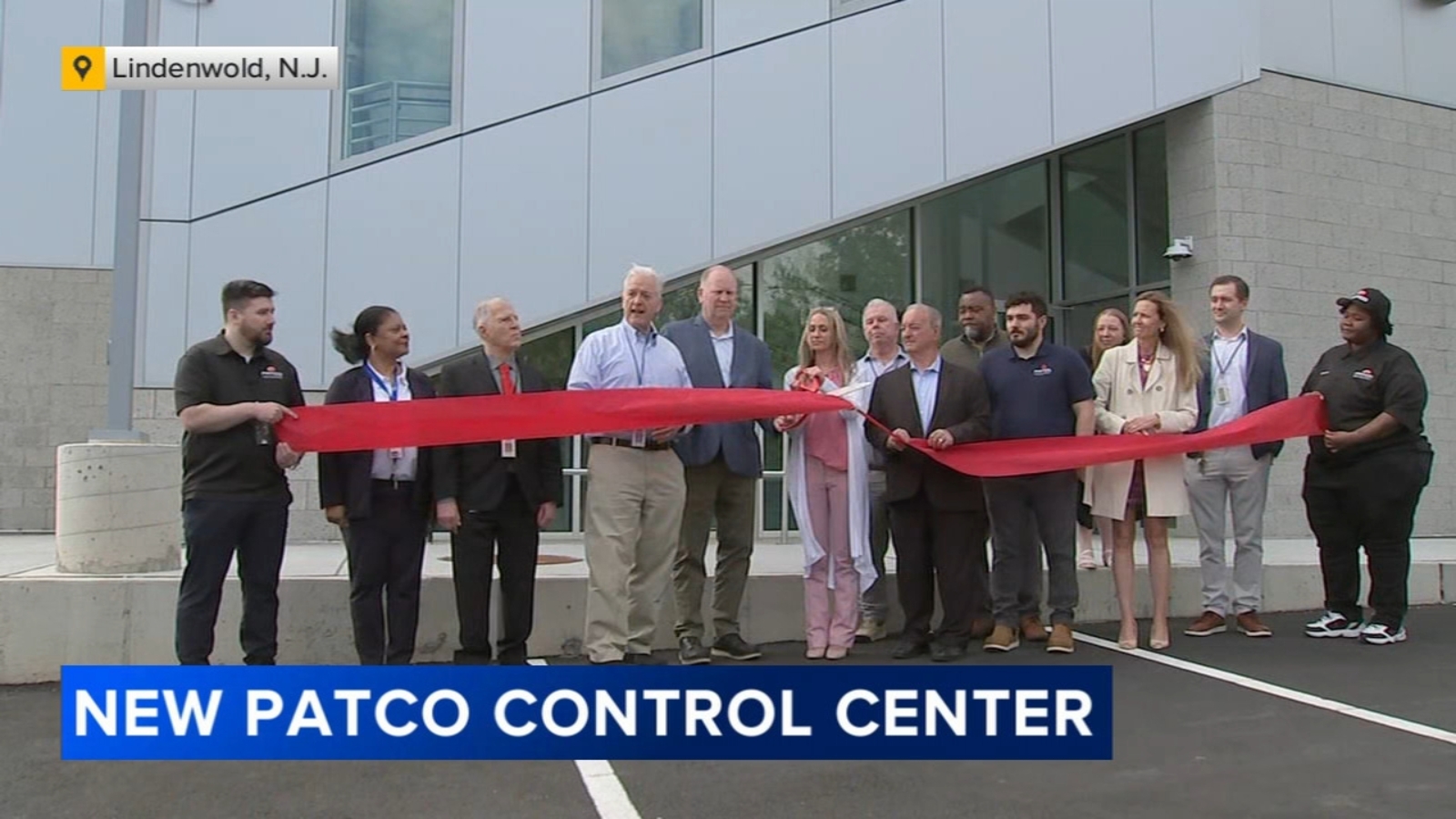
The PATCO operations control center has officially opened its doors in Lindenwold, New Jersey, marking a significant milestone for one of the Philadelphia region’s most vital commuter rail systems. After years of planning and construction, the Delaware River Port Authority (DRPA), which operates PATCO, celebrated the ribbon-cutting of this state-of-the-art facility on North Carlton Street. The approximately $19.4 million investment represents more than just a new building,it signals a modernized approach to managing train movements, coordinating emergency responses, and ensuring safe, reliable service for thousands of daily riders traveling between New Jersey and Philadelphia.
This new central hub replaces the aging Center Tower operations facility in Camden, which had faithfully served the transit system since 1969. While the original facility served its purpose for decades, the demands of contemporary rail operations called for a significant upgrade. The new Lindenwold facility consolidates critical functions into a single, purpose-built environment designed to meet the technological and operational demands of the 21st century.
Inside the State-of-the-Art Facility
Modern Technology and Infrastructure
The new PATCO operations control center was designed from the ground up to house cutting-edge technology. Unlike the original Center Tower, which was retrofitted over the years to accommodate evolving needs, this facility integrates modern signaling systems, real-time monitoring equipment, and advanced communication tools into its very architecture. The result is an environment where controllers, dispatchers, and operations staff can monitor train movements with greater precision than ever before.
One of the most significant improvements is the enhanced ability to track and manage train movements across the entire 14-mile line connecting Lindenwold to Center City Philadelphia. With real-time data feeds and integrated systems, the operations team can respond to track conditions, equipment issues, or unexpected events with remarkable speed. This kind of centralized visibility is essential for a transit system that carries commuters across state lines every day.
Centralized Command and Coordination
Beyond the technology, the new facility brings together all key operational functions under one roof. Train dispatchers, power directors, emergency response coordinators, and supervisory personnel now work side by side in a collaborative environment. This kind of integrated workspace was difficult to achieve in the older facility, where different teams were spread across separate rooms and floors.
During emergencies or service disruptions,whether caused by severe weather, mechanical failures, or medical incidents on board a train,the new operations control center allows for faster, more coordinated decision-making. The layout includes dedicated briefing areas, advanced communication systems, and backup power infrastructure to ensure continuity of operations even under challenging conditions.
From Center Tower to Lindenwold: A Long-Awaited Upgrade
For decades, PATCO’s original Center Tower in Camden stood as a symbol of mid-20th century transit infrastructure. Built in 1969, the facility was functional but increasingly outdated. Over the years, as technology advanced and ridership patterns evolved, the limitations of the older facility became more apparent. Equipment had to be patched together, and modernization efforts were constrained by the original building’s design.
The decision to build a completely new operations control center in Lindenwold reflects a forward-thinking approach. Rather than pouring money into a deteriorating structure, DRPA leadership invested in a purpose-built facility that could serve the system for the next several decades. The Lindenwold location is also strategic,it’s near one end of the line and provides excellent access to major roadways, making it easier for staff and emergency personnel to reach the facility when needed.
For long-time PATCO employees, the move represents a dramatic shift in working conditions. The original Center Tower, while iconic, was not designed with modern ergonomics or workflow efficiency in mind. The new center offers improved lighting, climate control, ergonomic workstations, and spaces designed for the kind of focused, attentive work that train operations demand.
Investment in Regional Transit Infrastructure
The $19.4 million price tag attached to the new PATCO operations control center underscores the authority’s commitment to maintaining and improving critical regional infrastructure. While that figure is substantial, it’s a relatively modest investment compared to the cost of building new rail lines or replacing entire fleets of train cars. The facility upgrade provides outsized benefits,better safety, more reliable service, and improved response capabilities,without requiring transit riders to bear the brunt of major service disruptions.
This kind of strategic investment is increasingly important as transit agencies across the country grapple with aging infrastructure. Many systems still rely on control centers built in the mid-20th century, and modernizing these facilities is essential for keeping pace with growing ridership and evolving safety standards. PATCO’s new center serves as a model for how transit agencies can approach infrastructure renewal thoughtfully and cost-effectively.
Job Creation and Local Economic Impact
Beyond the operational benefits, the construction of the new PATCO operations control center brought economic activity to the Lindenwold area. Construction jobs were created throughout the building process, and the facility now supports a dedicated team of operations professionals. The presence of a modern transit facility in the community can also serve as a catalyst for further investment and development in the surrounding area.
What Riders Can Expect
For the average PATCO commuter, the opening of the new operations control center may not be immediately visible in their daily routine,but the benefits will be felt over time. Improved coordination and faster response to incidents mean fewer cascading delays when problems occur. Enhanced monitoring capabilities allow the operations team to identify potential issues before they become major service disruptions. And the modern infrastructure provides a foundation for future service improvements that would have been difficult to implement from the older facility.
PATCO serves tens of thousands of riders each weekday, providing a critical link between southern New Jersey communities and employment centers in Philadelphia. For these commuters, reliability is paramount. A missed train can mean a missed meeting, a late arrival at work, or an appointment that needs to be rescheduled. The new operations control center is designed to minimize these disruptions and keep service running as smoothly as possible.
The Broader Impact on Camden County Transit
The opening of the new facility is also a win for Camden County’s broader transportation ecosystem. PATCO’s operations don’t exist in isolation,the system interfaces with other transit providers, including NJ Transit, Amtrak, and SEPTA. A more efficient and modern control center can better coordinate with these neighboring systems, improving transfers and reducing bottlenecks at shared stations like 30th Street Station and Walter Rand Transportation Center.
Additionally, the facility’s location in Lindenwold,a key stop on the PATCO line,reinforces the borough’s role as a transportation hub. As the eastern terminus of the line, Lindenwold is already home to a large station with substantial parking facilities. The addition of a modern operations center strengthens the community’s position as an anchor point for regional transit activity.
Looking Ahead
As PATCO celebrates this important milestone, attention is already turning to what comes next. The new operations control center provides a platform for future enhancements, including potential upgrades to train control systems, expanded real-time passenger information capabilities, and improved integration with other transit modes. While no specific timelines have been announced for these future projects, the facility gives PATCO the infrastructure foundation needed to pursue them.
For the DRPA leadership team, the ribbon-cutting ceremony marked the culmination of years of planning, design, and construction work. But more importantly, it marked the beginning of a new chapter for PATCO,one in which the transit system has the tools and infrastructure needed to deliver safe, reliable service for years to come.
Conclusion
The unveiling of the new PATCO operations control center in Lindenwold represents far more than a ribbon-cutting ceremony. It is a tangible commitment to the future of regional transit, a recognition of the critical role PATCO plays in connecting New Jersey and Philadelphia, and an investment in the safety and reliability that riders deserve. By replacing the aging 1969 Center Tower with a modern, purpose-built facility, DRPA has positioned PATCO to meet the challenges of contemporary transit operations while laying the groundwork for future improvements. For the thousands of commuters who depend on PATCO every day, this $19.4 million investment translates into better service, faster responses, and a transit system that’s ready for the decades ahead.