
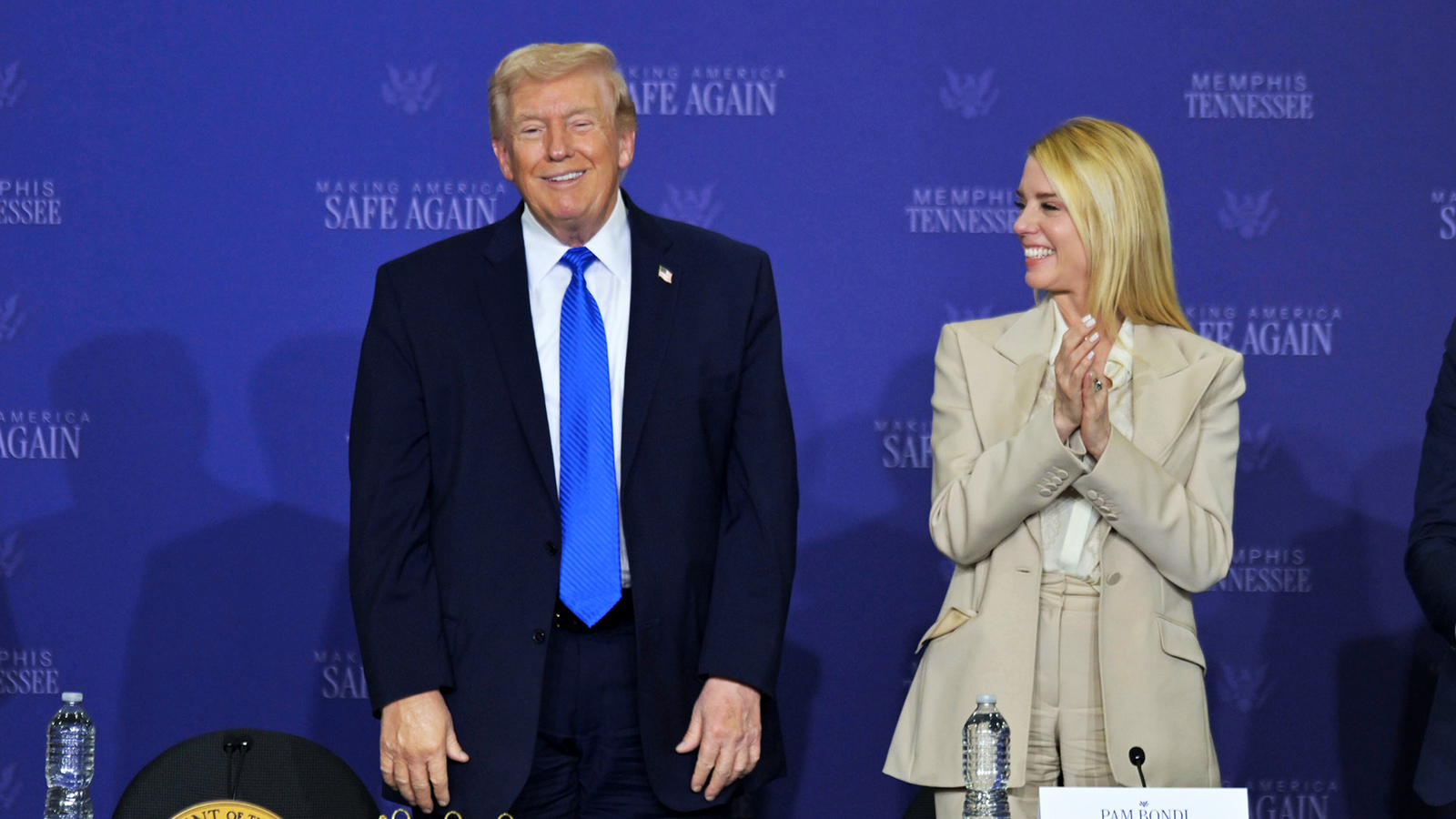
In a dramatic shakeup at the heart of American law enforcement, President Donald Trump announced that Pam Bondi fired from her position as U.S. Attorney General, ending a tenure defined by controversy, loyalty tests, and a fundamental reshaping of the Justice Department’s relationship with the White House. The move comes after months of growing tension over the handling of the Jeffrey Epstein files and mounting frustrations over the department’s inability to deliver criminal prosecutions against the president’s political adversaries.
Deputy Attorney General Todd Blanche, one of Trump’s former personal attorneys, has been named acting attorney general, while the president has privately discussed tapping Environmental Protection Agency chief Lee Zeldin as a permanent replacement, according to multiple sources familiar with the deliberations.
The Announcement and Its Aftermath
President Trump confirmed the leadership change on Thursday, offering warm public words for the departing official. In a written statement, he praised Bondi as “a Great American Patriot and a loyal friend, who faithfully served as my Attorney General over the past year.” He added that the former Florida attorney general “will be transitioning to a much needed and important new job in the private sector, to be announced at a date in the near future.”
Bondi responded with her own statement, calling the position “the honor of a lifetime” and pledging to work alongside Blanche during a one-month transition period. The carefully choreographed messaging masked what had become an increasingly strained relationship between the president and his top law enforcement officer.
Behind the Scenes: A Frustrated President
According to people familiar with the matter, Trump had been privately weighing whether to remove Bondi for weeks. His frustrations centered on two primary concerns: the Justice Department’s fumbling of the Epstein investigation files, and its repeated failure to bring criminal cases against political rivals Trump had publicly demanded be prosecuted.
In one striking example of the president’s impatience, Trump used social media last year to publicly pressure his attorney general to act, writing that delays in prosecuting figures like New York Attorney General Letitia James and former FBI Director James Comey were “killing our reputation and credibility.” Such public admonishment from a sitting president to his own DOJ chief underscored just how far the traditional boundaries of executive power had been stretched during Bondi’s watch.
A Tenure Defined by Loyalty Over Independence
When Bondi took office 14 months ago, she pledged that politics would not influence her stewardship of the Justice Department. Yet almost immediately, her actions suggested otherwise. She lavished praise on the president during congressional hearings and White House events, fired prosecutors deemed insufficiently loyal, and opened investigations into a roster of Trump critics.
The cultural shift inside the DOJ was seismic. Hundreds of career employees either resigned or were pushed out, with lawyers who had prosecuted violent attacks on police during the January 6, 2021 Capitol breach, along with environmental, civil rights, ethics, and counterterrorism prosecutors, among those who departed. Critics warned that the department was being transformed from an institution designed to pursue justice impartially into a tool for advancing the president’s personal and political agenda.
Senator Adam Schiff, a California Democrat, minced no words in his assessment. “Pam Bondi oversaw an unprecedented weaponization of the Justice Department that brought our nation’s rule of law to its knees,” he declared.
A Visual Symbol of the New DOJ
Perhaps no gesture captured the new direction of the Justice Department more vividly than Bondi’s decision to place a banner featuring the president’s image on the exterior of DOJ headquarters, an unprecedented symbolic move that signaled alignment with the White House in a way that previous attorneys general from both parties had studiously avoided.
At congressional hearings, she delivered combative performances filled with insults directed at Democratic questioners, praise for the president’s handling of the economy, and pointed defenses of Trump against what she characterized as unfair impeachments and investigations. Representative Jamie Raskin of Maryland, the top Democrat on the House Judiciary Committee, accused her of turning “the People’s Department of Justice into Trump’s instrument of revenge.”
The Epstein Files Fiasco
If any single issue defined the collapse of Bondi’s standing with both the public and the White House, it was her handling of the Jeffrey Epstein investigation files. The case has long captivated conspiracy theorists and conservative audiences who believed the Justice Department was hiding explosive revelations about powerful figures connected to the late financier’s sex trafficking network.
Bondi initially fueled those expectations. In a 2025 Fox News interview, she suggested that Epstein’s “client list” was sitting “on my desk” awaiting review. The Justice Department later acknowledged that no such comprehensive document existed, a stunning reversal that drew widespread ridicule.
She compounded the problem by personally distributing binders of Epstein-related files to conservative influencers at the White House, only for it to emerge that the documents contained no meaningful new revelations. When the DOJ announced in July that no additional files would be released, Congress responded by passing legislation to force disclosure. Even then, the eventual release of millions of pages did little to satisfy critics.
White House Criticism
Perhaps the most telling sign of Bondi’s diminished standing came through rare public criticism from White House Chief of Staff Susie Wiles, a close personal friend of the attorney general. In an interview with Vanity Fair, Wiles said Bondi had “completely whiffed” on the Epstein matter. Coming from within the president’s inner circle, the remarks signaled that Bondi’s time was running out.
The Republican-led House Oversight Committee also issued a subpoena to compel her appearance for a closed-door interview on the Epstein files, an extraordinary step that reflected bipartisan frustration with her handling of the matter.
Investigations Against Trump Critics
Under Bondi’s leadership, the Justice Department opened investigations into a string of prominent figures who had clashed with the president, including Federal Reserve Chair Jerome Powell, New York Attorney General Letitia James, former FBI Director James Comey, and former CIA Director John Brennan.
The high-profile prosecutions of Comey and James, however, were short-lived. Both cases were thrown out by a federal judge who ruled that the prosecutor who had brought them had been illegally appointed to his position. The dismissals represented a significant embarrassment for the Justice Department and reinforced accusations that the cases had been motivated more by political retribution than by legitimate law enforcement considerations.
Bondi’s Defenders and the Counter-Narrative
Bondi consistently rejected accusations that she had politicized the Justice Department. In her view, her mission was to restore the institution’s credibility following what she characterized as overreach by President Joe Biden’s Democratic administration, an era that included two federal criminal cases brought against Trump himself.
Her supporters argued that she had worked to refocus the department on critical priorities such as illegal immigration and violent crime, and that she had introduced much-needed reforms to an agency they believed had unfairly targeted conservatives in previous years. They pointed to the prosecution of January 6 defendants as evidence that the department was finally holding accountable those who had, in their view, attacked the constitutional order.
How Bondi Got the Job
Notably, Bondi was not Trump’s first choice for the role. She was selected only after former Florida Representative Matt Gaetz withdrew from consideration amid intense scrutiny over sex trafficking allegations. Given the unique irony of those circumstances, Bondi’s tenure carried additional political sensitivities from its earliest days.
She had previously served as a vocal defender of Trump during his first impeachment trial, and her prosecutorial background as Florida’s attorney general gave her credentials that resonated with the president’s base.
What Comes Next at the Justice Department
With Todd Blanche stepping into the acting attorney general role, the Justice Department faces an immediate leadership transition at a moment of significant internal strain. Blanche, who served as one of Trump’s personal lawyers before joining the department, brings intimate knowledge of the president’s priorities but also inherits an institution deeply divided over its proper role.
The eventual nomination of a permanent attorney general, with Lee Zeldin reportedly among the leading candidates, will likely face intense scrutiny in the Senate. Zeldin’s current role heading the EPA would require confirmation hearings that could become a proxy battle over the future direction of federal law enforcement.
The Broader Implications
The departure of Bondi raises fundamental questions about the balance between presidential authority and institutional independence at the Justice Department. The traditional norm that attorneys general maintain deliberate distance from the White House, designed to protect the impartiality of investigations and prosecutions, has been visibly eroded during her tenure. Whether her successor will restore those boundaries or continue moving the department in a more politically aligned direction remains to be seen.
Conclusion
The removal of Pam Bondi as attorney general closes one of the most turbulent chapters in recent Justice Department history. Her 14-month tenure saw the department undergo sweeping personnel changes, pursue investigations against the president’s political opponents, and stumble through a series of high-profile missteps, most notably the handling of the Epstein files. While Trump publicly praised her as a patriot and loyal friend, the underlying tensions that led to her ouster reveal how the demands of a president who views the DOJ as an extension of his political operation can collide with the institutional traditions of American law enforcement. As Todd Blanche takes the helm in an acting capacity, the nation watches to see whether the Justice Department will recalibrate toward greater independence or continue along the path Bondi charted.