
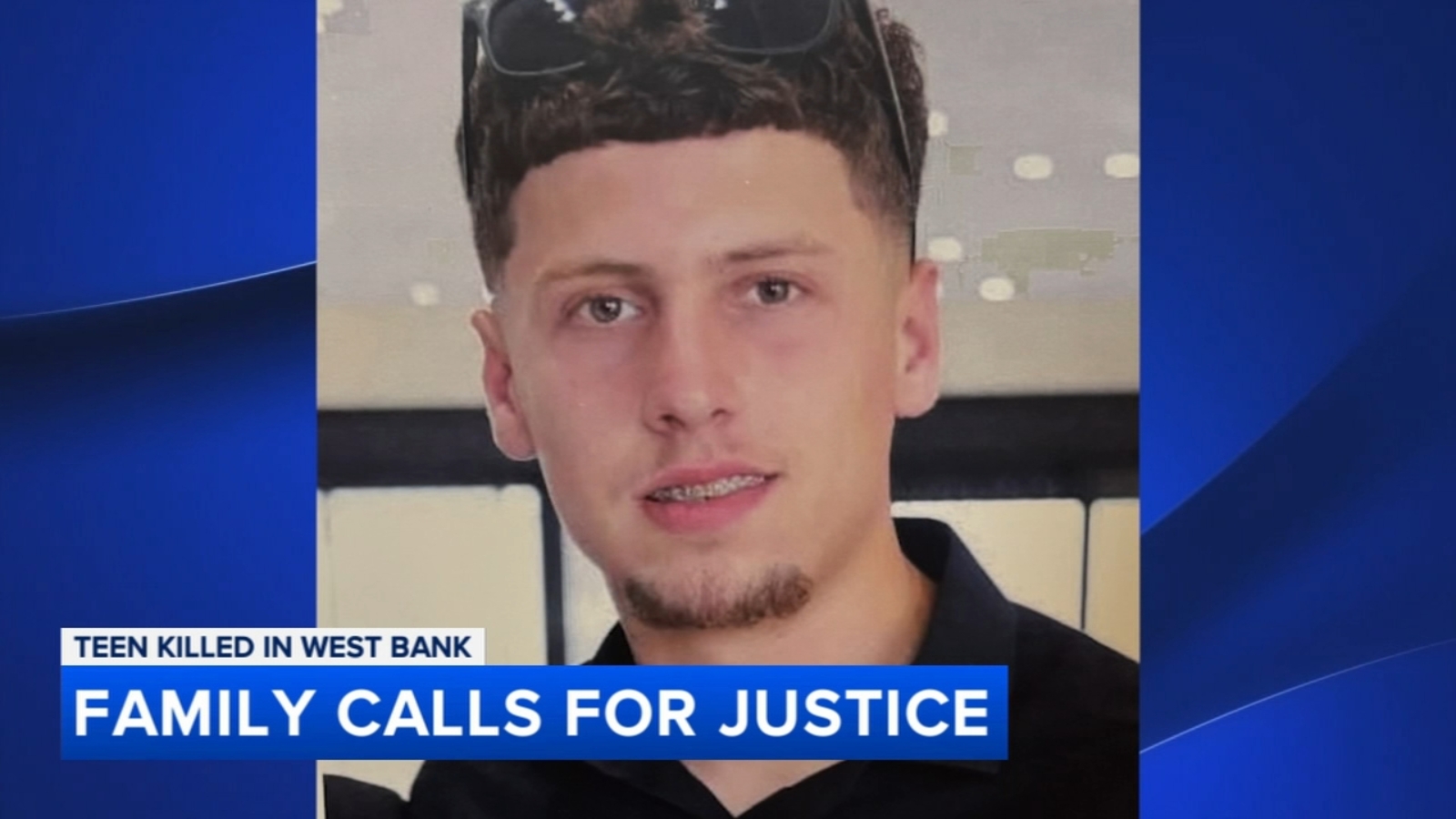
The tragic story of a Palestinian American killed in the West Bank has sent shockwaves through communities in both Philadelphia and the Middle East. Nasrallah Abu Siyam, a 19-year-old who was born and raised in Philadelphia before moving to the West Bank as a young boy, was fatally shot on February 18 while reportedly helping a neighbor protect goats in his village. His family is now demanding a federal investigation into the circumstances surrounding his death, insisting that U.S. authorities must pursue accountability for the loss of an American citizen abroad.
The Circumstances of the Fatal Shooting
According to family members, Nasrallah Abu Siyam was engaged in an ordinary, everyday task , assisting a neighbor with livestock protection in his village , when he was shot and killed. His relatives have identified the perpetrators as Israeli settlers, though the full details of the incident remain under examination. The young man, who had spent his early childhood in Philadelphia, represented the lived experience of countless Palestinian American families who maintain deep connections across two worlds.
His cousin, Abdelhamid Siyam, explained that moving children between the United States and the West Bank is a common practice among diaspora families. Many Palestinian Americans seek to preserve cultural ties, maintain family relationships, and ensure that younger generations understand their heritage. For Nasrallah, this transcontinental connection defined his identity from birth through his teenage years and into young adulthood.
A Pattern of Unanswered Tragedies
The Siyam family has been vocal about a troubling pattern they believe extends well beyond their personal loss. According to relatives, Nasrallah is not the first Palestinian American to lose their life in the region , they claim at least five such individuals have been killed since February 2024, none of whom have seen meaningful investigations or accountability.
This statistic, while striking, reflects a broader concern within Palestinian American communities about the treatment of dual nationals abroad. When an American citizen is killed in a foreign country, federal authorities typically have jurisdiction to investigate potential violations of U.S. law, particularly when there are indications of human rights abuses or inadequate local response. However, families say this standard has not been applied consistently in cases involving Palestinian Americans.
Calls for Federal Involvement
Ahmet Tekelioglu of the Council on American-Islamic Relations (CAIR) has emerged as one of the most prominent voices calling on the U.S. government to act. “The State Department should act, and all of our elected officials here should be raising their voices in the face of this injustice,” Tekelioglu stated emphatically at a press event.
His remarks underscore a growing frustration among advocacy organizations and community leaders who feel that the plight of Palestinian Americans abroad has been overlooked by Washington. CAIR has consistently called for stronger diplomatic protections and more robust investigative frameworks when U.S. citizens are harmed in conflict zones.
The family has outlined a clear escalation strategy. Cousin Sayel Kayed explained the multi-tiered approach: “We need to pressure. Starts with council level of Philadelphia, then the state level, then the country level, our congressmen.” This grassroots-to-federal pipeline reflects a sophisticated understanding of how policy change happens in American democracy.
Philadelphia’s Institutional Response
City Councilmembers Rue Landau and Nicholas O’Rourke responded swiftly by introducing a formal resolution calling for transparency and accountability. The resolution represented an official acknowledgment by municipal leadership that an American citizen’s death abroad demands more than silence.
“When an American citizen is killed abroad, there must be accountability,” Landau declared, framing the issue as a matter of fundamental rights rather than political positioning. The recognition of the Siyam family at Philadelphia City Hall provided a public platform for their demands and signaled local solidarity.
This institutional response is significant because Philadelphia is home to one of the largest Palestinian American communities in the United States. The city’s response sets a precedent for how municipal governments can support diaspora communities navigating international tragedies.
State-Level Pressure on Federal Authorities
Perhaps the most consequential development came from Pennsylvania Governor Josh Shapiro, who sent a formal letter to the U.S. Department of Justice requesting an investigation into Nasrallah’s death. The governor’s correspondence explicitly noted that the killing may have constituted a violation of U.S. law, elevating the matter from a diplomatic concern to a potential federal case.
Federal laws, including extraterritorial statutes, can apply when American citizens are victims of serious crimes abroad. The DOJ has historically investigated cases involving killings of U.S. nationals overseas, particularly when local judicial systems are deemed insufficient or compromised. Governor Shapiro’s intervention adds substantial weight to the family’s demands and places the issue squarely on the federal agenda.
The Human Cost of Geopolitical Conflict
Beyond the legal and political dimensions, the case highlights the personal toll that regional conflicts take on diaspora communities. A funeral procession was held in the West Bank, drawing mourners from across the region. Meanwhile, relatives in Philadelphia were left to process their grief while simultaneously organizing advocacy efforts and managing media relations.
The situation became even more complex when airspace closures linked to regional conflict prevented some family members who had traveled to the West Bank for the funeral from returning home to Philadelphia. This logistical nightmare added another layer of suffering to an already devastating experience, demonstrating how geopolitical instability reverberates through family networks separated by thousands of miles.
Those who did return to the United States have channeled their grief into action, pursuing both legislative advocacy and potential civil litigation. Relatives confirmed they are contacting lawmakers at multiple levels and exploring a civil case as part of a comprehensive strategy to seek justice.
Why This Case Matters Beyond One Family
The demands of the Siyam family raise important questions about the responsibilities of the U.S. government toward its citizens abroad, particularly those who maintain dual lives in conflict-affected regions. Several broader issues emerge from this tragedy:
- Diplomatic accountability , How should the State Department respond when American citizens are killed in areas of active conflict or occupation?
- Legal jurisdiction , What mechanisms exist for federal prosecution when local authorities fail to investigate?
- Diaspora protections , Are existing frameworks adequate for protecting citizens who maintain cultural and familial ties to regions experiencing violence?
- Media attention , Why have these cases received limited national coverage compared to other incidents involving American citizens abroad?
These questions are not abstract policy debates , they have real consequences for families like the Siyams who are navigating unimaginable loss while fighting for basic recognition and accountability.
Looking Ahead: The Path to Accountability
The combined pressure from Philadelphia City Council, the Pennsylvania governor’s office, community advocacy groups like CAIR, and the Siyam family itself creates a multi-front campaign for federal investigation. Whether this groundswell translates into concrete action from the Department of Justice and the State Department remains to be seen.
The family’s persistence in pursuing answers , through legislative channels, civil litigation, and public advocacy , demonstrates the kind of sustained engagement that has historically been necessary to move bureaucratic institutions. Their message is clear: an American citizen’s life has value regardless of where that citizen lived or worked, and accountability cannot be optional.
As the case develops, it will likely serve as a benchmark for how the United States addresses future incidents involving Palestinian Americans and, more broadly, citizens connected to conflict zones around the world. The outcome will send signals , either encouraging or discouraging , to other families who may find themselves in similar circumstances.
Conclusion
The death of Nasrallah Abu Siyam represents more than a single tragedy , it is a test of whether American institutions will extend their full protection to citizens whose lives span continents and cultures. The Siyam family’s demand for a federal investigation is grounded in the fundamental principle that nationality carries rights, including the right to justice when those rights are violated abroad. As advocacy efforts continue at the city, state, and national levels, the case stands as both a personal fight for one family and a broader struggle for accountability in an often-overlooked corner of American foreign policy. The coming months will reveal whether the calls for investigation translate into meaningful action or whether another Palestinian American killing will join the list of unresolved cases that prompted this family’s plea in the first place.