
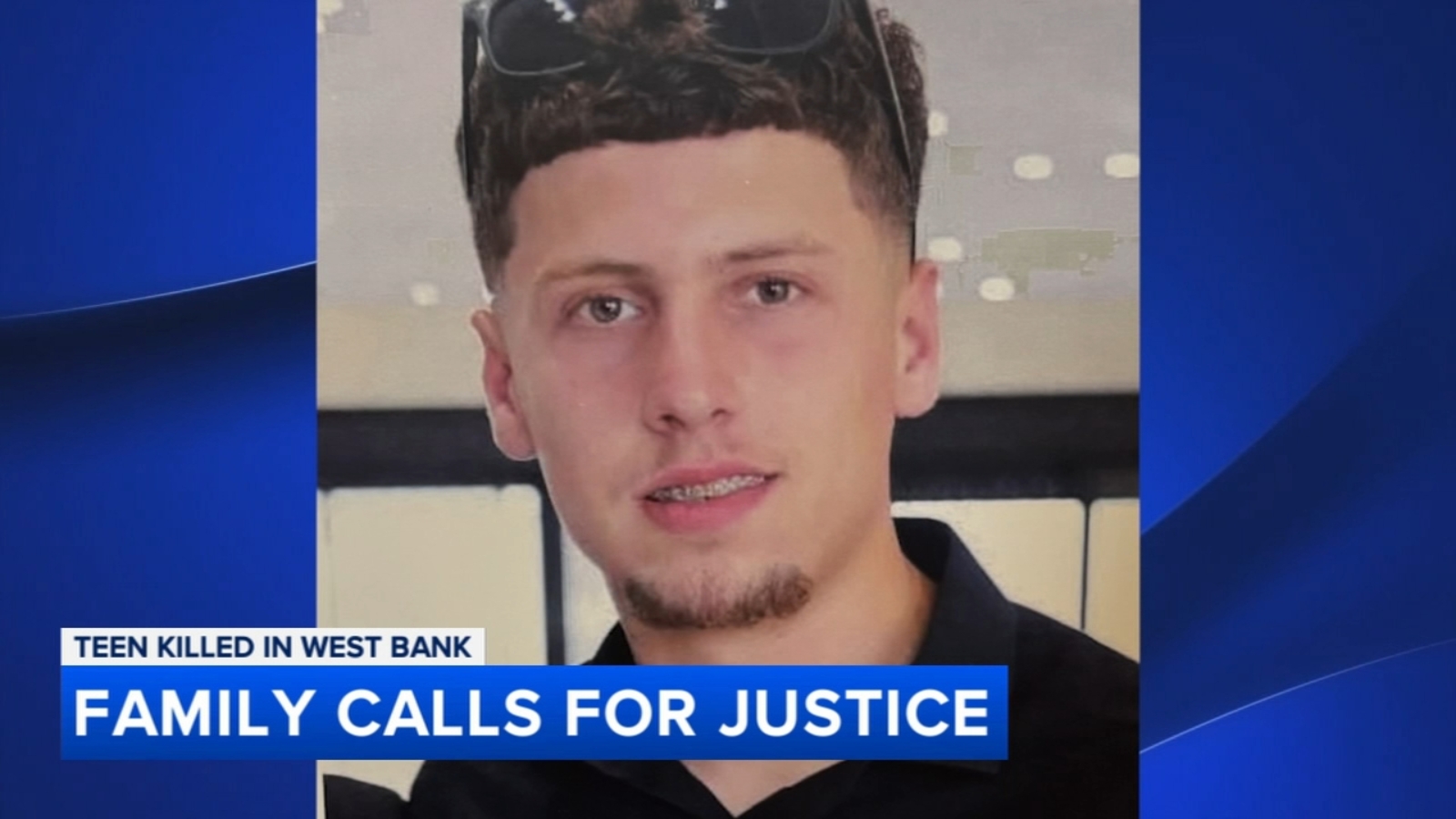
The family of a Philadelphia-born Palestinian American teenager who was shot and killed in the West Bank is mounting a passionate campaign for a federal investigation into his death, saying that American citizens deserve protection and accountability regardless of where they die. The case has ignited urgent conversations about the responsibilities of the U.S. government toward its citizens abroad and the broader issue of violence in occupied territories.
A Life Cut Short in the West Bank
Nasrallah Abu Siyam was just 19 years old when he was fatally shot on February 18 in his village in the West Bank. Born in Philadelphia and raised in the city during his earliest years, Siyam had moved to the West Bank as a young boy , a relocation his cousin described as common practice among Palestinian American families seeking to maintain ties to their ancestral homeland.
According to his relatives, Siyam was helping a neighbor protect his goats at the time of the shooting. Family members say he was killed by Israeli settlers, a claim that has intensified calls for transparency from both American and international authorities.
“When an American citizen is killed abroad, there must be accountability,” said Philadelphia City Councilmember Rue Landau during a public recognition of Siyam’s family at City Hall.
The Family’s Demand for a Federal Investigation
Relatives of the young man, joined by local leaders and advocacy organizations, gathered to announce their push for a comprehensive national investigation. They are urging the U.S. State Department, the Department of Justice, and elected officials at every level of government to take decisive action.
“The State Department should act, and all of our elected officials here should be raising their voices in the face of this injustice,” said Ahmet Tekelioglu of the Council on American Islamic Relations (CAIR), one of the organizations supporting the family’s efforts.
The family’s call for a federal investigation into the Palestinian American killed in the West Bank is not just about seeking justice for Nasrallah. His relatives say they want systemic change to ensure no other family endures the same painful absence of answers.
A Pattern of Unanswered Deaths
Cousin Abdelhamid Siyam painted a grim picture of what he described as an ongoing pattern of violence with no consequences. He noted that at least five Palestinian Americans have been killed in the region since February 2024, and none of those deaths have resulted in meaningful investigations or accountability.
“This is not the first Palestinian American killed, like five of them since February 2024. None of them have been investigated. None of them have been held accountable. None of them have been questioned,” Abdelhamid said.
This pattern, the family argues, points to a troubling gap in how the U.S. government responds to the deaths of American citizens of Palestinian descent abroad , a gap they are determined to close.
Local Government Responds
Philadelphia’s political establishment has begun to respond to the family’s advocacy. Councilmembers Rue Landau and Nicholas O’Rourke introduced a resolution calling for transparency and accountability in the case. The resolution was formally presented as Siyam’s relatives were recognized at City Hall, a moment that underscored both the local impact of the tragedy and the broader implications for Americans across the country.
Cousin Sayel Kayed emphasized that accountability must be pursued at every level of government.
“We need to pressure. Starts with council level of Philadelphia, then the state level, then the country level, our congressmen,” Kayed said.
Governor Shapiro Requests DOJ Involvement
Pennsylvania Governor Josh Shapiro took the family’s appeal seriously, sending a formal letter to the U.S. Department of Justice requesting an investigation into the circumstances surrounding Siyam’s death. In his correspondence, the governor noted that the killing may have constituted a violation of U.S. law , a significant legal argument that elevates the case from a foreign tragedy to a matter of domestic jurisdiction.
Shapiro’s intervention reflects a growing recognition among state leaders that American citizens killed abroad deserve the full weight of federal resources and legal authority, regardless of the geopolitical complexities surrounding their deaths.
The Complicating Factor of Regional Conflict
Even as the family pushes for justice, practical obstacles have complicated their efforts. Some relatives who traveled to the West Bank for Nasrallah’s funeral procession have been unable to return to Philadelphia because of airspace closures linked to the ongoing war in Iran. This logistical barrier has stranded family members in a conflict zone, adding emotional and physical distance to an already painful situation.
Those who have managed to return to the United States say their focus remains firmly on pursuing justice for Nasrallah. In addition to their advocacy with lawmakers, the family is also pursuing a civil case , a legal avenue that could potentially provide some measure of accountability even if criminal prosecutions remain elusive.
Broader Implications for Palestinian Americans
The case has cast a spotlight on the unique vulnerabilities faced by Palestinian Americans, a community that often finds itself navigating dual identities and complex geopolitical realities. For families with members living in both the United States and the West Bank, the threat of violence is not abstract , it is a lived reality that demands attention from policymakers.
Advocates argue that the U.S. government has a fundamental obligation to protect its citizens, no matter where they live or what their ethnic background may be. The failure to investigate the deaths of Palestinian Americans, they say, represents a form of selective enforcement that undermines the principle of equal protection under the law.
The Role of Advocacy Organizations
Organizations like CAIR have played a crucial role in amplifying the family’s demands and connecting them with legal resources and media attention. By framing the issue as one of civil rights and American citizenship , rather than purely a foreign policy matter , these groups have helped shift the public conversation toward accountability and justice.
This approach has proven effective in galvanizing local support. The combination of community advocacy, city council action, and state-level engagement demonstrates how a determined family can build momentum for change even in the face of significant geopolitical headwinds.
What Comes Next
As the family continues its campaign, several key developments will determine whether their efforts yield meaningful results:
- Federal response: Whether the Department of Justice formally opens an investigation into Siyam’s death
- Congressional engagement: Whether federal lawmakers from Pennsylvania and beyond publicly support the family’s calls for accountability
- Civil litigation: The progress of any civil case the family pursues against those responsible
- Policy changes: Whether the case prompts broader reforms in how the U.S. government responds to American citizens killed abroad
The outcome of this case could set an important precedent for how American institutions respond to violence against dual nationals and citizens living in conflict zones. For the Siyam family, the stakes could not be higher , not only because they seek justice for Nasrallah, but because they hope to establish protections that might save other lives in the future.
A Community United in Grief and Determination
Back in Philadelphia, the Palestinian American community has rallied around the Siyam family, transforming their private grief into a collective call for action. Vigils, public statements, and organized advocacy efforts have turned a single tragic death into a broader movement demanding that the United States live up to its obligations to all of its citizens.
The funeral procession held in the West Bank served as a powerful reminder of the transnational bonds that tie Palestinian American families together. Even as airspace closures kept some relatives apart, the shared commitment to seeking justice has kept them united in purpose.
Conclusion
The case of the Palestinian American killed in the West Bank represents far more than an isolated tragedy. It raises fundamental questions about citizenship, accountability, and the responsibilities of the United States government toward Americans living overseas. As the Siyam family continues their courageous fight for a federal investigation, they are also fighting for a broader principle: that no American life should be dismissed, and no American death should go unexamined, regardless of where it occurs.
With support from local officials, advocacy organizations, and state leaders like Governor Shapiro, the family has built a foundation for meaningful change. Whether that foundation will ultimately result in justice for Nasrallah Abu Siyam and systemic reform for how Palestinian American deaths abroad are handled remains to be seen. But the family’s unwavering determination has already ensured that their son’s story will not be forgotten , and that the call for accountability will continue to echo from Philadelphia to the halls of Washington, D.C.