
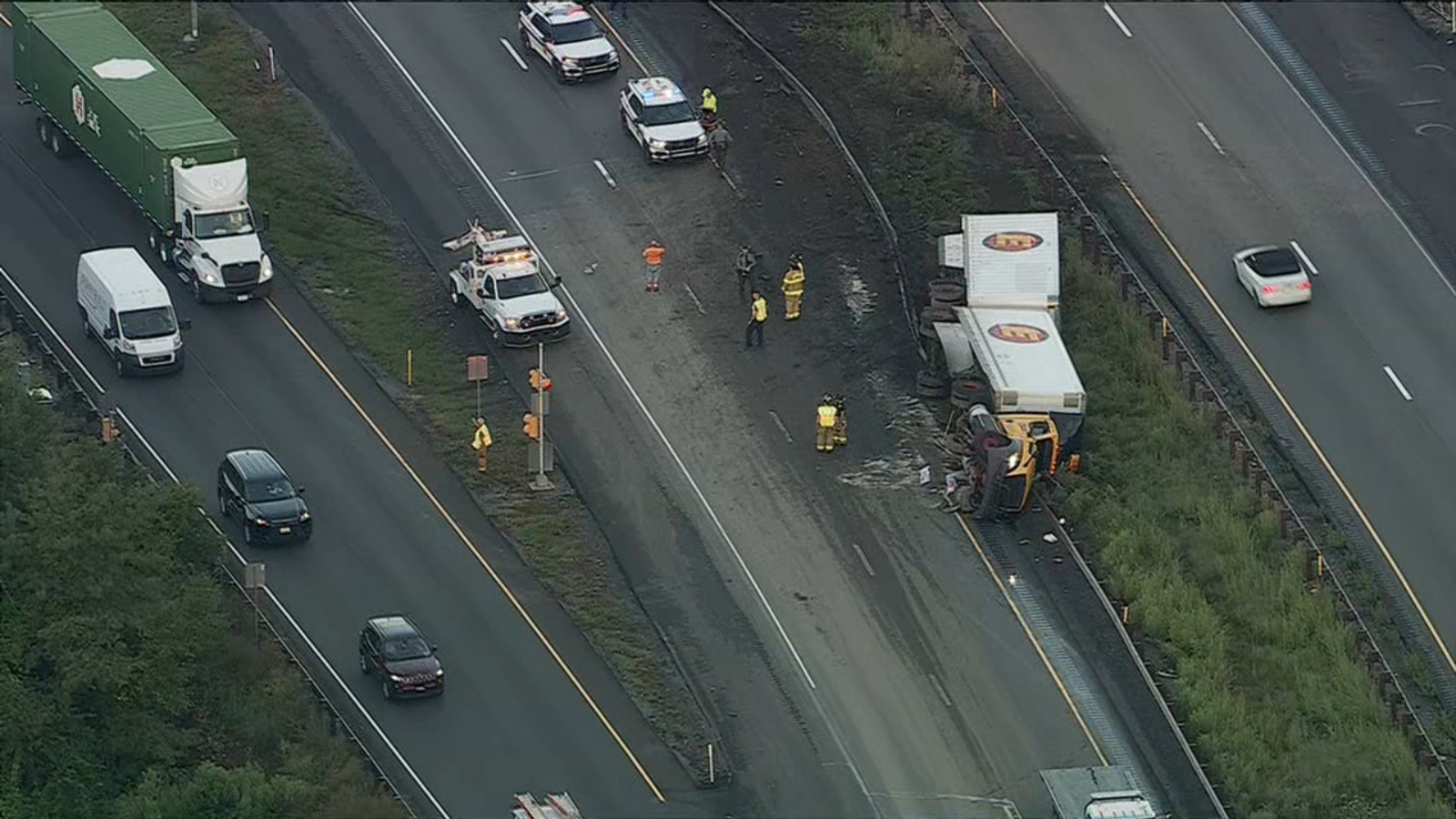
Drivers traveling along the Blue Route in Delaware County, Pennsylvania faced significant disruption on Friday morning after an overturned truck caused major traffic delays on the northbound lanes of Interstate 476. The incident, which occurred near the Media area, brought the morning commute to a crawl and left one lane closed while emergency crews worked to clear the wreckage and assist the driver. As authorities continue to manage the scene, commuters are urged to seek alternate routes and stay updated on local traffic reports.
What Happened on the Blue Route NB
At approximately 6:14 a.m. on Friday morning, emergency responders were dispatched to the scene of an overturned truck on I-476 northbound, commonly known as the Blue Route, at Exit 5 near Media in Delaware County. The early morning timing meant the incident coincided with the beginning of rush-hour traffic, compounding the congestion and creating headaches for thousands of commuters attempting to reach their destinations.
According to initial reports, the truck rolled over in the northbound lanes, blocking at least one travel lane and leaving a substantial cleanup operation in its wake. The Blue Route, which serves as a critical artery connecting the Pennsylvania suburbs to Philadelphia, sees heavy traffic volume throughout the day, making any major incident especially impactful for regional travel.
Details About the Driver
One of the most critical concerns following any commercial vehicle rollover is the welfare of the driver. In this case, the truck driver became entrapped inside the cab following the crash. Emergency responders, including local fire and rescue crews, worked quickly to extricate the individual from the wreckage. Reports confirm that the driver has since been successfully freed from the vehicle.
While the full extent of the driver’s injuries has not been publicly disclosed in the immediate aftermath of the incident, the successful extrication represents the most important outcome for first responders on the scene. Entrapment situations following commercial vehicle accidents can be complex, often requiring specialized equipment and careful coordination to safely remove victims without causing additional harm.
Traffic Impact and Lane Closures
Following the overturned truck incident, one lane of I-476 northbound was closed to allow emergency personnel to manage the scene, remove debris, and eventually clear the disabled vehicle. Lane closures on a heavily traveled highway like the Blue Route can create ripple effects throughout the surrounding road network, with traffic backing up for miles and drivers seeking alternative routes through local streets.
Motorists approaching the area reported significant delays, with some commuters experiencing extended travel times as vehicles navigated around the closure. The combination of the early morning timing, a commercial vehicle rollover, and reduced lane capacity created the perfect storm for traffic congestion in Delaware County.
Why Truck Rollovers Happen on Highways
Truck rollovers are among the most dangerous types of highway incidents, and understanding their causes can help drivers stay alert and safe when sharing the road with commercial vehicles. Several factors commonly contribute to these accidents, and examining them provides valuable context for incidents like the one on the Blue Route.
Common Causes of Commercial Vehicle Rollovers
- Excessive speed on curves , Trucks have a higher center of gravity than passenger vehicles, making them particularly susceptible to tipping when navigating curves or ramps at high speeds.
- Sudden evasive maneuvers , When truck drivers need to avoid obstacles or collisions, sharp steering inputs can cause trailers to swing or roll.
- Improperly loaded cargo , Uneven weight distribution or unsecured loads can shift during transit, destabilizing the vehicle and leading to rollovers.
- Driver fatigue , Long hours behind the wheel can impair reaction times and decision-making, increasing the risk of accidents.
- Weather conditions , Rain, ice, or strong winds can affect vehicle handling, particularly for high-profile commercial vehicles.
- Mechanical failures , Issues with brakes, steering, or tires can contribute to loss of control.
Investigators will likely review these and other factors as they work to determine the specific cause of the Blue Route incident. Commercial vehicle accidents often prompt thorough investigations by local police, state troopers, and sometimes federal agencies, particularly when injuries or significant property damage are involved.
Safety Tips for Drivers Near Overturned Trucks
When approaching the scene of an overturned truck or any major highway incident, drivers should exercise extreme caution to protect themselves, first responders, and other motorists. Here are essential safety practices to keep in mind when navigating through or around accident scenes.
Maintain Safe Following Distance
Sudden braking is common in traffic approaching accident scenes. Maintaining a generous following distance gives you additional time to react if vehicles ahead stop unexpectedly. The general rule of following at least three seconds behind the vehicle in front of you becomes even more important in congested or slow-moving traffic.
Reduce Speed Gradually
Avoid slamming on your brakes when you see traffic slowing. Gradual speed reduction helps prevent rear-end collisions, which are common secondary accidents in traffic backups. Use your brake lights early to alert drivers behind you of your deceleration.
Stay Alert and Avoid Distractions
Rubbernecking is a natural human tendency, but taking your eyes off the road to look at an accident scene dramatically increases your risk of causing a collision. Stay focused on the road ahead and resist the urge to stare at emergency operations.
Follow Posted Detours and Directions
If authorities have established detours or alternative routes, follow them carefully. Avoid the temptation to use shortcuts through residential neighborhoods unless specifically directed to do so, as this can create additional congestion and safety concerns in areas not designed for heavy traffic.
Move Over for Emergency Vehicles
Pennsylvania law requires drivers to move over or slow down when approaching emergency vehicles stopped on the roadside. This includes police cars, fire trucks, ambulances, and tow vehicles. Failing to do so can result in significant fines and endanger the lives of first responders working at the scene.
The Blue Route: A Vital Regional Artery
The Blue Route, officially designated as Interstate 476, plays a crucial role in the transportation infrastructure of southeastern Pennsylvania. Stretching from the Pennsylvania Turnpike in Plymouth Township to the Pennsylvania-Delaware border, the highway serves as a key connector for commuters traveling between the Philadelphia suburbs and points north and south.
The section near Media and Exit 5 is particularly busy during weekday mornings and evenings, as it provides access to numerous residential communities and business districts in Delaware County. When incidents like the overturned truck occur in this area, the impact on regional traffic can be substantial, affecting not just the highway itself but also surrounding local roads as drivers seek alternatives.
Common Alternate Routes During Blue Route Closures
When major incidents shut down lanes on the Blue Route, experienced commuters often turn to several alternate routes to navigate around the affected area. These can include:
- Route 1 (Baltimore Pike) , A parallel surface road that runs through much of Delaware County
- State Road and West Chester Pike , Offering alternative north-south travel options
- Interstate 95 , For longer-distance travel toward Philadelphia or Delaware
- Media Bypass and local roads through the borough of Media
Familiarizing yourself with these options before you need them can save valuable time during unexpected traffic disruptions.
Staying Updated on Traffic Conditions
For travelers in the Delaware County area and beyond, staying informed about current traffic conditions is essential for navigating the region’s complex road network effectively. Local news outlets, traffic apps, and transportation authority resources all provide valuable real-time information that can help you make informed decisions about your route and travel timing.
Apps like Waze and Google Maps offer crowd-sourced traffic data that often reflects incidents within minutes of their occurrence. Pennsylvania’s 511PA system also provides comprehensive traffic information, including construction updates, weather-related advisories, and incident reports throughout the state.
Conclusion
The overturned truck on the Blue Route NB near Media serves as a stark reminder of how quickly routine commutes can be disrupted by highway incidents. With the driver successfully extricated and recovery operations underway, the priority remains ensuring everyone reaches their destinations safely. As traffic patterns normalize and the affected lanes reopen, this incident underscores the importance of attentive driving, patience during congestion, and awareness of alternate routes. For commuters in Delaware County and the greater Philadelphia region, staying informed through reliable traffic sources remains the best strategy for navigating the unexpected challenges that come with sharing busy highways with commercial vehicles. Safe travels, and always remember to give yourself extra time and space when traveling near accident scenes or during periods of heavy congestion.