
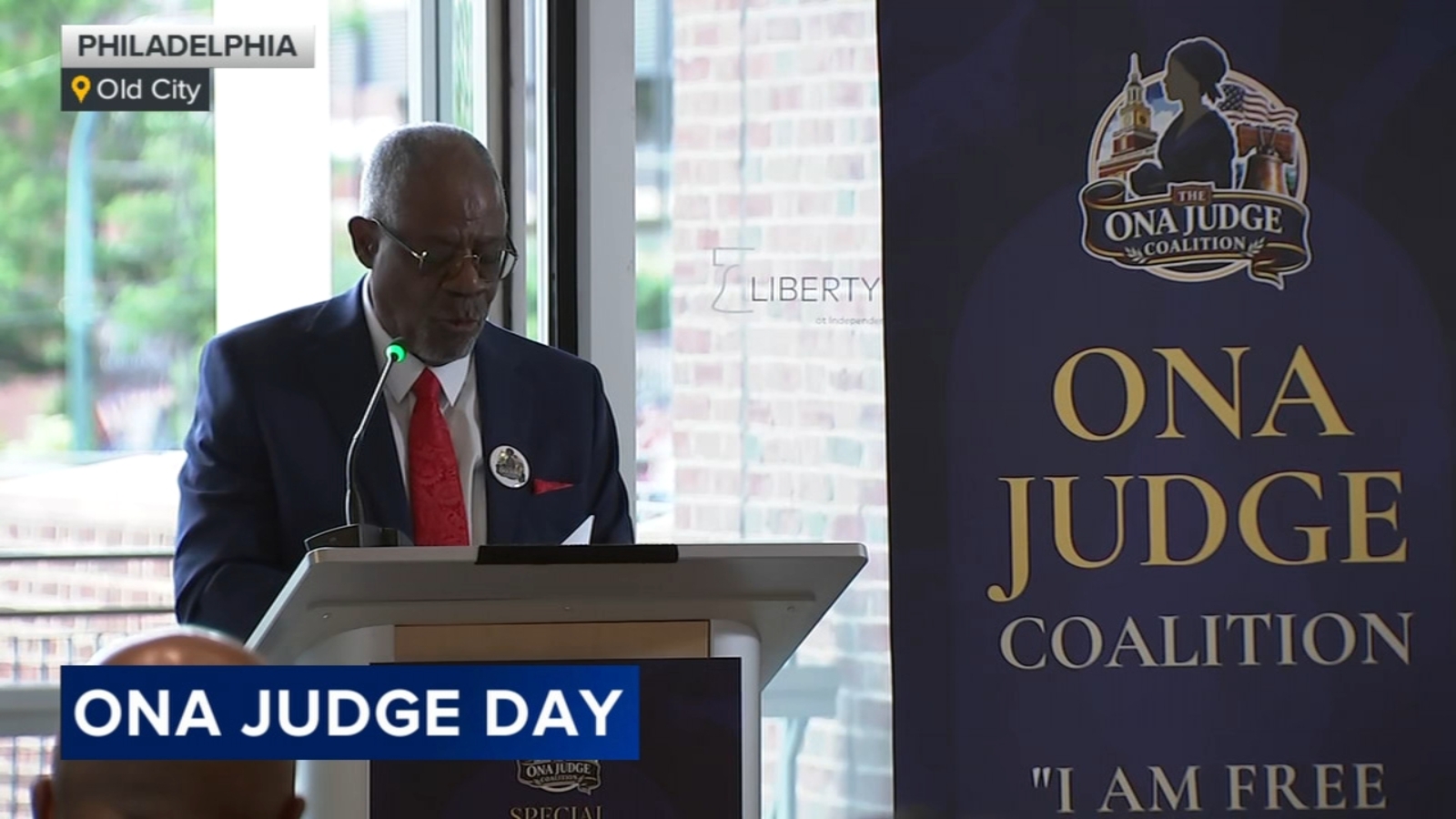
The City of Philadelphia has taken a powerful step toward correcting the historical record by proclaiming May 21st as Ona Judge Day. Announced at the Independence Visitors Center in Old City, this formal recognition honors an enslaved woman whose daring escape from the President’s House in 1796 has become one of the most compelling stories in early American history. The proclamation comes as the nation prepares to celebrate its 250th birthday, making this moment particularly significant for those seeking to tell a more complete and honest version of the American story.
The decision by Philadelphia officials represents more than a symbolic gesture. It acknowledges a woman whose courage, intelligence, and determination challenged the institution of slavery at the very heart of the new American republic. Her story, long overlooked by traditional historical narratives, is now being brought into the spotlight by dedicated advocates and historians who refuse to let her contributions be forgotten.
Who Was Ona Judge?
Ona Judge, also known as Oney Judge, was born into enslavement at the Mount Vernon plantation in Virginia. She was enslaved by George and Martha Washington, serving in their household from a young age. Unlike many enslaved people who worked in the fields, Ona was trained as a personal attendant, first for Martha Washington’s daughter and later for Martha herself. This proximity to the First Family gave her skills, exposure, and a perspective that would ultimately fuel her determination to live free.
As Martha Washington’s personal maid, Ona Judge traveled with the family to New York and then to Philadelphia when Philadelphia served as the nation’s temporary capital. During these years, she witnessed the formation of the new American government, the debates over liberty and freedom, and the contradictions between the nation’s founding ideals and the realities of slavery in America.
What made Ona’s situation particularly painful was that she had been promised her freedom upon Martha Washington’s death,a common, though legally tenuous, practice. When she learned that after Martha’s death she would likely be given to Martha Washington’s granddaughter rather than freed outright, Ona Judge made a decision that would change her life forever.
The Daring Escape of May 21, 1796
On May 21, 1796,exactly 230 years before Philadelphia’s proclamation,Ona Judge slipped away from the President’s House in Philadelphia while the Washingtons were preparing for dinner. She had been planning her escape for some time, and the opportunity finally arrived during a moment of distraction. With the help of free Black allies in the Philadelphia area, she made her way to Portsmouth, New Hampshire, where she would spend the rest of her life as a fugitive.
Why Portsmouth?
Portsmouth was chosen deliberately. Its location far from the reach of the Washingtons, its established community of free Black residents, and its distance from Virginia made it a practical refuge. New Hampshire had begun gradual emancipation earlier than many states, and free Black communities there offered some measure of safety and solidarity.
Her ona judge escape was not without consequence. George Washington, who had just signed the Fugitive Slave Act of 1793, actively pursued her return. He sent agents to New Hampshire and even attempted to lure her onto a ship through deception,a scheme that narrowly failed. Despite Washington’s considerable power and resources, Ona Judge successfully evaded recapture, living as a free woman until her death in 1848.
The Ona Judge Coalition and Modern Recognition
The Ona Judge Coalition has been instrumental in bringing national attention to her story. Composed of historians, educators, community advocates, and descendant communities, the coalition has worked tirelessly to ensure that Ona Judge receives the historical recognition she deserves. Their efforts have included educational programming, public art installations, and advocacy for official commemorations like the one in Philadelphia.
Officials with the coalition have stated that they are planning additional events as part of the nation’s 250th birthday to shine a spotlight on Judge and others whose stories have been marginalized in traditional accounts of American history. This includes:
- Educational workshops for schools and community groups
- Walking tours highlighting sites connected to slavery in early Philadelphia
- Panel discussions featuring historians and descendant communities
- Artistic performances and dramatic retellings of Ona Judge’s life
- Archival research initiatives to uncover additional historical records
The timing of this recognition is particularly meaningful. As the United States approaches its semitcentennial,250 years since the Declaration of Independence,there’s a growing movement to acknowledge that the founding story includes both the achievements of the Revolution and the lived experiences of those who were denied freedom within the new nation.
Philadelphia’s Complicated Historical Landscape
Philadelphia holds a unique place in this narrative. It was both the birthplace of American democracy and a city deeply entangled with the institution of slavery. The President’s House, where Ona Judge was enslaved, stood at what is now Independence Mall,mere steps from where the Declaration of Independence was debated and signed.
The irony was not lost on Ona Judge herself. Living in a household headed by a man who proclaimed liberty and freedom for all, she listened to debates about emancipation while remaining enslaved. She later reflected on this contradiction in an interview with a New Hampshire newspaper in 1845, stating that she had made up her mind to leave Washington because she was unhappy and wanted to be free.
The Significance of Official Recognition
Philadelphia’s proclamation of Ona Judge Day on May 21st carries multiple layers of meaning:
- Historical correction: It addresses the longstanding omission of enslaved people’s stories from official city commemorations.
- Educational opportunity: It provides a focal point for teaching about the realities of slavery during the founding era.
- Community healing: It acknowledges the trauma and resistance of those who lived through slavery.
- Contemporary relevance: It connects past struggles for freedom to ongoing conversations about justice and equality.
The Broader Context of Slavery and the Founding Era
Understanding Ona Judge’s story requires understanding the historical context of slavery in the late 18th century. While Philadelphia was a center of abolitionist activity,home to figures like Benjamin Franklin and the Free African Society,the city remained deeply connected to slavery. Many prominent Founding Fathers, including Washington, enslaved people even as they articulated principles of freedom.
The 1790s were a particularly complex period. The Fugitive Slave Act of 1793, signed by Washington himself, required the return of escaped enslaved people even from free states. This law made Ona Judge’s situation precarious, as she could be captured and returned at any moment. Her success in evading recapture, despite Washington’s persistent efforts, speaks to her resourcefulness and the support she received from free Black communities in New Hampshire.
The Power of Place in Memory
Philadelphia’s commitment to remembering Ona Judge represents an important shift in how cities approach public memory and historical commemoration. By officially recognizing the date of her escape, the city is making a statement that the locations associated with slavery,and with resistance to slavery,deserve as much attention as those associated with the founding documents.
What Ona Judge Teaches Us Today
The story of Ona Judge Philadelphia offers timeless lessons about courage, self-determination, and the complexities of American history. Her life challenges us to:
- Examine the contradictions between founding ideals and historical realities
- Recognize the agency of enslaved people in shaping their own lives
- Honor resistance as a legitimate response to oppression
- Expand our understanding of who belongs in our national story
Ona Judge was not a passive victim awaiting liberation from others. She was an active agent who assessed her situation, planned carefully, and took dramatic action to claim her own freedom. Her story reminds us that freedom has never been freely given,it has always required struggle, sacrifice, and the courage to act.
Looking Forward: The 250th Birthday and Beyond
As the nation approaches its 250th birthday, commemorations like Philadelphia’s Ona Judge Day proclamation offer a model for how America can mark this milestone more honestly and inclusively. The Ona Judge Coalition’s planned events will help ensure that this remarkable woman’s story reaches new audiences and inspires future generations.
This kind of recognition matters because historical memory is not neutral. Whose stories are told, whose contributions are acknowledged, and whose sacrifices are remembered,all of these shape our understanding of who we are as a nation. By officially designating May 21st as Ona Judge Day, Philadelphia has taken a meaningful step toward a more complete and truthful account of American history.
A Continuing Legacy
More than two centuries after her daring escape, Ona Judge continues to inspire. Historians like Erica Armstrong Dunbar, whose award-winning book “Never Caught” brought Judge’s story to wide public attention, have helped spark renewed interest in her life. Plays, podcasts, museum exhibits, and now official city proclamations all ensure that her legacy endures.
The proclamation of Ona Judge Day is not merely about honoring the past,it’s about committing to a future in which all Americans can see themselves in the nation’s story. Ona Judge’s courage, her refusal to accept the limits placed upon her, and her determination to live free remain as powerful and relevant today as they were in 1796.
As we reflect on her life and her lasting impact, May 21st now stands as an annual reminder that the American story includes many voices,some raised in triumph, others in protest, and some, like Ona Judge’s, in quiet but unbreakable determination to be free.