
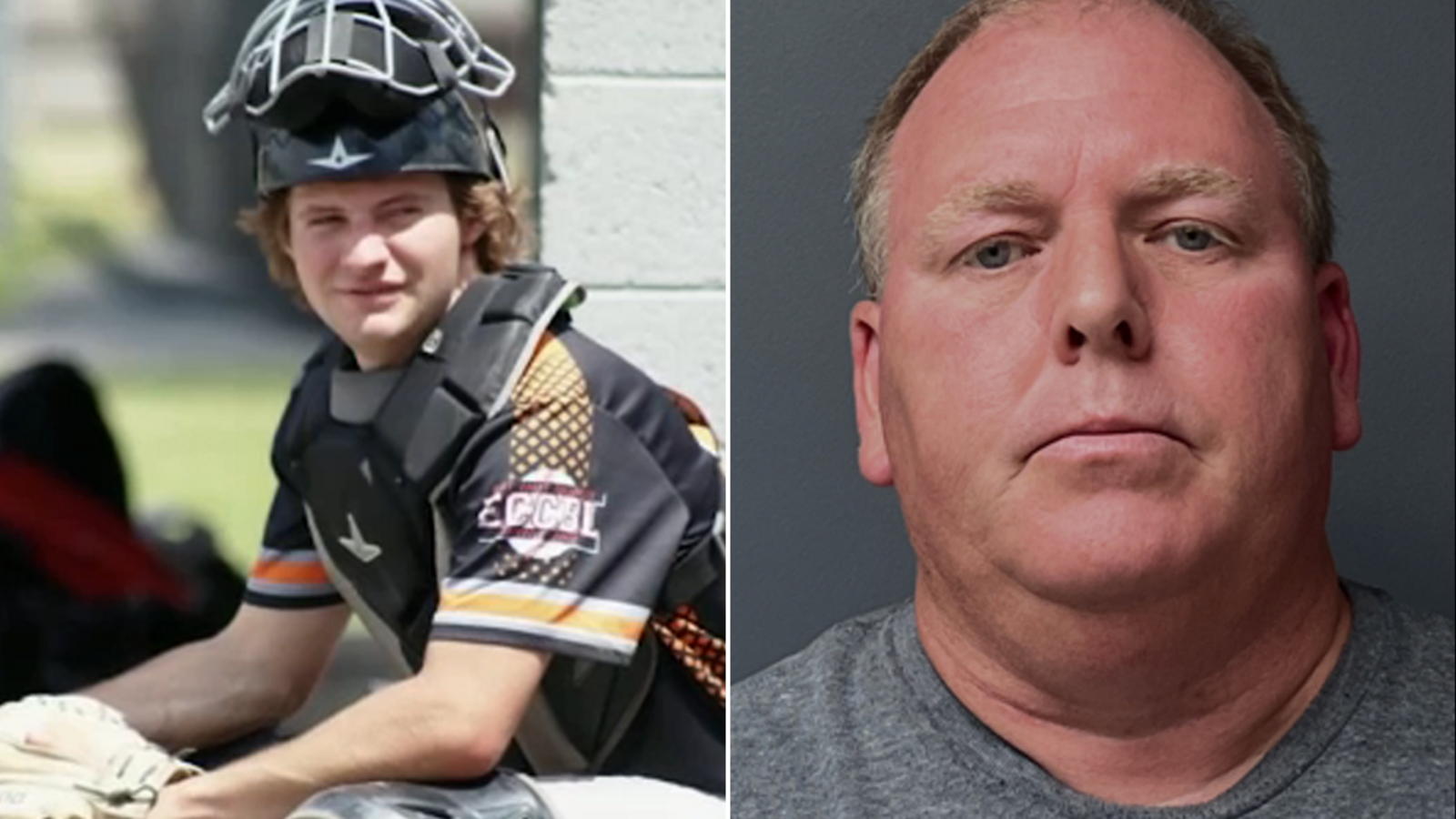
A Pennsylvania police officer is now facing a voluntary manslaughter charge following a fatal shooting that has shaken a community and raised serious questions about the use of deadly force by law enforcement. The case, which unfolded in Upper Pottsgrove Township, Montgomery County, has drawn national attention not only because of the tragic loss of life but also because of what investigators say was a significant discrepancy between what the officer claimed happened and what body camera footage actually revealed.
The Fatal Night: What Happened Before Police Arrived
The incident occurred in the early morning hours of Sunday, August 23. Glen Pysher IV, just 22 years old, had spent the evening out drinking with friends. According to Montgomery County District Attorney Kevin Steele, the group had the good sense to use a designated driver who dropped everyone off at a nearby home. Pysher, however, decided he wanted to continue the night at a different friend’s house approximately half a mile away.
What happened next proved to be a heartbreaking series of small errors with catastrophic consequences. Pysher became disoriented in the dark and wandered to the wrong home on Snyder Road. He began knocking on the back door, presumably trying to figure out where he was or attempting to get the attention of someone inside. The homeowners, startled and concerned by the late-night banging, did what many people would do , they called 911.
The Officer’s Response and the Shooting
Cpl. Sean Farrell, 58, was the first officer to arrive on the scene. Body camera footage released by the district attorney’s office shows that Farrell approached with his service weapon already drawn, using a mounted light to illuminate the area. He positioned himself behind a red car for cover.
What followed was a series of commands and actions that would ultimately form the basis of the criminal charge. Farrell ordered Pysher to put his hands up and to drop to the ground. A still image from the body camera shows Pysher with his hands clearly raised above his head. Yet Pysher continued walking toward the officer.
Farrell reportedly shouted another warning for Pysher to get on the ground. When Pysher continued approaching, the officer yelled, “Stop, or I’ll…” , and then fired his weapon before completing the sentence. Pysher was struck twice in the chest and collapsed approximately 17 to 20 feet from where Farrell was standing. He was not armed with any weapon.
The Investigation: A Gap Between Words and Evidence
Perhaps the most damning aspect of the case is what investigators discovered when they reviewed all the available evidence. According to D.A. Steele, immediately after the shooting, backup officers arrived on the scene. On the body camera audio, Farrell can allegedly be heard telling the other officers that “the guy charged me, screaming and yelling, and wouldn’t get down on the ground.”
However, the video evidence tells a very different story. The footage does not show Pysher charging at the officer, nor does it show him yelling or screaming in any aggressive manner. This contradiction between the officer’s verbal account and the visual record became a critical factor in the decision to file charges.
Ken Fulginiti, the attorney representing the Pysher family, did not mince words about the situation. “He lied; he flat out lied,” Fulginiti stated. Beyond the body camera footage, Fulginiti has expressed interest in obtaining additional evidence, including video and audio from Farrell’s patrol cruiser and from the home where the shooting took place.
Why a Taser or Baton Was Not Used
One of the central issues in the case is the officer’s choice to use lethal force when less-than-lethal options were readily available. Investigators noted that Farrell had both a Taser and an expandable baton on his utility belt, neither of which he deployed before firing his service weapon.
At the time of the shooting, Farrell was positioned safely behind a vehicle. Pysher’s hands were raised in the air. He was not armed. According to the district attorney’s analysis, this scenario did not meet the legal criteria for the use of deadly force by police.
“This was not a tense split-second decision where the wrong decision was made. This was a significantly reckless move on behalf of this officer,” Fulginiti said.
Understanding the Charge of Voluntary Manslaughter
The voluntary manslaughter charge against Farrell carries significant legal weight. In Pennsylvania, voluntary manslaughter generally applies when a person intentionally kills another, but does so under circumstances that would cause a reasonable person to become emotionally distraught, such as in the heat of passion, or when the killing results from an unreasonable but good-faith belief in the necessity of deadly force to defend oneself.
However, the application of this charge to a police officer involves additional layers of legal analysis. Officers are granted wide latitude in the use of force when they reasonably believe their life or the lives of others are in imminent danger. The prosecution’s argument in this case appears to focus on the fact that no such reasonable belief existed given the circumstances visible on the body camera footage.
D.A. Steele was careful to outline the specific legal framework that governs police use of deadly force. Officers may use lethal force when they face an imminent threat of death or serious bodily injury, when a suspect poses a significant threat of violence, or in certain other narrowly defined circumstances. The district attorney concluded that none of these conditions were met in the encounter with Pysher.
The D.A.’s Statement on Police Accountability
Steele’s remarks during the announcement of the charges made clear that he viewed this prosecution as part of his broader responsibility to the community.
“As the District Attorney, it is my role under the law to evaluate the totality of the circumstances of any fatal shooting by police and to determine whether that use of lethal force was justified under the law,” Steele explained. “The investigation found that Cpl. Farrell had less-than-lethal options on his utility belt that he did not employ, including a Taser. At the time of the shooting, the officer was a safe distance from Pysher behind a car, and the victim had his hands in the air and did not possess any type of weapon. Mr. Pysher was not a threat. This is not a legal use of deadly force, leading to the charge of voluntary manslaughter.”
The district attorney became visibly emotional when discussing the impact on Pysher’s family. Having spoken with them earlier in the day, Steele expressed his condolences and acknowledged the depth of their grief.
Community Reaction and the Human Cost
The tragedy has resonated deeply within the community and among those who knew Pysher personally. Friends have shared their memories of a young man they describe as kind, gentle, and full of life.
“No one would’ve ever expected this type [of thing] to happen to Bubba. Bubba was the sweetest kid ever,” said Chris Roskos, a friend of Pysher. Another friend, Evan Radomicki, struggled to find answers. “Why did this have to happen to such a great individual like Glenn was? It’s a question I’ll probably never figure out.”
The nickname “Bubba” speaks to the close-knit nature of Pysher’s friendships. Several of his friends were away at college when news of the shooting reached them, adding another layer of distance and grief to an already devastating situation.
Legal Proceedings and Bail Conditions
Following the announcement of the charges, Farrell turned himself in to Montgomery County detectives. His bail was set at 10% of $75,000, meaning he would need to post $7,500 to be released. As a condition of his release, Farrell is required to surrender all of his weapons to the Pennsylvania State Police.
His next court appearance is scheduled for September 10. The case will proceed through the Montgomery County Court of Common Pleas, where prosecutors will need to prove beyond a reasonable doubt that Farrell acted with the requisite mental state and circumstances to support a conviction for voluntary manslaughter.
Broader Implications for Policing and Accountability
This case highlights several ongoing conversations in American law enforcement. The presence of body-worn cameras has fundamentally changed how officer-involved shootings are investigated and prosecuted. Without the footage from Farrell’s body camera, the prosecution’s case would have relied heavily on the officer’s own account of events. With the footage, investigators could directly compare the officer’s statements to the visual evidence.
The case also raises important questions about de-escalation training, the use of less-than-lethal force options, and the criteria under which officers are authorized to discharge their firearms. While police work inherently involves moments of danger and split-second decision-making, prosecutors and civil rights advocates have increasingly scrutinized incidents where lethal force was used when alternative options appeared available.
For the families of victims of police shootings, cases like this one can offer a measure of accountability, though they can never truly compensate for the loss of a loved one. The pursuit of criminal charges against officers involved in fatal shootings remains relatively uncommon, which makes this prosecution notable.
Conclusion
The death of Glen Pysher IV represents a profound tragedy that has touched a family, a community, and raised difficult questions about the boundaries of police authority. The decision to charge Cpl. Sean Farrell with voluntary manslaughter reflects the district attorney’s conclusion that the use of deadly force was not legally justified under the circumstances. As the case moves through the courts, it will continue to prompt important discussions about policing, accountability, and the value of every human life. For Pysher’s family and friends, no legal outcome can undo the loss of a son and friend whose life was cut short at just 22 years old.