
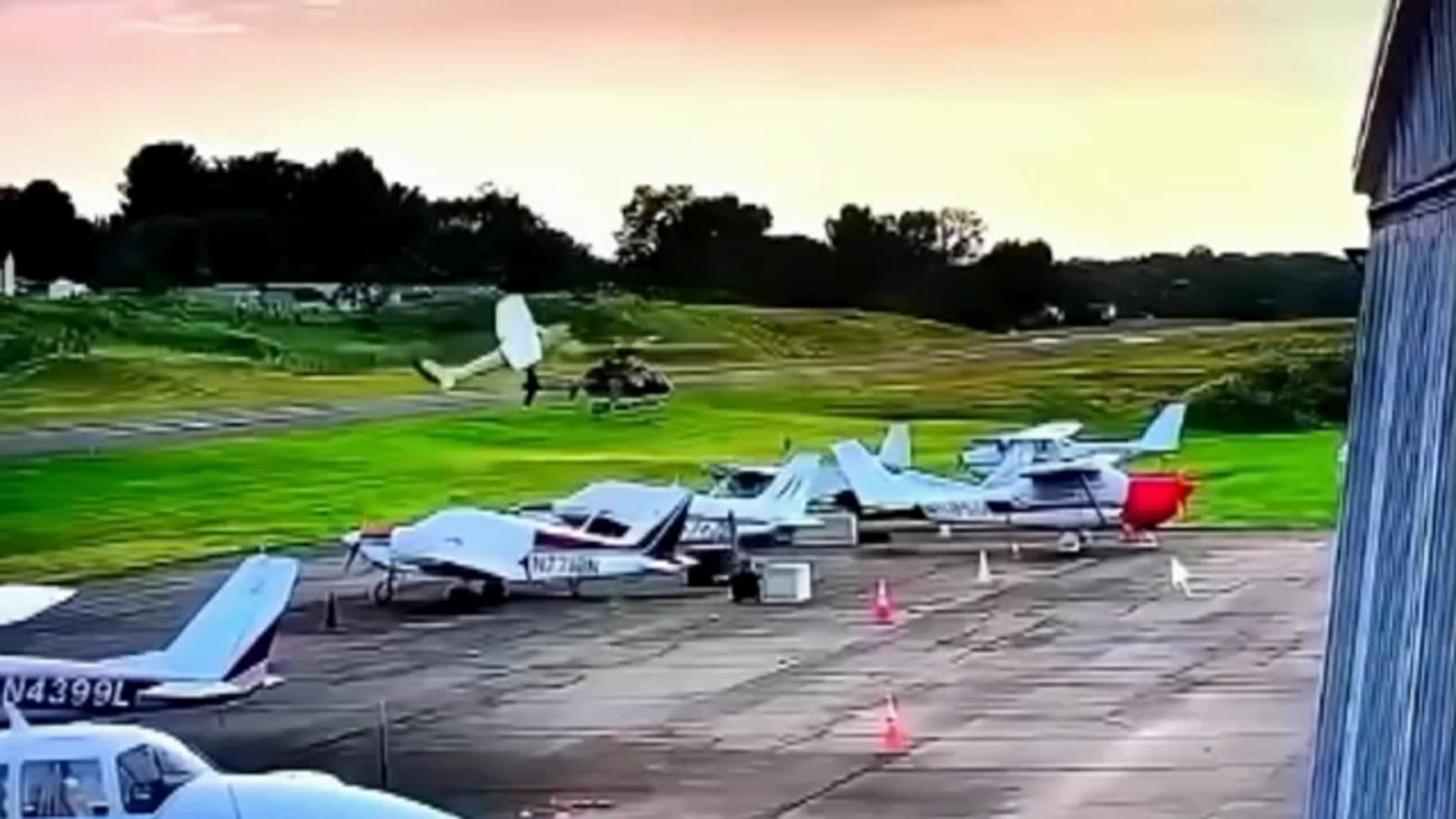
In a sobering update for the aviation community, the National Transportation Safety Board (NTSB) has released its preliminary findings on the midair collision that claimed one life at Carlisle Airport in Cumberland County, Pennsylvania. The report reconstructs the final seconds before a Cessna aircraft and a Pennsylvania State Police helicopter came together in a tragic encounter that has prompted renewed conversations about aviation safety protocols at small regional airfields.
What Happened on August 19
The collision occurred shortly before 7 p.m. on a summer evening, bringing together two aircraft in a sequence of events that unfolded in mere seconds. According to the NTSB preliminary report, the Cessna was on final approach to land at Carlisle Airport while the state police helicopter had already completed its landing and exited the active runway, hovering in a nearby field.
The helicopter crew was conducting a training flight and returning to the airport when they became aware of the incoming Cessna. What followed was a rapid series of communications and maneuvers that investigators say left little margin for error.
The Radio Exchange Between Aircraft
A witness who overheard radio transmissions between the two aircraft provided federal investigators with crucial insight into the moments leading up to the crash. According to the witness, the helicopter crew instructed the Cessna pilot to “extend his downwind,” an aviation maneuver that requires the pilot to continue flying parallel to the runway rather than turning toward the landing approach. This technique is commonly used to create additional spacing between aircraft when traffic warrants.
The Cessna pilot acknowledged the instruction, according to the report. The pilot of the small plane had also communicated that he was second in line to land, suggesting awareness of other traffic in the pattern.
The Critical Eight Seconds
One of the helicopter pilots told investigators that the crew received a Traffic Collision Avoidance System (TCAS) alert before visually spotting the approaching airplane. Despite this warning system, the situation deteriorated rapidly.
Airport surveillance video, which proved invaluable to the investigation, showed the airplane crossing the runway threshold approximately 30 seconds after the helicopter had crossed it. While the helicopter remained in the vicinity of the airfield, hovering near the runway, the Cessna never actually touched down.
Instead, the airplane continued along the runway before pitching up and beginning to climb. The NTSB report describes what happened next in painstaking detail:
“After the airplane reached the apex of its climb, about one wingspan above the runway, the right wing dropped and the airplane immediately turned right and descended toward the northwest.”
Still images captured from two of the airport’s security cameras show the time, locations, and orientation of both aircraft as well as their relative positions in the final moments before impact.
The Moment of Impact
Investigators determined that the helicopter was hovering approximately 50 feet north of the runway when the airplane leveled its wings, rapidly pitched up, and struck the rear section of the helicopter. The collision sheared off the tail rotor and main rotor blades of the helicopter.
Perhaps most striking about the entire sequence is the timeframe: the NTSB reported that only about eight seconds elapsed between the time the helicopter exited the runway surface and the catastrophic collision.
The helicopter crew told investigators that they were unable to see the approaching Cessna before impact because the airplane was positioned behind them. This blind spot proved fatal.
Aftermath and Investigation Findings
The consequences of the midair collision were devastating for both aircraft. The Cessna broke apart into four major pieces upon impact, while the helicopter’s rotor and tail blades separated from the aircraft body. The violence of the collision underscored how unforgiving aviation can be when margins shrink to mere feet and seconds.
Wreckage Recovery and Mechanical Inspection
Federal investigators confirmed that teams recovered all major wreckage components from the scene. Flight data was successfully retrieved from both aircraft, and post-accident examination revealed no evidence of any pre-impact mechanical malfunctions or failures that would have precluded normal operation of either plane.
This finding is significant because it effectively rules out equipment failure as a contributing factor, placing greater emphasis on procedural, communication, and visual awareness issues in the moments before the crash.
The Human Toll
The collision resulted in contrasting outcomes for the pilots involved. Both pilots aboard the Pennsylvania State Police helicopter suffered injuries but have since been released from the hospital. A second trooper’s release from medical care was confirmed in subsequent days, marking a hopeful turn for the law enforcement aviation team.
Tragically, the pilot of the Cessna did not survive. He has been identified as Dr. Paul Sokoloski, 57, of Hershey, Pennsylvania. His death has sent ripples through both the local community and the broader aviation world, serving as a stark reminder of the risks faced by general aviation pilots every time they take to the skies.
Broader Implications for Aviation Safety
While the NTSB’s preliminary report lays out the factual sequence of events, it does not yet assign probable cause or make final recommendations. However, several aspects of the incident are likely to draw scrutiny from safety advocates and training professionals.
Communication and Spacing at Small Airports
The decision to instruct the Cessna pilot to extend his downwind suggests the helicopter crew was aware of potential spacing concerns. However, the subsequent positioning of both aircraft in close proximity to the runway raises questions about how traffic separation is managed at smaller airfields without control towers.
Many regional airports like Carlisle operate without traditional air traffic control, relying instead on pilot-to-pilot communication over a common radio frequency (often called CTAF, or Common Traffic Advisory Frequency). This system places enormous responsibility on individual pilots to maintain situational awareness and follow established traffic patterns.
The Limits of Technology
The fact that the TCAS system provided an alert but did not prevent the collision highlights the limitations of even modern safety technology. While TCAS is designed to alert pilots to potential collision threats, it cannot replace visual awareness and proper traffic pattern procedures. In this case, the helicopter crew reportedly did not see the approaching Cessna in time to take evasive action.
What Comes Next in the Investigation
Investigators have indicated that data cards recovered from both aircraft will soon undergo detailed analysis. This information could provide additional insight into the aircraft’s speed, altitude, and configuration in the moments leading up to impact. Voice recordings from the radio transmissions may also be reviewed to better understand the verbal coordination between the pilots.
The NTSB’s investigation remains ongoing, and a final report with probable cause determination typically takes several months to over a year to complete. In the meantime, the preliminary findings already offer a detailed window into how rapidly a routine training flight and a landing approach can turn tragic.
Honoring a Loss While Pursuing Answers
For the family of Dr. Sokoloski, the friends of those injured, and the tight-knit community of aviators in central Pennsylvania, this accident has left deep wounds. The NTSB’s preliminary report, while clinical in its presentation, represents the first formal accounting of how an ordinary evening flight ended in catastrophe.
As investigators continue their work, the broader aviation community will be watching closely. Every midair collision, regardless of scale, contributes to a body of knowledge that shapes training standards, airspace regulations, and pilot procedures. The lessons drawn from this tragedy may ultimately influence how similar situations are managed at small airports across the country.
For now, the final moments before the midair collision at Carlisle Airport have been documented in painstaking detail. Eight seconds. Two aircraft. One life lost. The aviation world waits for the fuller picture to emerge from the continuing investigation.