
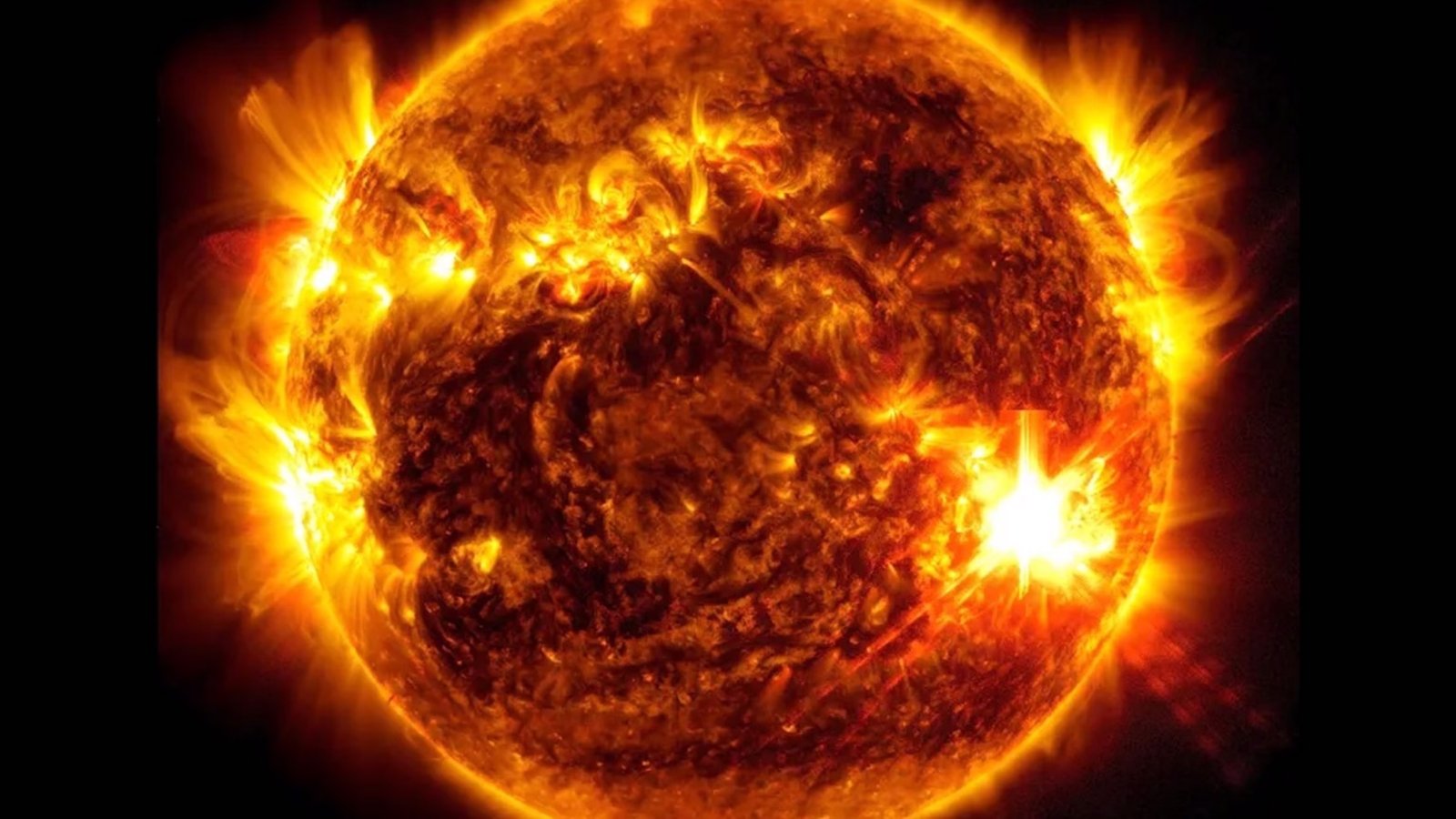
If you’ve ever dreamed of witnessing the northern lights without booking a trip to Iceland or Norway, tonight might be your chance. A rare combination of three coronal mass ejections is barreling toward Earth, triggering a strong geomagnetic storm that could push the aurora borealis visible as far south as 16 U.S. states. From Illinois to Oregon, skywatchers across the country are gearing up for what could be one of the most spectacular celestial displays of the year.
The National Oceanic and Atmospheric Administration’s (NOAA) Space Weather Prediction Center has issued alerts for a level G3, or “strong,” geomagnetic storm expected to peak Thursday evening and possibly extend into the overnight hours. Here’s everything you need to know about catching this extraordinary show.
What Are the Northern Lights and Why Are They Lighting Up So Far South?
The northern lights, also known as the aurora borealis, are nature’s most mesmerizing light show. They occur when charged particles from the sun collide with gases in Earth’s atmosphere, creating dancing ribbons of green, purple, pink, and red light across the night sky.
Typically, this phenomenon is reserved for high-latitude regions near the Arctic Circle. But during periods of intense solar activity, the auroral oval expands southward, allowing millions more people to witness the spectacle. Tonight’s event is shaping up to be one of those rare opportunities.
The Science Behind Auroras
When the sun releases bursts of energy and magnetic plasma, these particles travel through space and interact with Earth’s magnetosphere. The result is a stunning visual display that has captivated humans for millennia. The colors you see depend on which atmospheric gases are being excited:
- Green – the most common color, produced by oxygen molecules at lower altitudes
- Red – oxygen at higher altitudes
- Purple and blue – nitrogen molecules
- Pink and magenta – a mix of nitrogen and oxygen interactions
Three Coronal Mass Ejections Are Headed Our Way
What makes this aurora forecast particularly exciting is the rare arrival of three coronal mass ejections (CMEs) in quick succession. All three left the sun on June 2, and forecasters expect them to merge into what’s known as a “combination event” as they approach Earth.
What Is a CME?
A coronal mass ejection is a massive eruption of plasma and magnetic field from the sun’s outer atmosphere, or corona. These billion-ton clouds of charged particles can travel at speeds exceeding a million miles per hour. When directed toward Earth, CMEs can compress our planet’s magnetic field and trigger geomagnetic storms that fuel spectacular auroral displays.
The Rare “Combination Event”
The third CME in this sequence is the fastest of the three and is expected to catch up and merge with the first two before reaching Earth. This creates an unusually powerful combined front of solar material, amplifying the storm’s potential intensity. According to NOAA, forecasters are highly confident the CMEs will arrive, though the exact strength remains uncertain due to the complex interactions between the merging plasma clouds.
16 States With Potential Aurora Visibility Tonight
NOAA’s space weather models indicate that auroras could be visible across a wide swath of the United States. The forecast map suggests sightings from Illinois all the way west to Oregon. Here’s the breakdown of states that could potentially witness the northern lights tonight:
- Washington
- Oregon
- Idaho
- Montana
- Wyoming
- North Dakota
- South Dakota
- Nebraska
- Minnesota
- Iowa
- Wisconsin
- Illinois
- Michigan
- New York
- Vermont
- New Hampshire
Under more severe conditions, the aurora could push even farther south. Previous G4-level storms have produced sightings as far south as Alabama and Northern California, so residents in mid-latitude states should remain hopeful.
Understanding Geomagnetic Storm Levels: G3 vs. G4
NOAA uses a five-level scale to classify geomagnetic storms, ranging from G1 (minor) to G5 (extreme). Tonight’s event is forecast at G3, or “strong”, which is significant enough to produce widespread auroras but generally manageable from an infrastructure standpoint.
What G3 Storms Mean for Technology
A G3 storm isn’t just about pretty lights. It can have tangible effects on modern technology, including:
- Voltage corrections required on some power systems
- Intermittent satellite navigation issues (GPS)
- Low-frequency radio navigation disruptions
- Potential interference with HF radio communications
Astronauts aboard the International Space Station may also receive elevated radiation exposure during strong solar events.
The Possibility of G4 (Severe) Conditions
There’s a meaningful chance that storm levels could reach G4, or “severe,” especially if the merged CMEs turn out to be more directly Earth-facing than current models predict. A G4 event would intensify all the impacts mentioned above and could cause widespread voltage control problems on power grids, more significant satellite navigation disruptions, and surface charging issues on spacecraft.
The good news for skywatchers? A stronger storm means a more vibrant and far-reaching aurora display.
When and Where to Watch Tonight
Timing is everything when chasing the northern lights. Even with a strong geomagnetic storm in progress, you need to be in the right place at the right time to catch the show.
Best Viewing Times
According to NOAA, the optimal window for viewing the aurora borealis in the continental U.S. is generally between 10 p.m. and 4 a.m. local time. The mid-afternoon ET arrival of the CMEs means the storm should be fully engaged by late evening, with peak activity likely occurring in the overnight hours.
Tips for the Best Viewing Experience
To maximize your chances of witnessing this rare event:
- Get away from city lights. Light pollution is the aurora’s biggest enemy. Drive to the darkest location you can reasonably access.
- Find a clear northern horizon. Auroras typically appear low on the northern horizon at lower latitudes, so a wide-open view is essential.
- Check the weather. Cloud cover can ruin even the most spectacular displays. Monitor local forecasts for clear skies.
- Be patient. Auroras can come in waves, with lulls between active periods. Plan to stay out for at least a couple of hours.
- Use your phone camera. Modern smartphone cameras can capture auroras even when they’re invisible to the naked eye. Set up a long exposure and see what appears.
- Dress warmly. If you’re in a northern state in June, temperatures can still drop significantly overnight.
Potential Impacts on Technology and Infrastructure
While the focus tonight will be on the visual spectacle, it’s worth noting that geomagnetic storms can have real-world consequences. The strongest storms in history, such as the 1989 Quebec event, have caused power outages affecting millions. The 2003 Halloween storms disrupted satellite communications and airline routes.
Today’s infrastructure is more resilient than ever, with power grid operators taking preventive measures when strong solar storms are forecast. Airlines may reroute polar flights to avoid communication blackouts, and satellite operators may put spacecraft into safe modes to protect sensitive electronics.
For most people, however, the only impact will be a stunning night sky and perhaps some unusually beautiful photos to share on social media.
A Historic Year for Solar Activity
Tonight’s event comes during what astronomers have called an exceptionally active solar period. The sun is currently near the peak of Solar Cycle 25, an 11-year cycle of activity that has already produced multiple X-class solar flares and significant geomagnetic storms.
Just recently, the sun released the largest solar radiation storm in over 20 years, underscoring how dynamic our nearest star has become. With several more years of peak activity potentially ahead, opportunities to see the northern lights at lower latitudes will likely continue throughout this decade.
Conclusion
Tonight represents a rare and remarkable opportunity for millions of Americans to witness the northern lights without leaving home. With three coronal mass ejections combining forces and a strong G3 geomagnetic storm expected, the stage is set for one of the most memorable aurora events in recent memory. Whether you’re in Seattle, Chicago, or somewhere in between, take a moment to look up tonight.
Find a dark spot, face north, and prepare to be amazed. The universe is putting on a show, and the seats are free. Just don’t forget your camera, your warmest jacket, and a little patience. Clear skies and happy aurora hunting!