
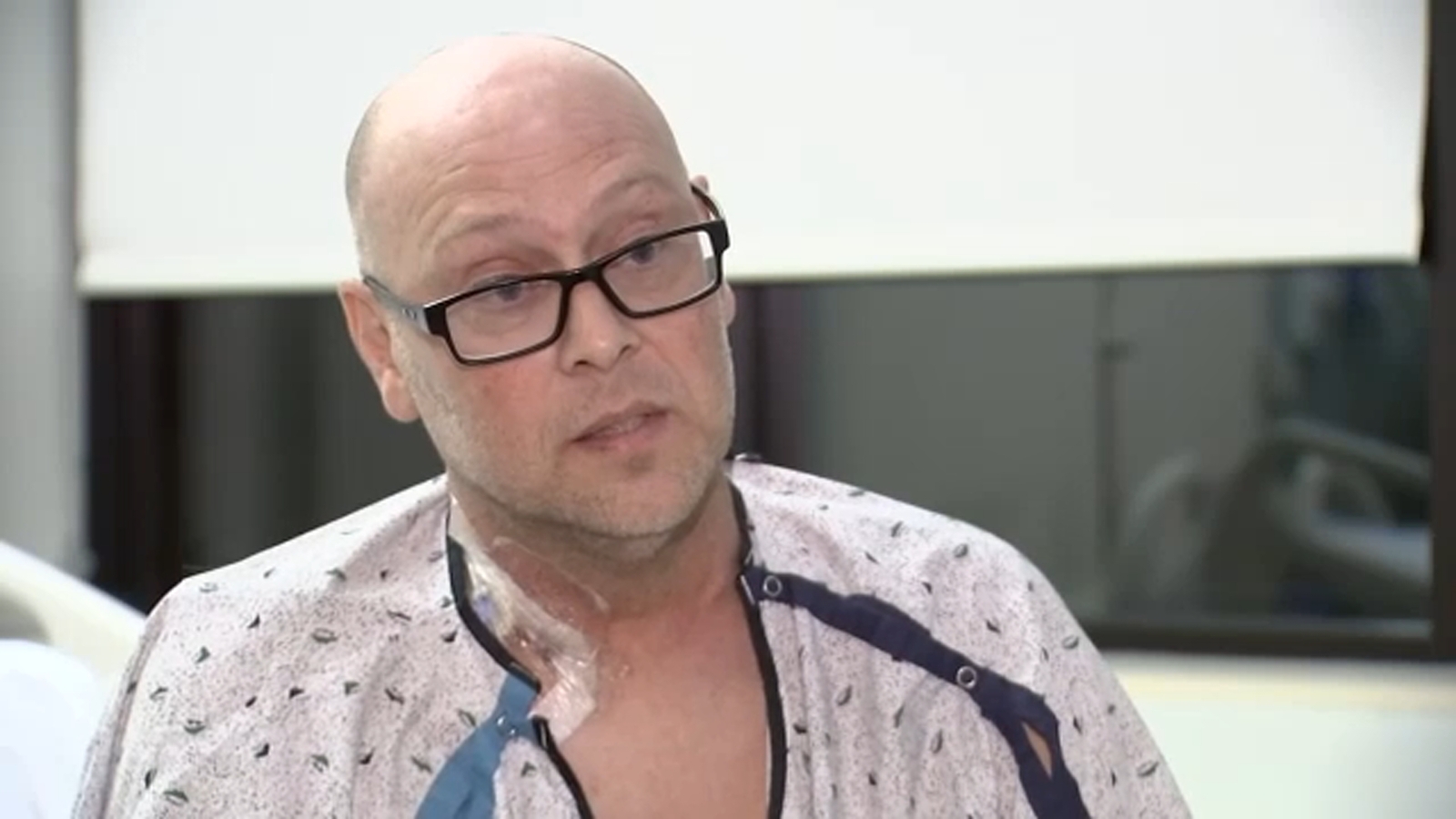
A 49-year-old Montgomery County business owner is fighting for his life after being diagnosed with necrotizing fasciitis, an extraordinarily rare and aggressive flesh-eating bacterial infection that has kept him hospitalized for weeks. Peter Atkinson of North Wales has been receiving intensive care at Doylestown Hospital since December 19, after what initially felt like a routine bout of the flu turned into a life-threatening medical emergency that required emergency surgery, intubation, and ongoing dialysis treatment.
A Father’s Ordeal Begins With Flu-Like Symptoms
The Atkinson family’s world was turned upside down in mid-December when Peter, the owner of a local towing company, began experiencing what he believed were common cold or flu symptoms. Within hours, his condition worsened dramatically. He developed a high fever that spiked to 104 degrees and noticed an alarming mass forming in his chest area. Trusting his instincts, Atkinson sought medical attention at Doylestown Hospital, a decision that medical professionals later credited with saving his life.
“How did I get this? How did this happen? Apparently, it’s rare, but it’s not that rare because it happened to me,” Atkinson said from his hospital bed. His candid reflection underscores how quickly this devastating condition can strike even healthy, active individuals without warning.
Understanding Necrotizing Fasciitis: A Medical Emergency
Necrotizing fasciitis is a severe bacterial infection that spreads rapidly through the body’s soft tissue, including the fascia,the connective tissue surrounding muscles, nerves, fat, and blood vessels. Despite its rarity, with only a few thousand cases reported annually in the United States, this flesh-eating bacteria carries a mortality rate that can climb significantly without immediate medical intervention.
What Makes This Infection So Dangerous
Several characteristics make necrotizing fasciitis particularly lethal. The infection progresses at an alarming rate, with bacteria destroying tissue so quickly that even aggressive treatment may not keep pace. Common bacterial culprits include Group A Streptococcus (often called “flesh-eating bacteria”), Staphylococcus aureus, and various other organisms that can enter the body through seemingly minor cuts, scrapes, or even surgical wounds.
Once the bacteria enter the body, they release toxins that:
- Destroy surrounding tissue directly
- Trigger an overwhelming immune response
- Cut off blood flow to affected areas
- Lead to widespread systemic complications
The infection can develop from something as small as a paper cut, an insect bite, or a minor abrasion. In some cases, no visible entry point can be identified, which makes prevention particularly challenging.
Early Warning Signs to Recognize
Medical experts emphasize that recognizing the early symptoms of necrotizing fasciitis can mean the difference between life and death. Unlike common skin infections that remain localized, this condition presents with rapidly escalating symptoms that should prompt an immediate emergency room visit.
Key warning signs include:
- Severe pain that seems disproportionate to any visible injury or wound
- Rapid swelling and redness that spreads quickly across the skin
- High fever accompanied by chills and flu-like symptoms
- Skin discoloration, including purple, dark, or black patches
- Blisters or ulcers that develop rapidly
- Fatigue, dizziness, or confusion as the infection progresses
Atkinson’s experience mirrors these classic warning signs. His initial flu-like symptoms escalated within hours to a point where medical staff recognized the urgency of his situation almost immediately upon examination.
Emergency Surgery and the Race Against Time
When Atkinson presented his symptoms to the medical team at Doylestown Hospital, the response was swift and decisive. According to Atkinson, doctors recognized the severity of his condition within minutes, ordering emergency intubation and rushing him into surgery.
“I showed them, and it was like, wow, not even five minutes later, he came and said, ‘We have to do emergency surgery. We’re going to intubate you,'” Atkinson recalled.
This rapid response exemplifies the critical nature of treating necrotizing fasciitis. Surgical debridement,the removal of infected and dead tissue,remains the cornerstone of effective treatment. The procedure often requires multiple operations as surgeons work to halt the infection’s spread and save as much healthy tissue as possible. In severe cases, amputation of affected limbs may be necessary to prevent the bacteria from reaching vital organs.
Complications: When Sepsis Develops
Perhaps the most dangerous complication of necrotizing fasciitis is the development of sepsis, a life-threatening response to infection that causes the body to attack its own tissues and organs. Atkinson’s case took this troubling turn, with the infection progressing to sepsis and causing his kidneys to fail.
For his family, this development carried devastating echoes of past tragedy. His sister, Marietta Atkinson, revealed that the family lost another sibling to sepsis in 2016 under similar circumstances.
“Probably one of the most traumatic events in our life, second traumatic event. In 2016, we lost our sister to sepsis, very similar to what Pete had,” she said.
According to the Centers for Disease Control and Prevention, sepsis affects approximately 1.7 million adults in America each year and contributes to hundreds of thousands of deaths. The condition requires aggressive treatment with broad-spectrum antibiotics, intravenous fluids, and organ support therapies.
A Family’s Emotional Journey
Beyond the physical battle, Atkinson and his loved ones have faced an emotional ordeal that has tested their resilience. His wife, Sherri Paulson-Atkinson, described the heart-wrenching experience of watching her husband,the family’s primary provider and a man known for his tireless work ethic,lying helpless in a hospital bed.
“My husband is a fighter, he’s a go-getter, he is always busy, and to see him laying there like that was really hard for me,” she said.
The family’s pain is compounded by uncertainty. Atkinson remains on dialysis as his kidneys recover, faces additional surgical procedures, and will eventually transition to a rehabilitation facility for continued recovery. The timeline for his return to normal life remains unclear, leaving the family in a state of anxious anticipation.
Signs of Hope on Christmas Day
Despite the severity of his condition, Atkinson began showing promising signs of improvement on Christmas Day. While the family maintains cautious optimism, each small victory represents a meaningful step forward in a recovery that will likely span months rather than weeks.
“He does everything for us, and we just need him back,” Paulson-Atkinson said, capturing the universal hope of families facing medical crises.
Community Rallies Around the Family
As Atkinson fights his battle in the hospital, the broader community has stepped forward to support his family during this challenging period. Unable to operate his towing company, Atkinson faces a prolonged absence from work with mounting medical bills and everyday expenses to cover.
A close friend launched an online fundraising campaign that has already generated approximately $13,000 in donations. The response left Atkinson overwhelmed with gratitude.
“The amount of people that have touched me just in the last couple of days,I can’t fathom the help,” he said.
The Broader Lessons of One Man’s Survival
Peter Atkinson’s story serves as a powerful reminder that necrotizing fasciitis, while rare, remains a genuine threat that can affect anyone regardless of age, health, or lifestyle. His experience highlights several critical lessons:
- Trust your instincts: If something feels wrong with your health, seek medical attention without delay. Atkinson’s decision to go to the hospital likely saved his life.
- Recognize the warning signs: Severe pain, rapid swelling, high fever, and skin discoloration warrant immediate emergency evaluation.
- Time is tissue: Every hour matters when dealing with necrotizing fasciitis. The faster treatment begins, the better the chances of survival and limb preservation.
- Community matters: Medical crises affect entire families and communities. Support systems, whether emotional or financial, play crucial roles in recovery.
Conclusion
As Peter Atkinson continues his recovery at Doylestown Hospital, his journey stands as a testament to both the devastating power of necrotizing fasciitis and the resilience of the human spirit. From a tow truck business owner to a critically ill patient fighting for his life, his story has touched countless individuals across Montgomery County and beyond. With his family by his side, a supportive community behind him, and a dedicated medical team providing care, Atkinson faces the long road ahead with the same determination that has defined his life. His experience reminds us all that rare infections can strike without warning, that early intervention saves lives, and that in moments of crisis, the bonds of family, friendship, and community can carry us through even the darkest of times.