
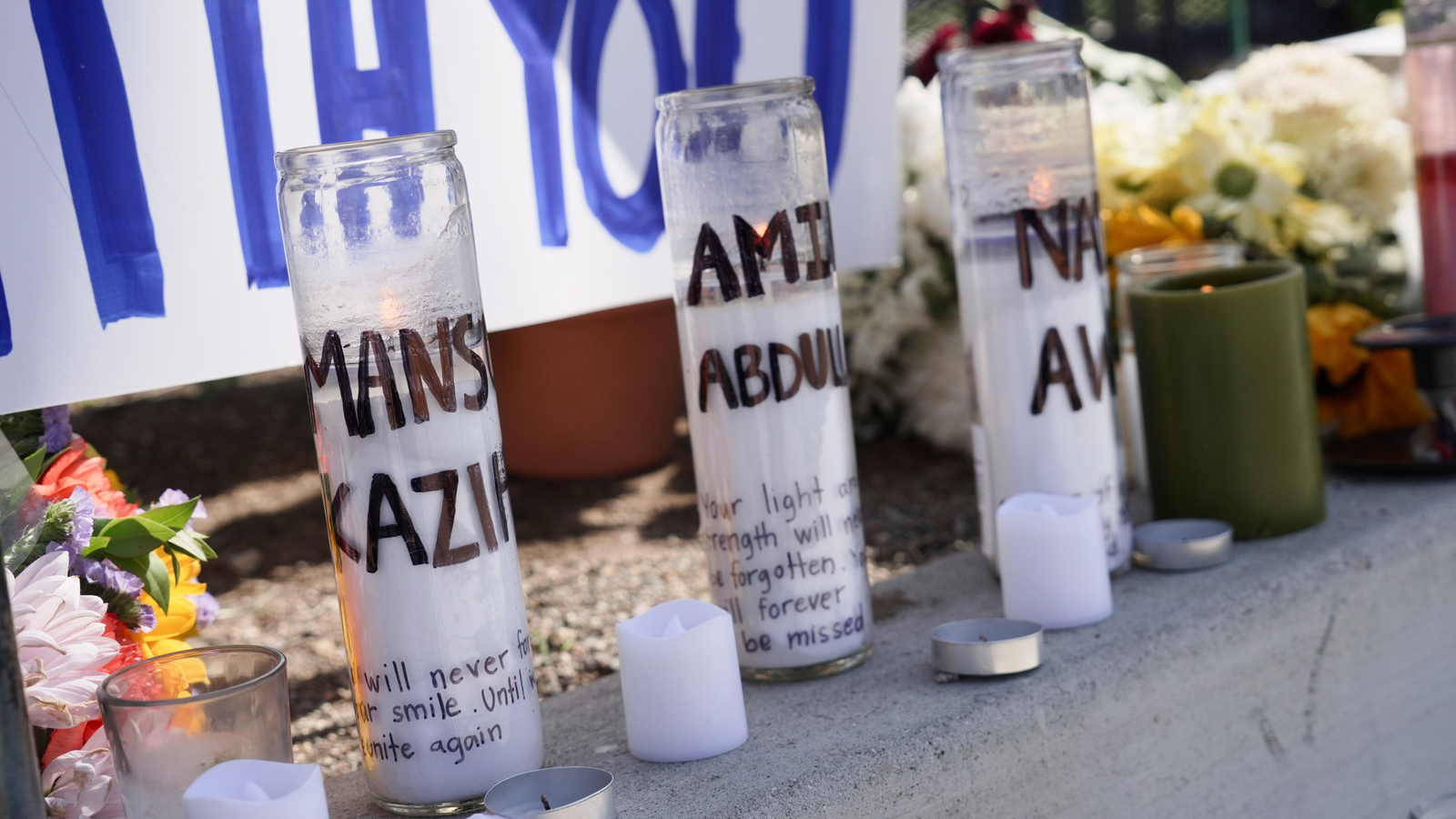
A North Carolina teenager has been formally indicted for her role in a deadly San Diego mosque shooting that claimed three lives and shook communities across the country. The 17-year-old girl from Winston-Salem faces three counts of murder and one count of conspiracy, prosecutors announced this week. According to Forsyth County District Attorney Jim O’Neill, the teen played a critical role in the attack not by physically firing a weapon, but by recording the violence and amplifying the attackers’ white-supremacist ideology to a wider audience.
The Indictment and the Charges
Just before she was set to begin a new school year, a grand jury in Forsyth County returned an indictment against the unnamed teenage girl. Authorities revealed that she had been arrested the week prior and was being charged with murder by aiding and abetting, along with a separate conspiracy charge. Under North Carolina law, individuals who assist in a homicide face identical penalties as those who physically carry out the act.
“The individual here, locally, was the person who was recording the livestream,” District Attorney O’Neill explained during a Monday afternoon press conference. “She disseminated that information, and she published their manifesto.”
The severity of the charges underscores how seriously prosecutors are treating the role of online radicalization and the distribution of extremist propaganda in modern acts of terror. The teen’s actions , broadcasting the event in real time and sharing the attackers’ ideological writings , are being viewed as essential components of the crime itself.
What Happened at the Islamic Center of San Diego
The tragic events unfolded on May 18, when two gunmen identified as Cain Clark, 17, and Caleb Vazquez, 18, stormed the Islamic Center of San Diego. The pair launched a violent assault on the place of worship, fatally shooting security guard Amin Abdullah along with two other men before fleeing the scene.
Tragically, Clark and Vazquez died by suicide in a vehicle located near the mosque shortly after the attack, bringing the total death count to five. However, their rampage could have been far worse if not for the heroic actions of the on-duty security guard, who engaged the attackers in gunfire and initiated a lockdown that helped shield approximately 140 children who were in the building at the time of the attack. Many of those children were reportedly just steps away from the violence.
The Attackers’ Ideology and Manifesto
Following the shooting, investigators uncovered extensive written materials left behind by Clark and Vazquez. These writings were filled with vitriol targeting a wide range of groups and individuals. Most notably, the manifesto cited the perpetrator of the 2019 Christchurch mosque shootings as an inspiration and model for their own actions. The Christchurch attacker killed 51 people at two mosques in New Zealand, an event that reverberated throughout the global Muslim community and beyond.
This connection to international white-supremacist terrorism highlights a troubling trend: the cross-pollination of ideologies between violent extremists across different countries. By referencing the Christchurch shooter, Clark and Vazquez aligned themselves with a broader transnational movement of hate that uses online platforms to spread propaganda, recruit followers, and inspire copycat attacks.
The Power of Livestreaming Hate
The North Carolina teen’s role in broadcasting the attack represents an alarming evolution in how mass violence is documented and disseminated. The decision to livestream a hate-fueled shooting serves multiple purposes for extremists: it creates a permanent record meant to terrorize communities, it allows the perpetrators’ message to reach a global audience in real time, and it transforms the act itself into a piece of propaganda that can inspire future attacks.
By publishing the manifesto alongside the livestream footage, the teen allegedly helped amplify the attackers’ worldview and extend the reach of their hateful ideology far beyond what the shooters could have accomplished alone. This is precisely why prosecutors pursued aiding-and-abetting murder charges rather than lesser offenses , they view her actions as integral to the crime rather than incidental.
A Community in Mourning
The Islamic Center of San Diego and the broader Muslim community have been left to grapple with the aftermath of this devastating attack. The loss of Amin Abdullah, who acted as a protector for worshippers and children, has been particularly painful. His decision to confront the attackers head-on likely saved countless lives, even at the cost of his own.
The presence of 140 children in the building during the attack has raised urgent questions about security at places of worship across the country. Mosques, churches, synagogues, and other religious institutions have increasingly found themselves in the crosshairs of hate-driven violence, prompting many to reevaluate their security protocols and emergency response procedures.
Broader Implications for Hate Crime Prosecution
The indictment of this North Carolina teen sends a powerful message about accountability in the digital age. As social media and livestreaming platforms have transformed how information , including extremist propaganda , is shared, law enforcement and prosecutors have had to adapt their legal strategies accordingly.
The case raises critical issues about:
- The legal definition of participation in a crime , When does recording and sharing content become criminal participation?
- The responsibility of online amplifiers , Should those who spread extremist content face the same consequences as those who create it?
- Youth radicalization , How are teenagers being drawn into white-supremacist movements, and what can be done to intervene?
- Cross-state jurisdiction in hate crimes , How do prosecutors handle cases where the perpetrators and accomplices are scattered across multiple states?
Looking Ahead
As this case moves through the North Carolina court system, it is likely to set important precedents for how the legal system handles individuals who facilitate mass violence without directly committing the physical act. The teen’s age adds another layer of complexity, as the juvenile justice system typically handles defendants under 18 differently than adults. However, the gravity of the murder charges may mean that her case will be transferred to adult court.
Meanwhile, families of the victims continue their journey toward healing and justice. The San Diego mosque shooting stands as a stark reminder that hate-fueled violence can strike anywhere, and that the consequences of such attacks ripple far beyond the immediate victims. Communities, lawmakers, and law enforcement agencies must continue working together to address the root causes of white-supremacist extremism while holding all participants , including those who enable violence through documentation and dissemination , fully accountable for their actions.
The indictment represents a significant step toward that accountability, sending a clear message that those who aid in spreading hate-filled propaganda will face serious legal consequences. As the legal process unfolds, the nation watches closely to see how justice will be served for the lives lost at the Islamic Center of San Diego.