
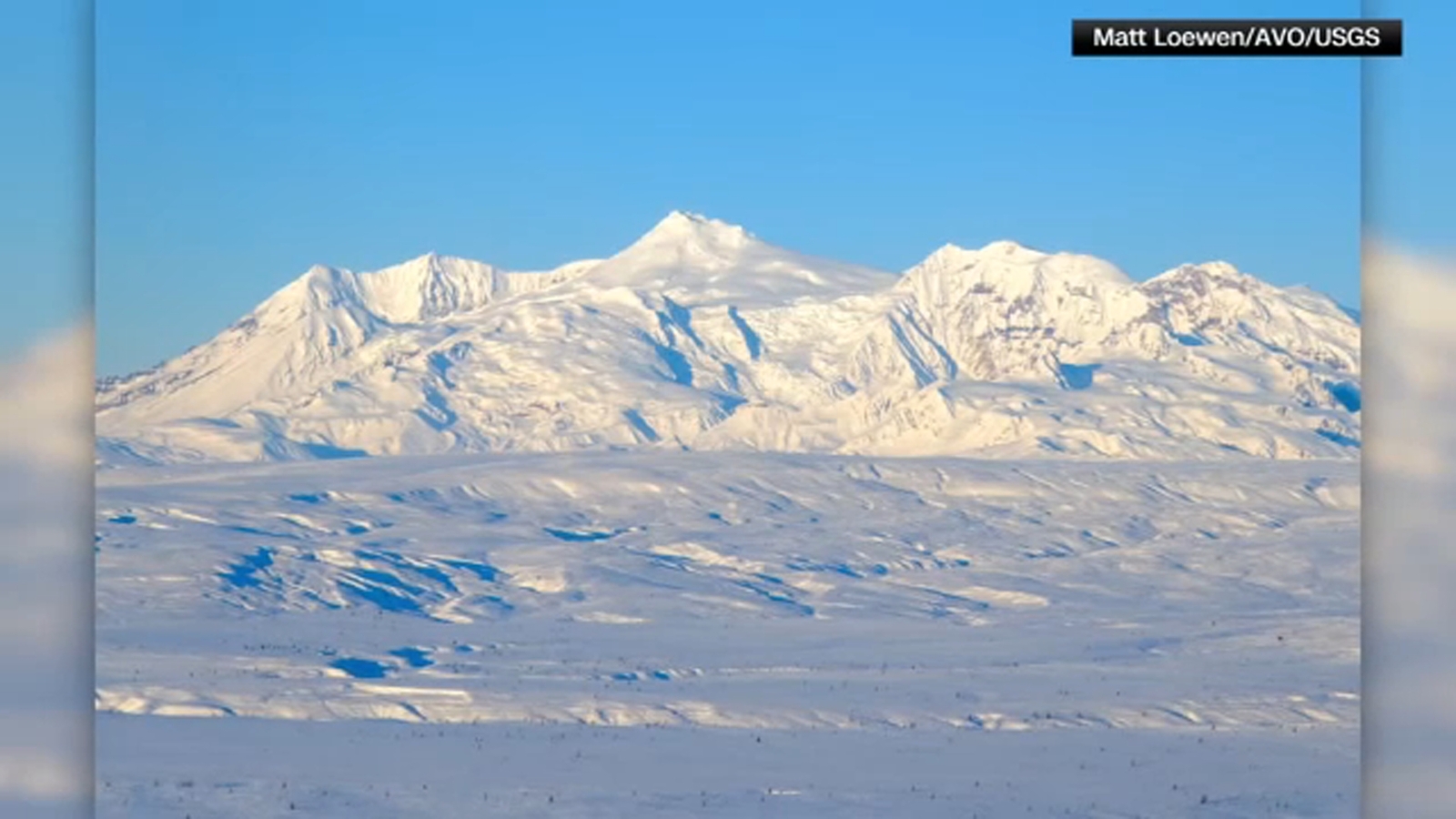
In the shadow of Alaska’s vast wilderness, a sleeping giant is stirring. Scientists monitoring Mount Spurr eruption risks have raised the alert level after the volcano, located about 75 miles west of Anchorage, began showing significant signs of unrest over the past ten months. With hundreds of small earthquakes rumbling beneath its surface, ground swelling from rising magma, and a new lake forming in its summit crater, experts from the Alaska Volcano Observatory (AVO) now estimate a 50-50 chance of a future eruption.
While no communities sit directly in Mount Spurr’s shadow, the potential consequences of an eruption could ripple across south-central Alaska, disrupting air travel and blanketing Anchorage in ash. Here’s what scientists know, what they don’t, and what residents and travelers should keep on their radar.
Why Mount Spurr Matters
Mount Spurr is a striking stratovolcano perched in the Aleutian Arc, one of the most volcanically active regions on the planet. Though it sits about 75 miles from Anchorage, Alaska’s most populous city, its past eruptions have had outsized effects on the region. The volcano’s last major activity came in 1992, when ash plumes forced the temporary closure of Ted Stevens Anchorage International Airport and triggered days of air-quality warnings.
Because of its history, Mount Spurr remains a high-priority watch for the Alaska Volcano Observatory. As of mid-February 2025, the volcano’s alert level sits at “advisory,” which is one step above normal, signaling that scientists are paying close attention.
What the Experts Are Seeing
According to David Fee, a coordinating scientist at the AVO, two key long-term indicators have raised the profile of a potential Mount Spurr eruption:
1. Earthquake Swarms
Scientists have detected hundreds of small earthquakes emanating from beneath the volcano. These seismic events are typically associated with the movement of magma, gas, and other fluids through the Earth’s crust, an early hint that pressure may be building below the surface.
2. Ground Deformation
Satellite and ground-based instruments have picked up noticeable swelling of the land around Mount Spurr. As Fee explained, “as magma and fluids rise within the earth, it causes the ground to swell or deform.” This kind of movement often signals that molten material is on the move, pushing upward toward the surface.
In addition, scientists have observed a small lake forming within the summit crater, along with warmer water and gas emissions. Together, these observations paint a clear picture: something is happening beneath the volcano.
The Odds: 50-50 Chance of a Mount Spurr Eruption
Despite all of these warning signs, predicting exactly when a volcano will blow is notoriously difficult. Scientists stress that the timeline could span days, weeks, or even months, with no clear way to know for sure. Right now, however, they put the odds of an eventual Mount Spurr eruption at roughly 50-50.
Fee noted that the volcano has a history of providing extended warning periods before past eruptions. That track record gives scientists a bit of hope that any future blast will come with ample lead time. Still, the team is watching the data stream around the clock for changes that might tip the scales.
What Hazards Would a Mount Spurr Eruption Bring?
The good news is that no major communities live near the volcano itself, which limits the immediate risk to human life. The bad news is that Mount Spurr’s hazards tend to travel far beyond its slopes.
Ash Clouds and Air Travel Disruption
By far, the most significant risk is the ash plume. The AVO has warned that an eruption “would produce ash clouds carried downwind for hundreds of miles.” A past eruption in 1953 sent ash columns soaring to 65,000 feet above sea level, and another in 1992 grounded flights at Anchorage’s main airport for roughly 20 hours.
Modern jet engines are extremely sensitive to volcanic ash, which can melt inside turbines and cause them to stall. Even a thin dusting in the atmosphere can lead to widespread flight cancellations, stranding thousands of travelers and disrupting supply chains across the Pacific.
Ash Fall Over Anchorage and Beyond
Although the 1953 eruption deposited only about 6 millimeters of ash in Anchorage, even small amounts can wreak havoc on air quality, water supplies, and respiratory health. Following the 1992 eruptions, air-quality alerts blanketed south-central Alaska for days.
Pyroclastic Flows and Mudflows
Closer to the volcano itself, an eruption would unleash pyroclastic flows (fast-moving clouds of hot gas and volcanic material), mudflows known as lahars, and ballistic showers of rock and debris across the uninhabited wilderness surrounding Mount Spurr. These hazards are intense but would primarily affect a remote area with no permanent residents.
A Look Back: Mount Spurr’s Eruption History
Mount Spurr is no stranger to explosive activity. The volcano erupted once in 1953 and then three times in 1992, all from the Crater Peak vent, a secondary crater located roughly two miles south of the summit. Significantly, the summit itself has been quiet for thousands of years, making Crater Peak the most likely source of any future activity.
Each of these past eruptions was relatively small in volume, but they were highly explosive. The ash they produced drifted across interior, south-central, and southeastern Alaska, demonstrating the volcano’s far-reaching influence despite its remote location.
Fee pointed to this pattern when explaining why scientists expect the next event, if it occurs, to also originate from Crater Peak: “There has been no eruption from the summit of Spurr in thousands of years… so that’s one of the reasons we think it’s more likely to erupt from Crater Peak.”
How Scientists Are Responding
The Alaska Volcano Observatory is employing every tool at its disposal to monitor the situation. Seismometers track the ongoing earthquake swarm, GPS stations measure ground deformation, and satellite imagery captures thermal and gas emissions from the summit crater.
“We use a lot of our knowledge from past eruptions to kind of see what we think might happen in the future,” Fee said. That historical perspective, combined with modern technology, gives researchers their best shot at forecasting whether the Mount Spurr eruption risk will translate into an actual event.
Scientists are also watching for short-term warning signs that often precede an eruption, including:
- Rising water temperatures in the summit crater lake
- Melting snow and glaciers near the summit
- Increased gas emissions, particularly sulfur dioxide
- Stronger or more frequent earthquakes
If any of these indicators ramp up significantly, the AVO would likely elevate the alert level from “advisory” to “watch,” signaling that an eruption may be imminent.
What Residents and Travelers Should Know
For Anchorage residents, the most likely impacts from a future Mount Spurr eruption would be ash fall and air travel disruptions. Officials recommend that households prepare emergency kits with N95 masks, extra water, and a plan for potential flight cancellations or poor air quality. Travelers flying in or out of Ted Stevens Anchorage International Airport should monitor airline communications and stay flexible with itineraries, especially if the alert level escalates.
Farmers, outdoor workers, and people with respiratory conditions should be especially mindful, as even light ash fall can aggravate asthma and other lung issues. Keeping windows closed and limiting outdoor exposure during an ash event can help reduce health risks.
The Bottom Line
Mount Spurr is not erupting today, but it is clearly awake. With a 50-50 chance of a future eruption, rising earthquake counts, swelling ground, and changes in the summit crater, scientists are treating this as a serious situation worth watching. The good news is that the volcano has a history of providing clear warning signs before it blows, and Alaska’s monitoring infrastructure is among the best in the world.
For now, scientists continue to analyze every tremor, every pixel of satellite imagery, and every shift in the landscape. Whether the next chapter of Mount Spurr’s story is written in fire and ash or quiet rumblings remains to be seen, but one thing is certain: the Aleutian Arc’s sleeping giant is stirring, and Alaska is paying close attention.